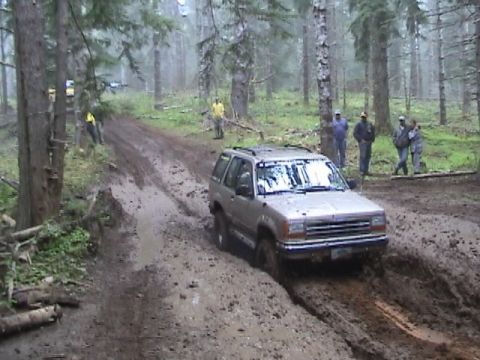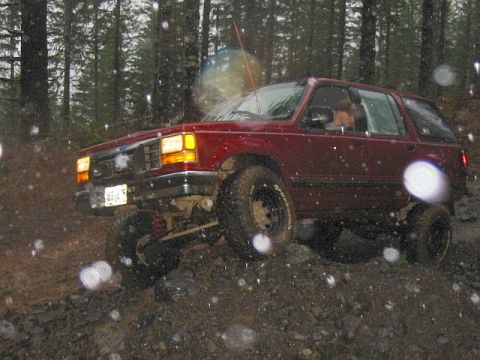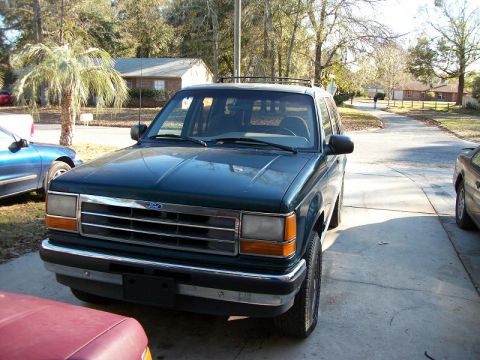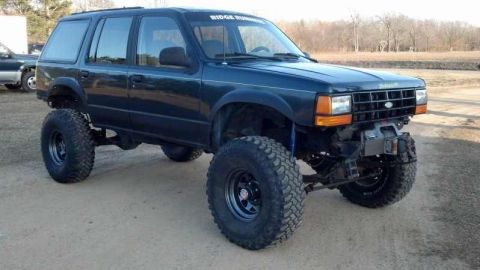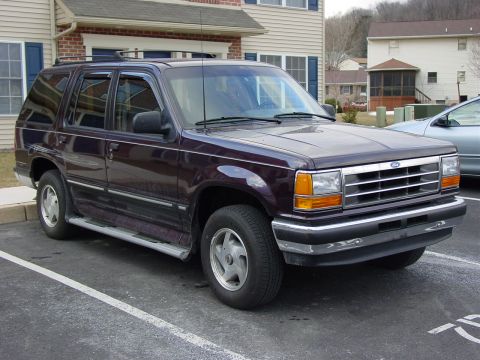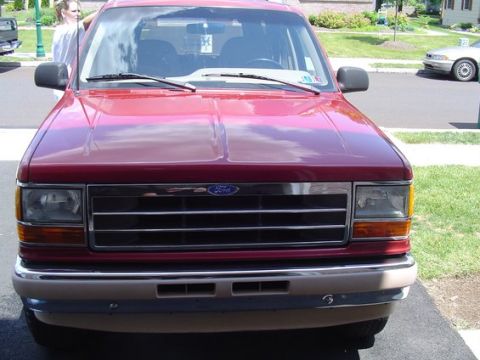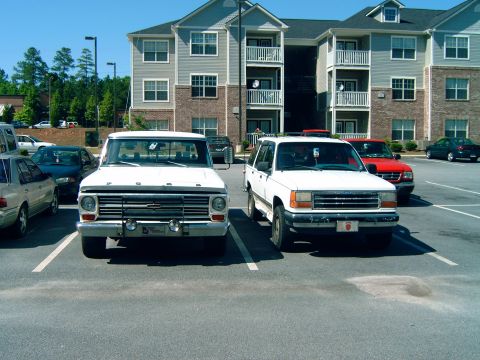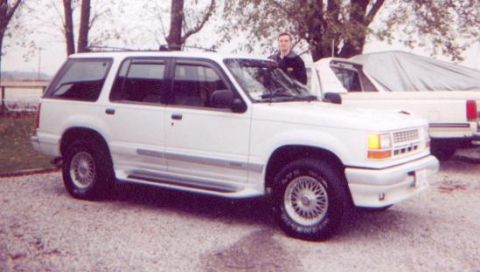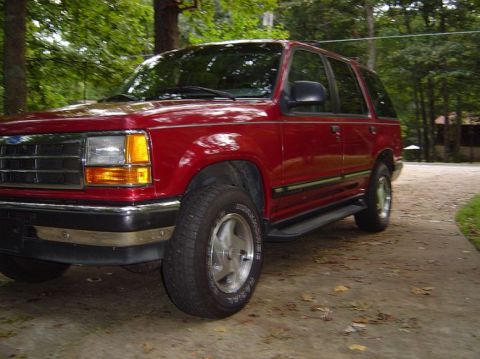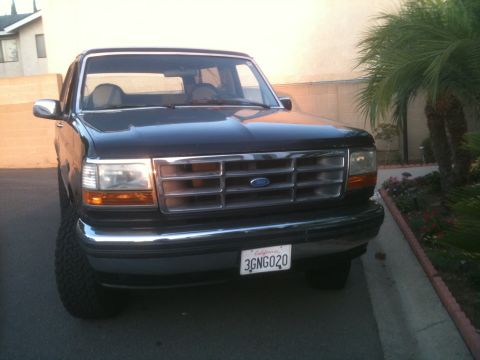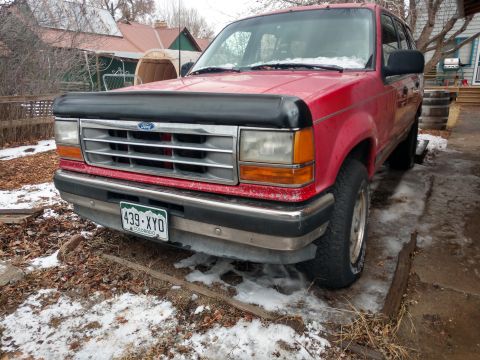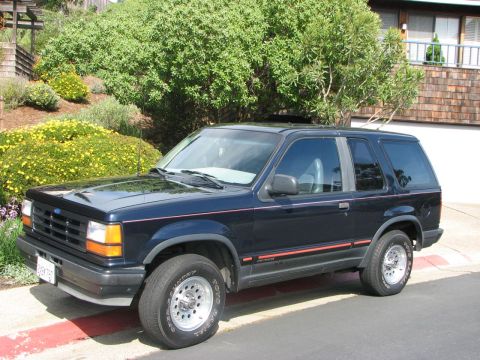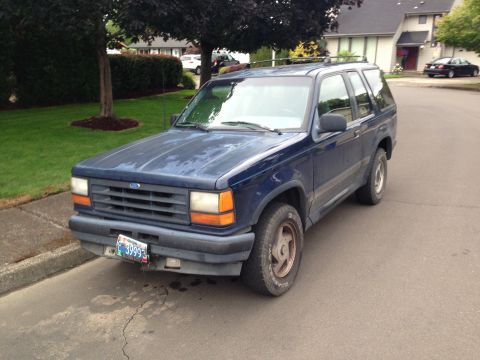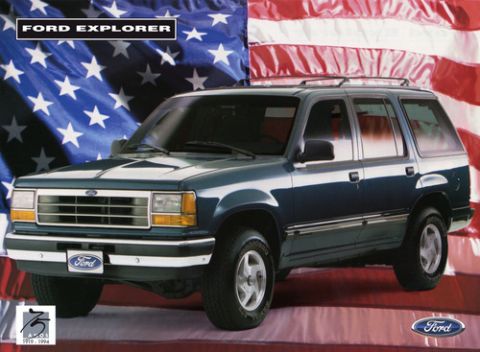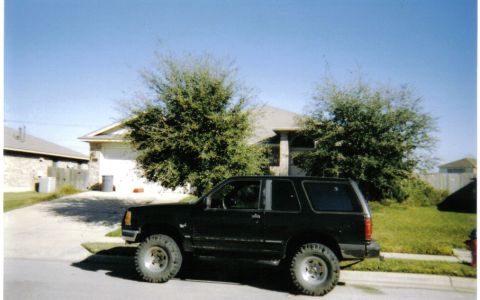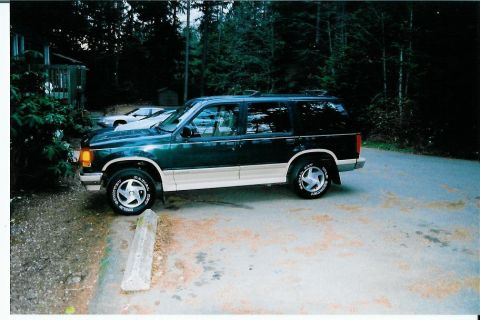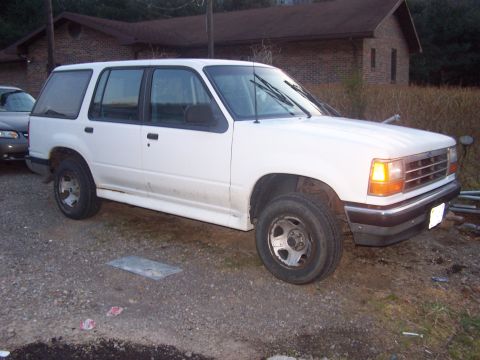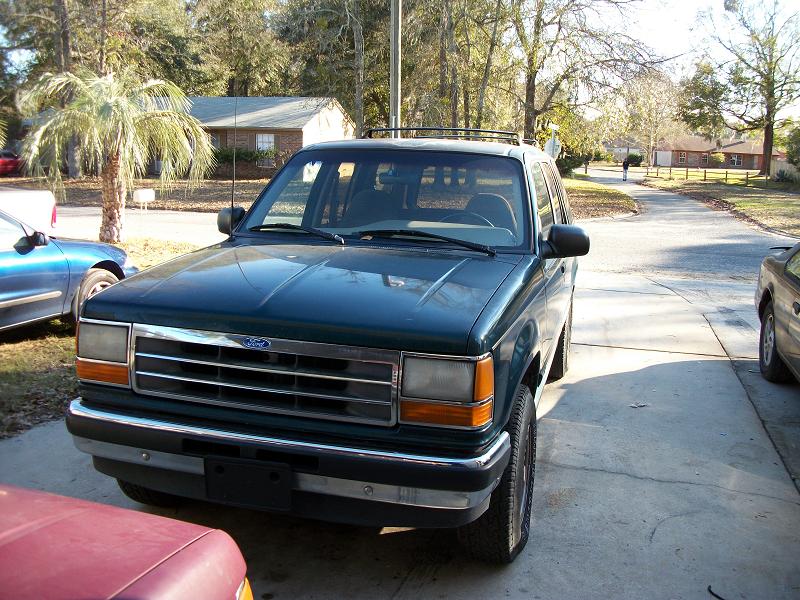
The 1991 model year introduced the first-generation Ford Explorer, a midsize SUV that replaced the two-door Bronco II. The Explorer used the UN46 platform, a body-on-frame chassis derived from the Ford Ranger pickup, and shared many of the Ranger's components. Unlike the Bronco II, which was two-door only, the Explorer was offered in both a two-door body and a four-door body, and the four-door helped establish the Explorer in the growing family SUV market. The 1991-1994 Ford Explorer was powered by the 4.0-liter overhead-valve (OHV) V6, a pushrod engine from Ford's Cologne V6 family; it was rated at 155 horsepower for the 1991 and 1992 model years and 160 horsepower for 1993 and 1994. Transmissions were a Mazda-sourced five-speed manual or a four-speed automatic, with rear-wheel drive standard and four-wheel drive optional. Trim levels included the base XL, the better-equipped XLT, the two-door Sport, and the upscale Eddie Bauer edition. The first-generation Explorer ran through the 1994 model year and was replaced by the redesigned second generation for 1995.
Other Ford Explorer generations
The 1991-1994 Ford Explorer at a glance
- Generation: first-generation Ford Explorer, platform code UN46
- Years: 1991 through 1994, replaced by the second-generation Explorer for 1995
- Replaced: the two-door Bronco II, which Ford had sold since 1984
- Chassis: body-on-frame, derived from the Ford Ranger pickup
- Engine: 4.0-liter OHV V6 (155 hp for 1991-1992, 160 hp for 1993-1994)
- Transmissions: Mazda-sourced five-speed manual or a four-speed automatic
- Bodies: two-door and four-door
- Trims: XL, XLT, Sport (two-door), and Eddie Bauer
Ford Explorer 1991-1994 year by year
| Year | Ford Explorer changes | Engine |
|---|---|---|
| 1991 | First-generation Ford Explorer launches on the UN46 platform, replacing the Bronco II; offered in two-door and four-door bodies with XL, XLT, Sport, and Eddie Bauer trims | 4.0L OHV V6 (155 hp) |
| 1992 | The 1992 Ford Explorer carried over with the 4.0L OHV V6 and the same body and trim lineup | 4.0L OHV V6 (155 hp) |
| 1993 | The 4.0L OHV V6 in the Ford Explorer was rated at 160 horsepower for 1993 | 4.0L OHV V6 (160 hp) |
| 1994 | Final model year of the first-generation Ford Explorer before the 1995 redesign | 4.0L OHV V6 (160 hp) |
How the first Explorer replaced the Bronco II
The first-generation Ford Explorer arrived for 1991 to replace the Bronco II, the compact two-door SUV Ford had sold since 1984. The Explorer used the UN46 platform, a body-on-frame chassis derived from the Ford Ranger pickup, and it carried over the Ranger-derived layout that the Bronco II had also used. The major change from the Bronco II was the addition of a four-door body alongside the two-door, which gave Ford a more practical family SUV. The 1991-1994 Explorer is widely credited as a key vehicle in the expansion of the midsize SUV market through the early 1990s.
The 4.0-liter OHV V6 and drivetrain
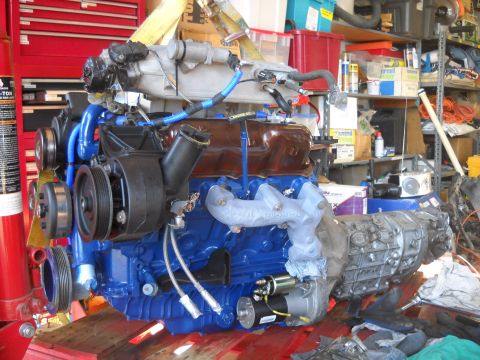
Every 1991-1994 Ford Explorer used the 4.0-liter overhead-valve (OHV) V6, a pushrod engine from Ford's Cologne V6 family. It was rated at 155 horsepower and 220 lb-ft of torque for the 1991 and 1992 model years and 160 horsepower for 1993 and 1994. The engine drove through a Mazda-sourced five-speed manual transmission or a four-speed automatic. The 1991-1994 Explorer was rear-wheel drive in standard form, with a part-time four-wheel-drive system optional.
Trim levels: XL, XLT, Sport, and Eddie Bauer
The 1991-1994 Ford Explorer was offered in several trim levels. The base trim was the XL, with the better-equipped XLT above it. The two-door body was marketed as the Explorer Sport. The top trim was the Eddie Bauer edition, an upscale package named for the outdoor-apparel brand and fitted with additional equipment and trim. The Eddie Bauer name would continue as a premium Explorer trim across later generations.
Frequently asked questions
What did the first Ford Explorer replace?
The first-generation Ford Explorer, introduced for 1991, replaced the Bronco II, a compact two-door SUV Ford had sold since 1984. The Explorer used the same Ranger-derived body-on-frame approach but added a four-door body alongside the two-door.
What engine did the 1991-1994 Ford Explorer use?
The 1991-1994 Ford Explorer used the 4.0-liter overhead-valve (OHV) V6 from Ford's Cologne family. It was rated at 155 horsepower for the 1991 and 1992 model years and 160 horsepower for 1993 and 1994.
What platform is the first-generation Ford Explorer?
The first-generation Ford Explorer used the UN46 platform, a body-on-frame chassis derived from the Ford Ranger pickup. The Explorer kept body-on-frame construction through the fourth generation, which ended after 2010, though the 2002-2010 models used dedicated Explorer platforms rather than the original Ranger-derived chassis.
Was the 1991-1994 Ford Explorer offered as a two-door?
Yes. The first-generation Ford Explorer was offered in both a two-door body, marketed as the Explorer Sport, and a four-door body. The four-door was new compared with the two-door-only Bronco II it replaced.
Sources
- Ford factory specification sheets and brochures for the 1991-1994 Explorer
- Wikipedia, Ford Explorer (first generation, UN46)
- Ford Explorer generation histories and 4.0L V6 references
Asked all the time
What did the first Ford Explorer replace?
The first-generation Ford Explorer, introduced for 1991, replaced the Bronco II, a compact two-door SUV Ford had sold since 1984. The Explorer used the same Ranger-derived body-on-frame approach but added a four-door body alongside the two-door.
What engine did the 1991-1994 Ford Explorer use?
The 1991-1994 Ford Explorer used the 4.0-liter overhead-valve (OHV) V6 from Ford's Cologne family. It was rated at 155 horsepower for the 1991 and 1992 model years and 160 horsepower for 1993 and 1994.
What platform is the first-generation Ford Explorer?
The first-generation Ford Explorer used the UN46 platform, a body-on-frame chassis derived from the Ford Ranger pickup. The Explorer kept body-on-frame construction through the fourth generation, which ended after 2010, though the 2002-2010 models used dedicated Explorer platforms rather than the original Ranger-derived chassis.
Was the 1991-1994 Ford Explorer offered as a two-door?
Yes. The first-generation Ford Explorer was offered in both a two-door body, marketed as the Explorer Sport, and a four-door body. The four-door was new compared with the two-door-only Bronco II it replaced.
Technical Reference
Member-uploaded diagrams & documents for this generation. AI-classified; community-verified where badged.
Schematics (3)
- Custom Fuel Cell Mounting Sketch - Filler Neck, Toolbox, Bed Floor & Frame RailsThis is a simple hand-drawn schematic sketch (not a factory document) illustrating a planned or proposed fuel cell installation in a pickup-style bed. The drawing shows a side/cross-section view with five labeled…
- Ford Ranger/Explorer Shortened Frame Diagram - Spring Hanger Moved 22" ForwardThis document is a hand-drawn side-view schematic (line drawing) of a truck frame and rear suspension area, apparently illustrating a frame-shortening or spring-relocation modification. The drawing shows a frame rail…
- Truck Frame Shortening Sketch - Weld and Plate Splice Location Behind CabThis document is a simple hand-drawn schematic (uploaded as "frame.JPG") illustrating a truck frame modification. The drawing shows a side view of a vehicle: a cab (labeled "cab" in red) at the left, a horizontal frame…
Wiring Diagrams (1)
Data/Spec Plates (1)
- 1992 Ford Explorer Safety Compliance / Door Data Plate - GVWR, Axle & Tire SpecsThis is a photograph of the factory Safety Compliance Certification Label (data/spec plate) affixed to a 1992 Ford Explorer, manufactured by Ford Motor Co. in the U.S.A. with a build date of 05/92. The label lists the…
Brochures & Literature (1)
Blueprints (1)
- 1991 Ford Explorer Custom Front Bumper CAD Blueprint - Winch Mount DesignThis document is a computer-generated 3D CAD rendering (uploaded as a 'blueprint') showing a custom front bumper design, filed in the gallery of a 1991 Ford Explorer on SuperMotors.net. The bumper is depicted in…
The wall · registered 1991-1994 Explorers
Sorted by depth of documentation. Click any vehicle to open its permanent record.