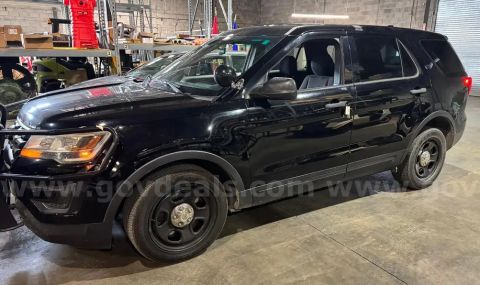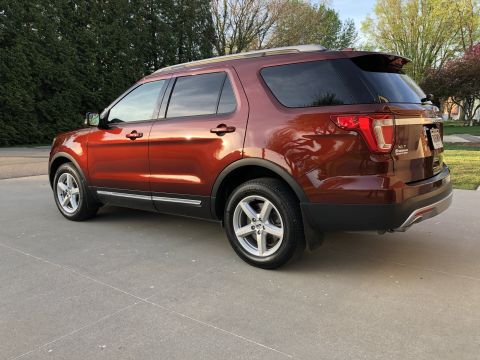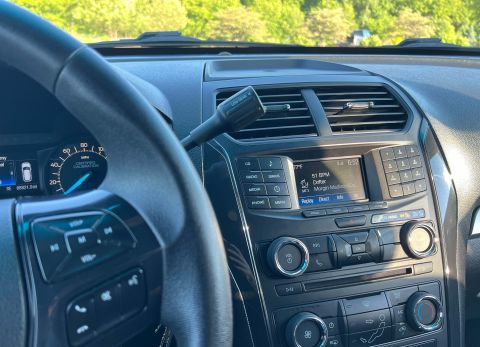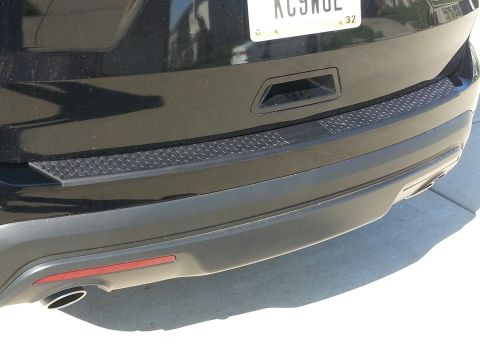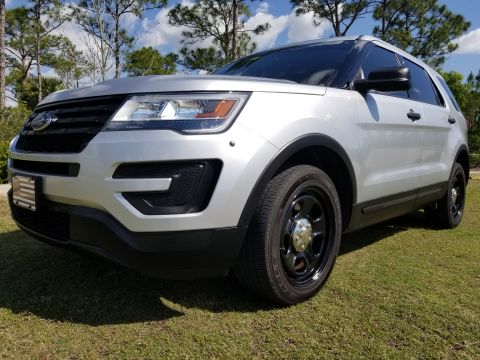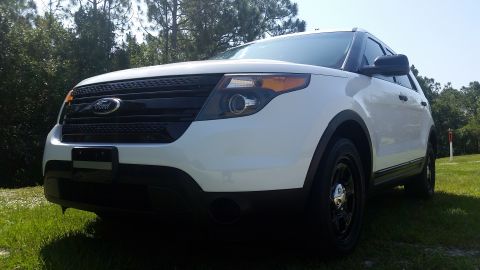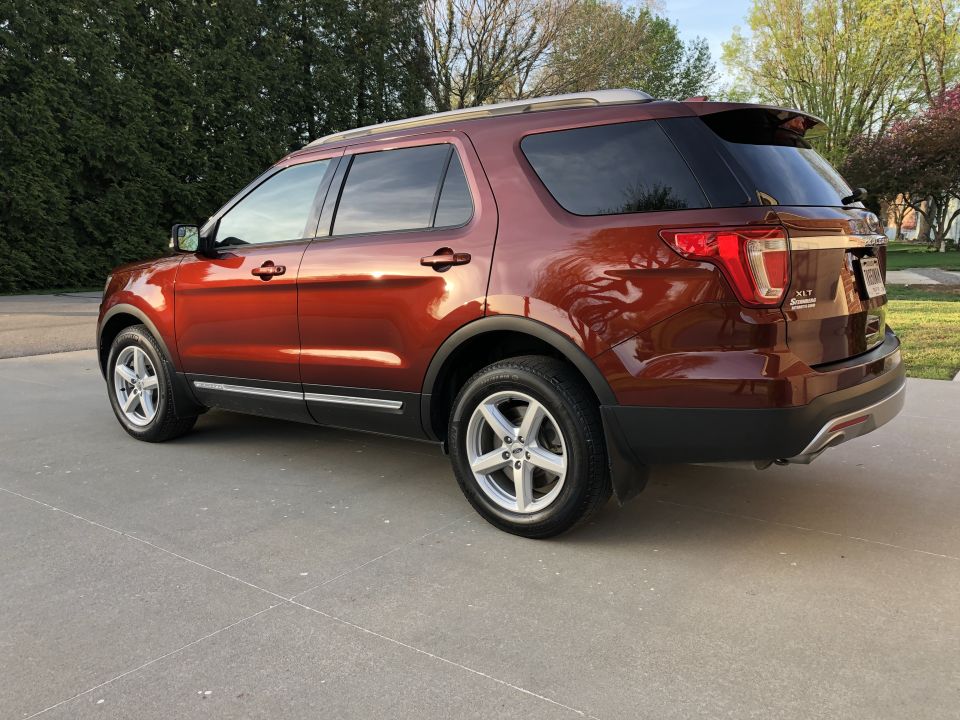
The 2011 model year brought the fifth-generation Ford Explorer, the redesign that ended the Explorer's body-on-frame era. Instead of the body-on-frame ladder chassis used since 1991, the 2011 Explorer was a unibody crossover built on Ford's front-wheel-drive-based D4 platform, with front-wheel drive standard and all-wheel drive optional. The fifth-generation Explorer kept three rows of seating and introduced EcoBoost turbocharged engines to the model. The base engine was a 3.5-liter naturally aspirated V6; a turbocharged 2.0-liter EcoBoost four was added for the 2012 model year for fuel economy, and from 2013 the Explorer Sport used a twin-turbocharged 3.5-liter EcoBoost V6 rated at 365 horsepower, also fitted to the Platinum trim added later. For 2016 Ford gave the Explorer a facelift with revised styling and replaced the 2.0-liter EcoBoost with a 2.3-liter EcoBoost four. This generation also introduced the Police Interceptor Utility, a fleet-and-law-enforcement version of the Explorer that became a common police vehicle. The fifth-generation Explorer ran through the 2019 model year and was replaced by the rear-drive-based sixth generation for 2020.
Other Ford Explorer generations
The 2011-2019 Ford Explorer at a glance
- Generation: fifth-generation Ford Explorer, the first built as a unibody crossover
- Years: 2011 through 2019, replaced by the sixth-generation Explorer for 2020
- Platform: front-wheel-drive-based D4 unibody platform, with front-wheel drive standard and all-wheel drive optional
- Engines: 3.5L naturally aspirated V6 (base); 2.0L EcoBoost I4 (from 2012), replaced by 2.3L EcoBoost I4 for 2016; 3.5L EcoBoost twin-turbo V6 (365 hp, Sport and Platinum)
- Performance trim: Explorer Sport (from 2013) with the twin-turbo 3.5-liter EcoBoost V6
- 2016 facelift: revised styling and the switch from the 2.0L to the 2.3L EcoBoost four
- Fleet model: Police Interceptor Utility, introduced in this generation
- Seating: three rows, seating up to seven
Ford Explorer 2011-2019 year by year
| Year | Ford Explorer changes | Engines offered |
|---|---|---|
| 2011 | Fifth-generation Ford Explorer arrives as a unibody crossover on the front-drive-based D4 platform, ending the body-on-frame layout used since 1991; launched with the 3.5-liter V6 as the sole engine | 3.5L V6 |
| 2012 | The turbocharged 2.0-liter EcoBoost four was added to the Ford Explorer lineup for fuel economy | 3.5L V6; 2.0L EcoBoost I4 |
| 2013 | The Explorer Sport joins with a twin-turbocharged 3.5-liter EcoBoost V6 rated at 365 horsepower; the Ford Police Interceptor Utility, the law-enforcement version of the Explorer, arrives for the 2013 model year | 3.5L V6; 2.0L EcoBoost I4; 3.5L EcoBoost twin-turbo V6 (Sport) |
| 2014 | The 2014 Ford Explorer continued with the V6, the 2.0-liter EcoBoost four, and the Sport's twin-turbo 3.5-liter EcoBoost V6 | 3.5L V6; 2.0L EcoBoost I4; 3.5L EcoBoost twin-turbo V6 (Sport) |
| 2015 | The 2015 Ford Explorer carried over ahead of the 2016 facelift, with the V6, the 2.0-liter EcoBoost four, and the Sport's twin-turbo 3.5-liter EcoBoost V6 | 3.5L V6; 2.0L EcoBoost I4; 3.5L EcoBoost twin-turbo V6 (Sport) |
| 2016 | The Ford Explorer received a facelift with revised styling; the 2.0-liter EcoBoost four was replaced by a 2.3-liter EcoBoost four, and the Platinum trim was added with the twin-turbo 3.5-liter EcoBoost V6 | 3.5L V6; 2.3L EcoBoost I4; 3.5L EcoBoost twin-turbo V6 (Sport, Platinum) |
| 2017 | The 2017 Ford Explorer continued the facelifted design with the V6, the 2.3-liter EcoBoost four, and the twin-turbo 3.5-liter EcoBoost V6 | 3.5L V6; 2.3L EcoBoost I4; 3.5L EcoBoost twin-turbo V6 (Sport, Platinum) |
| 2018 | The 2018 Ford Explorer carried the facelifted fifth-generation lineup | 3.5L V6; 2.3L EcoBoost I4; 3.5L EcoBoost twin-turbo V6 (Sport, Platinum) |
| 2019 | Final model year of the fifth-generation Ford Explorer before the 2020 redesign to the rear-drive-based CD6 platform | 3.5L V6; 2.3L EcoBoost I4; 3.5L EcoBoost twin-turbo V6 (Sport, Platinum) |
From body-on-frame SUV to unibody crossover
The 2011 Ford Explorer was the redesign that turned the Explorer from a truck-based SUV into a car-based crossover. The earlier Explorers, built from 1991 through 2010, used body-on-frame ladder chassis, with the early generations derived from the Ranger. The fifth-generation Explorer instead used Ford's unibody D4 platform, a front-wheel-drive-based architecture, with front-wheel drive standard and all-wheel drive optional. The change moved the Explorer into direct competition with car-based three-row crossovers, while keeping the three-row seating buyers expected from the nameplate.
EcoBoost engines and the Explorer Sport
The fifth-generation Ford Explorer introduced EcoBoost turbocharged engines to the model. The base engine was a 3.5-liter naturally aspirated V6. For fuel economy, Ford offered a turbocharged 2.0-liter EcoBoost four-cylinder, which was replaced by a 2.3-liter EcoBoost four for the 2016 model year. The performance variant was the Explorer Sport, added for 2013, which used a twin-turbocharged 3.5-liter EcoBoost V6 rated at 365 horsepower; the same engine was later fitted to the Platinum trim. The twin-turbo 3.5 EcoBoost gave the Explorer its highest output of the generation.
The 2016 facelift
For the 2016 model year Ford gave the fifth-generation Explorer a facelift, with revised front and rear styling, new lighting, and interior updates. The most significant powertrain change of the facelift was replacing the 2.0-liter EcoBoost four with a 2.3-liter EcoBoost four. Ford also added the Platinum trim for 2016, positioned above the Limited and fitted with the twin-turbo 3.5-liter EcoBoost V6.
The Police Interceptor Utility
The fifth-generation Ford Explorer introduced the Police Interceptor Utility for the 2013 model year, a law-enforcement and fleet version of the Explorer engineered for police duty. It became one of the most common police vehicles in North America during this period, helping replace traditional body-on-frame police sedans. The Police Interceptor Utility was offered with Explorer powertrains adapted for fleet use and continued into the following generation.
Frequently asked questions
When did the Ford Explorer become a unibody crossover?
The Ford Explorer became a unibody crossover for the 2011 model year, the start of the fifth generation. It moved from the body-on-frame chassis used since 1991 to the front-wheel-drive-based D4 platform, with front-wheel drive standard and all-wheel drive optional.
What engines did the 2011-2019 Ford Explorer use?
The 2011-2019 Ford Explorer used a 3.5-liter naturally aspirated V6 as the base engine, a 2.0-liter EcoBoost four (replaced by a 2.3-liter EcoBoost four for 2016) for fuel economy, and a twin-turbocharged 3.5-liter EcoBoost V6 rated at 365 horsepower in the Sport and Platinum.
What is the Ford Explorer Sport from this generation?
The Ford Explorer Sport, added for the 2013 model year, was the performance trim of the fifth-generation Explorer. It used a twin-turbocharged 3.5-liter EcoBoost V6 rated at 365 horsepower, the most powerful engine offered in the 2011-2019 Explorer.
What changed in the 2016 Ford Explorer facelift?
The 2016 Ford Explorer received a facelift with revised front and rear styling, new lighting, and interior updates. The 2.0-liter EcoBoost four was replaced by a 2.3-liter EcoBoost four, and Ford added the Platinum trim fitted with the twin-turbo 3.5-liter EcoBoost V6.
What is the Police Interceptor Utility?
The Ford Police Interceptor Utility is the law-enforcement version of the Ford Explorer, introduced during the fifth generation. It became one of the most common police vehicles in North America, adapting the Explorer for police and fleet duty.
Sources
- Ford factory specification sheets and press materials for the 2011-2019 Explorer
- Wikipedia, Ford Explorer (fifth generation) and Ford D4 platform
- Ford Explorer Sport and EcoBoost engine references
- Ford Police Interceptor Utility fleet documentation
Asked all the time
When did the Ford Explorer become a unibody crossover?
The Ford Explorer became a unibody crossover for the 2011 model year, the start of the fifth generation. It moved from the body-on-frame chassis used since 1991 to the front-wheel-drive-based D4 platform, with front-wheel drive standard and all-wheel drive optional.
What engines did the 2011-2019 Ford Explorer use?
The 2011-2019 Ford Explorer used a 3.5-liter naturally aspirated V6 as the base engine, a 2.0-liter EcoBoost four (replaced by a 2.3-liter EcoBoost four for 2016) for fuel economy, and a twin-turbocharged 3.5-liter EcoBoost V6 rated at 365 horsepower in the Sport and Platinum.
What is the Ford Explorer Sport from this generation?
The Ford Explorer Sport, added for the 2013 model year, was the performance trim of the fifth-generation Explorer. It used a twin-turbocharged 3.5-liter EcoBoost V6 rated at 365 horsepower, the most powerful engine offered in the 2011-2019 Explorer.
What changed in the 2016 Ford Explorer facelift?
The 2016 Ford Explorer received a facelift with revised front and rear styling, new lighting, and interior updates. The 2.0-liter EcoBoost four was replaced by a 2.3-liter EcoBoost four, and Ford added the Platinum trim fitted with the twin-turbo 3.5-liter EcoBoost V6.
What is the Police Interceptor Utility?
The Ford Police Interceptor Utility is the law-enforcement version of the Ford Explorer, introduced during the fifth generation. It became one of the most common police vehicles in North America, adapting the Explorer for police and fleet duty.
Technical Reference
Member-uploaded diagrams & documents for this generation. AI-classified; community-verified where badged.
Wiring Diagrams (3)
- Ford Connector Pinout 14A005 / 14N139 - 16-Pin Wiring Circuits & Wire ColorsThis page from a Ford wiring diagram manual documents a mating pair of 16-pin electrical connectors identified by harness numbers 14A005 (male) and 14N139 (female). Two connector face-view illustrations show the cavity…
- 2016 Ford Explorer C601 Connector Pinout - RH Exterior Mirror Wiring DiagramThis document is a connector pinout page ("Connector Views 150-102") from a Ford wiring/EVTM-style manual, photographed upside-down. It details connector C601 (BK), which serves component 14630, EXTERIOR MIRROR RH…
- 2016 Ford Explorer C516 Connector Pinout - LH Exterior Mirror Wiring (14631)This document is a factory-style connector pinout page for connector C516 (BK), identified as component 14631, Exterior Mirror LH (left-hand exterior mirror), part# N/A. It shows a 16-cavity connector face drawing…
Schematics (1)
- Ford Explorer Rear End Connector Locations - Parking Aid, Trailer Tow, SOD DiagramThis document is a component/connector location diagram (schematic locator page) titled "Rear end," showing the rear view of a Ford Explorer (the word "EXPLORER" is visible on the liftgate). It uses a lettered/numbered…
The wall · registered 2011-2019 Explorers
Sorted by depth of documentation. Click any vehicle to open its permanent record.