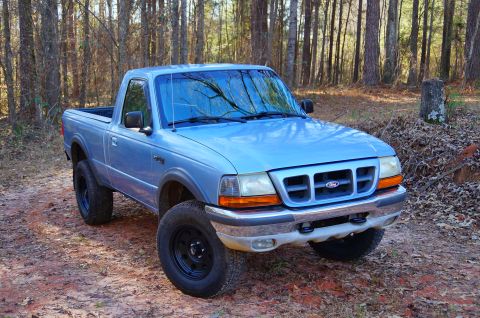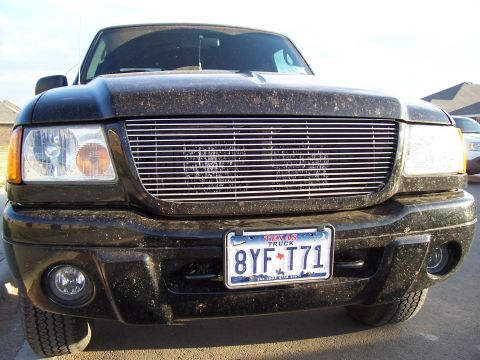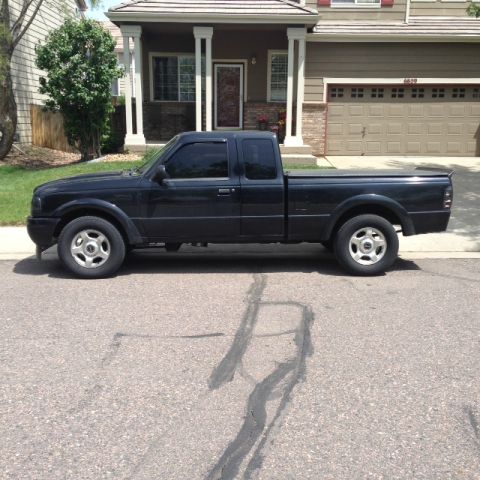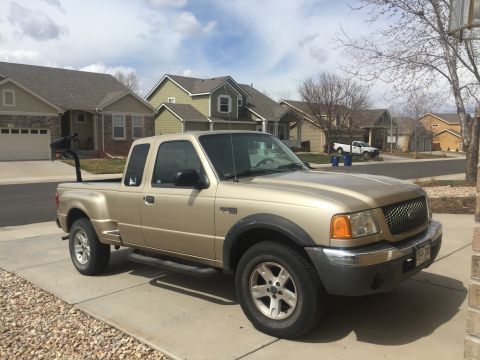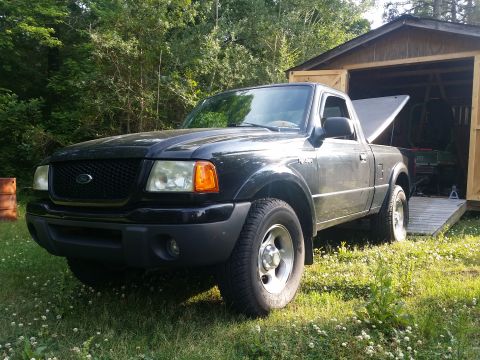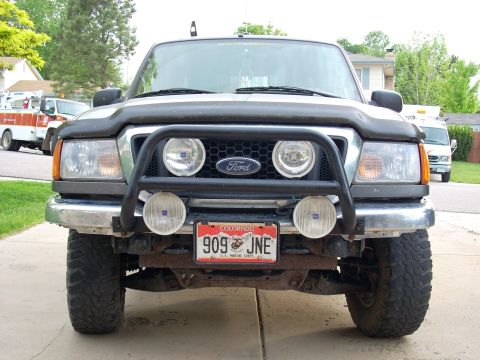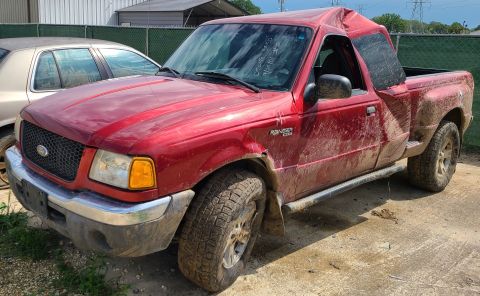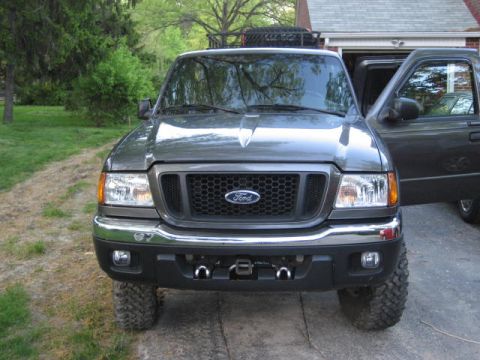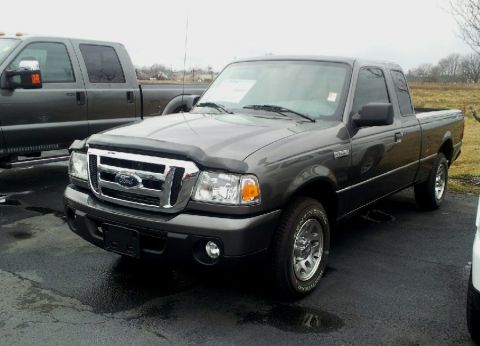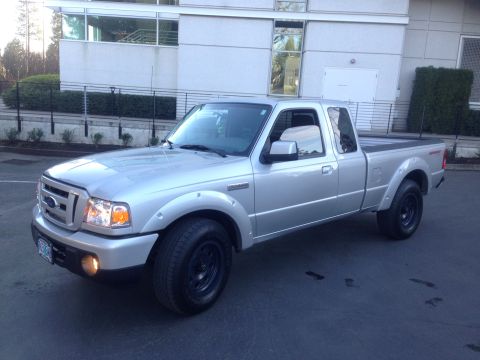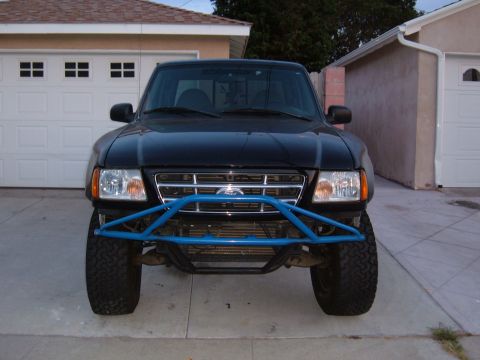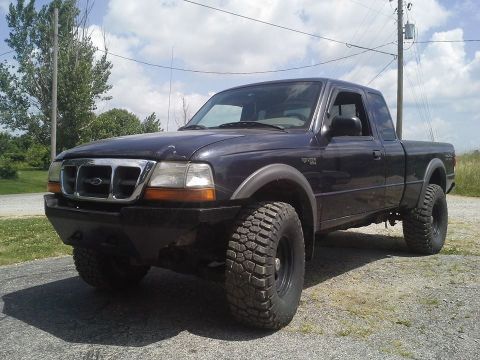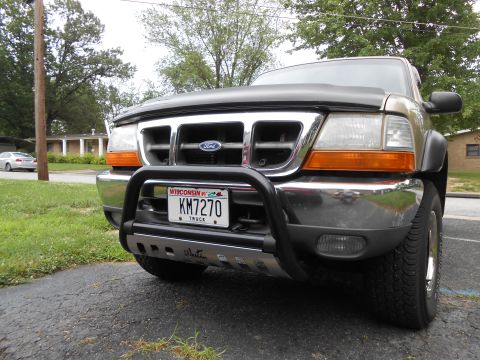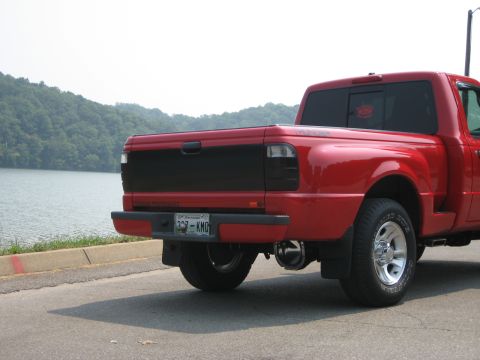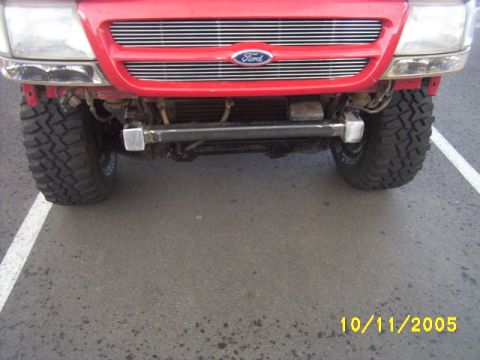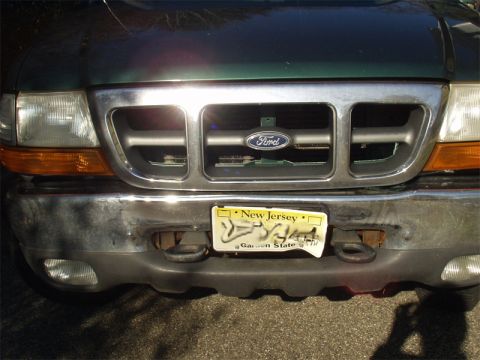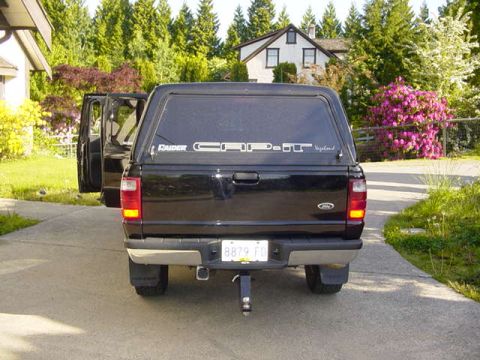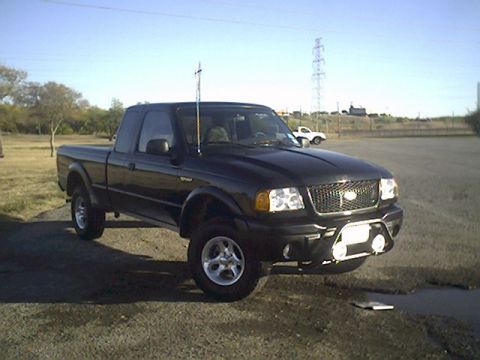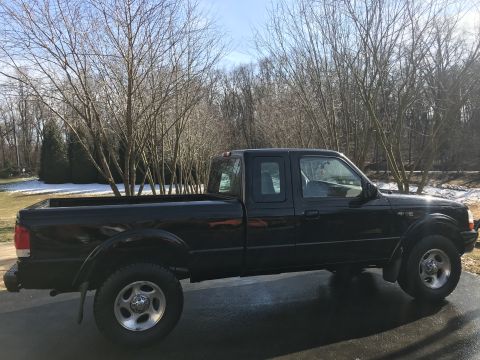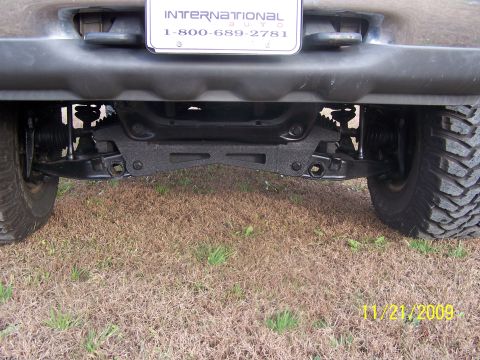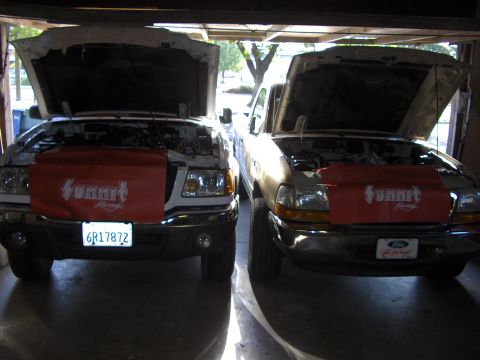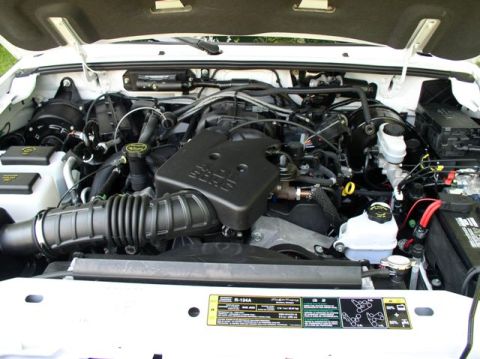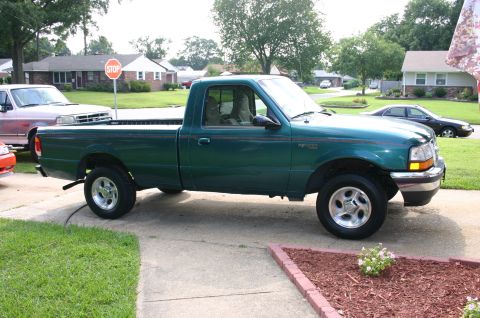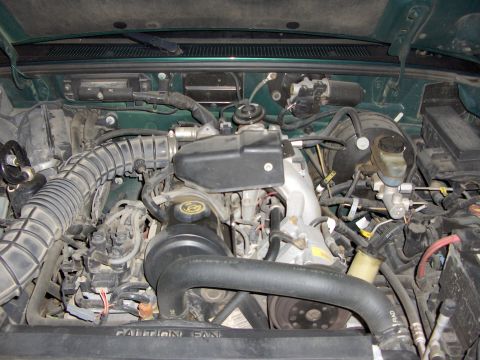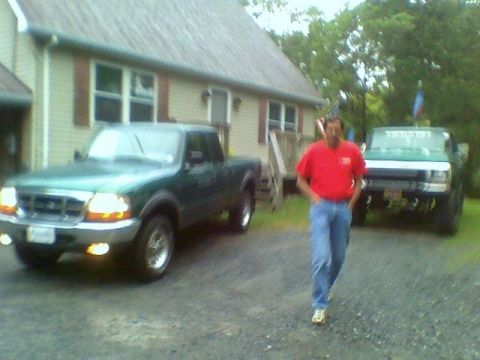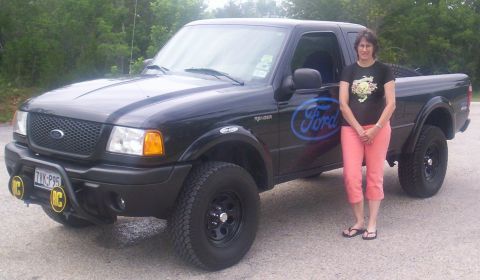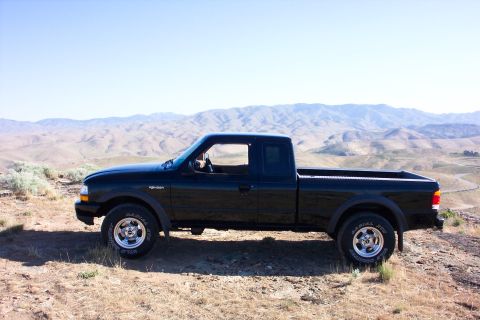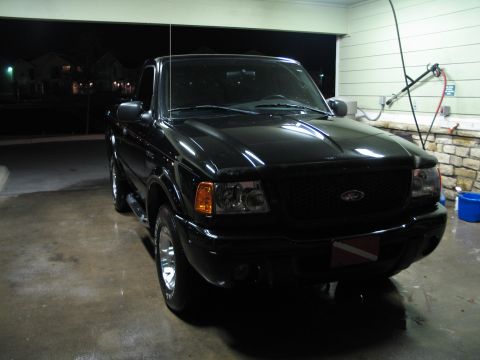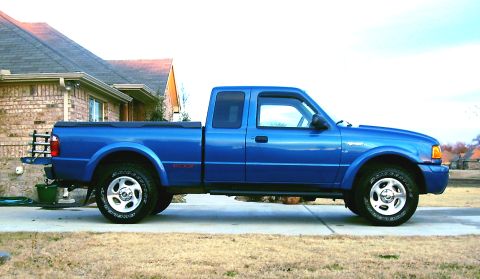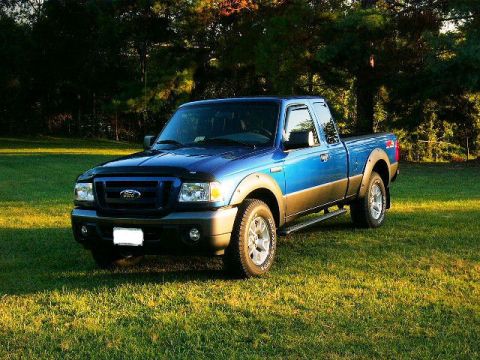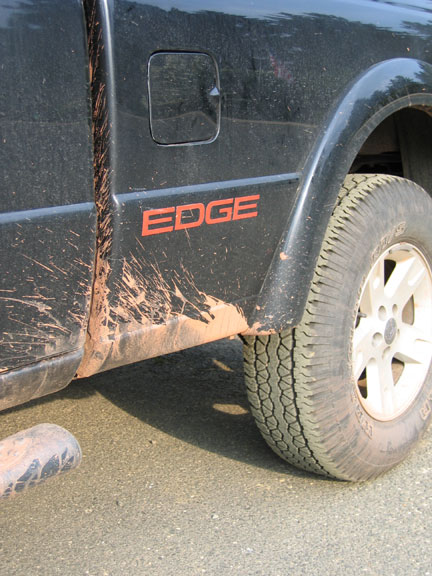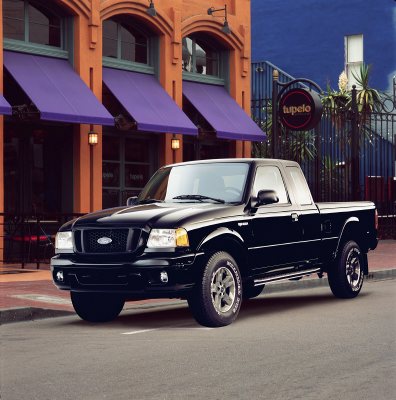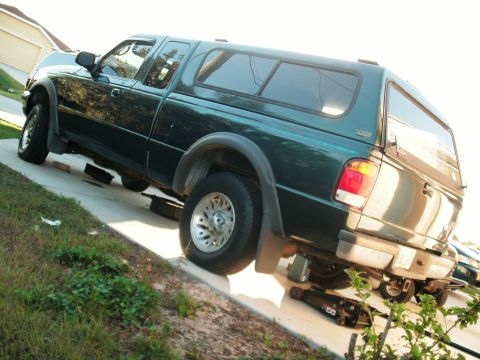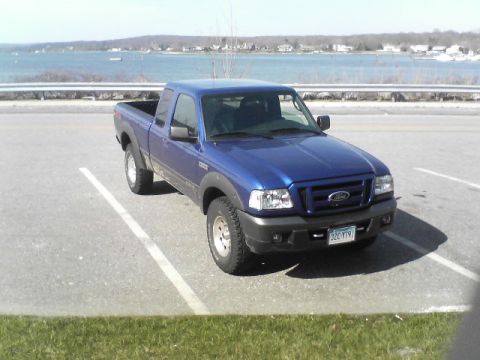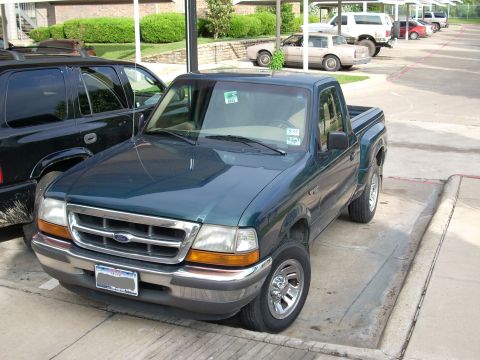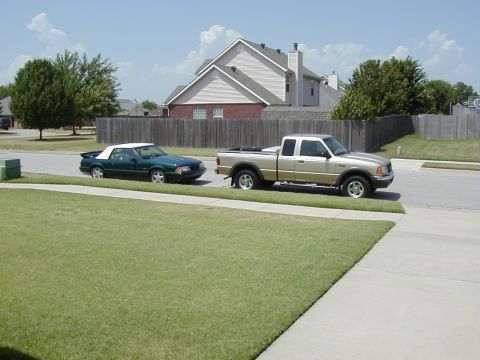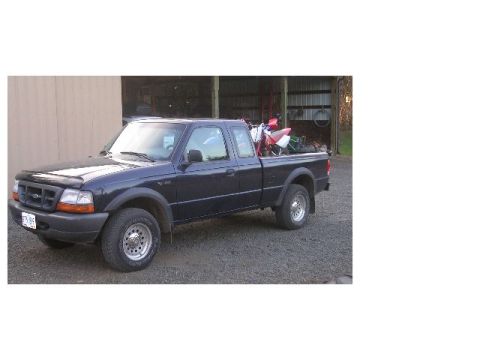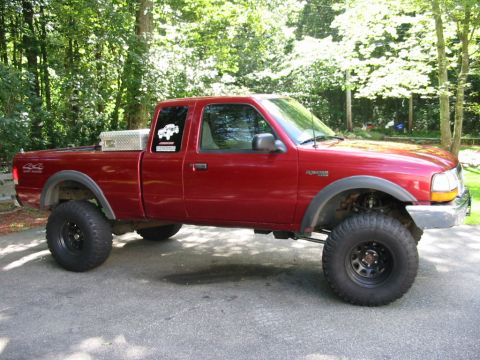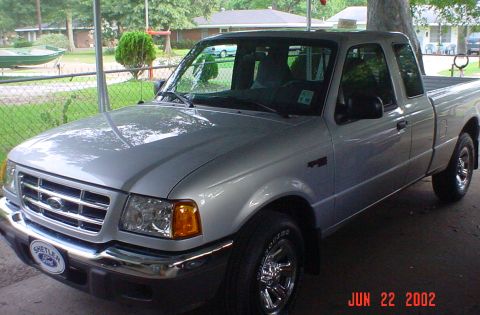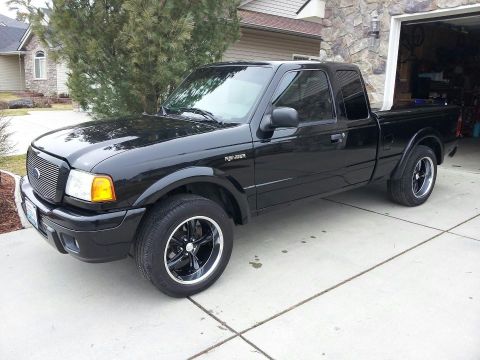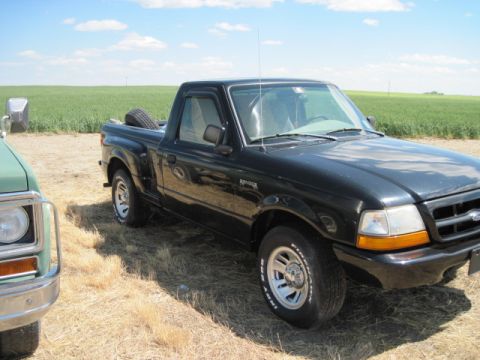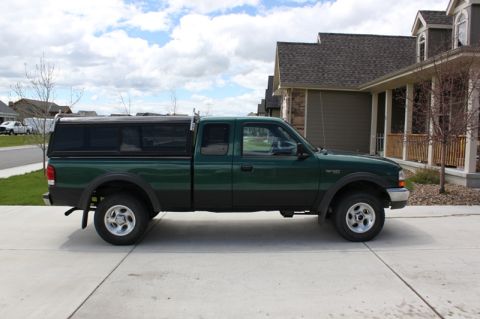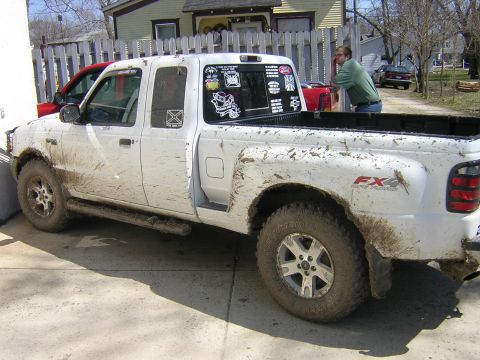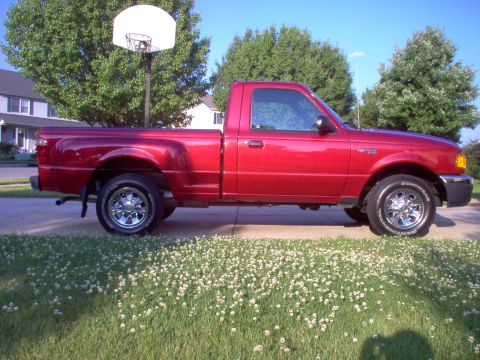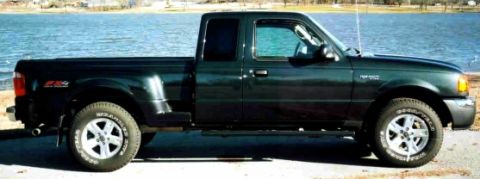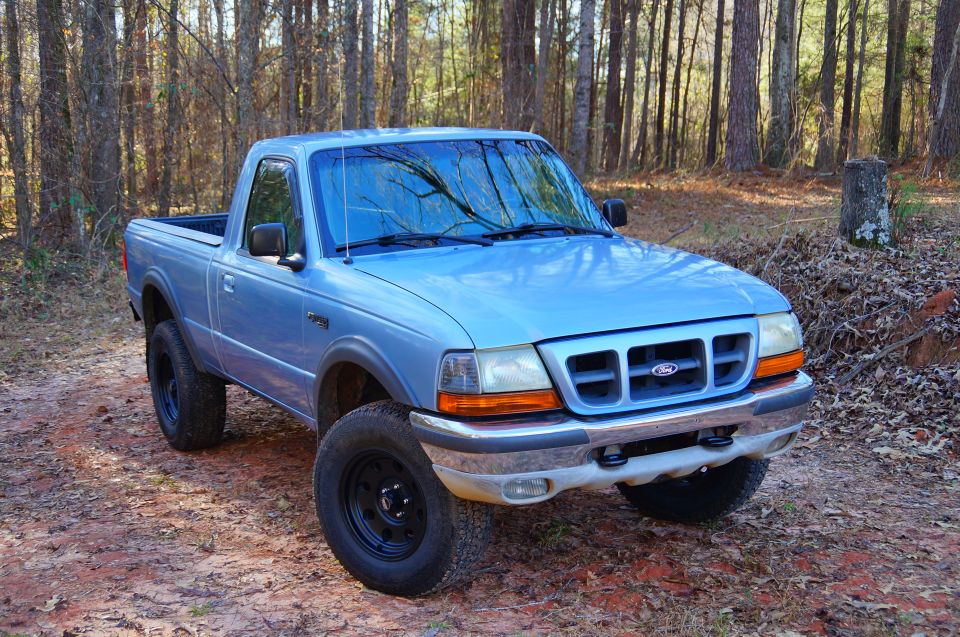
The 1998 model year brought the heavily reworked third-generation Ford Ranger, the longest-running version of the compact pickup. The 1998 Ford Ranger received a new frame and, most significantly, replaced the Twin-Traction-Beam four-wheel-drive front suspension used since 1983 with a short-and-long-arm (SLA) independent front, using coil springs on conventional two-wheel-drive models and torsion bars on four-wheel-drive models plus some raised two-wheel-drive configurations. The early third-generation engine lineup was the 2.5 four-cylinder, the 3.0 Vulcan V6, and the 4.0 OHV Cologne V6. For 2001 Ford modernized the engines: the 2.3 Duratec four replaced the 2.5, and the pushrod 4.0 gave way to the SOHC 4.0 Cologne V6 shared with the Ford Explorer, rated up to 207 horsepower. The third generation introduced the Edge and FX4 trims and offered both regular-cab and extended SuperCab bodies. Transmissions ranged from a five-speed manual to four-speed and five-speed automatics. The Ranger ran with only minor changes for 14 model years, becoming dated against newer rivals. Ford ended North American Ranger production at the Twin Cities Assembly Plant in Saint Paul, Minnesota on December 16, 2011, after which the US had no new Ranger until the 2019 return.
Other Ford Ranger generations
The 1998-2011 Ford Ranger at a glance
- Generation: third-generation Ford Ranger, the long-running compact pickup built across 14 model years
- Years: 1998 through 2011; the final North American Ranger was built December 16, 2011
- Four-cylinders: 2.5 four (1998-2001), replaced by the 2.3 Duratec four (from 2001)
- V6 engines: 3.0 Vulcan V6; 4.0 OHV Cologne V6 (1998-2000), replaced by the 4.0 SOHC Cologne V6 (from 2001, up to 207 hp)
- Front suspension: short-and-long-arm (SLA) independent front, replacing the Twin-Traction-Beam used through 1997; coil springs on 2WD, torsion bars on 4WD and some raised 2WD
- Transmissions: five-speed manual; four-speed and five-speed automatics
- Trims: XL, XLT, Sport, the car-like Edge, the off-road FX4, and the STX
- End of production: Twin Cities Assembly Plant, Saint Paul, Minnesota, December 16, 2011
Ford Ranger 1998-2011 year by year
| Year | Ford Ranger changes | Engines offered |
|---|---|---|
| 1998 | Third-generation Ford Ranger arrives with a new frame and a short-and-long-arm independent front suspension replacing the Twin-Traction-Beam | 2.5 I4; 3.0 Vulcan V6; 4.0 OHV Cologne V6 |
| 1999 | The third-generation Ford Ranger continues with its new chassis and three-engine lineup | 2.5 I4; 3.0 Vulcan V6; 4.0 OHV Cologne V6 |
| 2000 | Final year of the 4.0 OHV Cologne V6 in the Ford Ranger; the 2.5 four carries into 2001 before the 2.3 Duratec replaces it | 2.5 I4; 3.0 Vulcan V6; 4.0 OHV Cologne V6 |
| 2001 | The 2.3 Duratec four replaces the 2.5, and the SOHC 4.0 Cologne V6 replaces the pushrod 4.0; the car-like Edge trim debuts | 2.3 Duratec I4; 3.0 Vulcan V6; 4.0 SOHC Cologne V6 |
| 2002 | The Ford Ranger continues with the updated engine lineup and the Edge trim | 2.3 Duratec I4; 3.0 Vulcan V6; 4.0 SOHC Cologne V6 |
| 2003 | The off-road FX4 trim expands in the Ford Ranger lineup | 2.3 Duratec I4; 3.0 Vulcan V6; 4.0 SOHC Cologne V6 |
| 2004 | Exterior and interior refresh for the Ford Ranger | 2.3 Duratec I4; 3.0 Vulcan V6; 4.0 SOHC Cologne V6 |
| 2005 | The Ford Ranger continues with its refreshed styling and three engines | 2.3 Duratec I4; 3.0 Vulcan V6; 4.0 SOHC Cologne V6 |
| 2006 | The Ford Ranger carries over with minor equipment changes | 2.3 Duratec I4; 3.0 Vulcan V6; 4.0 SOHC Cologne V6 |
| 2007 | The Ford Ranger continues largely unchanged in the compact-pickup class | 2.3 Duratec I4; 3.0 Vulcan V6; 4.0 SOHC Cologne V6 |
| 2008 | Front-end and interior updates to the Ford Ranger; final model year for the 3.0 Vulcan V6 | 2.3 Duratec I4; 3.0 Vulcan V6; 4.0 SOHC Cologne V6 |
| 2009 | The 3.0 Vulcan V6 is dropped, narrowing the Ford Ranger to the 2.3 four and the 4.0 SOHC V6 | 2.3 Duratec I4; 4.0 SOHC Cologne V6 |
| 2010 | The Ford Ranger carries over with the 2.3 four and the 4.0 SOHC V6 | 2.3 Duratec I4; 4.0 SOHC Cologne V6 |
| 2011 | Final model year of the North American Ford Ranger; the last truck was built December 16, 2011 | 2.3 Duratec I4; 4.0 SOHC Cologne V6 |
What changed in the 1998 redesign
The 1998 Ford Ranger introduced the third generation with a new frame and, most significantly, a new front suspension. Ford abandoned the Twin-Traction-Beam four-wheel-drive front suspension it had used since 1983 and switched to a short-and-long-arm (SLA) independent front with upper and lower control arms, using coil springs on conventional two-wheel-drive models and torsion bars on four-wheel-drive models plus some raised two-wheel-drive configurations. This was the biggest chassis change in the Ranger's history. The 1998 redesign also widened the track and updated the body and interior, modernizing the compact pickup while keeping body-on-frame construction.
The 2001 engine modernization
For the 2001 model year the Ford Ranger modernized its engine lineup. The new 2.3 Duratec four, a dual-overhead-cam engine rated 135 horsepower at first and 143 horsepower in later years, replaced the older 2.5 four-cylinder during the 2001 model year. At the top of the range, Ford replaced the pushrod 4.0 OHV Cologne V6 with the SOHC 4.0 Cologne V6 shared with the Ford Explorer, rated up to 207 horsepower and 238 lb-ft of torque. The 3.0 Vulcan V6 continued as the mid-range engine. This 2001 update gave the Ranger its strongest powertrain of the generation and remained largely in place through the end of production, although the 3.0 Vulcan V6 was dropped after the 2008 model year.
Trims: Edge, FX4, and the rest
The third-generation Ford Ranger offered a range of trims beyond the work-grade XL and better-equipped XLT. The Edge, introduced for 2001, was a car-like trim with monochrome styling and a raised ride height in some configurations. The FX4 was the off-road trim, offered in standard and more capable Level II and Off-Road forms with skid plates, off-road shocks, and a limited-slip or locking rear differential depending on year. The Sport and STX trims rounded out the lineup. Body styles were the regular cab and the extended SuperCab; the third-generation North American Ranger did not offer a four-door crew cab.
The end of the original Ranger
The third-generation Ford Ranger ran for 14 model years with only minor updates, becoming dated against newer compact and midsize rivals. Ford built the truck at the Twin Cities Assembly Plant in Saint Paul, Minnesota, and ended North American Ranger production there on December 16, 2011. The final unit is commonly described as a 2012-model-year Ranger. After production ended, Ford sold no new Ranger in the United States for the 2012 through 2018 model years, even as a larger global Ranger continued in other markets. The Ranger nameplate returned to the United States for 2019 on the global T6 platform.
Frequently asked questions
What changed in the 1998 Ford Ranger redesign?
The 1998 Ford Ranger introduced the third generation with a new frame and a short-and-long-arm (SLA) independent front suspension, replacing the Twin-Traction-Beam four-wheel-drive front used since 1983. Conventional two-wheel-drive models used coil springs, while four-wheel-drive models and some raised two-wheel-drive configurations used torsion bars. It was the biggest chassis change in the Ranger's history.
What engines did the 1998-2011 Ford Ranger use?
The 1998-2011 Ford Ranger used the 2.5 four (1998-2001), replaced by the 2.3 Duratec four for 2001, plus the 3.0 Vulcan V6 and the 4.0 Cologne V6. The 4.0 was a pushrod OHV engine for 1998-2000 and a SOHC engine rated up to 207 horsepower from 2001. The 3.0 Vulcan V6 was dropped after the 2008 model year.
When did the original Ford Ranger end production?
The original North American Ford Ranger ended production at the Twin Cities Assembly Plant in Saint Paul, Minnesota on December 16, 2011. Ford sold no new Ranger in the United States for the 2012 through 2018 model years, until the Ranger returned for 2019.
What is the Ford Ranger FX4?
The Ford Ranger FX4 was the off-road trim of the third generation, offered in standard and more capable Level II and Off-Road forms. Depending on year it added skid plates, off-road-tuned shocks, and a limited-slip or locking rear differential to the four-wheel-drive Ranger.
Did the 1998-2011 Ford Ranger 4x4 use the Twin-Traction-Beam suspension?
No. The 1998 redesign replaced the Twin-Traction-Beam four-wheel-drive front suspension used through 1997 with a short-and-long-arm (SLA) independent front. The third-generation Ranger 4x4 used the SLA front for its entire 1998-2011 run.
Sources
- Ford factory specification sheets and shop manuals for the 1998-2011 Ranger
- Wikipedia, Ford Ranger (Americas), third generation
- CarBuzz, Ford Ranger third generation 1998-2011
- The Ranger Station, front-suspension and 4.0 V6 (OHV and SOHC) histories
- Twin Cities Assembly Plant production records (final Ranger, December 16, 2011)
Asked all the time
What changed in the 1998 Ford Ranger redesign?
The 1998 Ford Ranger introduced the third generation with a new frame and a short-and-long-arm (SLA) independent front suspension, replacing the Twin-Traction-Beam four-wheel-drive front used since 1983. Conventional two-wheel-drive models used coil springs, while four-wheel-drive models and some raised two-wheel-drive configurations used torsion bars. It was the biggest chassis change in the Ranger's history.
What engines did the 1998-2011 Ford Ranger use?
The 1998-2011 Ford Ranger used the 2.5 four (1998-2001), replaced by the 2.3 Duratec four for 2001, plus the 3.0 Vulcan V6 and the 4.0 Cologne V6. The 4.0 was a pushrod OHV engine for 1998-2000 and a SOHC engine rated up to 207 horsepower from 2001. The 3.0 Vulcan V6 was dropped after the 2008 model year.
When did the original Ford Ranger end production?
The original North American Ford Ranger ended production at the Twin Cities Assembly Plant in Saint Paul, Minnesota on December 16, 2011. Ford sold no new Ranger in the United States for the 2012 through 2018 model years, until the Ranger returned for 2019.
What is the Ford Ranger FX4?
The Ford Ranger FX4 was the off-road trim of the third generation, offered in standard and more capable Level II and Off-Road forms. Depending on year it added skid plates, off-road-tuned shocks, and a limited-slip or locking rear differential to the four-wheel-drive Ranger.
Did the 1998-2011 Ford Ranger 4x4 use the Twin-Traction-Beam suspension?
No. The 1998 redesign replaced the Twin-Traction-Beam four-wheel-drive front suspension used through 1997 with a short-and-long-arm (SLA) independent front. The third-generation Ranger 4x4 used the SLA front for its entire 1998-2011 run.
Technical Reference
Member-uploaded diagrams & documents for this generation. AI-classified; community-verified where badged.
Data/Spec Plates (1)
- 1998 Ford Ranger Door Jamb VIN Data Plate - GVWR, Tire Size & Axle CodesThis is a photograph of the factory Safety Compliance Certification Label (data/spec plate) affixed to the door jamb of a Ford truck. The label states the vehicle was manufactured in 11/97 by Ford Motor Co. in the…
Brochures & Literature (2)
- 1989-1993 Ford Thunderbird Supercharger Rebuilding Service - eBay ListingThis document is a printed eBay Motors listing page for a supercharger rebuilding service, filed under the category path eBay Motors > Parts & Accessories > Car & Truck Parts > Turbos, Nitrous, Superchargers >…
- Banshee Supercharger Kit by R.P. Caster - Installation Guide & Manual CoversThis photograph shows the covers of two printed installation guides for the Banshee Supercharger kit by R.P. Caster (RPCASTER / Banshee Supercharger, Inc). The top booklet is titled "Banshee Supercharger: Fuel Rails &…
Exploded Parts (2)
- Ford Ranger Pre-Runner Bumper Install Sheet IIS-5960-A (1989) Exploded DiagramThis document is a Ford factory installation instruction sheet (drawing/part number IIS-5960-A) for a pre-runner style front bumper accessory kit, apparently for the Ford Ranger (the title block is partially cut off…
- Ford Truck Front Bumper & Skid Plate Install Instructions - Exploded DiagramThis is a scanned, heavily creased factory-style installation instruction sheet showing an exploded parts diagram for a front bumper / brush guard (with skid plate) assembly on a Ford truck. The drawing shows the front…
Schematics (1)
- Driveline Angle Set Up Diagram - Driveshaft & U-Joint Angle SchematicThis document is a simple black-background schematic titled "Driveline Angle Set Up." It contains no tables, part numbers, or numeric specifications, only an illustrative side-view line drawing. The drawing depicts a…
The wall · registered 1998-2011 Rangers
Sorted by depth of documentation. Click any vehicle to open its permanent record.