Home/
Registry/
Mercury/
Cougar/
1967-1970/
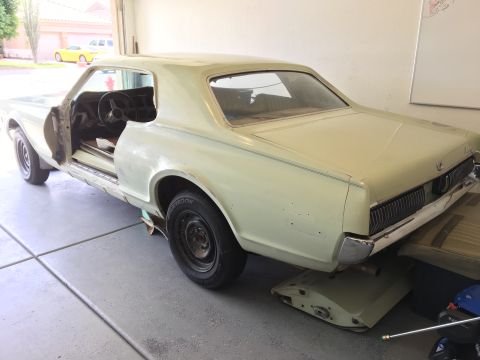
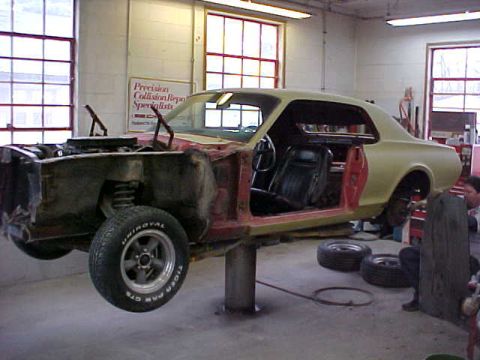
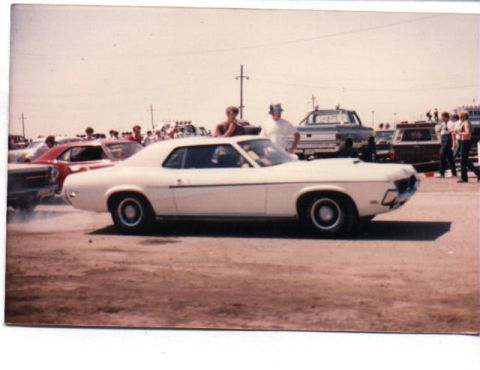
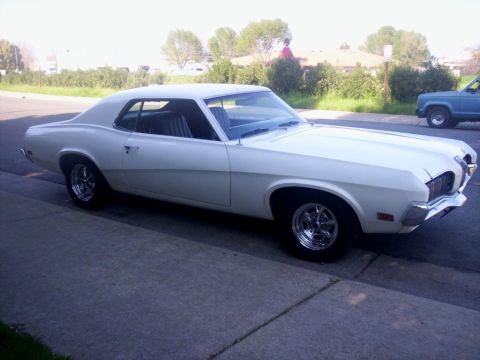
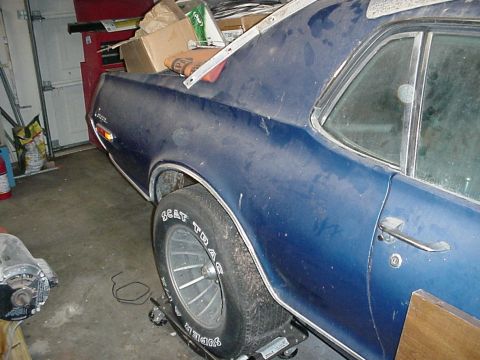
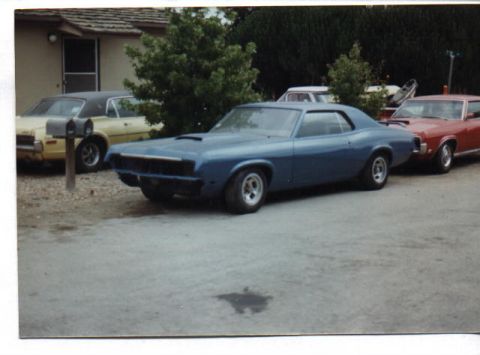
1968 Mercury Cougar/
Photo
supermotors.net/registry/media/1137904
1968 Ford 4-Pinion Locking Differential Service Procedure - 390/428 Traction-Lok

Service article on the new 4-pinion torque-sensitive (Traction-Lok type) locking differential for 1968 Mustang/Cougar/Fairlane/Montego with 9-inch and 428 CID engines; covers operation, disassembly and assembly with exploded view.
This is page one of a Ford service publication introducing the new 4-pinion torque sensitive locking differential, offered as optional equipment on 1968 Mustang, Cougar, Fairlane and Montego models equipped with 390 or 428 CID engines. The Description section explains that the unit uses a multiple disc clutch pack (four steel plates, four friction plates, and one composite plate on a clutch hub), shims, ear guides, calibrated pre-load springs, and a one-piece pre-load plate and block housed in the differential case and cover. The Operation section explains that the clutch slips during normal cornering but transfers torque to the wheel with the most traction on low-traction surfaces like snow, ice, or mud. Step-by-step Disassembly instructions (9 steps) cover removing the ring gear, compressing pre-load springs in a press (approx. 1,500 lbs.) or with 7/16" bolts, and removing clutch components and pinion shafts. Assembly steps (1-5 shown) begin with lubricating parts with Ford Hypoid Lubricant part no. C6AZ-19580-C. Figure 1 is an exploded-view diagram labeling all components with Ford basic part numbers, including ring gear 4209, differential case 4204, pinion shafts 4211/44207, clutch hub, friction plates 4945, steel plates 4947, and shims 4A324.
Is this accurate? Sign in to help verify it.
Frequently asked questions
- Which 1968 models offered the 4-pinion torque sensitive locking differential?
- It was available as optional equipment on 1968 Mustang, Cougar, Fairlane and Montego models equipped with a 390 or 428 CID engine.
- How much press force is needed to overcome the differential pre-load springs during disassembly?
- Approximately 1,500 lbs. If a press is not available, two 7/16" bolts and nuts can be used in the ring gear mounting holes to compress the case halves.
- What lubricant does Ford specify for assembling this locking differential?
- Ford Hypoid Lubricant, Ford Part No. C6AZ-19580-C, or equivalent, used on all parts during assembly.
- How does the locking differential work in slippery conditions?
- When one or both wheels are on a low traction surface such as snow, ice or mud, friction between the clutch plates transfers a portion of the usable torque to the wheel with the most traction; under normal cornering the clutch slips to allow normal differential action.
- What clutch components are inside the differential?
- Four steel plates, four friction plates, one composite plate (steel on one side, friction material on the other) stacked on a clutch hub, plus shims, four ear guides, four calibrated pre-load springs and a one-piece pre-load plate and block.
Comments
More from this build
No comments yet.