SuperMotors SuperMotors SUPERMOTORS Search: try “orange Bronco on 35s”
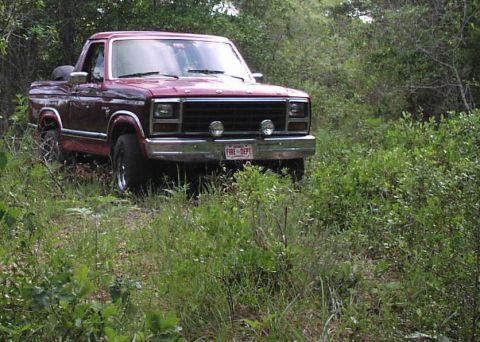
Home/ Registry/ Ford/ Bronco/ 1980-1986/ “That dirty old truck”/ Photo supermotors.net/registry/media/240148

On-car brake lathe. The motor is turned on, the automatic calib…

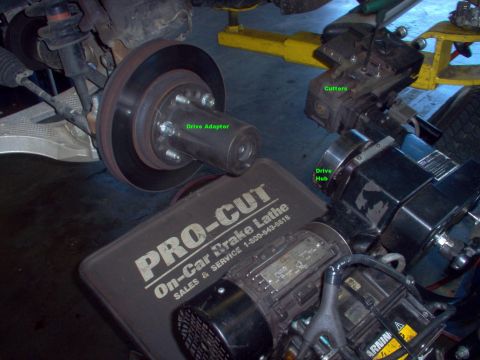
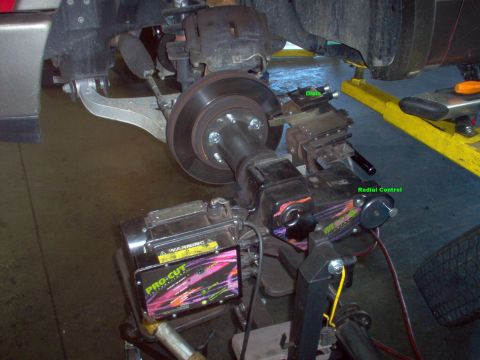
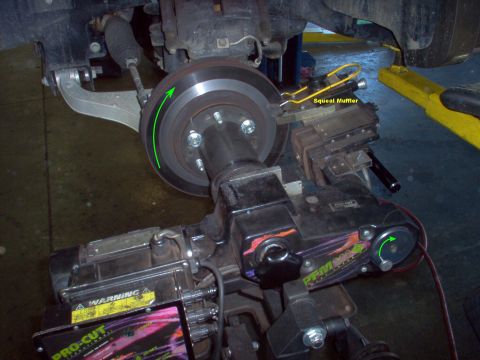
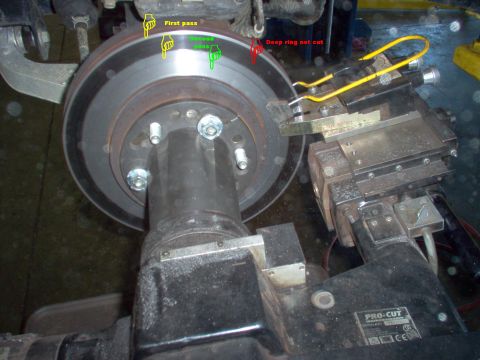
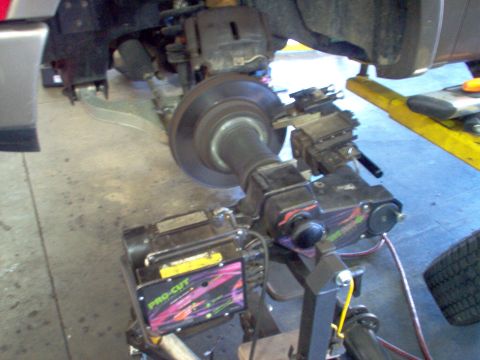
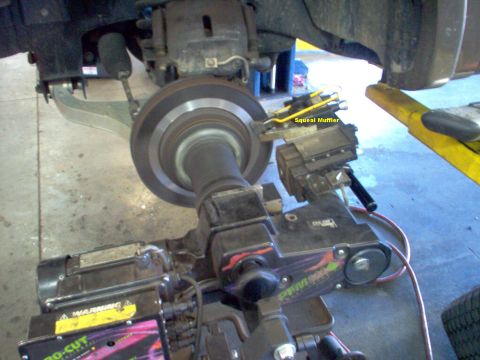
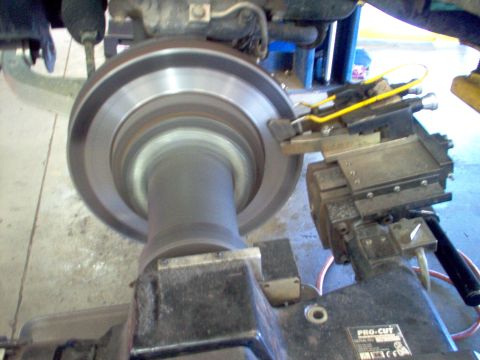
On-car brake lathe.  The motor is turned on, the automatic calibration process finishes, & the cutters are set to the rotor's surfaces.  Then they are positioned at the inner edge of the rotor & tightened 3 counts each.

The depth of cut should be between 0.10 and 0.20 mm (0.004 and 0.008 in). Lighter cuts will cause the bit to heat up and wear faster. Heavier cuts will cause poor brake disc surface finish.
On-car brake lathe. The motor is turned on, the automatic calibration process finishes, & the cutters are set to the rotor's surfaces. Then they are positioned at the inner edge of the rotor & tightened 3 counts each. The depth of cut should be between 0.10 and 0.20 mm (0.004 and 0.008 in). Lighter cuts will cause the bit to heat up and wear faster. Heavier cuts will cause poor brake disc surface finish.Original file
On-car brake lathe.  The motor is turned on, the automatic calibration process finishes, & the cutters are set to the rotor's surfaces.  Then they are positioned at the inner edge of the rotor & tightened 3 counts each.

The depth of cut should be between 0.10 and 0.20 mm (0.004 and 0.008 in). Lighter cuts will cause the bit to heat up and wear faster. Heavier cuts will cause poor brake disc surface finish.

On-car brake lathe. The motor is turned on, the automatic calibration process finishes, & the cutters are set to the rotor's surfaces. Then they are positioned at the inner edge of the rotor & tightened 3 counts each.

The depth of cut should be between 0.10 and 0.20 mm (0.004 and 0.008 in). Lighter cuts will cause the bit to heat up and wear faster. Heavier cuts will cause poor brake disc surface finish.

Owner caption · Photo 978 of 6546

Is this accurate? Sign in to help verify it.
Comments

No comments yet.

More 1980-1986 Broncos