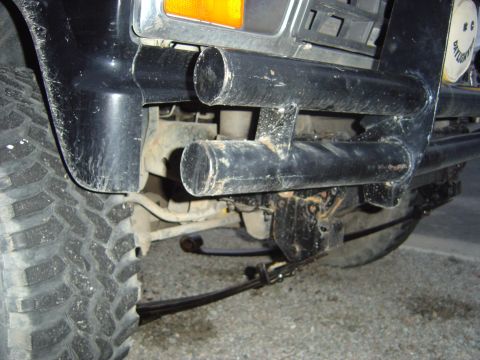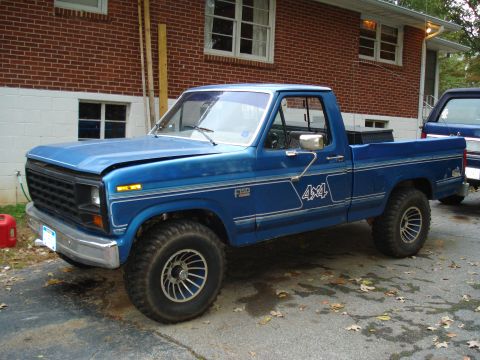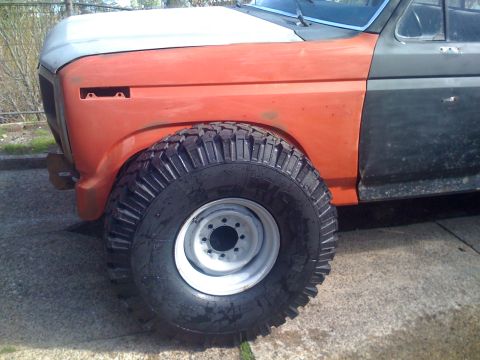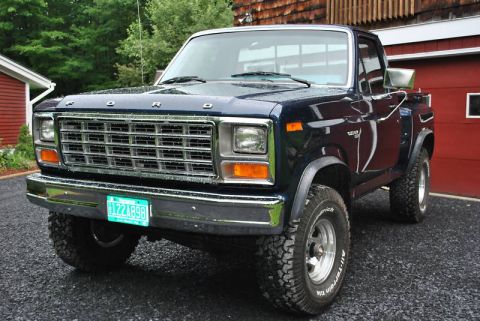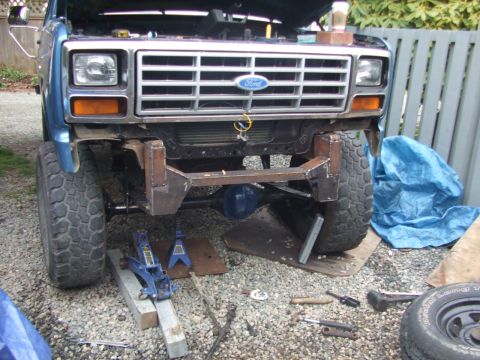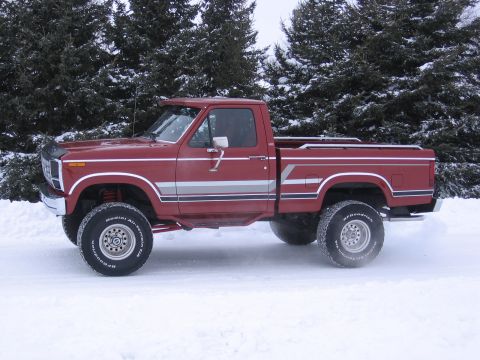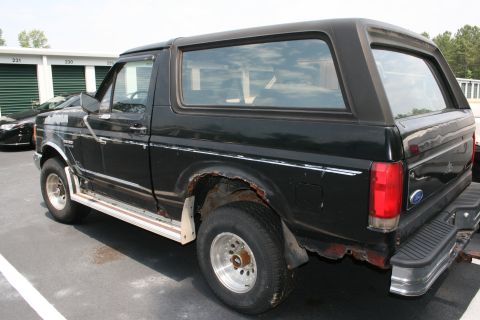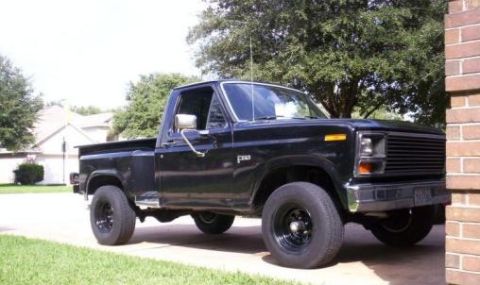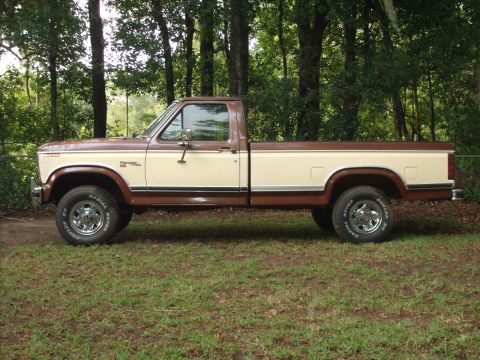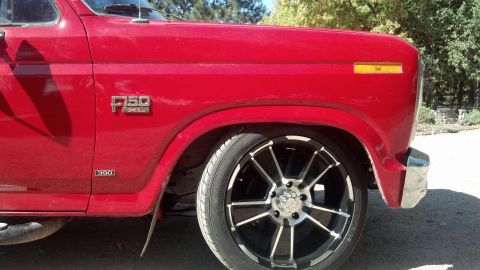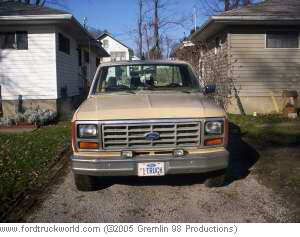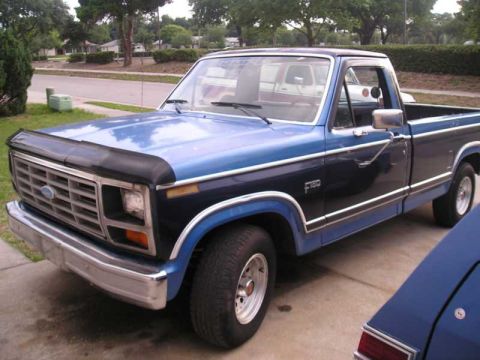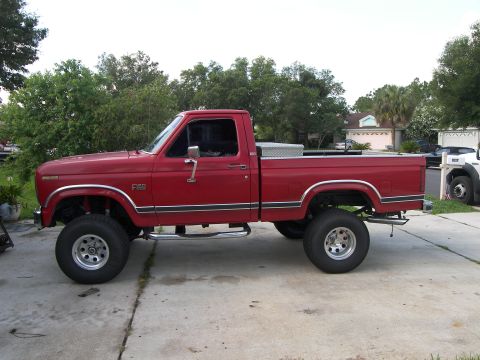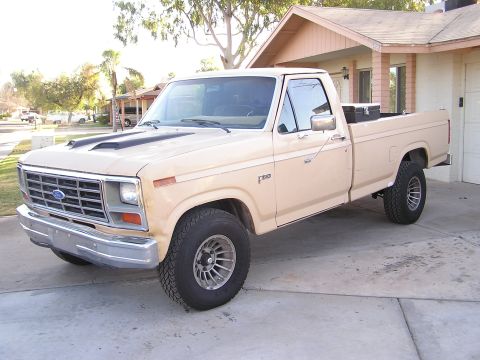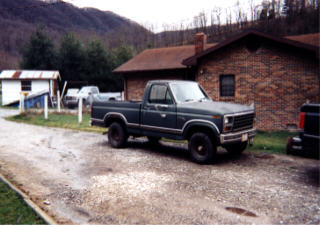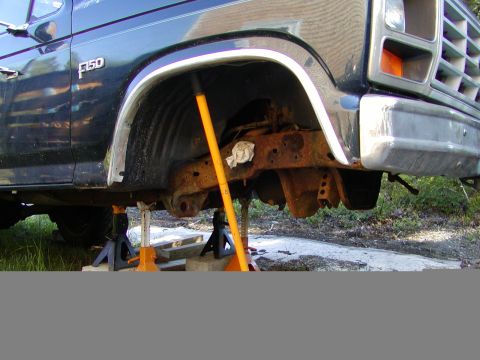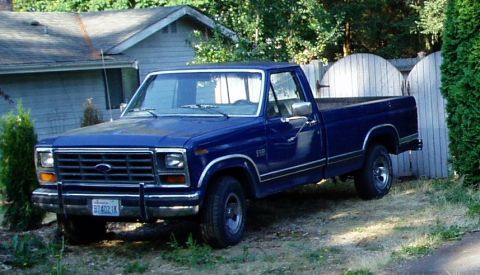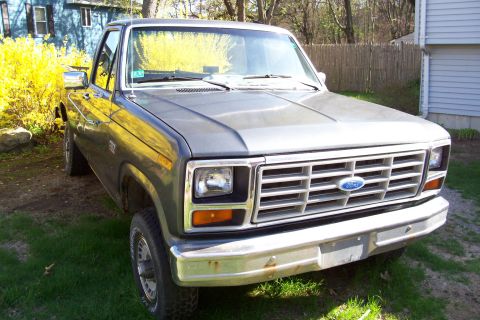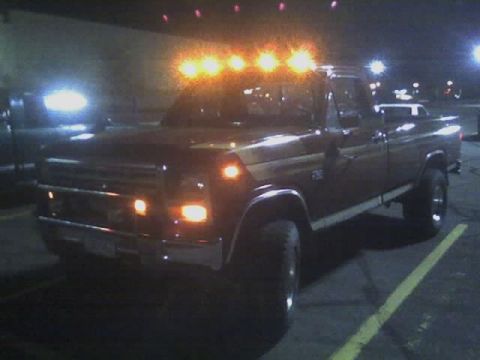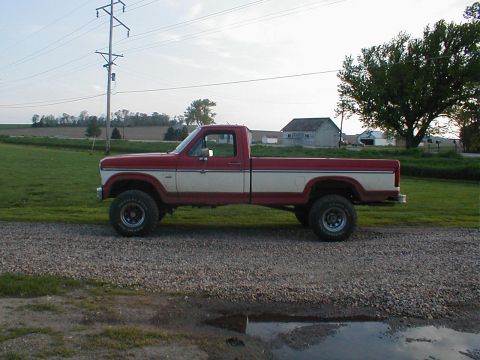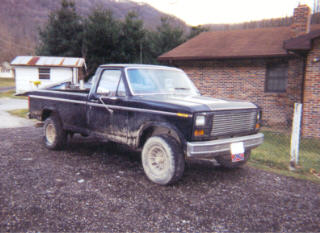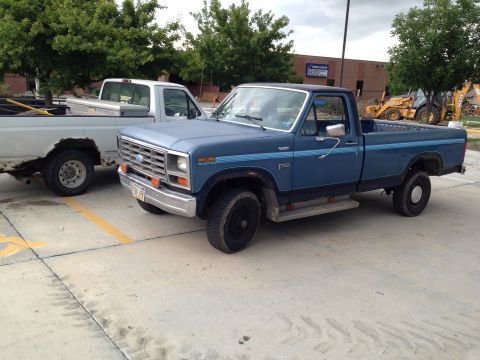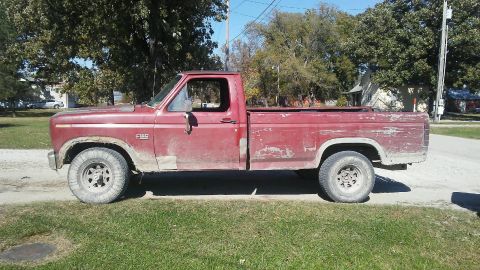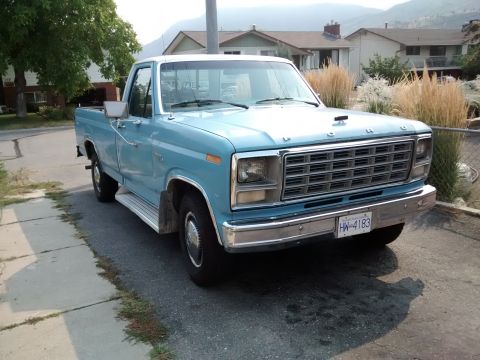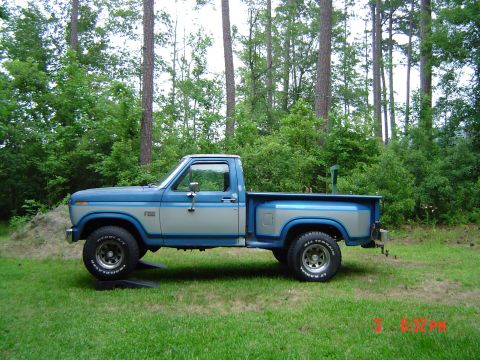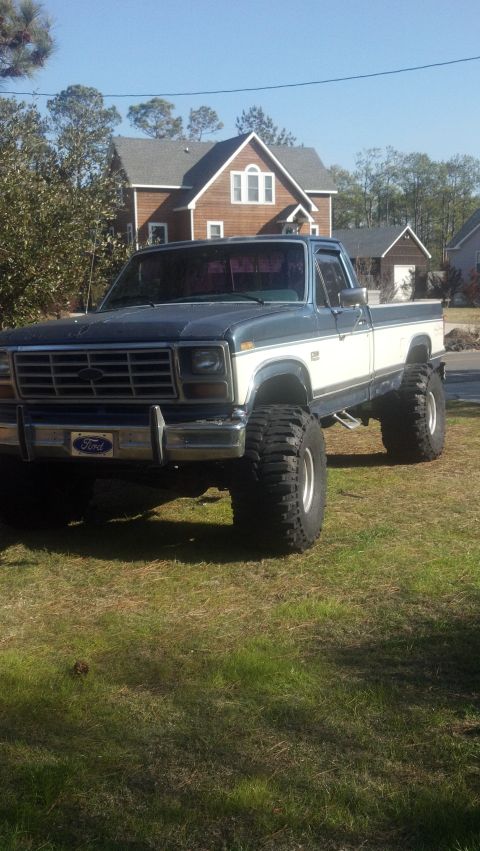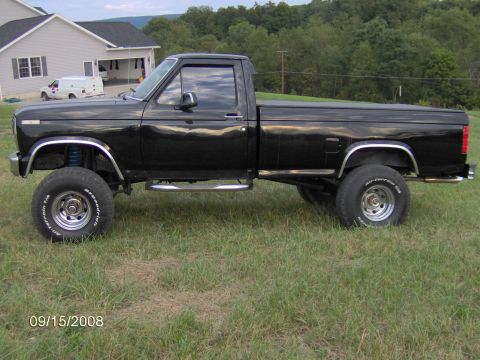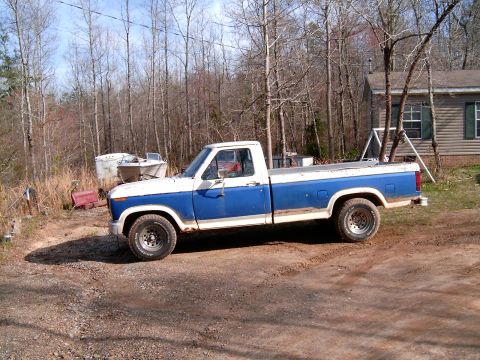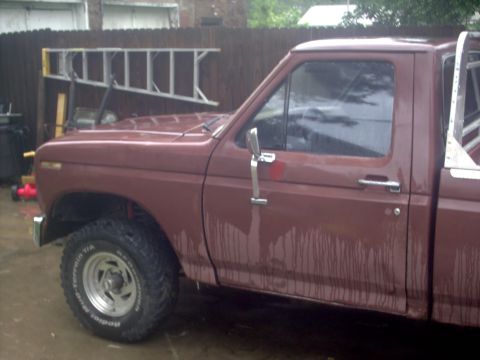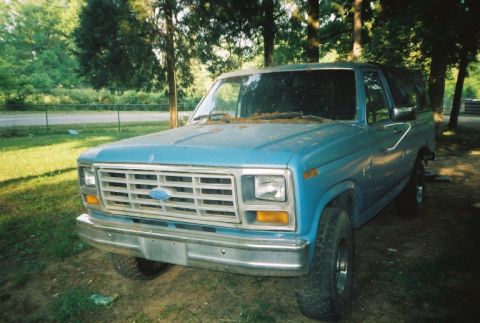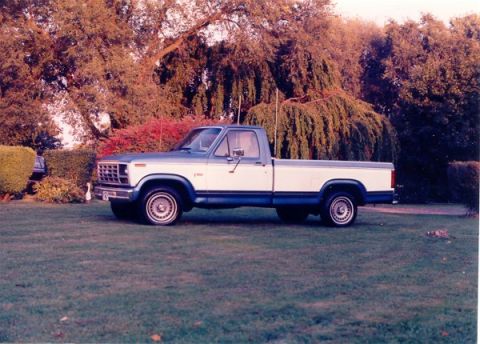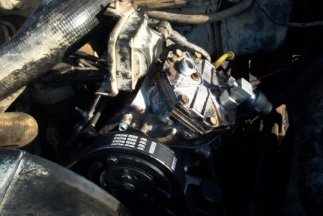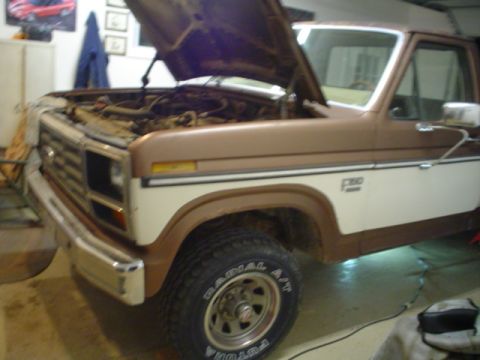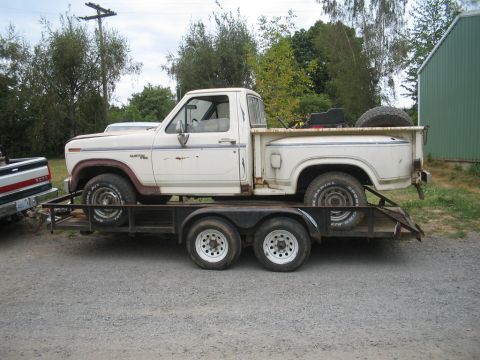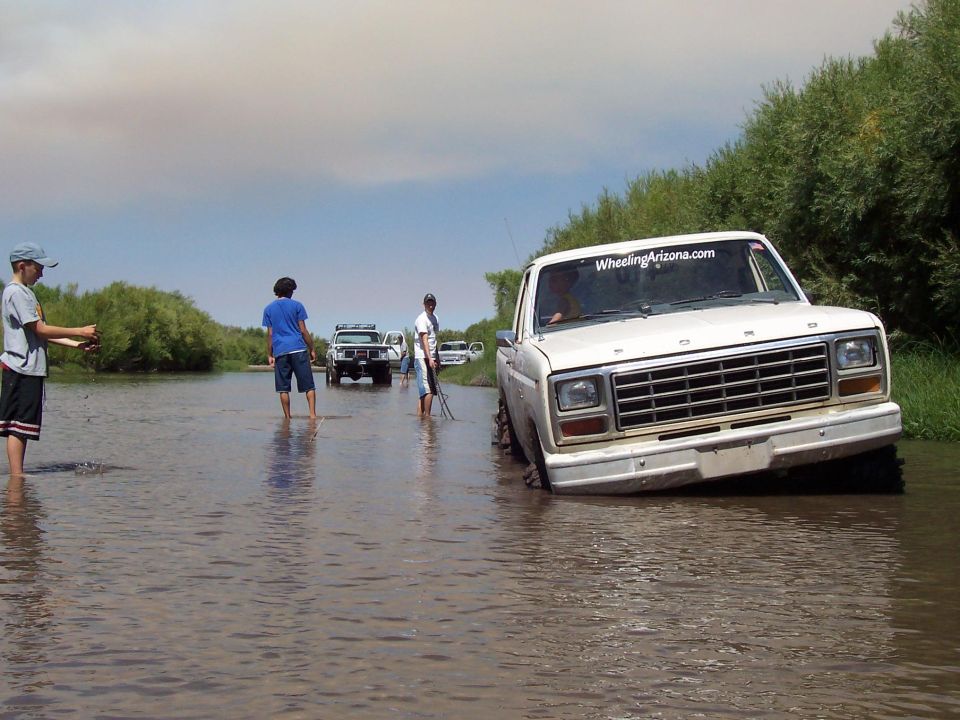
The 1980-1986 Ford F-150 is the seventh-generation F-Series, known among owners as the Bullnose for its rounded grille and faired-in headlamps. For 1980 Ford gave the F-Series an all-new cab, body, and chassis, the first ground-up redesign of the line since 1965, with flatter panels and a sloped hood shaped to cut drag and improve fuel economy after the 1970s oil shocks. The most significant chassis change for the Ford F-150 was the arrival of Twin-Traction Beam (TTB) independent front suspension on the 4x4 for 1980, built around a Dana 44 front axle, while two-wheel-drive trucks used the related Twin-I-Beam layout. The engine range centered on the 300-cubic-inch (4.9L) inline-six as the base unit, with the 302 (5.0L) Windsor V8 above it. For 1980 the larger V8 was the carried-over M-series (351M/400), and the lighter 351 Windsor replaced the M-series V8s during the generation as a fuel-economy move; the 460 was not offered in the half-ton in these years. Mid-generation the Ford F-150 moved toward fuel injection: the 302 gained central fuel injection for 1985 and sequential electronic fuel injection for 1986.
Other Ford F-150 generations
At a glance: 1980-1986 Ford F-150
- Generation: seventh-generation F-Series, nicknamed the "Bullnose"
- Years: 1980 through 1986 model years
- What changed for 1980: all-new cab, body, and chassis, the first full F-Series redesign since 1965, with an aero-influenced sloped hood and flush headlamps
- Front suspension: Twin-Traction Beam (Dana 44) independent front suspension arrived on the F-150 4x4 for 1980; the 2WD used Twin-I-Beam
- Base engine: 300-cubic-inch (4.9L) inline-six
- V8s: 302 (5.0L) and 351 Windsor (5.8L); the 351M and 400 M-series V8s and the 460 were dropped from the half-ton early in the run
- Fuel injection: the 302 gained central fuel injection (CFI) for 1985 and sequential electronic fuel injection for 1986
- Diesel: the 6.9L IDI diesel arrived for 1983 in the heavier F-250 and F-350, not in the half-ton F-150
Ford F-150 1980-1986 year by year
| Model year | Key changes to the Ford F-150 |
|---|---|
| 1980 | Seventh-generation Ford F-150 launches with an all-new cab, body, and chassis, the first full F-Series redesign since 1965. Twin-Traction Beam (Dana 44) independent front suspension debuts on the 4x4; the 2WD uses Twin-I-Beam. Engines include the 300 inline-six, the 302 Windsor V8, and the carried-over M-series 351M and 400 V8s; the 351 Windsor replaced the M-series V8s later in the generation. |
| 1981 | The 1981 Ford F-150 adds the small-bore 255 V8 as a fuel-economy option while the M-series 351M and 400 V8s carry over; Ford dropped the M-series engines after 1982, and the lighter 351 Windsor took over as the 5.8L V8. Ford's AOD four-speed automatic overdrive transmission becomes available with the 302. |
| 1982 | The 1982 Ford F-150 receives a mildly revised grille with fewer vertical bars, and the Ford Blue Oval appears on the grille for the first time, replacing the block "FORD" lettering on the hood. The trim lineup is reshuffled. |
| 1983 | The 6.9L International-built IDI V8 diesel becomes available across the F-Series for 1983, but in the heavier F-250 and F-350 rather than the half-ton Ford F-150. The 300 inline-six and 302 and 351 Windsor V8s continue in the F-150. |
| 1984 | The 1984 Ford F-150 trim structure is trimmed to three levels as the XLS package is dropped. The 300 inline-six remains the base engine with the 302 and 351 Windsor V8s above it. |
| 1985 | The 1985 Ford F-150 gains central fuel injection (CFI) on the 302 (5.0L) V8, an early step away from the carburetor. The XLT Lariat returns as the top trim above XL and the base trim. |
| 1986 | The 1986 Ford F-150 moves the 302 (5.0L) to sequential electronic fuel injection with an injector for each cylinder, the final year of the Bullnose generation before the 1987 aero refresh. |
The 1980 redesign and the Bullnose nickname
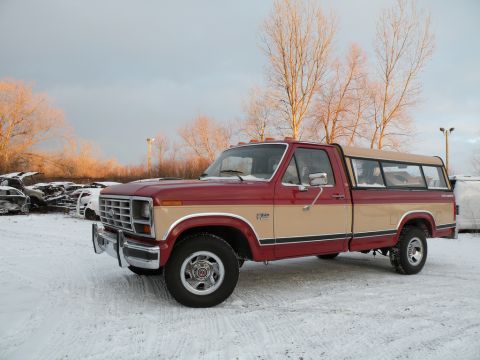
For the 1980 model year the Ford F-150 was part of a complete F-Series redesign, the first ground-up change to the line since 1965. Ford gave the trucks a new cab, new sheet metal, and a new chassis, with flatter body sides, a sloped hood, and a squared-off grille that faired the headlamps into the front end. The shape was driven by fuel economy: after the fuel-price increases of the 1970s, Ford reworked the front end and body to reduce aerodynamic drag. Owners later named the 1980-1986 trucks the "Bullnose" for that rounded, tapered front. The nickname is a community term, not a Ford marketing name.
Twin-Traction Beam: the 1980 Ford F-150 4x4 front suspension
The defining chassis change of the 1980 Ford F-150 was the front suspension on four-wheel-drive trucks. For 1980 the F-150 4x4 adopted Ford's Twin-Traction Beam (TTB) independent front suspension, built around a Dana 44 front axle. TTB used two stamped-steel beams that each pivoted from the opposite side of the frame, giving each front wheel independent travel while keeping a driven front axle. It was the four-wheel-drive counterpart to the Twin-I-Beam front suspension that two-wheel-drive F-150s used. The TTB front end stayed on the F-150 4x4 from 1980 through the 1996 model year, well past the end of the Bullnose generation, before the 1997 redesign replaced it with an 8.8-inch independent front suspension.
Engines of the 1980-1986 Ford F-150
The base engine of the 1980-1986 Ford F-150 was the 300-cubic-inch (4.9L) inline-six, the engine most associated with the truck's durability and the most common choice in these years. Above it sat the 302 (5.0L) Windsor V8. For 1980 the larger V8 was the carried-over M-series (the 351M and the 400), which Ford dropped early in the run as it shifted toward lighter, more fuel-efficient engines; the lighter 351 (5.8L) Windsor V8 replaced the M-series during the generation. The 460 big-block was no longer offered in the half-ton F-150 after the prior generation. A small-bore 255 V8, essentially a fuel-economy version of the 302, appeared briefly at the start of the 1980s before being dropped for being underpowered. The 6.9L IDI diesel V8, built for Ford by International Harvester, arrived across the F-Series for 1983 but in the heavier F-250 and F-350, not in the half-ton F-150.
The 302 moves to fuel injection: 1985 and 1986
Late in the Bullnose run the Ford F-150's 302 (5.0L) V8 moved off the carburetor. For 1985 the 302 gained central fuel injection (CFI), a throttle-body-style system that placed injectors in a central housing on the intake. For 1986 the 302 advanced to sequential electronic fuel injection, with an injector for each cylinder, the same year that marked the last of the seventh-generation trucks before the 1987 aero refresh brought broader changes. The 300 inline-six remained carbureted through the end of this generation.
Trim levels and mid-cycle updates
The 1980-1986 Ford F-150 ran the familiar F-Series trim ladder, from a base work trim up through XL, XLT, and the Lariat name, with the exact lineup shuffled several times during the generation. The clearest visual update came for 1982, when Ford revised the grille and moved the Blue Oval onto the front of the truck for the first time, replacing the block "FORD" letters that had run across the hood. The trim structure was reduced to three levels for 1984 with the XLS package dropped, and for 1985 the XLT Lariat returned as the top trim above XL and the base model. These updates were styling and trim changes within the same seventh-generation body that ran from 1980 to 1986.
Frequently asked questions
What years is the Bullnose Ford F-150?
The Bullnose Ford F-150 covers the 1980 through 1986 model years, the seventh generation of the F-Series. "Bullnose" is an enthusiast nickname for the rounded, tapered front end of these trucks, not an official Ford name. The 1987 model year began the next, more rounded "aero" generation.
When did the Ford F-150 get Twin-Traction Beam front suspension?
The Ford F-150 4x4 gained Twin-Traction Beam (TTB) independent front suspension, built around a Dana 44 front axle, for the 1980 model year. Two-wheel-drive F-150s of the era used the related Twin-I-Beam layout. The TTB front end stayed on the F-150 4x4 from 1980 through 1996.
What engines came in the 1980-1986 Ford F-150?
The 1980-1986 Ford F-150 used the 300-cubic-inch (4.9L) inline-six as the base engine, with the 302 (5.0L) and 351 Windsor (5.8L) V8s above it. The M-series 351M and 400 V8s were dropped early in the generation, and the 460 was not offered in the half-ton F-150 in these years. The 6.9L diesel of 1983 went to the F-250 and F-350, not the F-150.
When did the Ford F-150 302 get fuel injection?
The Ford F-150's 302 (5.0L) V8 gained central fuel injection (CFI) for the 1985 model year, then moved to sequential electronic fuel injection, with an injector per cylinder, for 1986. The 300 inline-six stayed carbureted through the end of the 1980-1986 generation.
What changed on the 1982 Ford F-150?
The 1982 Ford F-150 received a revised grille and, for the first time, the Ford Blue Oval on the front of the truck, replacing the block "FORD" lettering on the hood. The trim lineup was also reshuffled. These were updates within the same seventh-generation body introduced for 1980.
Sources
- Ford factory specification sheets and shop manuals for the 1980-1986 F-Series
- Wikipedia, "Ford F-Series (seventh generation)"
- Generation reference histories of the 1980-1986 Bullnose F-Series, including engine and trim records
- Dana 44 Twin-Traction Beam axle references and VIN and data-plate decoding for engine and axle identification
- International Harvester 6.9L IDI diesel production records
Asked all the time
What years is the Bullnose Ford F-150?
The Bullnose Ford F-150 covers the 1980 through 1986 model years, the seventh generation of the F-Series. "Bullnose" is an enthusiast nickname for the rounded, tapered front end of these trucks, not an official Ford name. The 1987 model year began the next, more rounded "aero" generation.
When did the Ford F-150 get Twin-Traction Beam front suspension?
The Ford F-150 4x4 gained Twin-Traction Beam (TTB) independent front suspension, built around a Dana 44 front axle, for the 1980 model year. Two-wheel-drive F-150s of the era used the related Twin-I-Beam layout. The TTB front end stayed on the F-150 4x4 from 1980 through 1996.
What engines came in the 1980-1986 Ford F-150?
The 1980-1986 Ford F-150 used the 300-cubic-inch (4.9L) inline-six as the base engine, with the 302 (5.0L) and 351 Windsor (5.8L) V8s above it. The M-series 351M and 400 V8s were dropped early in the generation, and the 460 was not offered in the half-ton F-150 in these years. The 6.9L diesel of 1983 went to the F-250 and F-350, not the F-150.
When did the Ford F-150 302 get fuel injection?
The Ford F-150's 302 (5.0L) V8 gained central fuel injection (CFI) for the 1985 model year, then moved to sequential electronic fuel injection, with an injector per cylinder, for 1986. The 300 inline-six stayed carbureted through the end of the 1980-1986 generation.
What changed on the 1982 Ford F-150?
The 1982 Ford F-150 received a revised grille and, for the first time, the Ford Blue Oval on the front of the truck, replacing the block "FORD" lettering on the hood. The trim lineup was also reshuffled. These were updates within the same seventh-generation body introduced for 1980.
Technical Reference
Member-uploaded diagrams & documents for this generation. AI-classified; community-verified where badged.
Vacuum Routing (3)
- Ford emission control information decal, non-catalyst, code BEA, with timing, idle and fast idle specs and vacuum hose routing diagram.
- Weathered 1984 emissions decal showing color-coded vacuum hose routing between carb, EGR, PCV, SOL V solenoids and VRESER, with gap .042-.046.
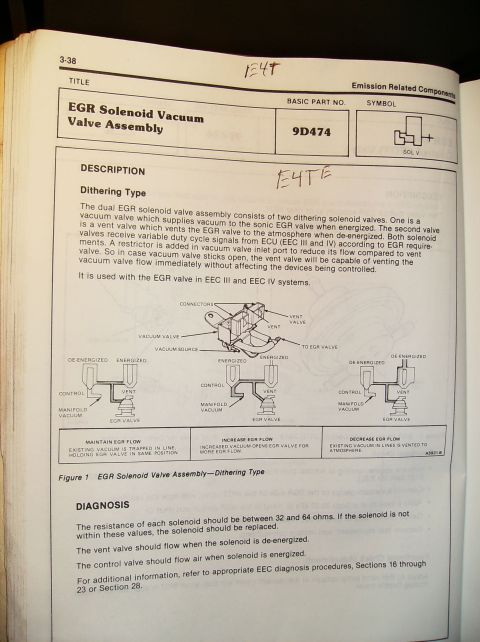
- Manual page 3-38 on the 9D474 dithering EGR solenoid vacuum valve, with maintain, increase and decrease EGR flow diagrams and 32-64 ohm check.
Wiring Diagrams (2)
- Ford Duraspark II Ignition Wiring Diagram - Reduced Voltage Coil (Blue Connector)This is a color-coded wiring diagram by MustangSteve (mustangsteve.com) showing how to wire a Ford Duraspark II ignition module (the version with the blue connector) into a vehicle, commonly referenced for Duraspark…
- 1985 Ford F-150 Auxiliary Reverse Light Switch Wiring Diagram - Relay TriggerThis is a simple hand-drawn wiring sketch (filename switch.JPG) showing how to wire a six-terminal switch, likely for an auxiliary lighting or relay-triggering setup. The switch is drawn as a rectangle with six…
Manual Pages (2)
- Emission Related Components page 3-35 describing the 9D474 Dual Thermactor Air Control Solenoid Valve (TAB and TAD), with photo and 51-108 ohm coil spec.
- Manual page 3-40 showing 9D474 normally open and normally closed solenoid valve assemblies for Thermactor dump/diverter, choke pull-down and A/C kicker.
Data/Spec Plates (1)
The wall · registered 1980-1986 F-150s
Sorted by depth of documentation. Click any vehicle to open its permanent record.