Home/
Registry/
Ford/
Mustang/
1979-1993/
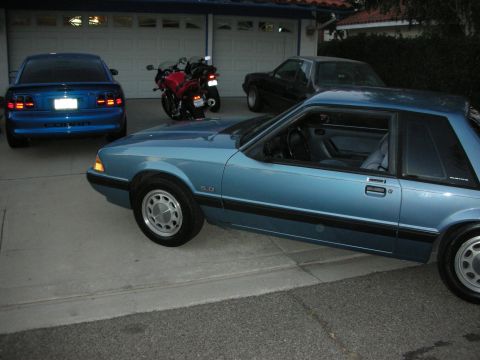
1990 Ford Mustang/
Photo
supermotors.net/registry/media/423111
Ford 289/302/351W/351C Cylinder Head Water Passage & Rocker Stud Modification Guide
Reference · 1979-1993 MustangAll 3 service procedures
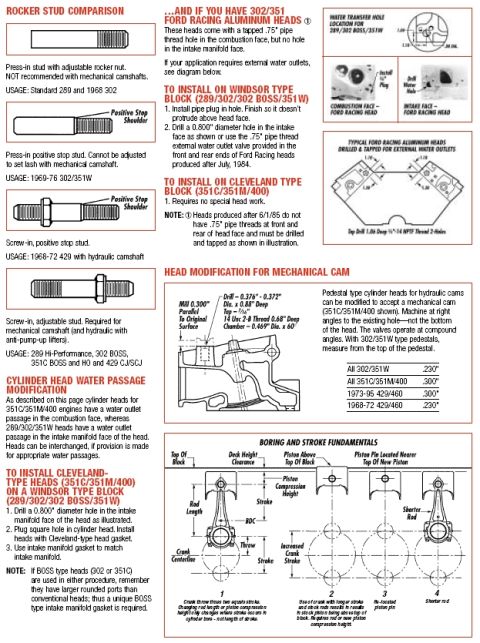
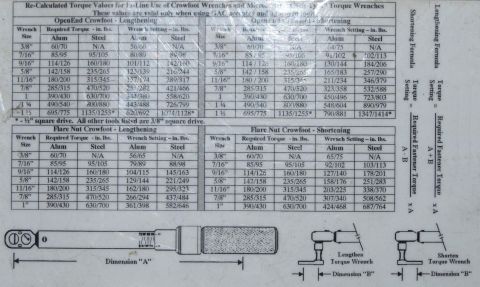
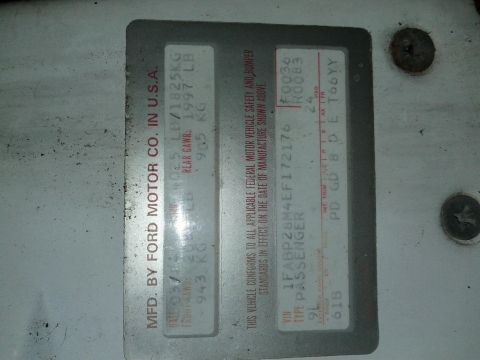
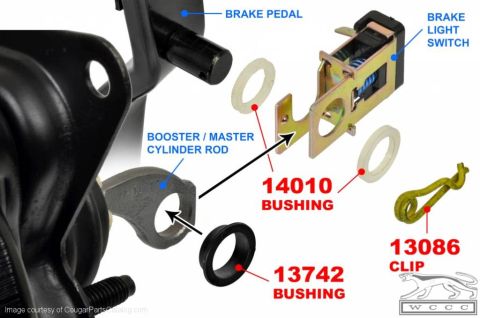
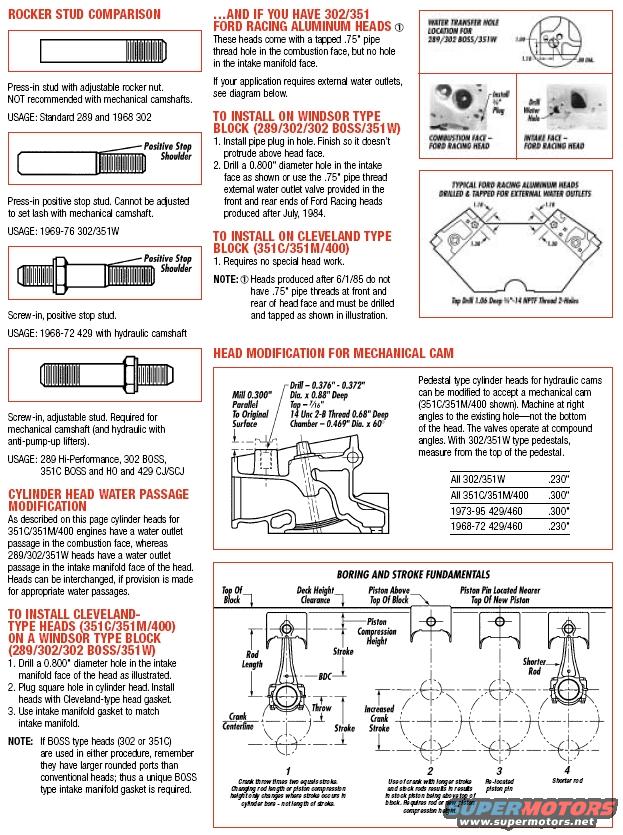
Service-procedure page detailing rocker stud types, Windsor/Cleveland head installation steps, head modification, and boring/stroke fundamentals with figures.
Part of 1979-1993 Ford Mustang Service Procedures
This page is an engine-building technical reference (likely from a Ford Racing/Motorsport catalog) covering small-block and big-block Ford cylinder head topics. A "Rocker Stud Comparison" section illustrates four stud types: press-in adjustable (standard 289 and 1968 302), press-in positive-stop (1969-76 302/351W), screw-in positive-stop (1968-72 429 hydraulic cam), and screw-in adjustable (289 Hi-Po, 302 BOSS, 351C BOSS/HO, 429 CJ/SCJ), noting which are compatible with mechanical camshafts. It then explains cylinder head water passage differences between Cleveland (351C/351M/400) and Windsor (289/302/351W) heads and gives step-by-step instructions for installing Cleveland-type heads on Windsor blocks, including drilling a 0.800" hole in the intake manifold face. Instructions are also given for Ford Racing 302/351 aluminum heads, which have a tapped .75" pipe thread hole in the combustion face; diagrams show water transfer hole locations and tapping specs (¾"-14 NPTF, tap drill 1.06" deep). A "Head Modification for Mechanical Cam" section provides machining dimensions (mill 0.300", drill 0.376-0.372" x 0.88" deep, tap 7/16-14 UNC) with a table of pedestal measurement dimensions by engine family. Finally, "Boring and Stroke Fundamentals" illustrates how crank throw, rod length, piston pin location, and compression height interact when changing stroke.
Is this accurate? Sign in to help verify it.
Frequently asked questions
- Which Ford rocker studs are compatible with a mechanical camshaft?
- Only the screw-in, adjustable stud is recommended for mechanical camshafts (used on 289 Hi-Performance, 302 BOSS, 351C BOSS and HO, and 429 CJ/SCJ). Press-in studs are not recommended, and positive-stop studs cannot be adjusted to set lash with a mechanical cam.
- How do you install Cleveland-type heads (351C/351M/400) on a Windsor block (289/302/351W)?
- Drill a 0.800" diameter hole in the intake manifold face of the head, plug the square hole in the cylinder head, install the heads with a Cleveland-type head gasket, and use an intake manifold gasket that matches the intake manifold. BOSS-type heads require a unique BOSS-type intake gasket due to larger rounded ports.
- What machining is needed to convert hydraulic-cam pedestal heads for a mechanical cam?
- Mill 0.300" parallel to the original surface, drill 0.376"-0.372" dia. x 0.88" deep, tap 7/16-14 UNC 2-B thread 0.68" deep, and chamfer 0.469" dia. x 60°. Measurement dimensions: all 302/351W.230", all 351C/351M/400.300", 1973-95 429/460.300", 1968-72 429/460.230".
- Do Ford Racing 302/351 aluminum heads need modification on a Windsor block?
- Yes. Install a pipe plug in the.75" pipe thread hole in the combustion face (finished flush), then either drill a 0.800" hole in the intake face or use the.75" pipe thread external water outlet provided in the front and rear ends of heads produced after July 1984. Heads produced after 6/1/85 lack the.75" pipe threads and must be drilled and tapped per the illustration.
- What determines engine stroke, the crankshaft or the connecting rod?
- Crank throw times two equals stroke. Changing rod length or piston compression height only changes where the stroke occurs in the cylinder bore, not the length of the stroke.


No comments yet.