1989 Ford Taurus SHO Yamaha V6 Engine Article - Hot Rod Dec 1988, Page 70

Reference · 1992-1995 TaurusAll 40 brochures & literature
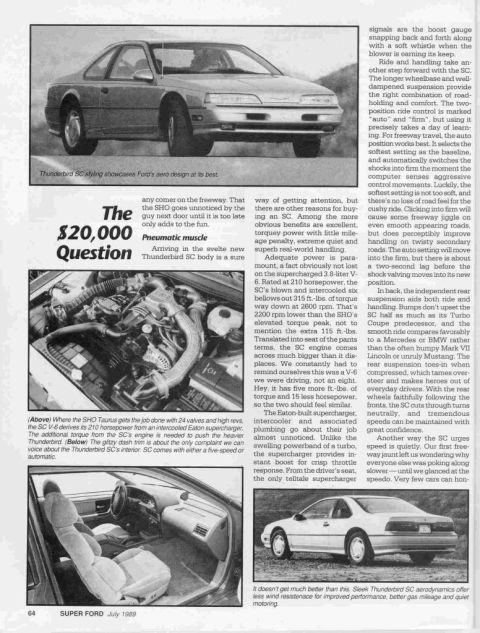
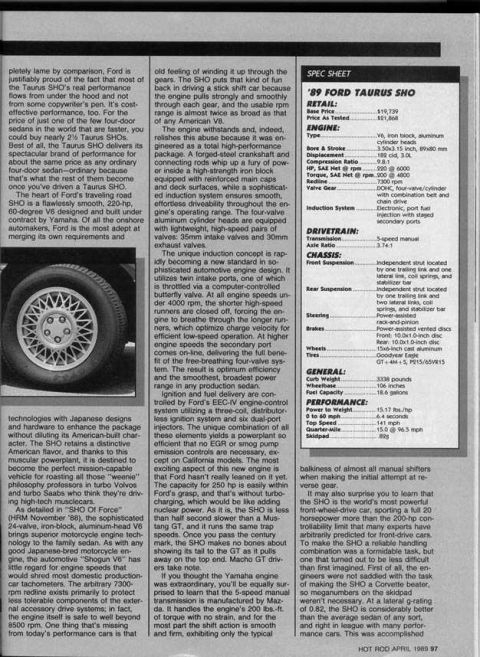
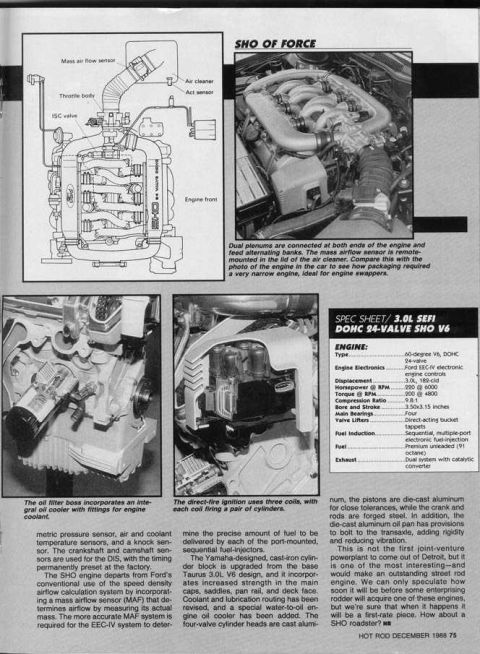
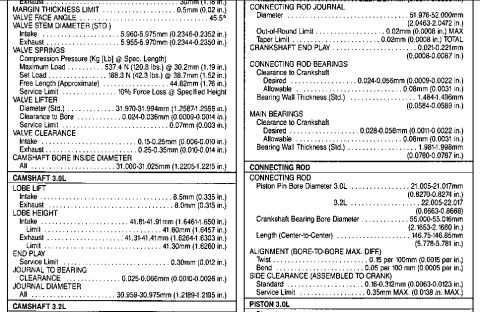
Hot Rod magazine article page about the Ford SHO engine with prose columns, cutaway illustrations, and photos.
Part of 1992-1995 Ford Taurus Brochures & Literature
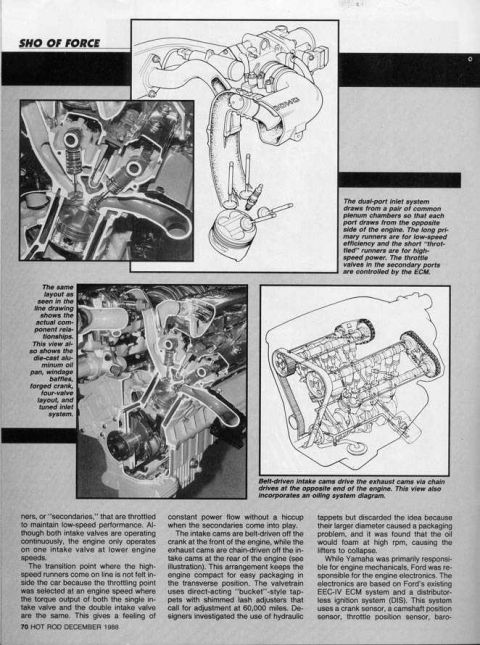
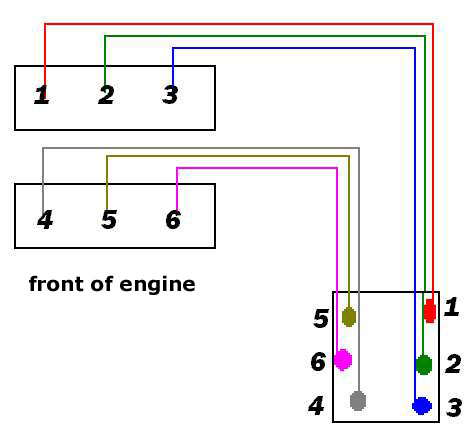
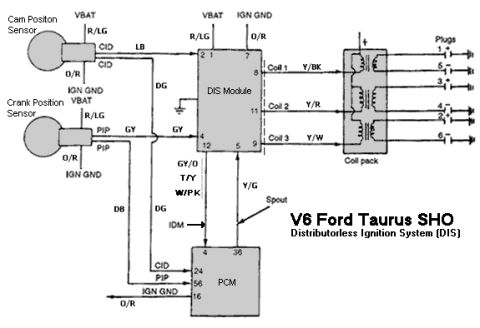
This is page 70 of the December 1988 issue of Hot Rod magazine, part of an article titled "SHO of Force" covering the Ford Taurus SHO's Yamaha-built V6 engine. The page features cutaway engine illustrations and photographs with detailed captions. It explains the dual-port inlet system, which draws air from a pair of common plenum chambers with long primary runners for low-speed efficiency and short "throttled" secondary runners for high-speed power, with the secondary throttle valves controlled by the ECM. The illustrations also depict the die-cast aluminum oil pan, windage baffles, forged crankshaft, four-valve-per-cylinder layout, and tuned inlet system. The body text describes how the transition to the secondary runners is seamless because it occurs where torque from single- and dual-valve operation is equal. The intake cams are belt-driven off the crank at the front of the engine, while exhaust cams are chain-driven off the intake cams at the rear, keeping the engine compact for transverse mounting. The valvetrain uses direct-acting bucket tappets with shimmed lash adjusters requiring adjustment at 60,000 miles; hydraulic lifters were rejected due to packaging and high-rpm oil foaming. Yamaha handled engine mechanicals while Ford developed the electronics, based on the EEC-IV ECM and distributorless ignition (DIS) with crank, camshaft, and throttle position sensors.
Is this accurate? Sign in to help verify it.
Frequently asked questions
- How does the Taurus SHO's dual-port intake system work?
- It draws from a pair of common plenum chambers so each port draws from the opposite side of the engine. Long primary runners provide low-speed efficiency, while short "throttled" secondary runners provide high-speed power. The throttle valves in the secondary ports are controlled by the ECM.
- Why isn't the transition to the secondary intake runners felt while driving?
- The throttling point was selected at an engine speed where the torque output of single intake valve and double intake valve operation are the same, giving constant power flow without a hiccup.
- How are the SHO engine's camshafts driven?
- The intake cams are belt-driven off the crank at the front of the engine, while the exhaust cams are chain-driven off the intake cams at the rear of the engine, which keeps the engine compact for transverse mounting.
- What valve lash adjustment interval does the SHO engine require?
- The valvetrain uses direct-acting bucket-style tappets with shimmed lash adjusters that call for adjustment at 60,000 miles.
- Why weren't hydraulic lifters used in the SHO engine?
- Designers discarded hydraulic tappets because their larger diameter caused a packaging problem, and the oil would foam at high rpm, causing the lifters to collapse.

No comments yet.