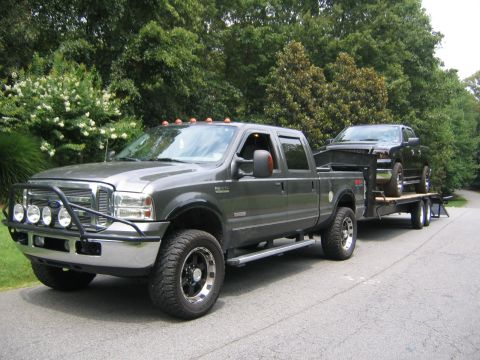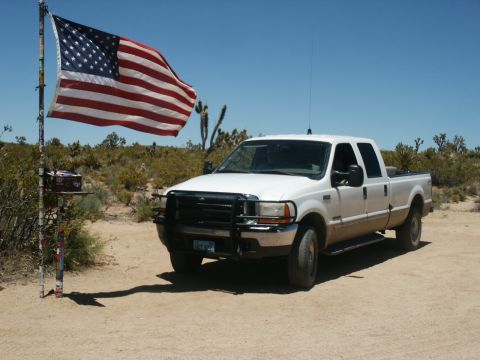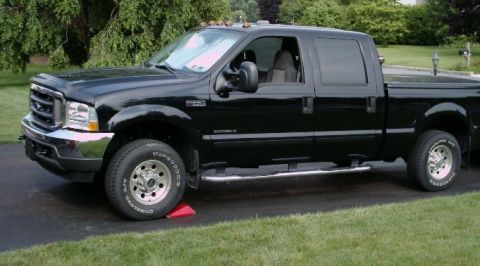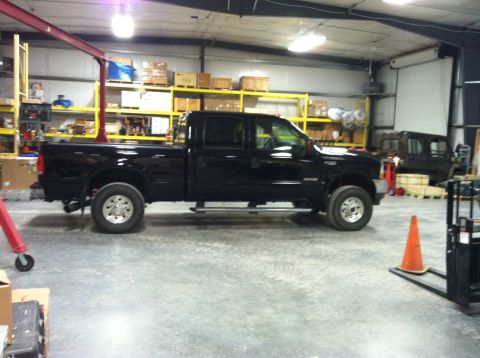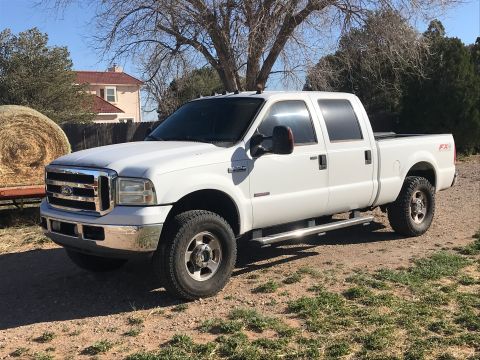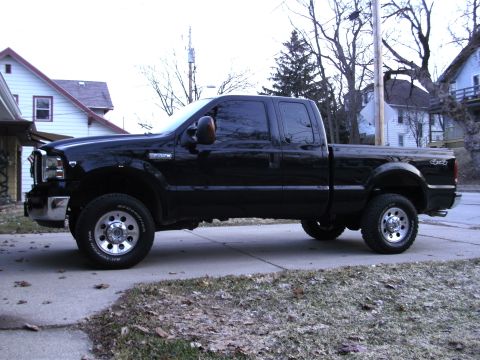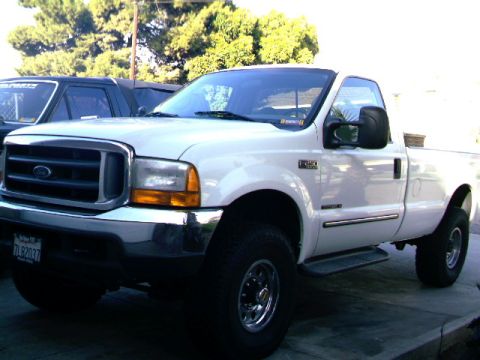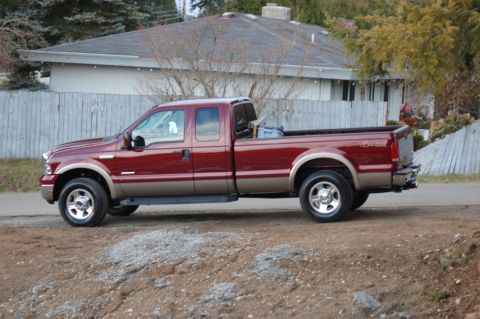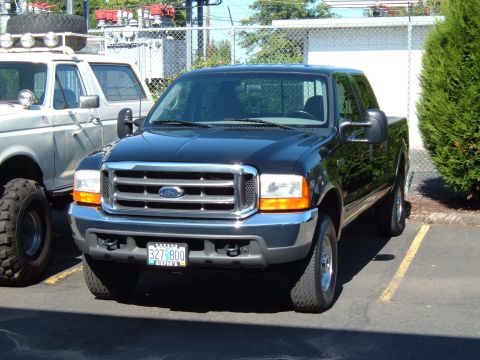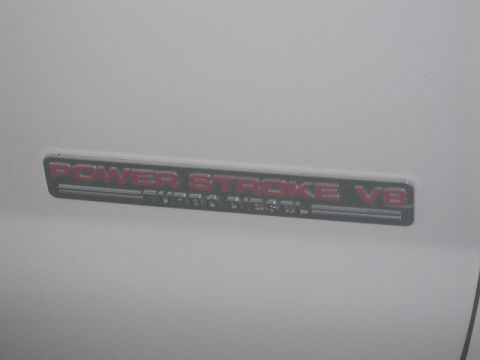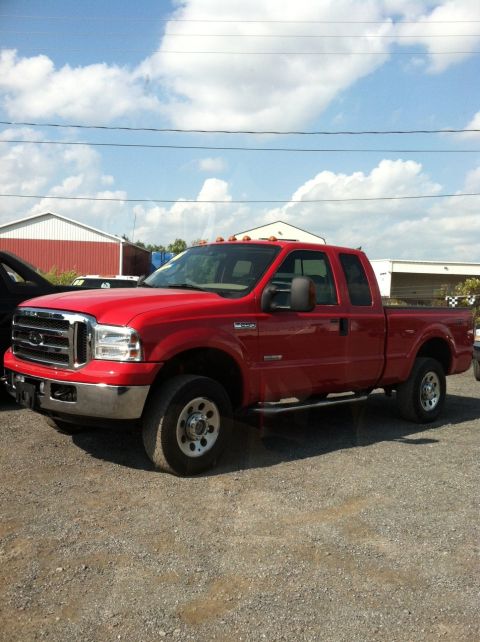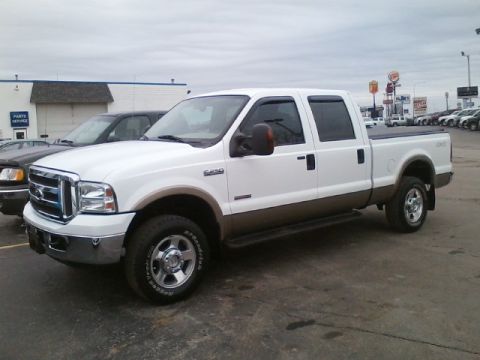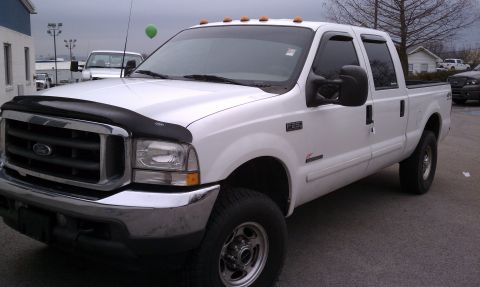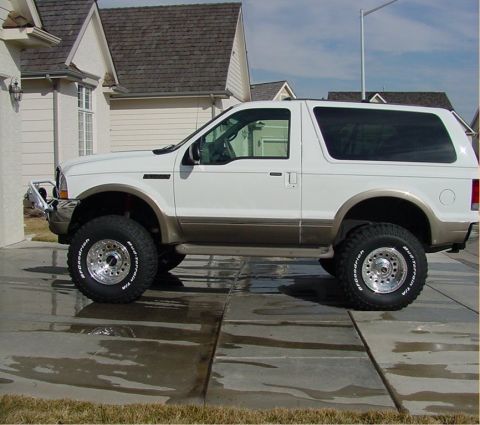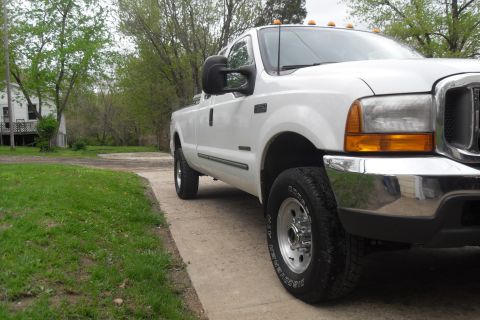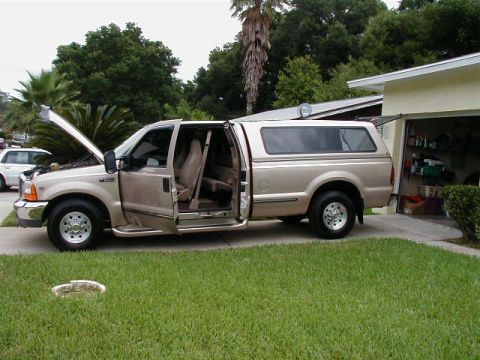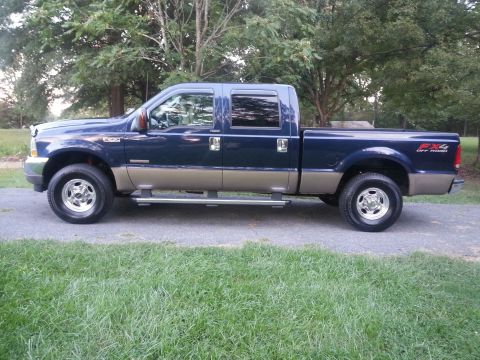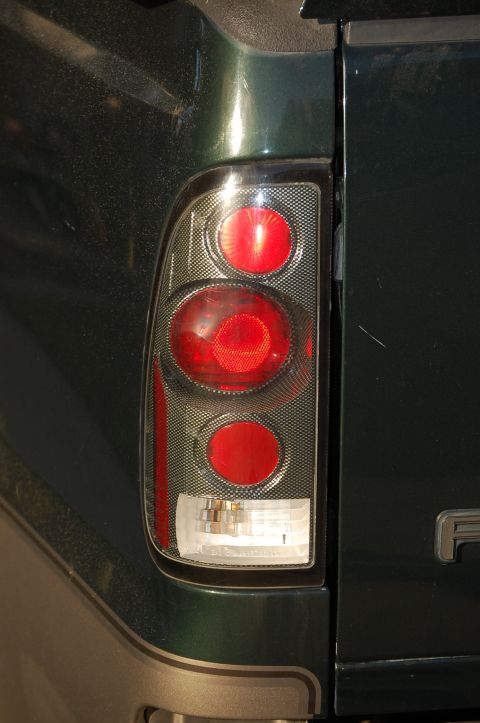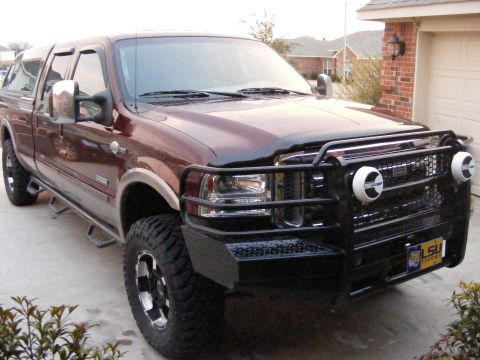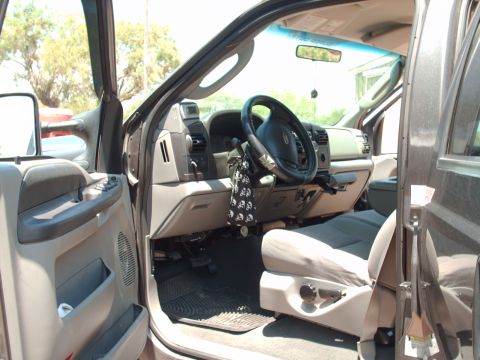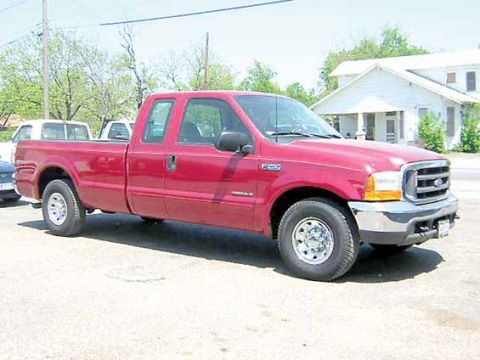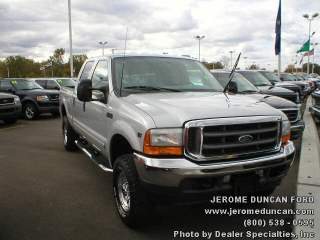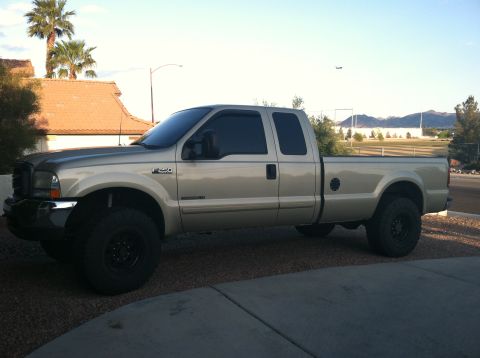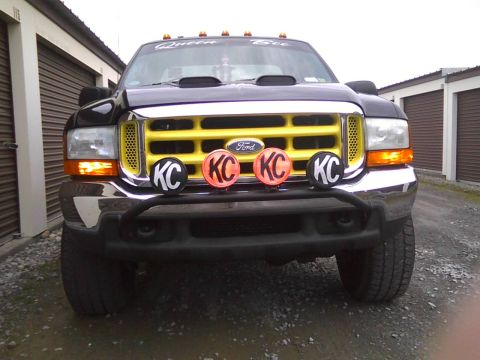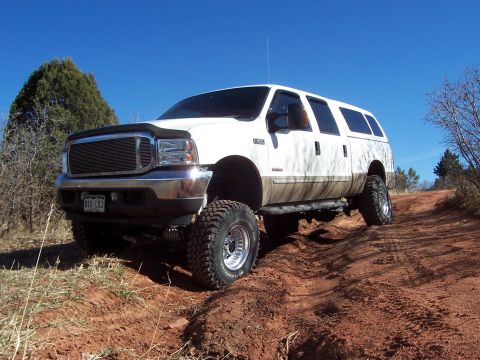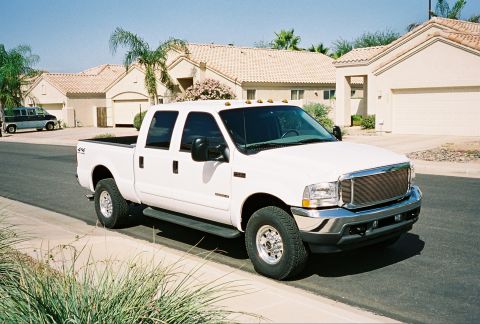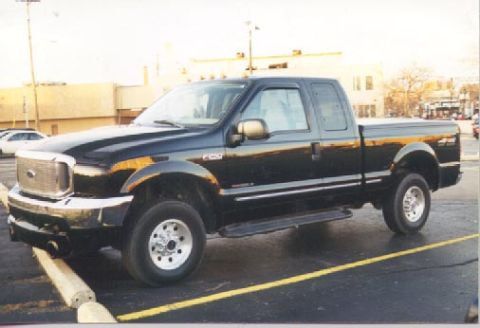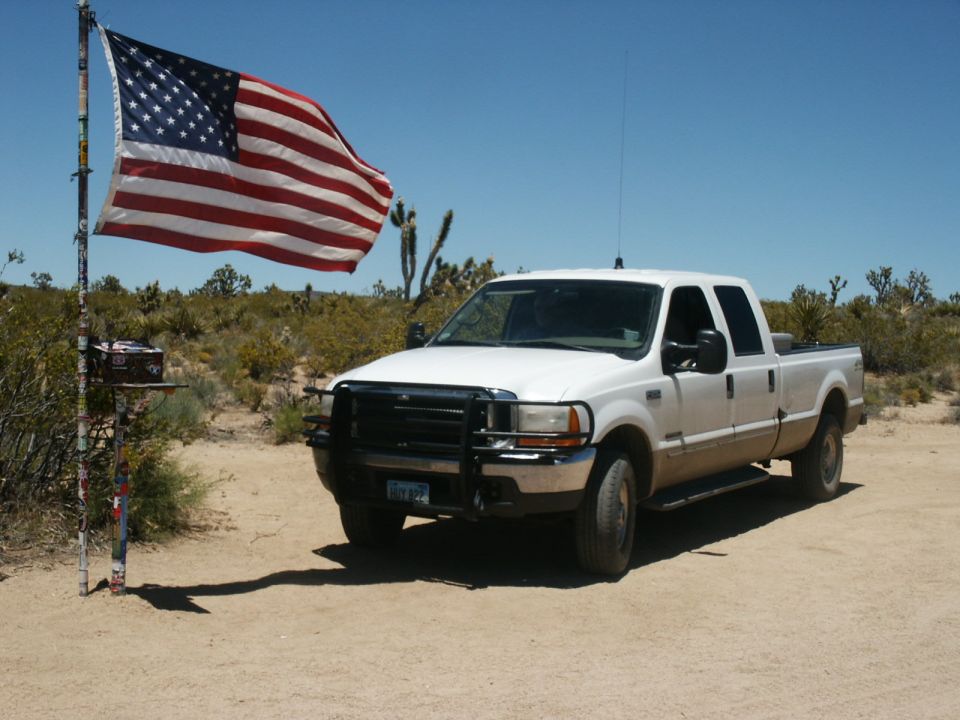
The 1999 model year brought the first Ford F-250 Super Duty, an all-new heavy-duty platform that ended the F-250's shared body with the lighter F-Series. Ford built the Super Duty with its own body, frame, and chassis, separate from the F-150, and gave the four-wheel-drive trucks a solid front axle rather than the F-150's independent front suspension. The 1999-2007 generation covers the first Super Duty body in two phases: the original 1999-2004 trucks and the 2005-2007 restyle. At launch the engines were the 5.4L Triton SOHC V8 and the 6.8L Triton SOHC V10 gas engines, plus the 7.3L Power Stroke turbodiesel built by International/Navistar. The 6.0L Power Stroke replaced the 7.3L during the 2003 model year. The 5R110W TorqShift automatic arrived for 2003 on the diesel and spread to the gas engines for 2005. The 2005 restyle brought a new front end, upgraded the 5.4L and 6.8L V10 to three-valve designs, and switched the four-wheel-drive front suspension from leaf springs to coil springs. The four-wheel-drive 1999-2007 Ford F-250 used a solid front axle, a Dana 50 on most early trucks with the Dana 60 taking over later in the run. Transmissions also included a ZF six-speed manual and the 4R100 four-speed automatic early in the run.
Other Ford F-250 generations
The 1999-2007 Ford F-250 Super Duty at a glance
- Platform: the first Super Duty, an all-new heavy-duty platform with its own body, frame, and chassis, separate from the F-150
- Years: 1999 through 2007, in two phases (1999-2004 original, 2005-2007 restyle)
- Diesel: 7.3L Power Stroke, then the 6.0L Power Stroke from mid-2003
- Gas engines: 5.4L Triton SOHC V8 and 6.8L Triton SOHC V10, both three-valve from 2005
- 4x4 front axle: solid Dana 50 or Dana 60 front axle (leaf-sprung 1999-2004, coil-sprung from 2005)
- Transmissions: ZF six-speed manual; 4R100 four-speed automatic; 5R110W TorqShift (diesel from 2003, gas from 2005)
- 2005 restyle: new front end, three-valve 5.4L and 6.8L V10, and the switch to coil-sprung front suspension on 4x4
- Body styles: regular cab, SuperCab, and Crew Cab
Ford F-250 Super Duty 1999-2007 year by year
| Year | Ford F-250 Super Duty changes | Engines offered |
|---|---|---|
| 1999 | All-new Super Duty platform launches with its own body, frame, and chassis and a solid front axle on 4x4 | 5.4L V8; 6.8L V10; 7.3L Power Stroke diesel |
| 2000 | The Ford F-250 Super Duty carries over; the 7.3L Power Stroke continues as the diesel | 5.4L V8; 6.8L V10; 7.3L Power Stroke diesel |
| 2001 | The 7.3L Power Stroke is uprated to roughly 250 horsepower with the automatic and 275 with the manual | 5.4L V8; 6.8L V10; 7.3L Power Stroke diesel |
| 2002 | A new instrument cluster is fitted; the powertrain carries over | 5.4L V8; 6.8L V10; 7.3L Power Stroke diesel |
| 2003 | The 6.0L Power Stroke is phased in mid-year, overlapping the 7.3L, and the 5R110W TorqShift automatic arrives for the diesel | 5.4L V8; 6.8L V10; 7.3L then 6.0L Power Stroke diesel |
| 2004 | The 6.0L Power Stroke becomes the sole diesel as the 7.3L is dropped | 5.4L V8; 6.8L V10; 6.0L Power Stroke diesel |
| 2005 | Restyle: new front end, the 5.4L and 6.8L V10 become three-valve engines, TorqShift spreads to the gas engines, and the 4x4 front suspension switches to coil springs | 5.4L 3V V8; 6.8L V10; 6.0L Power Stroke diesel |
| 2006 | The restyled Ford F-250 Super Duty carries over with the three-valve 5.4L, the 6.8L V10, and the 6.0L Power Stroke | 5.4L 3V V8; 6.8L V10; 6.0L Power Stroke diesel |
| 2007 | Final year of the first-generation Super Duty body before the 2008 redesign | 5.4L 3V V8; 6.8L V10; 6.0L Power Stroke diesel |
The 1999 Super Duty split from the F-150
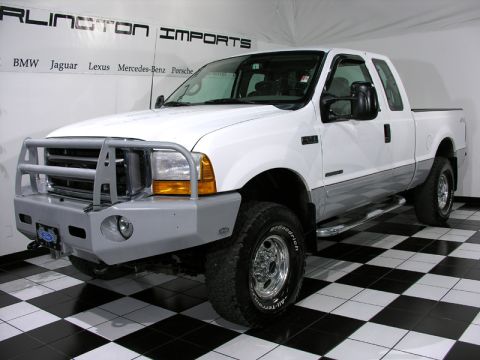
The 1999 Ford F-250 Super Duty was the structural turning point for the nameplate. Until 1998 the F-250 shared its body with the lighter F-Series; for 1999 Ford moved the F-250 and F-350 onto an all-new heavy-duty platform called the Super Duty, with its own body, frame, and chassis engineered separately from the F-150. The Super Duty was taller and more upright than the light-duty trucks, with a heavier frame and a solid front axle on four-wheel-drive models. This is the reason a Super Duty F-250 is not simply a larger F-150: the two are different vehicles built on different platforms from 1999 on.
The diesel engines: 7.3L and 6.0L Power Stroke
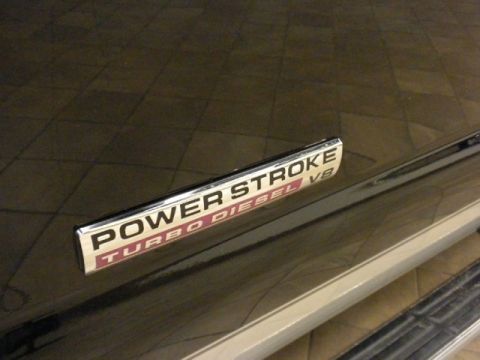
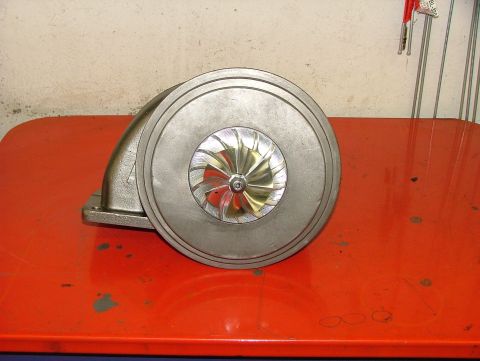
The 1999 Ford F-250 Super Duty launched with the 7.3L Power Stroke turbodiesel, built by International/Navistar, carrying the engine over from the OBS trucks. In the Super Duty the 7.3L was rated around 235 horsepower at launch and was uprated to roughly 250 horsepower with the automatic and 275 with the manual for 2001. The 6.0L Power Stroke (International VT365) replaced the 7.3L during the 2003 model year, phased in as a running change so both were available in 2003, and became the sole diesel for 2004. The 6.0L was rated at 325 horsepower and 560 to 570 lb-ft of torque. The 6.0L is widely known for reliability problems centered on its exhaust-gas-recirculation (EGR) system, including EGR cooler and oil cooler clogging and head-gasket failures; Ford settled a class-action lawsuit over the engine in 2013. The earlier 7.3L Power Stroke, by contrast, earned a strong durability reputation.
Gas engines and transmissions
The gas engines of the 1999-2007 Ford F-250 Super Duty were the 5.4L Triton SOHC V8 and the 6.8L Triton SOHC V10. The 6.8L V10 was the high-output gas option, rated around 310 horsepower in two-valve form and about 362 horsepower as a three-valve engine from 2005. For 2005 the 5.4L was upgraded to a three-valve-per-cylinder design with variable cam timing, raising it to about 300 horsepower. Transmissions included a ZF six-speed manual and the 4R100 four-speed automatic early in the run. The 5R110W TorqShift automatic arrived for 2003 with the diesel and spread to the gas engines for 2005, replacing the 4R100. Marketed as a five-speed, the TorqShift physically has additional gear ratios used in specific conditions.
The 2005 restyle and the solid front axle
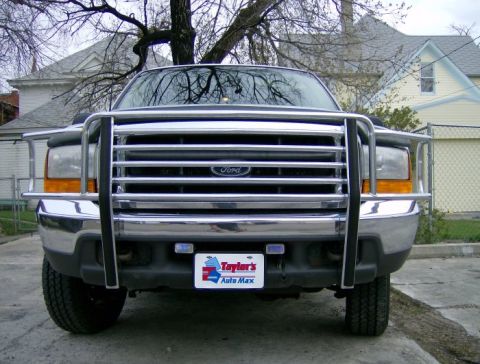
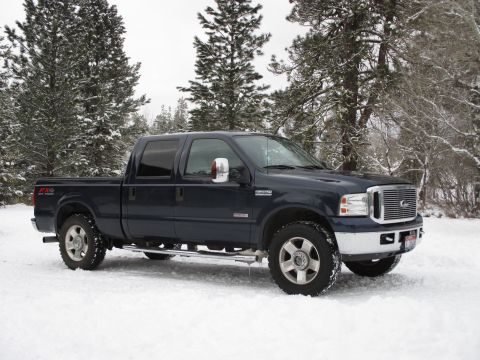
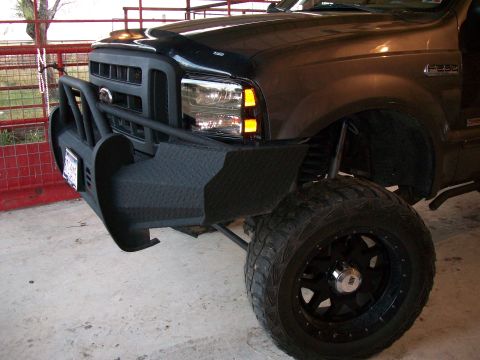
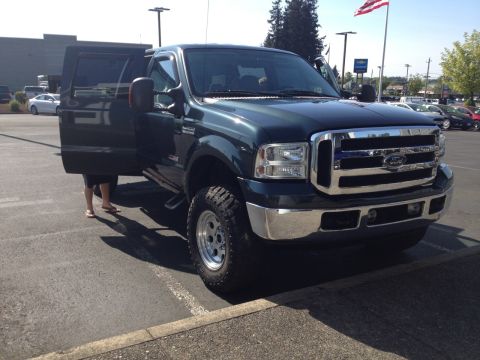
The 2005 model year brought the first restyle of the Super Duty, with a new front end and grille, a revised interior, and equipment updates. Mechanically, 2005 upgraded the 5.4L and 6.8L V10 to three-valve engines, spread the TorqShift automatic to the gas engines, and switched the four-wheel-drive front suspension from leaf springs to coil springs with a radius-arm setup. Throughout the 1999-2007 run the four-wheel-drive Ford F-250 Super Duty used a solid front axle, a Dana 50 on the early trucks and a Dana 60 later in the run, leaf-sprung through 2004 and coil-sprung from 2005. The solid front axle is one of the heavy-duty traits that distinguishes the Super Duty F-250 from the independently sprung F-150.
Frequently asked questions
What is the 1999-2007 Ford F-250 Super Duty?
The 1999-2007 Ford F-250 Super Duty is the first generation of Ford's heavy-duty Super Duty platform, introduced for 1999 with its own body, frame, and chassis separate from the F-150. It covers the original 1999-2004 trucks and the 2005-2007 restyle, and it uses a solid front axle on four-wheel-drive models.
What diesel engines did the 1999-2007 Ford F-250 Super Duty use?
The 1999-2007 Ford F-250 Super Duty launched with the 7.3L Power Stroke turbodiesel, then the 6.0L Power Stroke replaced it during the 2003 model year and became the sole diesel for 2004. The 7.3L is known for durability, while the 6.0L is known for EGR-related reliability problems that led to a 2013 Ford settlement.
What changed on the 2005 Ford F-250 Super Duty?
The 2005 Ford F-250 Super Duty received a restyle with a new front end, upgraded the 5.4L and 6.8L V10 to three-valve engines, spread the TorqShift automatic to the gas engines, and switched the four-wheel-drive front suspension from leaf springs to coil springs. It marks the second phase of the first-generation Super Duty.
Does the 1999-2007 Ford F-250 Super Duty have a solid front axle?
Yes. The four-wheel-drive 1999-2007 Ford F-250 Super Duty uses a solid front axle, a Dana 50 on the early trucks and a Dana 60 later in the run, leaf-sprung through 2004 and coil-sprung from 2005. The solid front axle is a key difference from the independently sprung F-150.
When did the TorqShift automatic arrive in the Ford F-250 Super Duty?
The 5R110W TorqShift automatic arrived in the Ford F-250 Super Duty for the 2003 model year on the diesel and spread to the gas engines for 2005, replacing the 4R100 four-speed automatic. It was marketed as a five-speed.
Sources
- Ford factory specification sheets for the 1999-2007 F-250 Super Duty
- Wikipedia, Ford Super Duty
- DieselHub references, 7.3L Power Stroke, 6.0L Power Stroke, and 5R110W TorqShift
- Class-action settlement records for the 6.0L Power Stroke EGR system
- TorqueKing and Dana references for the solid front axle
Asked all the time
What is the 1999-2007 Ford F-250 Super Duty?
The 1999-2007 Ford F-250 Super Duty is the first generation of Ford's heavy-duty Super Duty platform, introduced for 1999 with its own body, frame, and chassis separate from the F-150. It covers the original 1999-2004 trucks and the 2005-2007 restyle, and it uses a solid front axle on four-wheel-drive models.
What diesel engines did the 1999-2007 Ford F-250 Super Duty use?
The 1999-2007 Ford F-250 Super Duty launched with the 7.3L Power Stroke turbodiesel, then the 6.0L Power Stroke replaced it during the 2003 model year and became the sole diesel for 2004. The 7.3L is known for durability, while the 6.0L is known for EGR-related reliability problems that led to a 2013 Ford settlement.
What changed on the 2005 Ford F-250 Super Duty?
The 2005 Ford F-250 Super Duty received a restyle with a new front end, upgraded the 5.4L and 6.8L V10 to three-valve engines, spread the TorqShift automatic to the gas engines, and switched the four-wheel-drive front suspension from leaf springs to coil springs. It marks the second phase of the first-generation Super Duty.
Does the 1999-2007 Ford F-250 Super Duty have a solid front axle?
Yes. The four-wheel-drive 1999-2007 Ford F-250 Super Duty uses a solid front axle, a Dana 50 on the early trucks and a Dana 60 later in the run, leaf-sprung through 2004 and coil-sprung from 2005. The solid front axle is a key difference from the independently sprung F-150.
When did the TorqShift automatic arrive in the Ford F-250 Super Duty?
The 5R110W TorqShift automatic arrived in the Ford F-250 Super Duty for the 2003 model year on the diesel and spread to the gas engines for 2005, replacing the 4R100 four-speed automatic. It was marketed as a five-speed.
Technical Reference
Member-uploaded diagrams & documents for this generation. AI-classified; community-verified where badged.
Exploded Parts (2)
- Fuel Filter Seal/PR Valve Kit instructions showing the exploded fuel filter housing with O-rings and valves, beside the kit's blue and plain springs.
- Packaged Fuel Filter Seal/PR Valve Kit with an exploded view of the fuel filter housing seals and valves and a note that the spring is blue.
Blueprints (2)
- AmeriCamp Trailer Receiver Hitch Blueprint - 2.5" Receiver Tube Fab SketchThis is a hand-drawn blueprint/sketch for a custom receiver hitch installation on an 'AmeriCamp' trailer, uploaded to the gallery of a 2005 Ford F-250 (likely as its tow vehicle). The drawing includes two views. The…
- F270RKS RV Floor Plan - Rear Kitchen Layout with Queen Bed & 18' AwningThis document is a floor plan (blueprint-style layout drawing) for an RV model designated F270RKS. It shows a rear-kitchen/slide-out layout with labeled living areas and fixtures. On the left/rear end is the kitchen…
Wiring Diagrams (1)
- 12V 5-Pin Relay Wiring Diagram - Pins 30, 85, 86, 87, 87a ExplainedThis document is a generic 12-volt automotive relay wiring sample diagram, branded by EPAuto. It illustrates how to wire a standard 5-pin relay (terminals 30, 85, 86, 87, and 87a) with a toggle/rocker switch, an inline…
Data/Spec Plates (1)
The wall · registered 1999-2007 F-250s
Sorted by depth of documentation. Click any vehicle to open its permanent record.