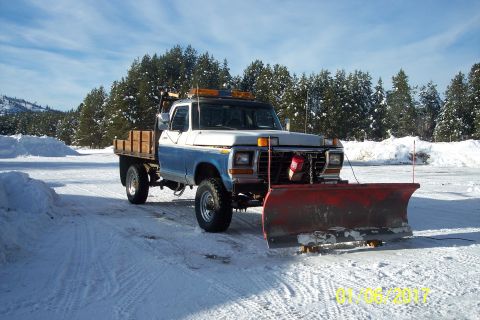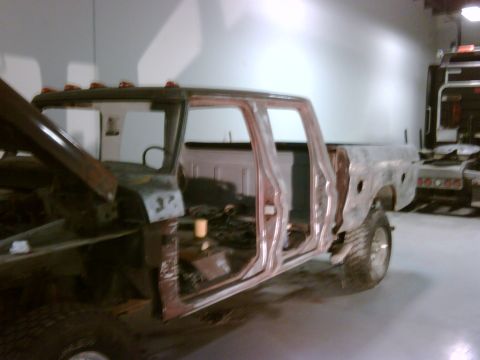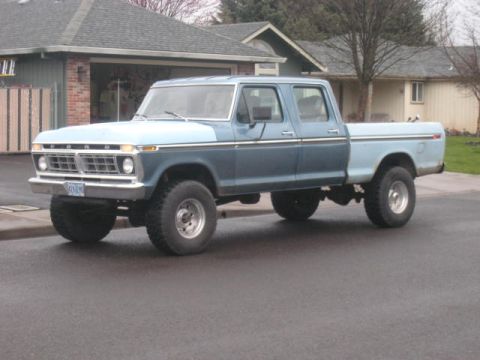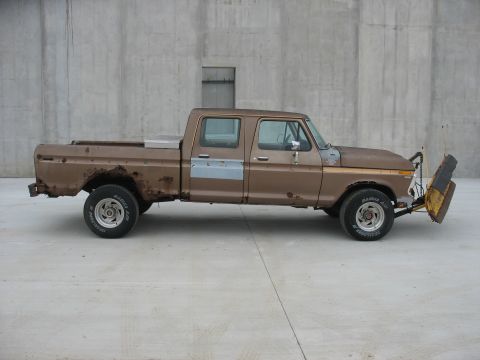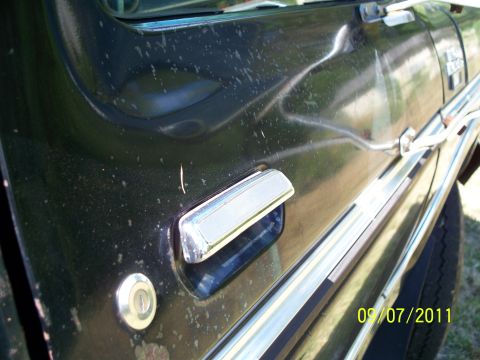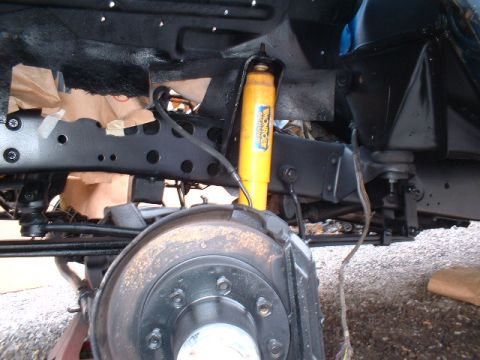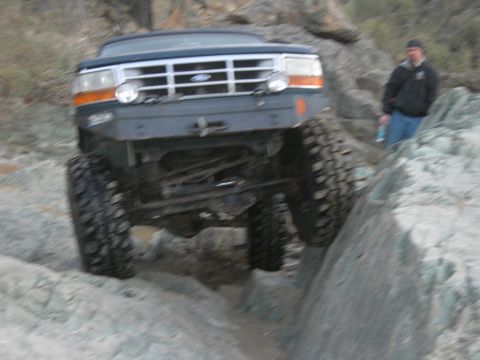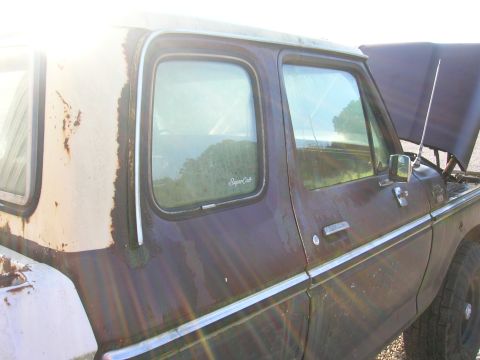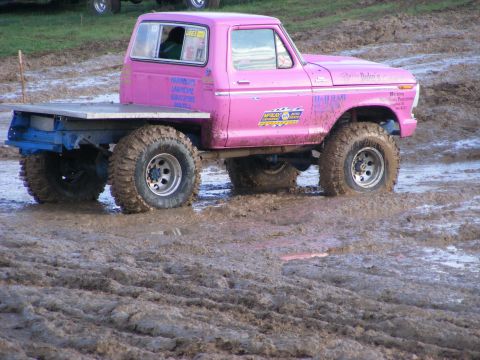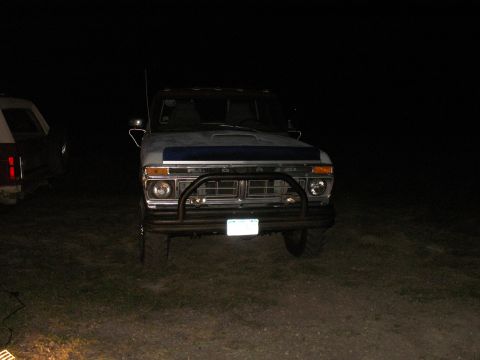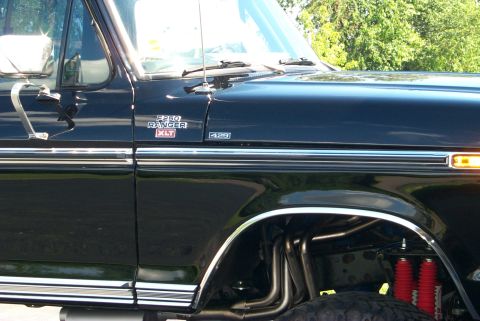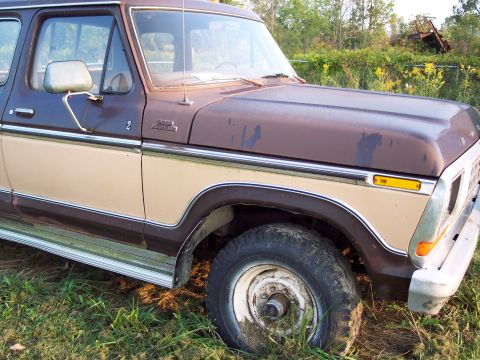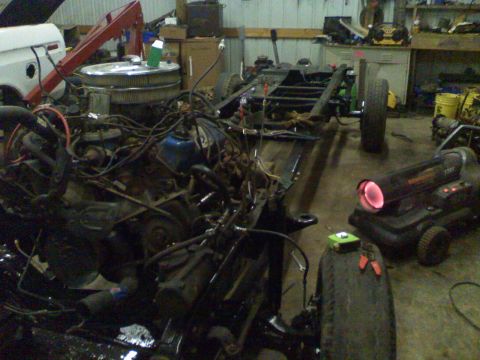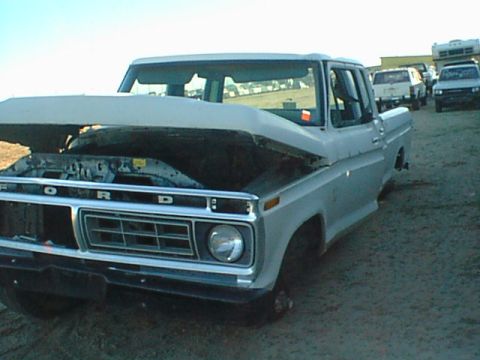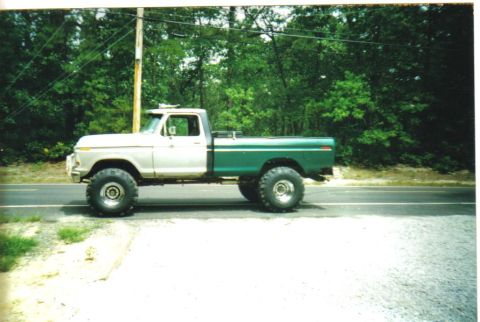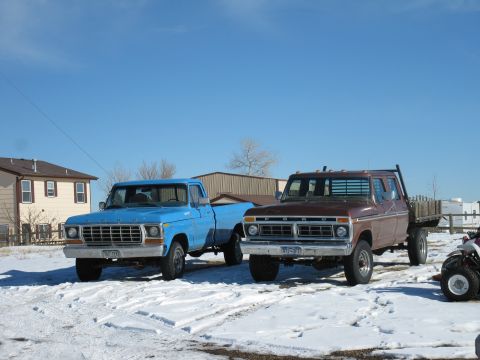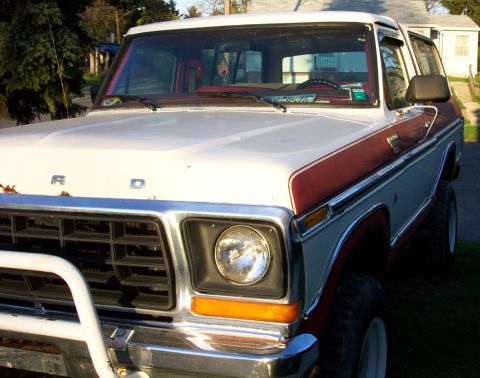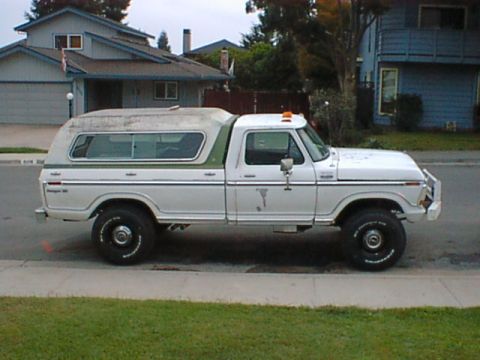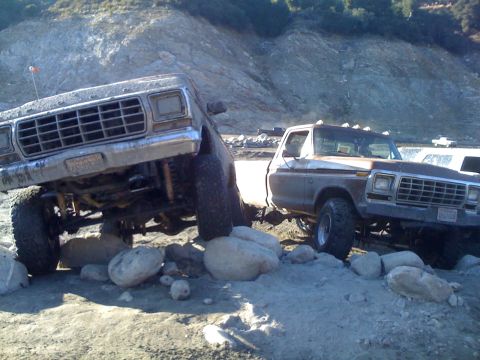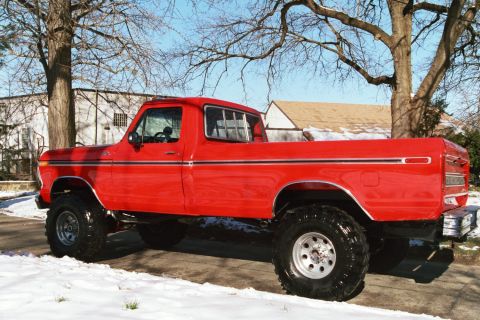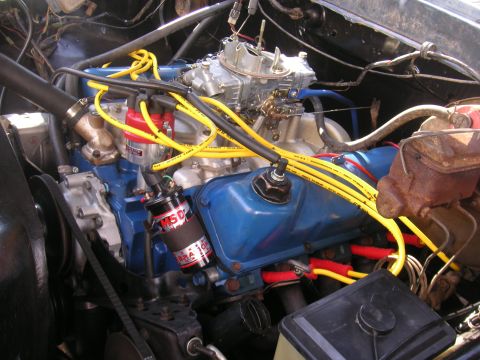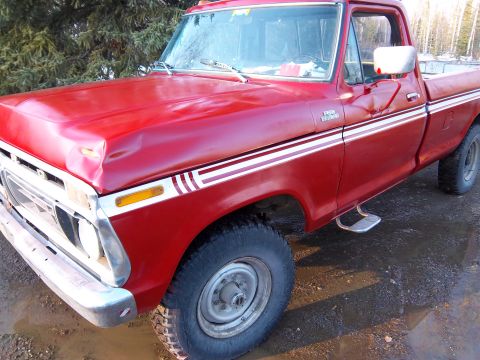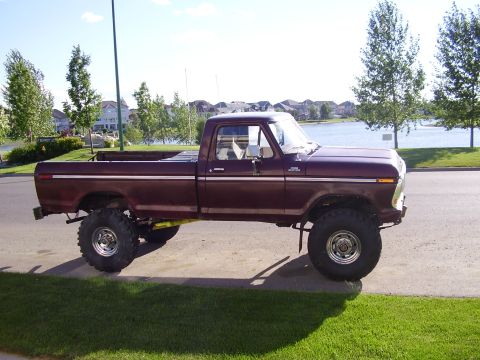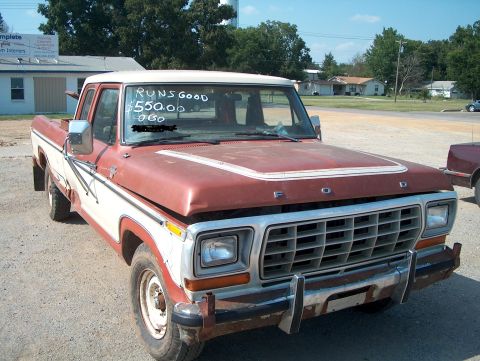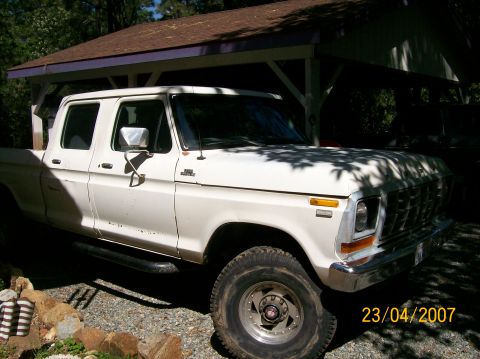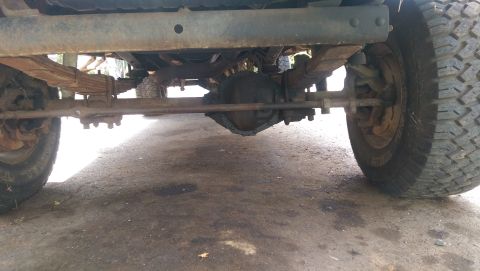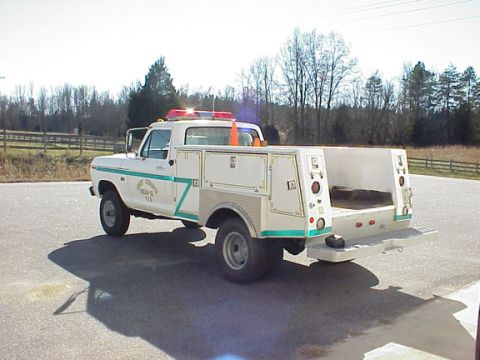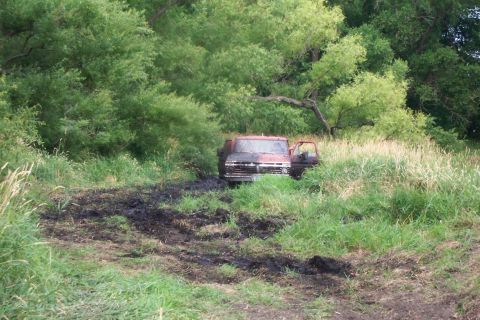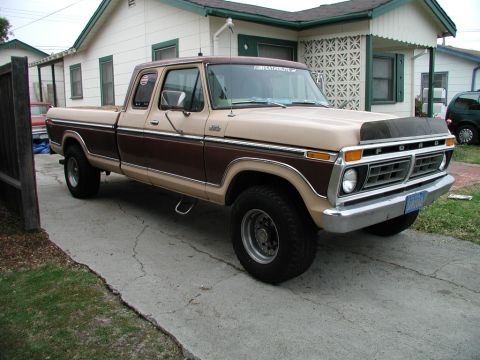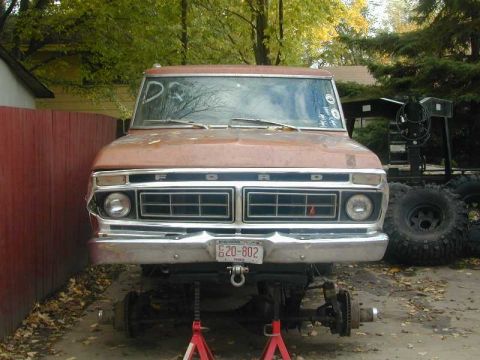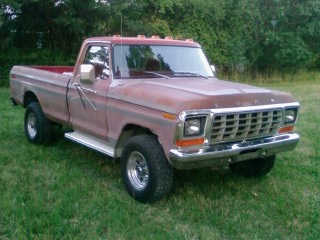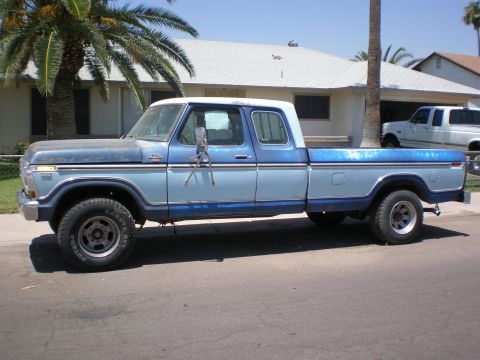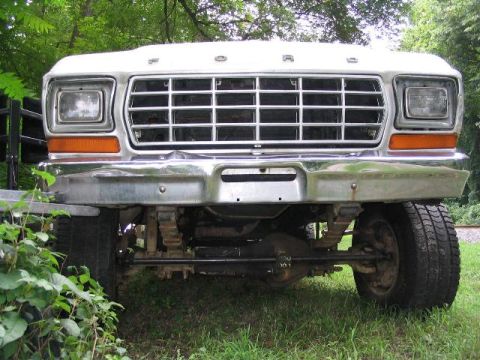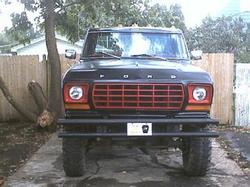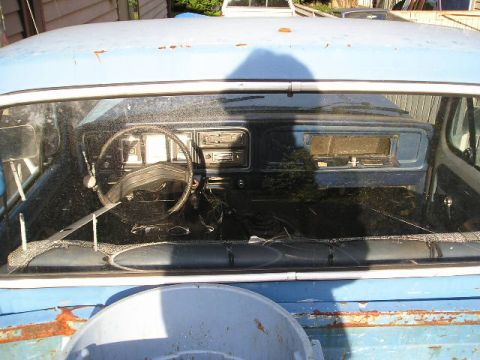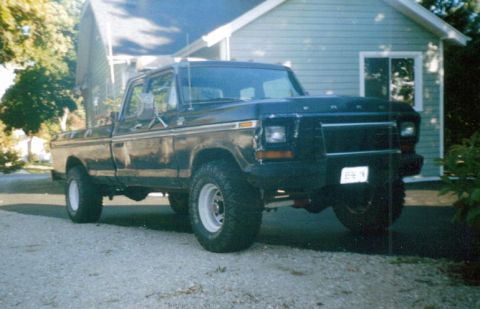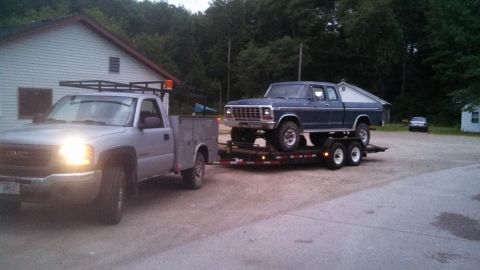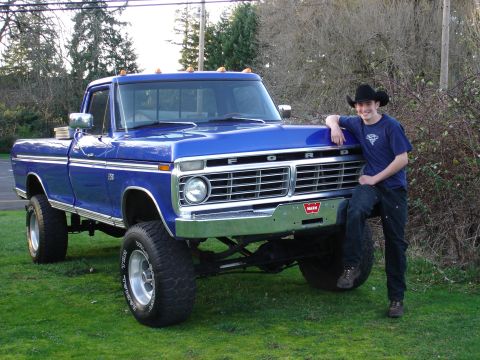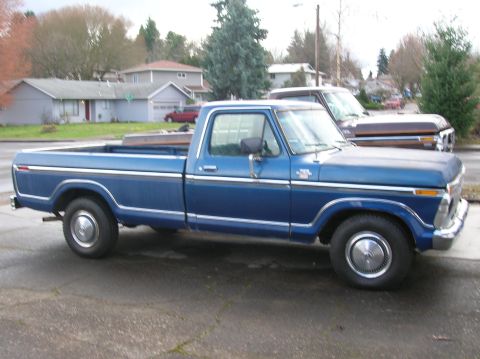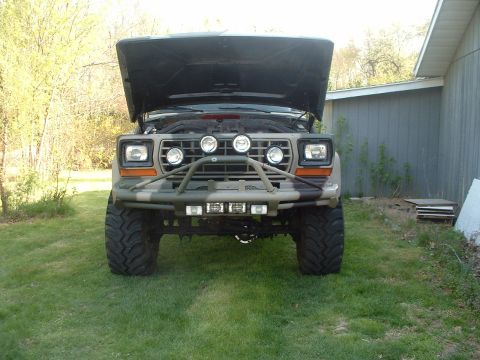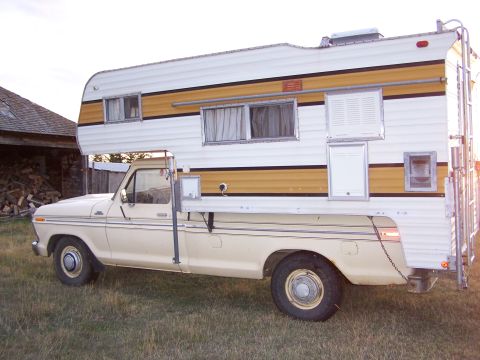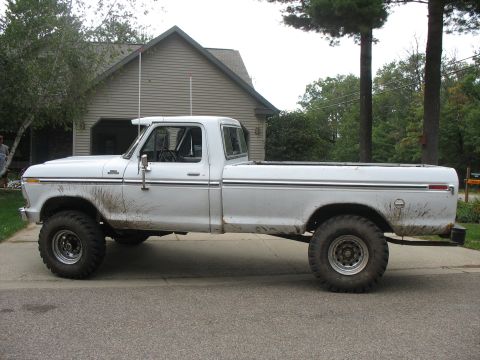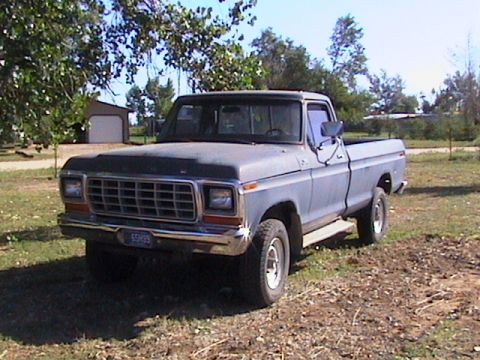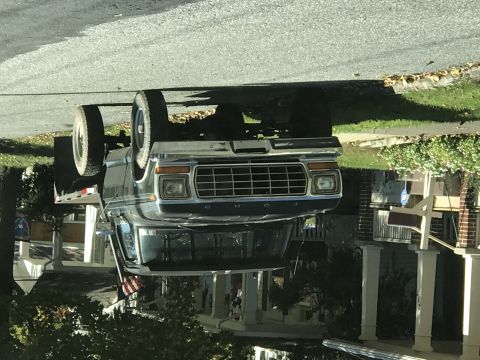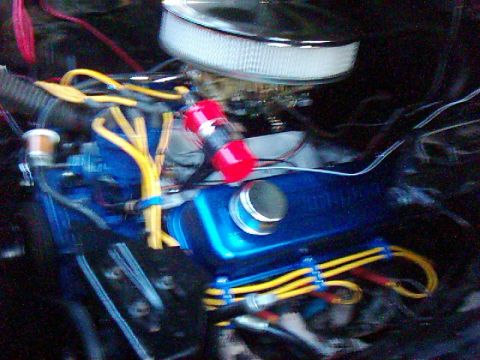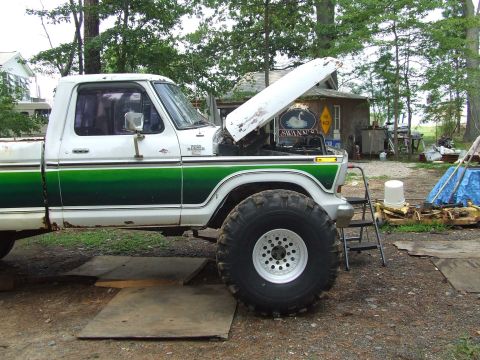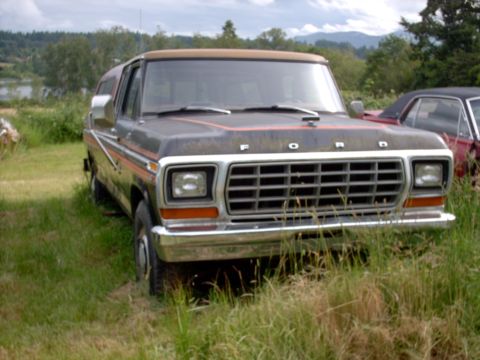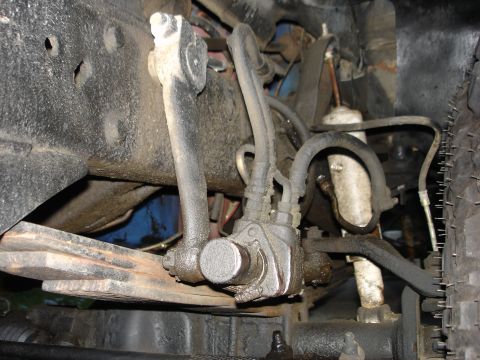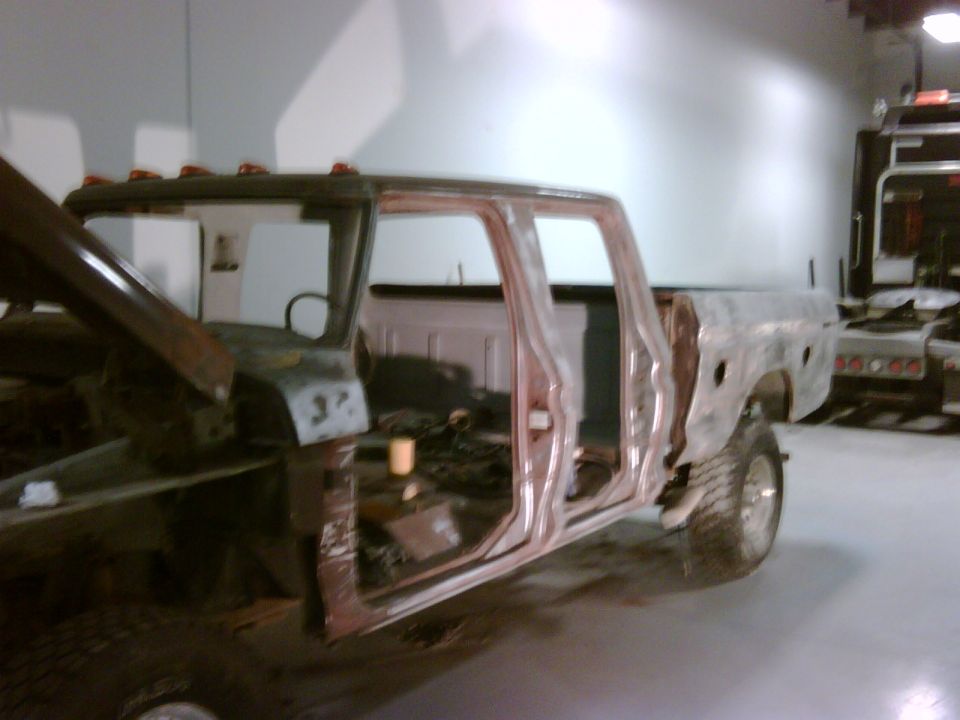
The 1973 model year brought the sixth-generation Ford F-Series, nicknamed the "Dentside" for the concave bodyside crease that is the visual opposite of the previous Bumpside's outward bulge. The 1973-1979 Ford F-250 is the three-quarter-ton truck of this generation, sharing its cab and front sheet metal with the rest of the F-Series. The biggest lineup change came for 1975, when Ford introduced the F-150 as a new model between the F-100 and the F-250, created in part so a heavier half-ton could sit above the federal 6,000-pound gross-weight threshold that triggered stricter emissions rules. The 1973-1979 Ford F-250 was gas-only; the first diesel did not arrive until the next generation. The base engine was the 300-cubic-inch inline-six, with the 302 small-block, the FE-series 360 and 390 big-blocks through 1976, the 335-series 351M and 400 from 1977, and the 385-series 460 (7.5L) big-block. All ratings in this generation are SAE net. The 1973-1979 Ford F-250 4x4 used a solid front axle, typically a Dana 44 with a heavier-duty Dana 60 available. The SuperCab extended cab arrived for 1974, and the four-door Crew Cab and Camper Special continued. The 1978 model year brought the largest restyle, with a single-piece grille and rectangular headlamps on the upper trims.
Other Ford F-250 generations
The 1973-1979 Ford F-250 at a glance
- Generation: sixth-generation F-Series, nicknamed the "Dentside" for the concave bodyside crease
- Years: 1973 through 1979, replaced by the seventh-generation "Bullnose" F-250 for 1980
- Lineup change: the F-150 launched as a new model between the F-100 and F-250 for 1975
- Engines: 300 I6; 302; 360 and 390 FE (through 1976); 351M and 400 (from 1977); 460 (7.5L) big-block; gas only
- Horsepower standard: SAE net throughout
- Transmissions: three-speed and four-speed (NP435) manuals; C6 three-speed automatic
- 4x4 front axle: solid front axle (Dana 44, with Dana 60 available), before the 1980 Twin-Traction Beam change
- Body styles: regular cab, SuperCab (from 1974), and four-door Crew Cab; Camper Special offered
Ford F-250 1973-1979 year by year
| Year | Ford F-250 changes | Engines offered (gas) |
|---|---|---|
| 1973 | Sixth-generation "Dentside" F-Series launches; the F-250 is the three-quarter-ton model on the new body | 300 I6; 302; 360 FE; 390 FE; 460 |
| 1974 | The SuperCab extended cab is introduced to the Ford F-250 lineup | 300 I6; 302; 360 FE; 390 FE; 460 |
| 1975 | The F-150 launches as a new model between the F-100 and the F-250 | 300 I6; 302; 360 FE; 390 FE; 460 |
| 1976 | Minor facelift; final year for the FE-series 360 and 390 big-blocks in the Ford F-250 | 300 I6; 302; 360 FE; 390 FE; 460 |
| 1977 | The 335-series 351M and 400 V8s replace the FE 360 and 390 in the Ford F-250 | 300 I6; 302; 351M; 400; 460 |
| 1978 | Largest restyle of the generation: single-piece grille and rectangular headlamps on the upper Ford F-250 trims; Ranger Lariat added as the top trim | 300 I6; 302; 351M; 400; 460 |
| 1979 | Final year of the Dentside Ford F-250; powertrain carries over before the 1980 redesign | 300 I6; 302; 351M; 400; 460 |
What the "Dentside" label means and where the F-150 fits
The 1973 Ford F-250 introduced the sixth-generation F-Series, which enthusiasts call the "Dentside" for the concave bodyside crease that recesses inward, the visual opposite of the previous Bumpside truck's outward bulge. It was the last F-Series body derived from the platform Ford introduced in the mid-1960s. As with earlier trucks, the 1973-1979 F-250 shared its cab and front sheet metal with the rest of the F-Series. The notable lineup change of this generation came for 1975, when Ford added the F-150 as a new model between the F-100 and the F-250. Ford created the F-150 in part to offer a heavier half-ton rated above the 6,000-pound gross-weight threshold, which let it sidestep emissions rules that applied to lighter vehicles. From 1975 on, the F-250 sat above both the F-100 and the new F-150.
Engines of the 1973-1979 Ford F-250
The 1973-1979 Ford F-250 was gas-only; the first F-250 diesel did not arrive until the 1983 model year in the next generation. The base engine was the 300-cubic-inch inline-six, with the 302 small-block also available. For heavier work the three-quarter-ton truck offered larger V8s: the FE-series 360 and 390 big-blocks through the 1976 model year, then the 335-series 351M and 400 from 1977, and the 385-series 460 (7.5L) big-block. All horsepower figures in this generation are quoted in the SAE net standard adopted for 1972, so they read lower than the gross figures used on earlier trucks. The 460 was the largest and most powerful option, suited to heavy towing and camper duty.
Drivetrain and the solid front axle
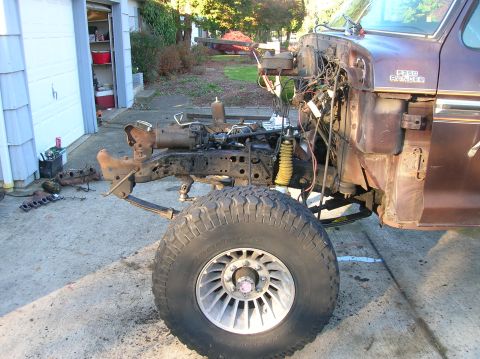
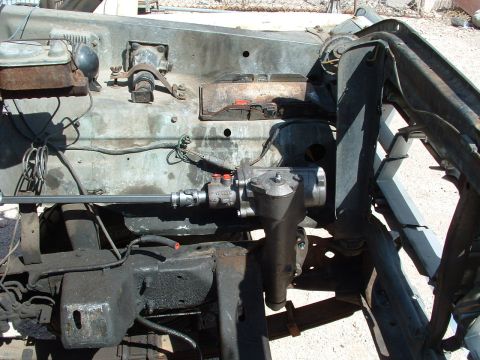
The 1973-1979 Ford F-250 used three-speed and four-speed manual transmissions, including the NP435 four-speed with its granny-low first gear, along with the C6 three-speed automatic. The four-wheel-drive 1973-1979 Ford F-250 used a solid front axle, typically a Dana 44 with the heavier-duty Dana 60 available on the most heavily rated trucks. This was the last F-250 generation with a solid front axle for two decades; the 1980 redesign switched the four-wheel-drive F-250 to independent Twin-Traction Beam front suspension. The tall, divorced-transfer-case four-wheel-drive F-250 of the early Dentside years is the truck enthusiasts call the "Highboy," a configuration phased out around the 1977 model year.
Body styles, the SuperCab, and the 1978 restyle
The 1973-1979 Ford F-250 was offered in regular-cab, SuperCab, and four-door Crew Cab forms. The SuperCab extended cab was introduced for 1974, adding interior space behind the front seat. The three-quarter-ton F-250 was a common base for slide-in campers, supported by the Camper Special package and its heavy-duty cooling, charging, and wiring. The largest visual change of the generation came for 1978, when the Ford F-250 received a single-piece grille and rectangular headlamps on its upper trims, while base trims kept round headlamps. Trim levels grew through the run to include the top Ranger Lariat from 1978.
Frequently asked questions
What generation is the 1973-1979 Ford F-250?
The 1973-1979 Ford F-250 is the sixth-generation F-Series, nicknamed the "Dentside" for the concave bodyside crease. It is the three-quarter-ton truck of the generation, and it was replaced by the seventh-generation "Bullnose" F-250 for 1980.
When did the Ford F-150 appear alongside the F-250?
The Ford F-150 launched for the 1975 model year as a new model between the F-100 and the F-250, created in part to offer a heavier half-ton rated above the 6,000-pound gross-weight threshold. From 1975 on, the F-250 sat above both the F-100 and the new F-150.
What engines did the 1973-1979 Ford F-250 use?
The 1973-1979 Ford F-250 used the 300 inline-six as the base engine, with the 302 small-block, the FE-series 360 and 390 big-blocks through 1976, the 351M and 400 from 1977, and the 460 (7.5L) big-block. All were gas engines; the first F-250 diesel did not arrive until 1983.
Did the 1973-1979 Ford F-250 4x4 have a solid front axle?
Yes. The 1973-1979 Ford F-250 4x4 used a solid front axle, typically a Dana 44 with a heavier-duty Dana 60 available. It was the last F-250 generation with a solid front axle before the 1980 redesign switched the four-wheel-drive F-250 to independent Twin-Traction Beam front suspension.
When did the Ford F-250 SuperCab arrive?
The Ford F-250 SuperCab, an extended cab with space behind the front seat, was introduced for the 1974 model year. The four-door Crew Cab and the regular cab were also offered through the 1973-1979 generation.
Sources
- Ford factory specification sheets for the 1973-1979 F-Series
- Wikipedia, Ford F-Series (sixth generation)
- Generation histories for the 1973-1979 "Dentside" F-Series and the 1975 F-150 introduction
- VIN and data-plate decoding for engine and axle identification
Asked all the time
What generation is the 1973-1979 Ford F-250?
The 1973-1979 Ford F-250 is the sixth-generation F-Series, nicknamed the "Dentside" for the concave bodyside crease. It is the three-quarter-ton truck of the generation, and it was replaced by the seventh-generation "Bullnose" F-250 for 1980.
When did the Ford F-150 appear alongside the F-250?
The Ford F-150 launched for the 1975 model year as a new model between the F-100 and the F-250, created in part to offer a heavier half-ton rated above the 6,000-pound gross-weight threshold. From 1975 on, the F-250 sat above both the F-100 and the new F-150.
What engines did the 1973-1979 Ford F-250 use?
The 1973-1979 Ford F-250 used the 300 inline-six as the base engine, with the 302 small-block, the FE-series 360 and 390 big-blocks through 1976, the 351M and 400 from 1977, and the 460 (7.5L) big-block. All were gas engines; the first F-250 diesel did not arrive until 1983.
Did the 1973-1979 Ford F-250 4x4 have a solid front axle?
Yes. The 1973-1979 Ford F-250 4x4 used a solid front axle, typically a Dana 44 with a heavier-duty Dana 60 available. It was the last F-250 generation with a solid front axle before the 1980 redesign switched the four-wheel-drive F-250 to independent Twin-Traction Beam front suspension.
When did the Ford F-250 SuperCab arrive?
The Ford F-250 SuperCab, an extended cab with space behind the front seat, was introduced for the 1974 model year. The four-door Crew Cab and the regular cab were also offered through the 1973-1979 generation.
Technical Reference
Member-uploaded diagrams & documents for this generation. AI-classified; community-verified where badged.
Schematics (2)
- Ford 360 FE V8 Firing Order Diagram - Distributor Cap Wiring & Timing MarksThis document is a schematic diagram (uploaded as "FORD 360 FIRING ORDER.gif") showing the firing order and distributor cap wiring arrangement for a Ford V8 engine. The drawing depicts the engine from above with two…
- 1975 Ford F-250 Dual Exhaust Routing Diagram - Cherry Bombs & HeadersThis document is a simple, hand-drawn (computer sketch) diagram comparing two dual-exhaust routing options for a truck chassis, viewed from above with the 'Rear' labeled at the top and 'front' at the bottom. Both…
The wall · registered 1973–1979 F-250s
Sorted by depth of documentation. Click any vehicle to open its permanent record.