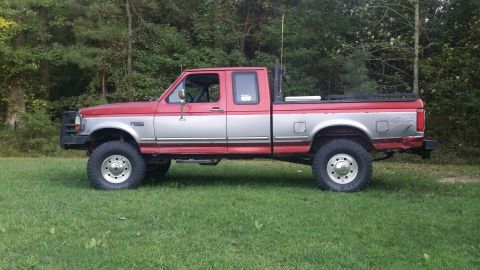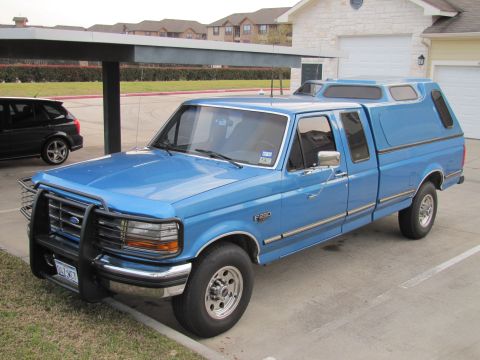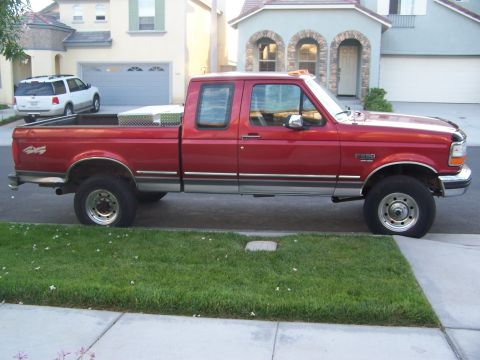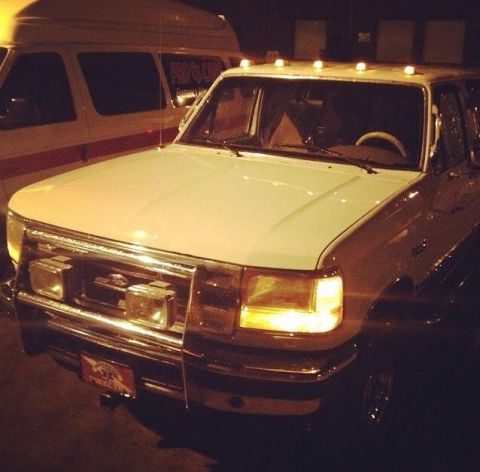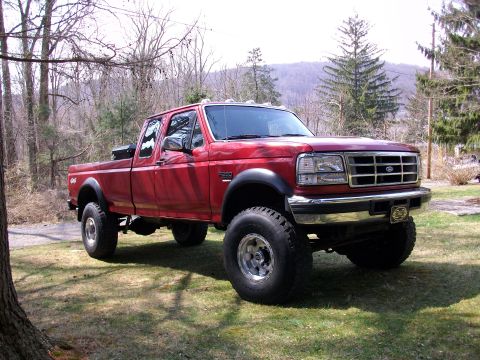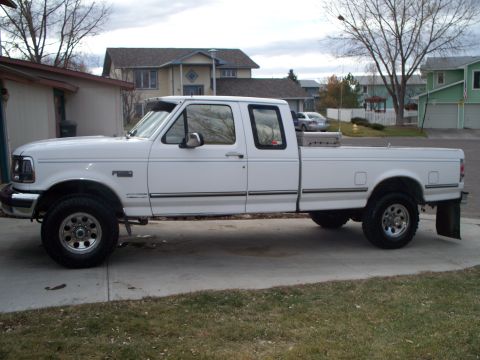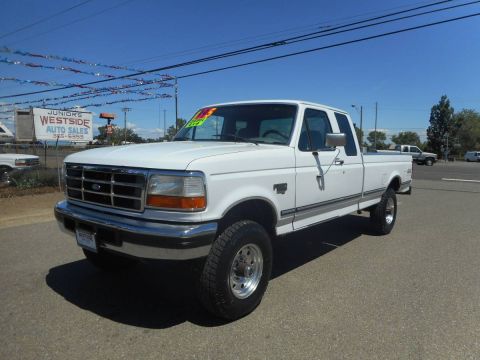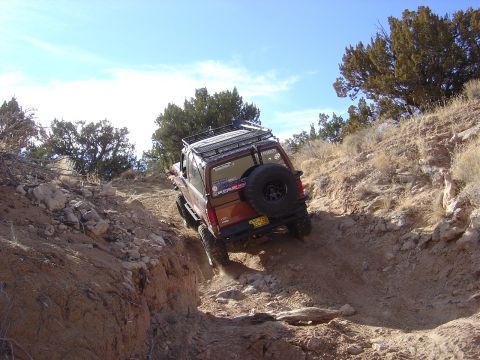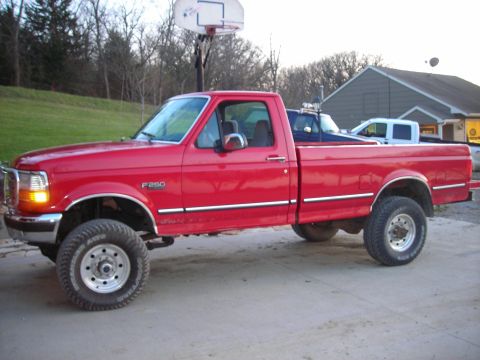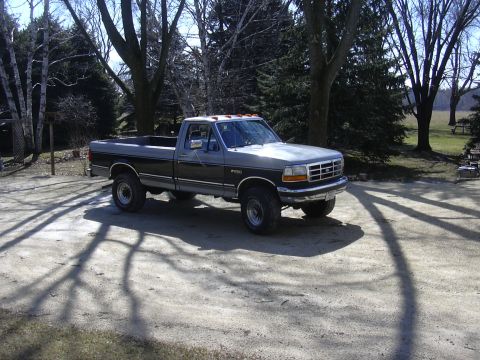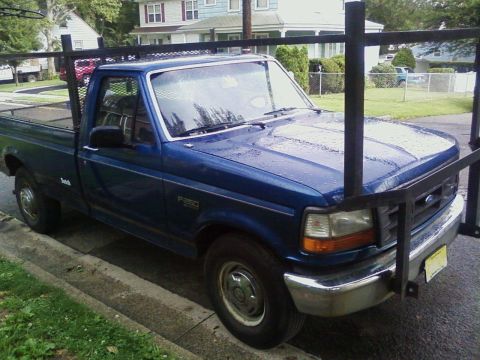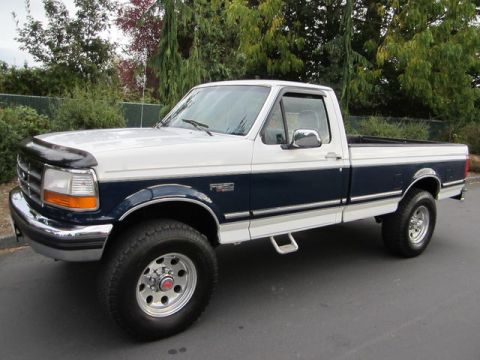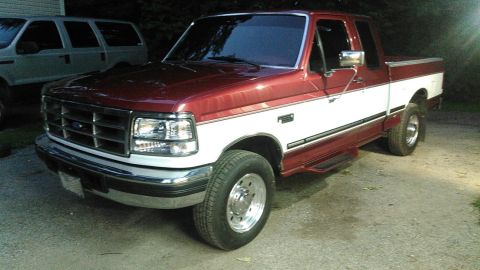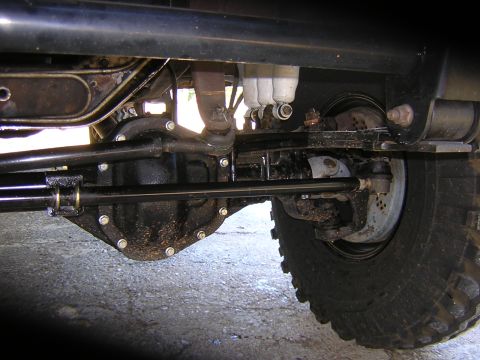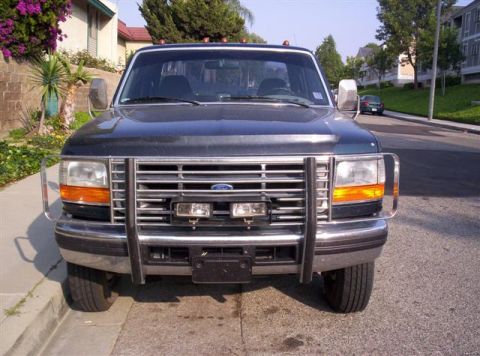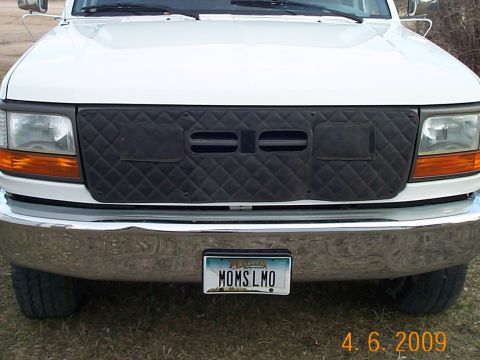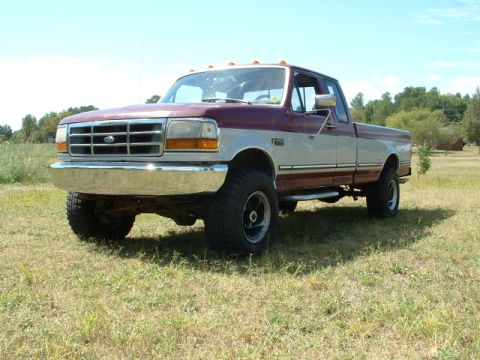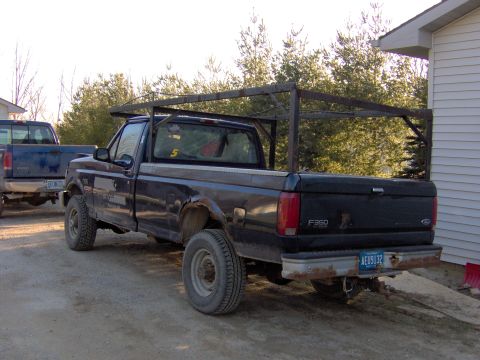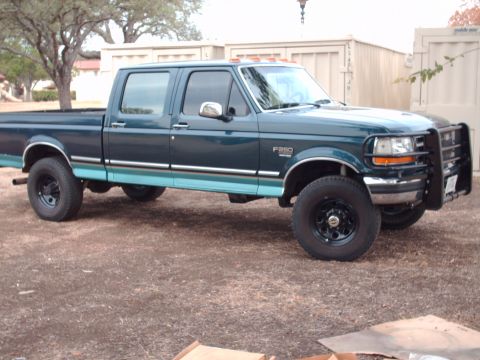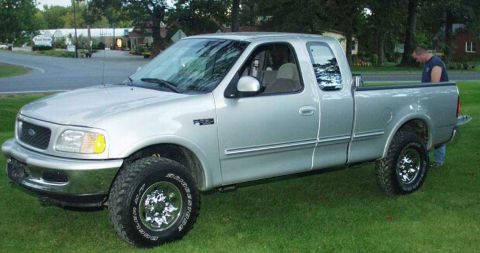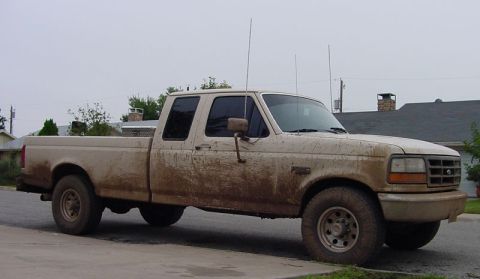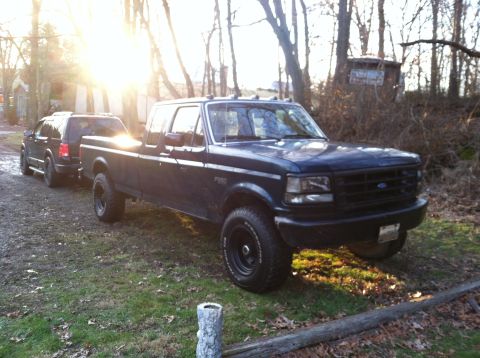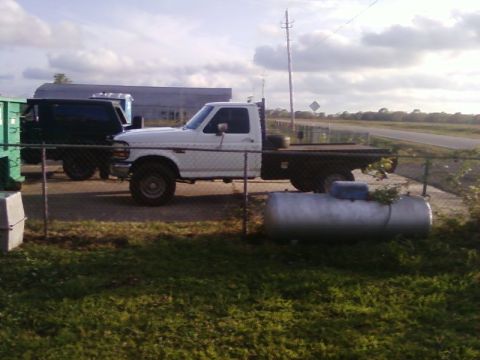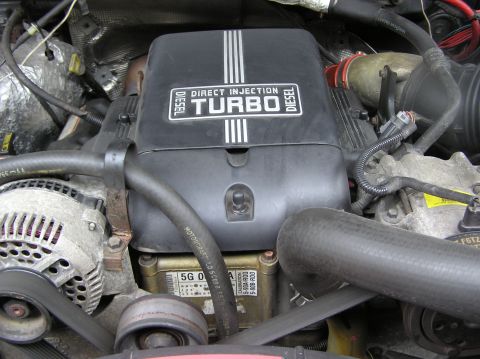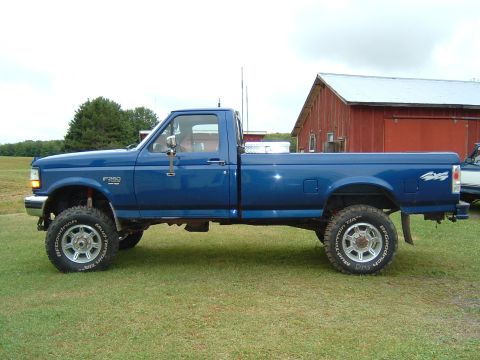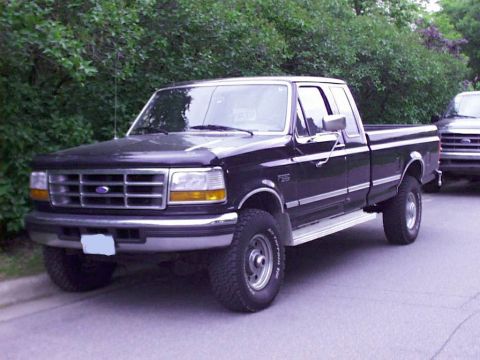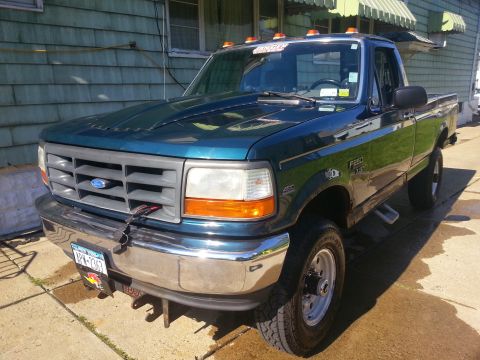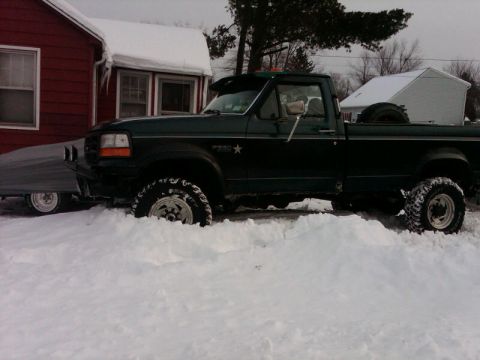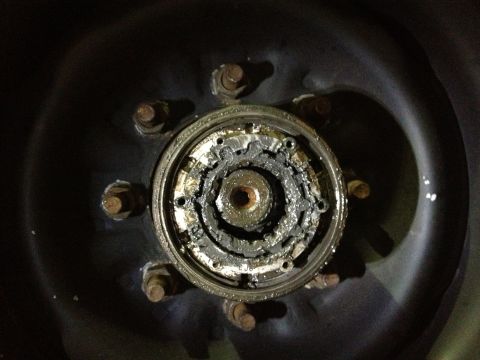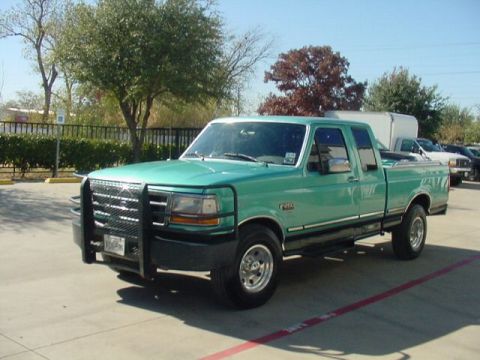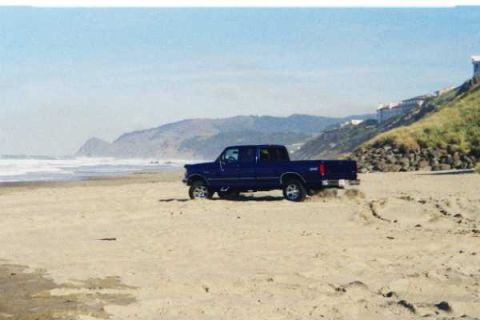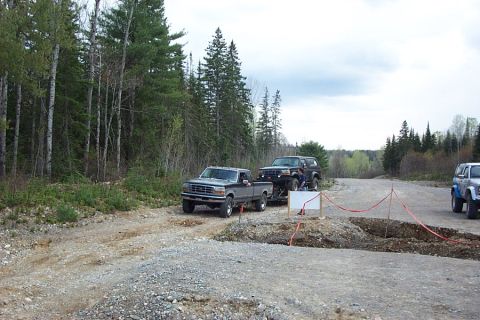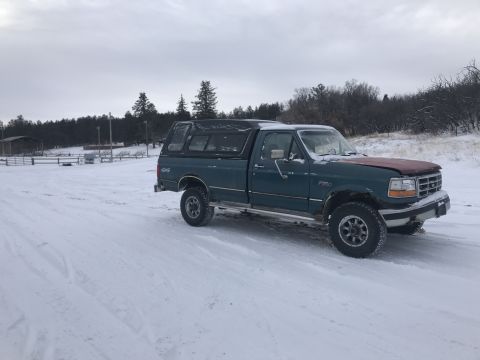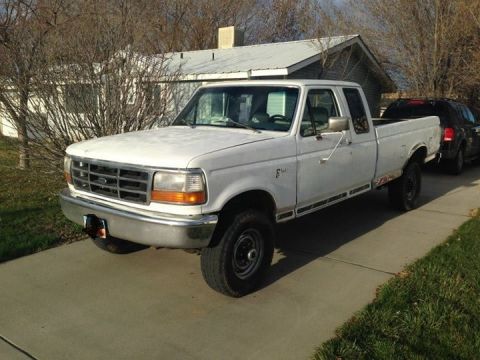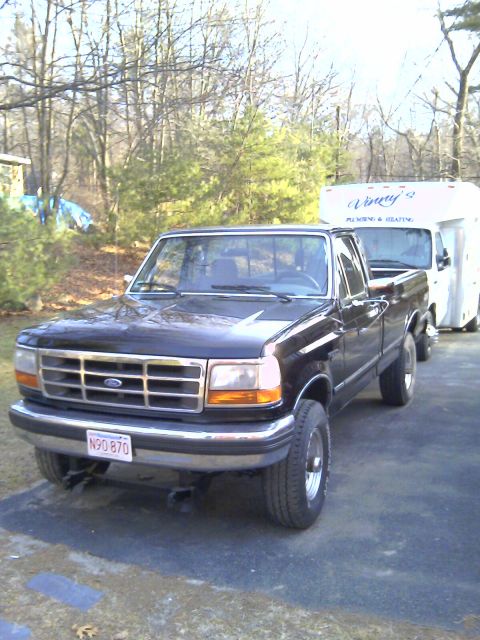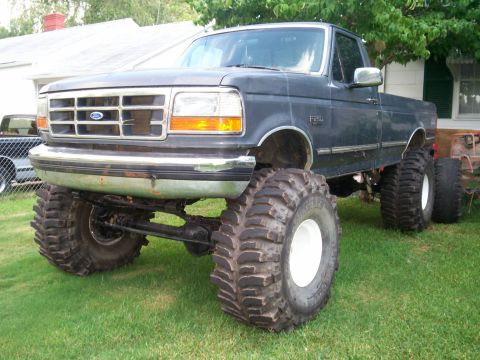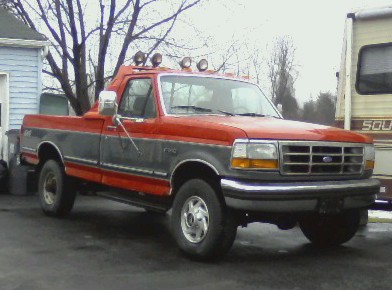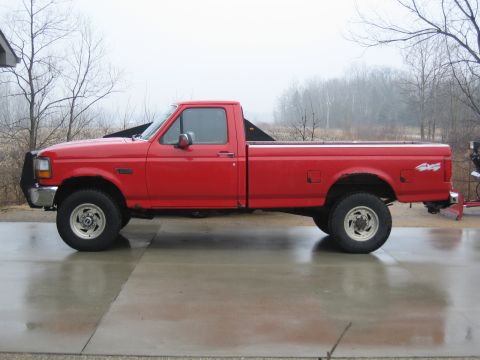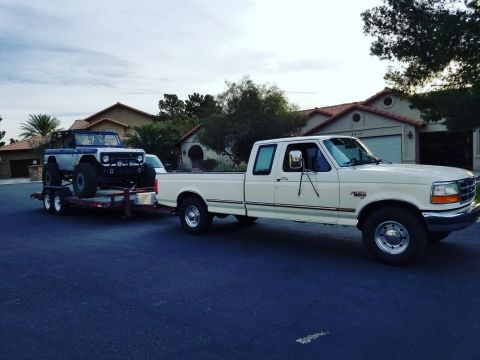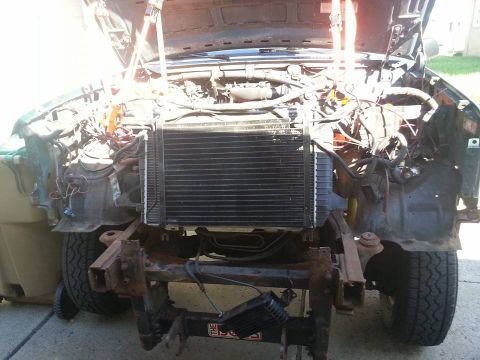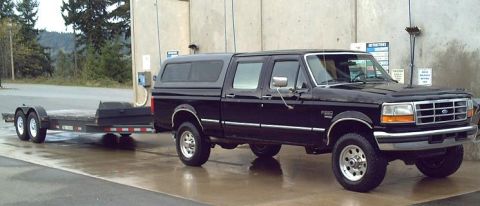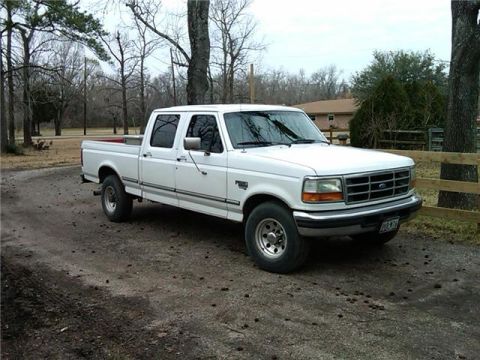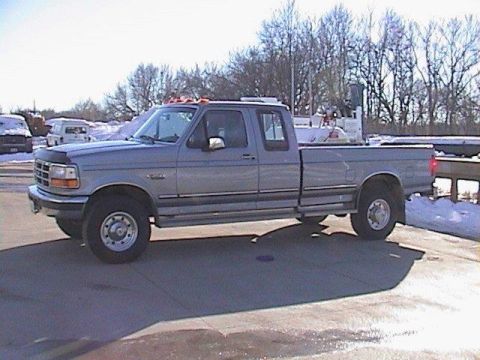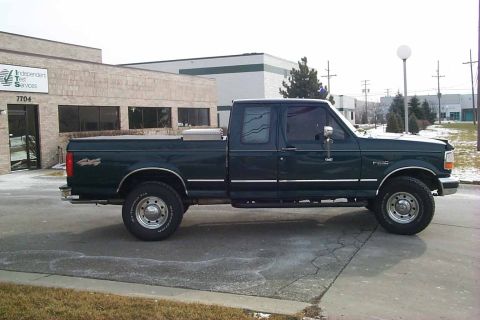
The 1992 model year brought the ninth-generation Ford F-Series, a restyle of the OBS truck that smoothed the front sheet metal into the rounded shape Ford literature and enthusiasts call the "Aeronose." The 1992-1997 Ford F-250 is the three-quarter-ton version, and along with the 1987-1991 trucks it is grouped under the "OBS" (Old Body Style) label because both share the same basic cab. The diesel story is the most important part of this generation. The 7.3L IDI V8 carried over, gained a factory turbocharger as the 7.3L IDI Turbo for 1993, and was then replaced mid-1994 by the 7.3L Power Stroke, a direct-injection turbodiesel built by International/Navistar that became the engine most associated with this era of F-250. The gas engines were the 300-cubic-inch (4.9L) inline-six, the 5.0L (302) V8 on light-duty trucks, the 5.8L (351 Windsor) V8, and the 7.5L (460) big-block. The four-wheel-drive 1992-1997 Ford F-250 used a Dana 50 Twin-Traction Beam independent front suspension. The body continued past the 1997 light-duty F-150 redesign: the OBS-style F-250 Heavy Duty ran through the 1997 model year as a bridge until the all-new Super Duty F-250 arrived for 1999. Transmissions included ZF five-speed manuals and the E4OD four-speed automatic.
Other Ford F-250 generations
The 1992-1997 Ford F-250 at a glance
- Generation: ninth-generation F-Series, the "Aeronose" restyle, grouped with the 1987-1991 trucks as "OBS"
- Years: 1992 through 1997; the OBS-style F-250 Heavy Duty bridged to the 1999 Super Duty
- Diesel: 7.3L IDI, then 7.3L IDI Turbo (1993), then the 7.3L Power Stroke direct-injection turbodiesel (from mid-1994)
- Gas engines: 4.9L (300) I6; 5.0L (302, light-duty trucks); 5.8L (351 Windsor); 7.5L (460) big-block
- 4x4 front suspension: Dana 50 Twin-Traction Beam independent front
- Transmissions: ZF five-speed manuals (S5-42, S5-47); E4OD four-speed automatic
- Safety: driver-side airbag added on light-duty trucks for 1994; OBD-II standard for 1996 builds
- Body styles: regular cab, SuperCab, and Crew Cab; Camper Special offered
Ford F-250 1992-1997 year by year
| Year | Ford F-250 changes | Engines offered |
|---|---|---|
| 1992 | Ninth-generation "Aeronose" restyle of the Ford F-250 cab arrives with smoother front sheet metal | 4.9L I6; 5.0L (light-duty); 5.8L; 7.5L; 7.3L IDI diesel |
| 1993 | The 7.3L IDI diesel gains a factory turbocharger as the 7.3L IDI Turbo in the Ford F-250 | 4.9L I6; 5.0L (light-duty); 5.8L; 7.5L; 7.3L IDI Turbo diesel |
| 1994 | A driver-side airbag is added on light-duty Ford F-250 trucks; mid-year, the 7.3L Power Stroke direct-injection turbodiesel replaces the 7.3L IDI Turbo | 4.9L I6; 5.0L (light-duty); 5.8L; 7.5L; 7.3L IDI Turbo, then 7.3L Power Stroke diesel |
| 1995 | The 7.3L Power Stroke continues as the Ford F-250 diesel; trim and equipment carry over | 4.9L I6; 5.0L (light-duty); 5.8L; 7.5L; 7.3L Power Stroke diesel |
| 1996 | OBD-II onboard diagnostics become standard on Ford F-250 trucks built after the start of 1996 | 4.9L I6; 5.0L (light-duty); 5.8L; 7.5L; 7.3L Power Stroke diesel |
| 1997 | The OBS-style Ford F-250 Heavy Duty continues this year as a bridge until the all-new Super Duty F-250 arrives for 1999 | 5.8L; 7.5L; 7.3L Power Stroke diesel |
What the "Aeronose" and "OBS" labels mean
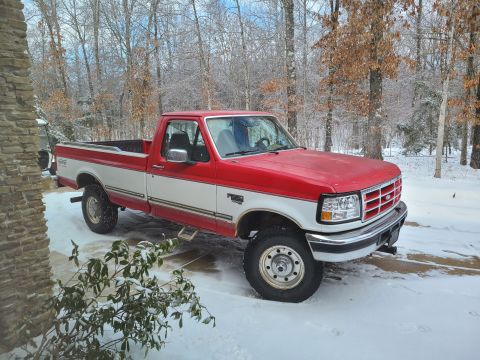
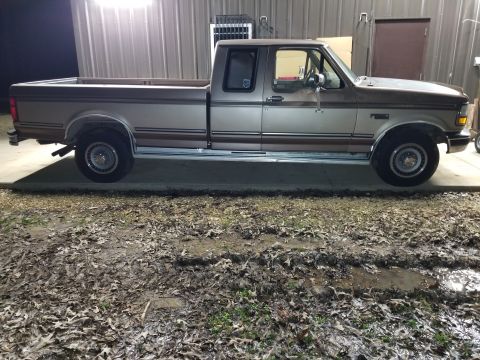
The 1992 Ford F-250 introduced the ninth-generation F-Series, which kept the cab structure from 1987 but reworked the front sheet metal and grille into a smoother, more aerodynamic shape widely called the "Aeronose." Because the 1987-1991 and 1992-1996 trucks share the same basic cab, both are grouped by enthusiasts under "OBS," for Old Body Style, a label coined after the very different 1997 light-duty redesign. The 1992 restyle was primarily exterior and interior; the chassis, axles, and engine family carried over. The three-quarter-ton F-250 continued to share its cab with the lighter F-Series, distinguished by its heavier chassis and higher ratings.
The diesel evolution: 7.3L IDI to 7.3L Power Stroke
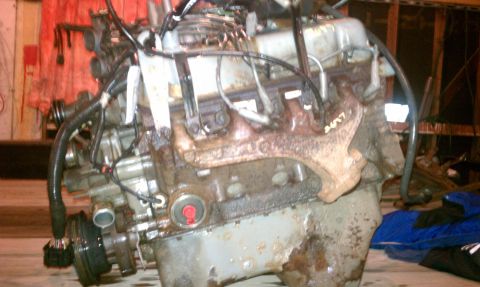
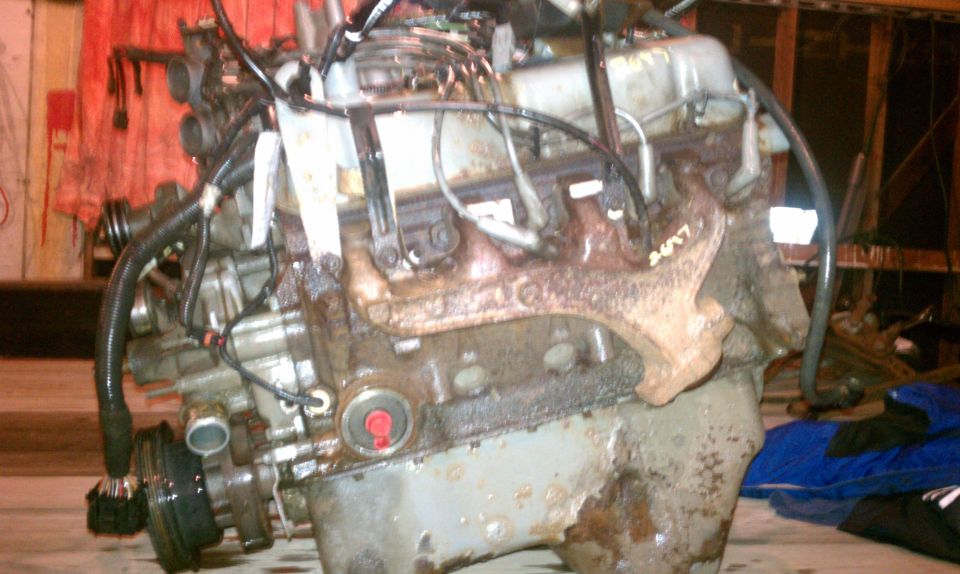
The diesel is the defining story of the 1992-1997 Ford F-250. The naturally aspirated 7.3L IDI carried in at the start of the generation, then gained a factory turbocharger as the 7.3L IDI Turbo for 1993, improving performance for towing and at altitude. The bigger change came mid-1994, when Ford replaced the IDI Turbo with the 7.3L Power Stroke, a clean-sheet direct-injection turbodiesel built by International/Navistar and known internally as the T444E. The Power Stroke used direct injection with a hydraulically actuated electronic unit injector (HEUI) system and produced around 210 to 215 horsepower in this era, a meaningful step over the older indirect-injection diesels. The 7.3L Power Stroke became the diesel most associated with the OBS F-250 and continued into the Super Duty era.
Gas engines, transmissions, and the front axle
The gas engines of the 1992-1997 Ford F-250 were the 300-cubic-inch (4.9L) inline-six, the 5.0L (302) V8 on light-duty versions, the 5.8L (351 Windsor) V8, and the 7.5L (460) big-block for heavy towing. Transmissions included ZF five-speed manuals, the lighter-duty S5-42 and the heavier-duty S5-47, along with the E4OD four-speed automatic, which served as the heavy-duty automatic for the diesel and big-block. The four-wheel-drive 1992-1997 Ford F-250 used a Dana 50 Twin-Traction Beam independent front suspension, continuing the layout adopted for 1987. As in the earlier OBS trucks, the F-250 of this era did not use a solid front axle; the solid front axle would arrive with the Super Duty platform for 1999.
Safety changes and OBD-II
The 1994 model year added a driver-side airbag on the light-duty Ford F-250, the same broad safety update that brought the airbag to the F-150. The 1996 model year made OBD-II onboard diagnostics standard on trucks built after the start of 1996, in line with the federal requirement. These were the major equipment milestones of the later OBS F-250 before the platform was replaced.
The 1997 bridge year and the road to Super Duty
The 1997 model year is where the F-250 lineup becomes complex. For 1997 the light-duty F-250 moved onto the all-new tenth-generation F-150 body, so a 1997-1999 "F-250 Light Duty" exists but wears the new rounded F-150 styling rather than the OBS shape. The OBS-bodied F-250 itself continued for the 1997 model year only, as the F-250 Heavy Duty, to bridge the gap until the all-new Super Duty F-250 arrived for the 1999 model year (built starting in early 1998). The OBS-style F-250 ended after 1997; the truck that overlapped the 1999 Super Duty was the new-body light-duty F-250, not the OBS truck. This generation page covers the OBS-bodied F-250 through its 1997 finale.
Frequently asked questions
What generation is the 1992-1997 Ford F-250?
The 1992-1997 Ford F-250 is the ninth-generation F-Series, a restyle of the cab introduced for 1987 with smoother "Aeronose" front sheet metal. It is grouped with the 1987-1991 trucks under the enthusiast label "OBS," for Old Body Style. The OBS-bodied F-250 ran through the 1997 model year before the 1999 Super Duty.
When did the 7.3L Power Stroke arrive in the Ford F-250?
The 7.3L Power Stroke direct-injection turbodiesel arrived in the Ford F-250 mid-1994, replacing the 7.3L IDI Turbo. Built by International/Navistar, it used direct injection with a HEUI system and produced around 210 to 215 horsepower in this era. It became the diesel most associated with the OBS F-250.
What is the difference between the 7.3L IDI and the 7.3L Power Stroke?
The 7.3L IDI is an older indirect-injection diesel, offered naturally aspirated and, from 1993, as a factory-turbocharged IDI Turbo. The 7.3L Power Stroke that replaced it mid-1994 is a clean-sheet direct-injection turbodiesel with electronic HEUI injection, making more power and being the basis for later Power Stroke development.
Did the 1992-1997 Ford F-250 4x4 have a solid front axle?
No. The 1992-1997 Ford F-250 4x4 used a Dana 50 Twin-Traction Beam independent front suspension, continuing the OBS-era layout. The solid front axle arrived on the F-250 with the all-new Super Duty platform for the 1999 model year.
Did the OBS Ford F-250 continue into 1998?
The OBS-bodied Ford F-250 ran through the 1997 model year as the F-250 Heavy Duty, bridging until the 1999 Super Duty. For 1997 the light-duty F-250 moved to the new tenth-generation F-150 body, so the 1997-1999 "F-250 Light Duty" that overlapped the 1999 Super Duty wore the new styling, not the OBS shape; no OBS-styled F-250 ran into 1998.
Sources
- Ford factory specification sheets for the 1992-1997 F-Series
- Wikipedia, Ford F-Series (ninth generation) and Ford Super Duty
- DieselHub references, 7.3L IDI and 7.3L Power Stroke; Wikipedia, Navistar T444E
- Haynes "The Complicated History of the 1996-1999 Ford F-250 and F-350" and Ford-Trucks.com
- VIN and data-plate decoding for engine and axle identification
Asked all the time
What generation is the 1992-1997 Ford F-250?
The 1992-1997 Ford F-250 is the ninth-generation F-Series, a restyle of the cab introduced for 1987 with smoother "Aeronose" front sheet metal. It is grouped with the 1987-1991 trucks under the enthusiast label "OBS," for Old Body Style. The OBS-bodied F-250 ran through the 1997 model year before the 1999 Super Duty.
When did the 7.3L Power Stroke arrive in the Ford F-250?
The 7.3L Power Stroke direct-injection turbodiesel arrived in the Ford F-250 mid-1994, replacing the 7.3L IDI Turbo. Built by International/Navistar, it used direct injection with a HEUI system and produced around 210 to 215 horsepower in this era. It became the diesel most associated with the OBS F-250.
What is the difference between the 7.3L IDI and the 7.3L Power Stroke?
The 7.3L IDI is an older indirect-injection diesel, offered naturally aspirated and, from 1993, as a factory-turbocharged IDI Turbo. The 7.3L Power Stroke that replaced it mid-1994 is a clean-sheet direct-injection turbodiesel with electronic HEUI injection, making more power and being the basis for later Power Stroke development.
Did the 1992-1997 Ford F-250 4x4 have a solid front axle?
No. The 1992-1997 Ford F-250 4x4 used a Dana 50 Twin-Traction Beam independent front suspension, continuing the OBS-era layout. The solid front axle arrived on the F-250 with the all-new Super Duty platform for the 1999 model year.
Did the OBS Ford F-250 continue into 1998?
The OBS-bodied Ford F-250 ran through the 1997 model year as the F-250 Heavy Duty, bridging until the 1999 Super Duty. For 1997 the light-duty F-250 moved to the new tenth-generation F-150 body, so the 1997-1999 "F-250 Light Duty" that overlapped the 1999 Super Duty wore the new styling, not the OBS shape; no OBS-styled F-250 ran into 1998.
Technical Reference
Member-uploaded diagrams & documents for this generation. AI-classified; community-verified where badged.
Wiring Diagrams (5)
- Ford Diesel Warning Lights Wiring Diagram 1992-1997 - Wait-to-Start, WIF LampThis is a wiring diagram titled "Diesel Warning Lights" covering the instrument-cluster warning lamp circuits for a Ford diesel truck. It shows power originating from fuse panel position 17 (10A, hot in start or run)…
- Wiring diagram of the Class II trailer/camper adapter showing trailer marker lamps, backup lamps and battery charge relays with connector IDs.
- Wiring diagram of the 1997 7.3L auxiliary powertrain control showing DLC circuits 107 (P), 915 (PK/LB) and 914 (T/O) to PCM connector C1027.
- Location diagram of the APP (TPS) and IVS sensors and their harness connectors near the accelerator pedal, with numbered callouts.
- Wiring diagram of the F-Series diesel fuel tank selector switch and 6-port selector valve, with in-tank sender and C268 and C423 connector pinouts.
Data/Spec Plates (5)
- 1997 International Navistar 7.3L diesel engine label showing model A225, 225 BHP @ 3000 RPM and emission control system ECM, TC, DI, OC.
- Ford certification label dated 11/96 showing 8600 LB GVWR, LT235/85R16E tires, an edited VIN, axle and paint codes, beside calibration label 6-90A-R11.
- Ford label dated 02/93 for an F-250 HD extended cab, 8800LB GVWR on LT235/85R16E tires, annotated to decode Mocha paint, C6 trans and C9 3.55 axle.
- Ingersoll Rand SS5L5 Air Compressor Data Plate - 5HP 60 Gal 230V SpecsThis photograph shows the data/specification plate on an Ingersoll Rand Industrial Technologies air compressor, model SS5L5, serial number CBV128270. The label lists key performance and electrical specifications: air…
- 1992 Ford F-250 California Smog Check Report - ASM Emission Test Results (PASS)This document is a California Smog Check Vehicle Inspection Report, uploaded to the gallery of a 1992 Ford F-250. It shows the vehicle passed both the visual/functional emission control checks and the ASM tailpipe…
Schematics (3)
- Ford Power Stroke Diesel Lube Oil System Schematic: Oil Flow & Bypass PSIThis document is a lube (low-pressure) oil system schematic and description for a Ford Power Stroke diesel engine, uploaded to a 1997 Ford F-250 gallery. The top half shows two exploded-view engine diagrams with…
- Ford 7.3L Diesel Fuel System Flow Chart - Supply, Regulator & Return DiagramThis document is a color-coded fuel system flow chart (schematic) for a diesel engine fuel supply system. It traces fuel flow beginning at the fuel tank, where it is drawn under suction (yellow) to a two-stage fuel…
- Steering linkage schematic marking PA. side and DR. side tie rods at 19 3/4" and 21 5/16" from end to inner stud centerline, with drag link and pitman arm.
Vacuum Routing (2)
- Ford underhood labels with vacuum hose routing, engine timing procedure at 10° BTDC, and 1993 heavy-duty emission certification for the 5.8L and 7.5L.
- Underhood vacuum hose routing label showing lines to the throttle body, air valves, carbon canister, fuel tanks and manifold vacuum.
Exploded Parts (2)
- 1997 Ford 7.3L Power Stroke Fuel System Exploded Diagram & Part NumbersThis document is an exploded parts diagram of the fuel system for a 1997 Ford 7.3L (Power Stroke diesel) engine, titled "'97 7.3L Fuel System." The illustration shows 57 numbered callouts pointing to components…
- Ford 7.3L Diesel Fuel Filter Housing Exploded Diagram - Component CalloutsThis document is an exploded parts diagram of a diesel fuel filter housing assembly, uploaded to the gallery of a 1997 Ford F-250. The illustration shows the filter housing bowl and its associated valve body with…
Service Procedures (2)
- 1994.5-97 Ford 7.3L Auxiliary Powertrain Control (APC) Module Installation SheetThis document is an installation sheet for the Auxiliary Powertrain Control (APC) module kit, part number 59A-02929, applicable to 1994.5-1997 Ford 7.3L (Power Stroke diesel) trucks. It includes an exploded-view…
- 1994.5-97 Ford 7.3L Auxiliary Powertrain Control (APC) Module Installation SheetThis document is an installation sheet for the Auxiliary Powertrain Control (APC) module kit for 1994.5-1997 Ford trucks with the 7.3L diesel engine. It includes an exploded-view diagram showing how the APC Module…
Fuse & Relay Charts (1)
Manual Pages (1)
Blueprints (1)
- 1994 Ford F-250 Custom Bumper Blueprint - Hand-Drawn Design with Tube SizesThis document is a hand-drawn blueprint/sketch for a custom truck bumper design, uploaded to a 1994 Ford F-250 gallery. It contains two views: an upper front-elevation view showing a bumper with a triangular (A-frame…
The wall · registered 1992-1997 F-250s
Sorted by depth of documentation. Click any vehicle to open its permanent record.