Cylinder Charge in Spark-Ignition Engines: Fresh Gas, Residual Gas & EGR Diagram
Reference · 1992-1995 TaurusAll 37 manual pages
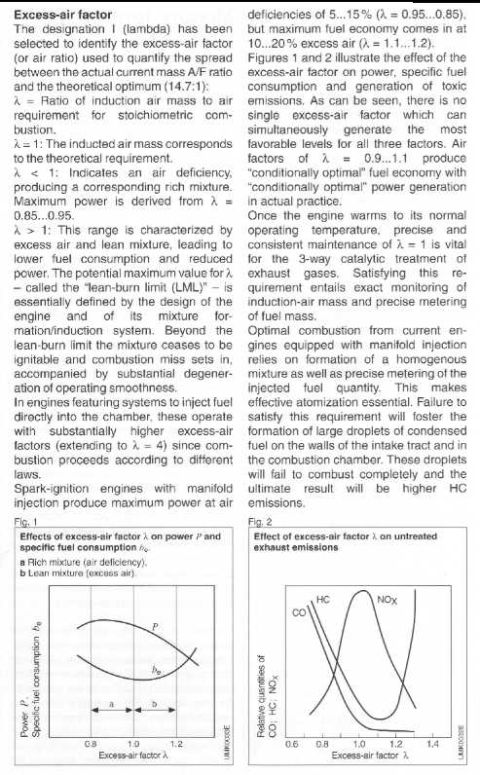
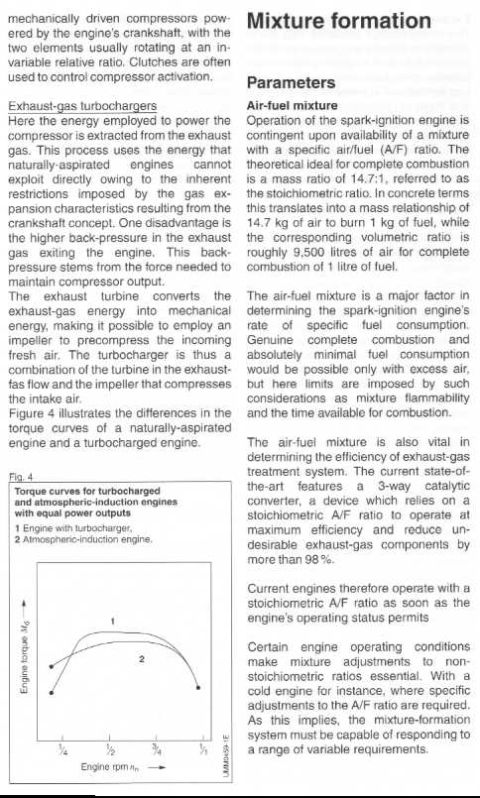
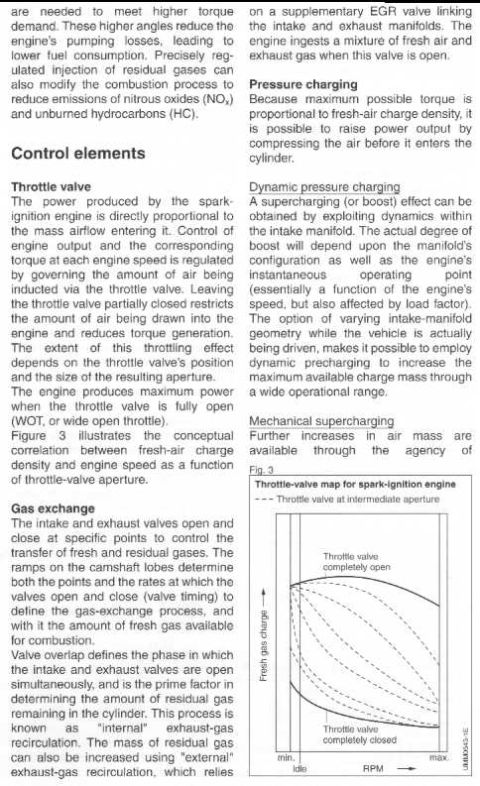

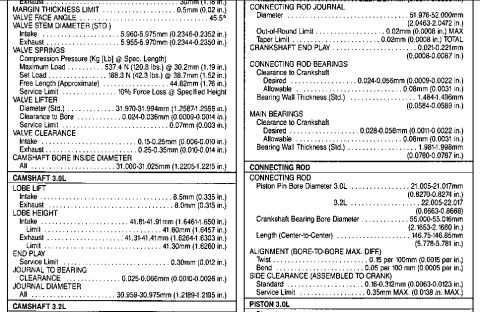
Bosch reference page on the ignition subsystem and cylinder charge composition (fresh air/fuel plus residual gases) in the spark-ignition engine, with a labeled charge diagram.
Part of 1992-1995 Ford Taurus Manual Pages
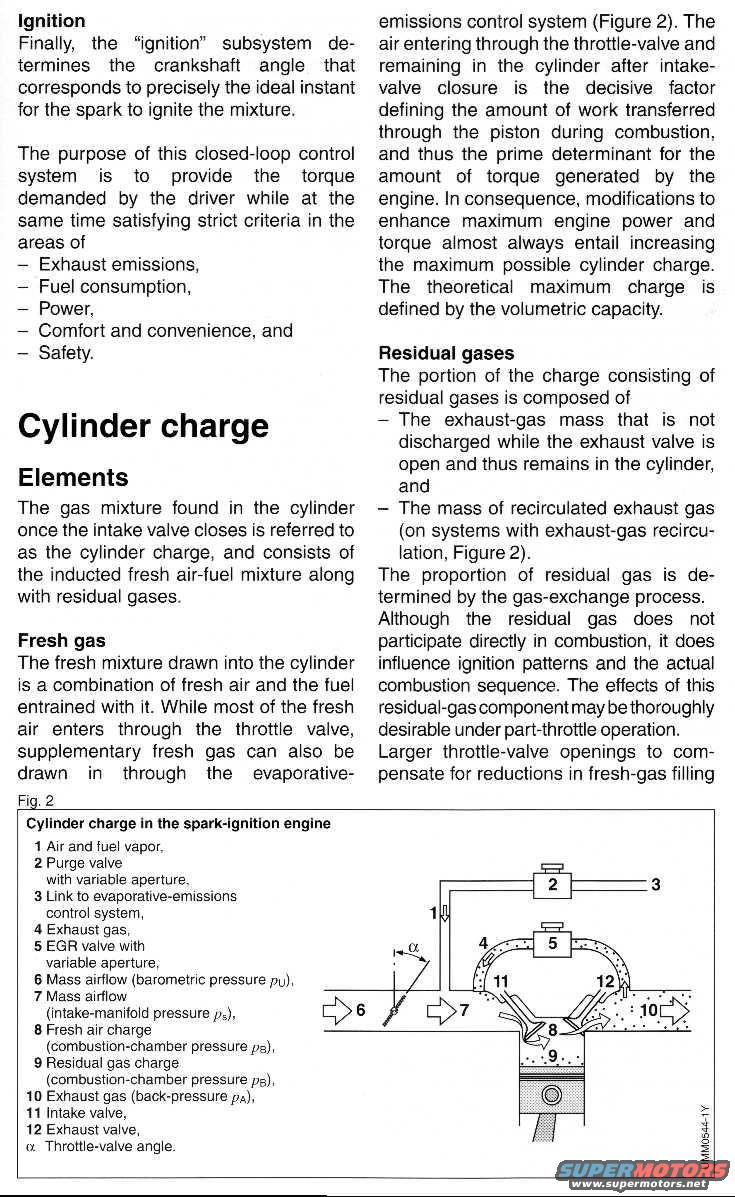
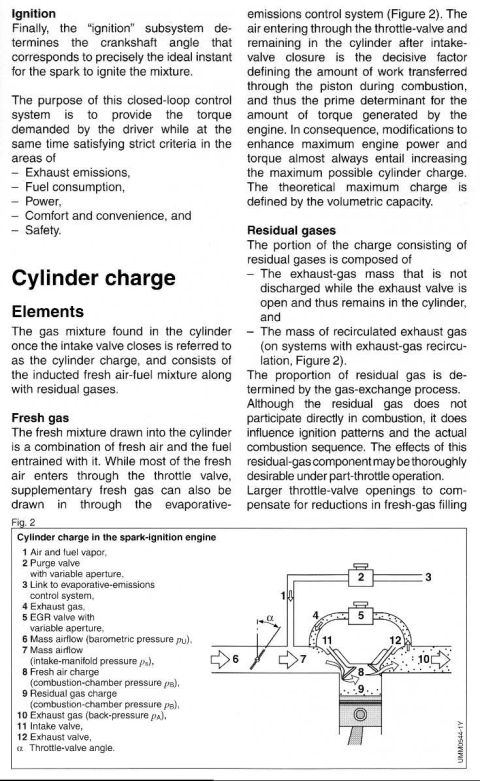
This manual page explains the fundamentals of cylinder charge in a spark-ignition (gasoline) engine as part of an engine management system description. It first concludes an overview of the ignition subsystem, which determines the crankshaft angle for the ideal spark instant, and lists the goals of the closed-loop control system: exhaust emissions, fuel consumption, power, comfort and convenience, and safety. The main section defines the cylinder charge as the gas mixture in the cylinder after intake-valve closure, consisting of fresh air-fuel mixture plus residual gases. The "fresh gas" subsection explains that air enters mainly through the throttle valve (with supplementary gas via the evaporative-emissions system) and that trapped air mass is the prime determinant of engine torque, so power increases usually require increasing maximum cylinder charge. The "residual gases" subsection describes the two sources of residual gas, undischarged exhaust and recirculated exhaust (EGR), and notes their influence on ignition and combustion, which can be desirable at part throttle. Figure 2 is a labeled schematic, "Cylinder charge in the spark-ignition engine," identifying 12 components including the purge valve, EGR valve, mass airflow points with associated pressures (barometric, intake-manifold, combustion-chamber, back-pressure), intake and exhaust valves, and throttle-valve angle α.
Is this accurate? Sign in to help verify it.
Frequently asked questions
- What is the cylinder charge in a spark-ignition engine?
- The gas mixture found in the cylinder once the intake valve closes; it consists of the inducted fresh air-fuel mixture along with residual gases.
- What determines the amount of torque an engine generates?
- The air entering through the throttle valve and remaining in the cylinder after intake-valve closure is the decisive factor defining work transferred through the piston during combustion, and thus the prime determinant of engine torque.
- What are residual gases composed of?
- The exhaust-gas mass that is not discharged while the exhaust valve is open and remains in the cylinder, plus the mass of recirculated exhaust gas on systems with exhaust-gas recirculation (EGR).
- What does the ignition subsystem control?
- It determines the crankshaft angle that corresponds to precisely the ideal instant for the spark to ignite the mixture.
- What does Figure 2 show?
- A diagram of cylinder charge in the spark-ignition engine, labeling air and fuel vapor, purge valve, evaporative-emissions link, exhaust gas, EGR valve, mass airflow points with pressures (p_U, p_s, p_B, p_A), fresh air and residual gas charges, intake and exhaust valves, and throttle-valve angle α.


No comments yet.