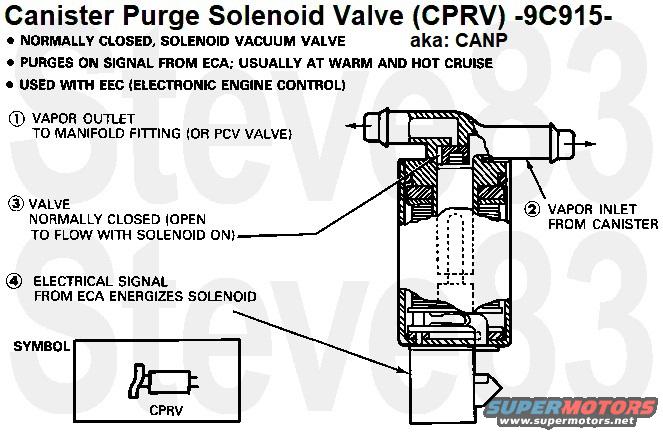
Diagram of Canister Purge Solenoid Valve CPRV 9C915 with cutaway
'90-96 Fuel Pump SystemView all 81
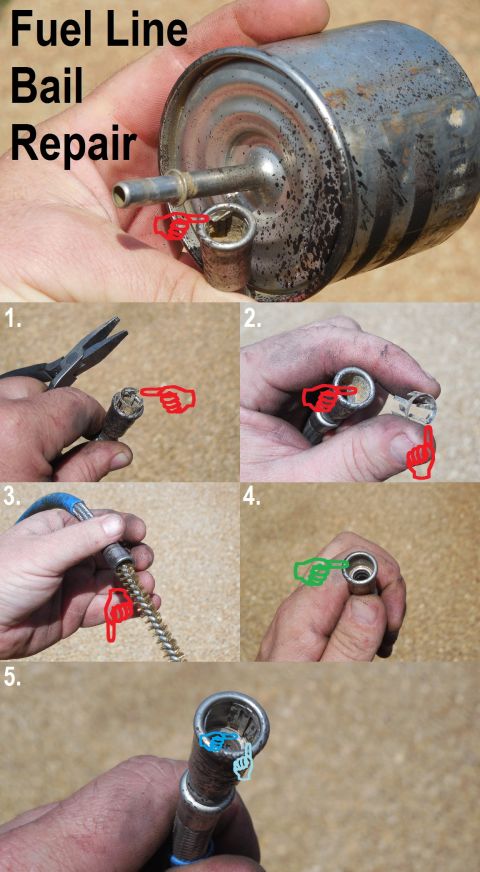
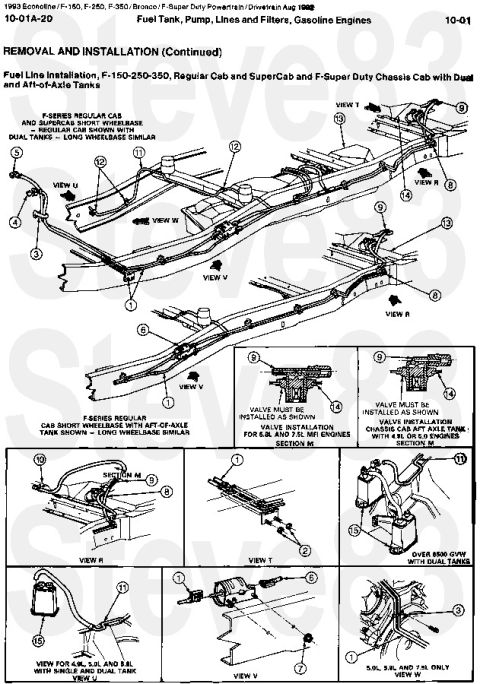
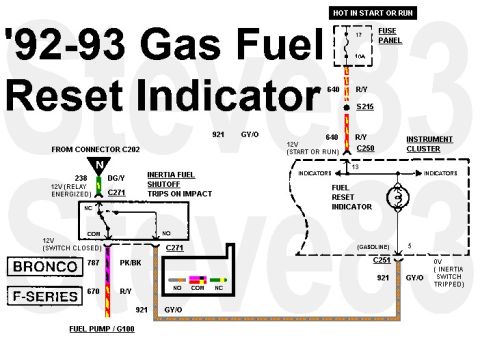
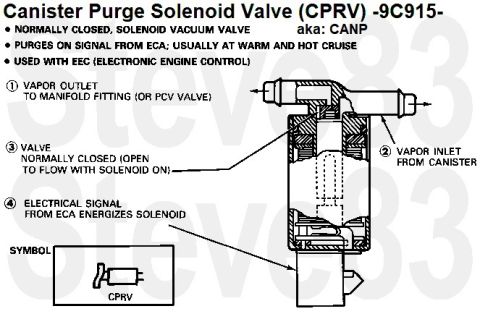
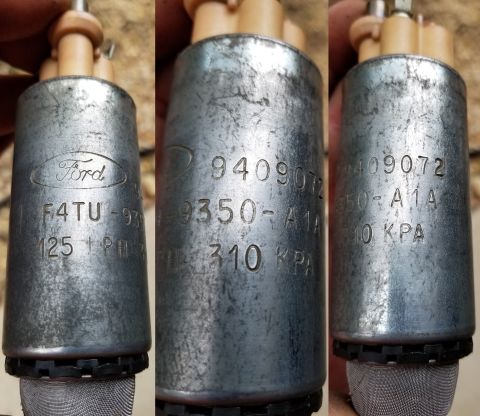
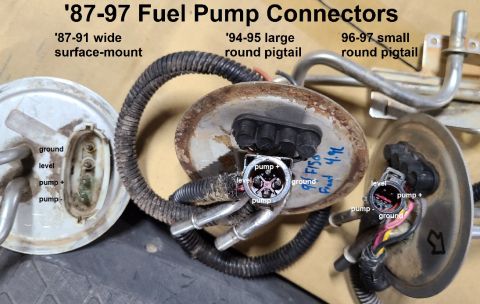
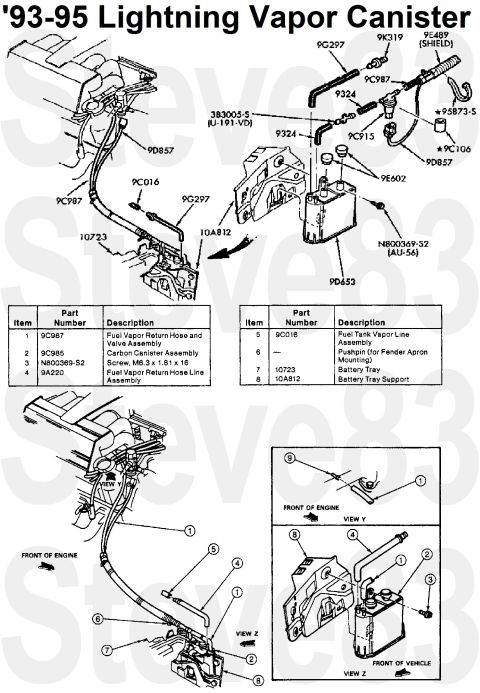
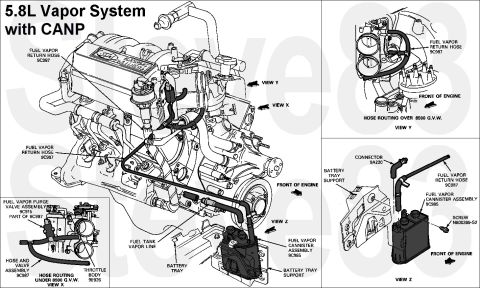
Canister Purge Valve (CANP/CPRV)
IF THE IMAGE IS TOO SMALL, click it.
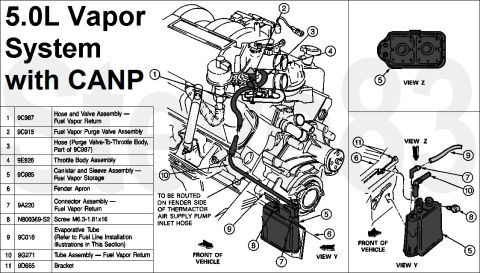
The port farther from the connector goes to the throttle body or manifold; the one closer comes from the charcoal canister.
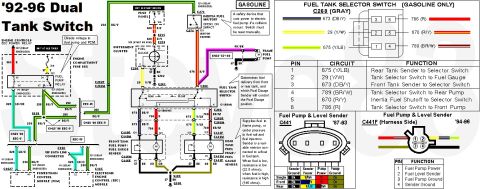
Beginning in some '95 F-series/Broncos, the VMV (LG/Bk wire) replaced the CANP (Gy/Y wire).
See also: .
.  .
.  .
.  .
.  .
.  .
. 
Diagnostic Trouble Code (DTC) P0443 indicates a failure in the EVAP canister purge valve circuit.
Possible causes:
-- VPWR circuit open.
-- EVAP CANISTER PURGE open.
-- EVAP CANISTER PURGE shorted to PWR GND or SIG RTN.
-- Damaged EVAP canister purge valve.
-- Damaged PCM.
l Key off.
l Disconnect EVAP canister purge valve.
l Key on, engine off.
l Measure VPWR circuit (Red) voltage at EVAP canister purge valve harness connector.
l Key off.
l Was voltage greater than 10.5 volts?
Yes
GO to «HW2».
No
REPAIR open circuit. RESTORE vehicle. COMPLETE PCM. Reset to clear DTCs. RERUN «Quick Test».
_________________________________________________________________
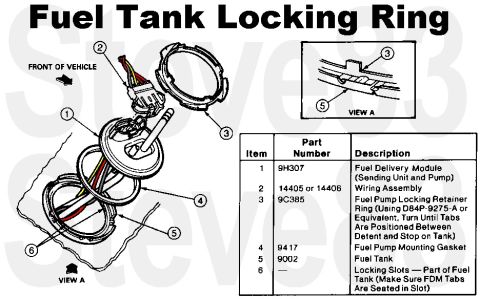
The Fuel Tank Vapor System -
Gasoline is extremely volatile in almost all environments, and even diesel is aromatic. Since these vapors can be flammable or noxious, they must be contained & routed to the engine to be burned. But they are produced even when the vehicle is unused for long periods, so a simple tube from the fuel tank to the engine would still allow them to vent out the air filter. Also, during hot weather or violent maneuvers, the quantity of vapor generated can exceed the engine's capacity at low RPM, so the vapors must be stored & their flow regulated.
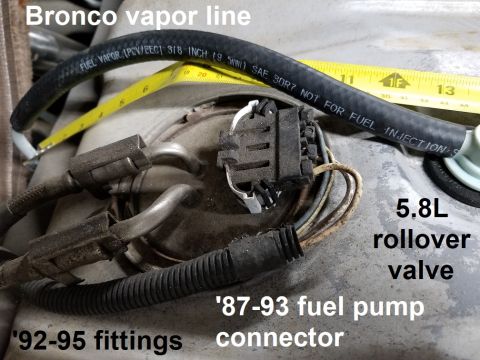
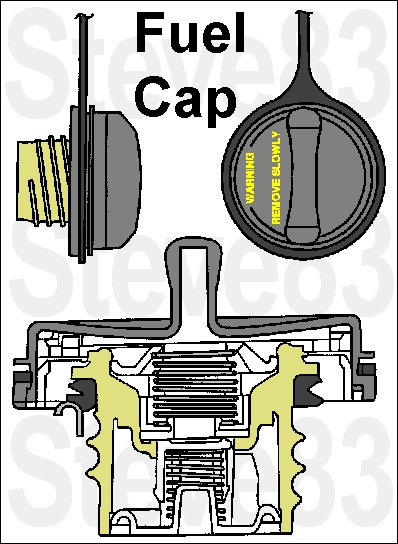
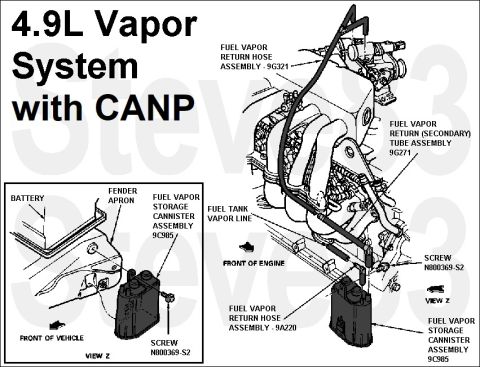
The system begins in the fuel tank where one or more valves are used to vent vapor pressure, but also to exclude liquid from the vapor system due to overfilling, slosh, or rollover. There may also be a pressure sensor to monitor the system's operation & effectiveness, and/or a vent valve (CANV solenoid, or built into the cap) to allow fresh air [b]into[/b] the fuel tank or vapor system. As vapor exits the tank, it flows thru a tube to a canister Motorcraft CX741 or Motorcraft W0133-1698805-MTR containing carbon (activated charcoal), which absorbs the fuel vapor, but allows air to pass. Depending on the size of the fuel tank, there may be several canisters, or a larger canister. Older canisters are vented, but they're known to collect water, so most modern canisters are sealed. Another tube leads from the canister toward the engine's intake, but it may contain a regulator valve (CANP solenoid, or VMV). The vapor system may also combine with the PCV system at this point.
Being virtually a zero-maintenance system, most faults are simple valve failures, hose leaks, or mechanical damage (collision, road debris, etc.).
Faults in the evaporative systems are usually detected by the use of a special machine which pumps a non-toxic non-flammable high-visibility smoke into the vapor lines to make leaks evident. But a common source of evaporative codes on '97-04 vehicles is the operator not securing the fuel filler cap. Earlier vehicles didn't detect this, and later vehicles are designed to exclude this from turning on the CEL.
Is this accurate? Sign in to help verify it.

No comments yet.