1995 Ford Bronco fuel lines routing diagram with detail views
'90-96 Fuel Pump SystemView all 81
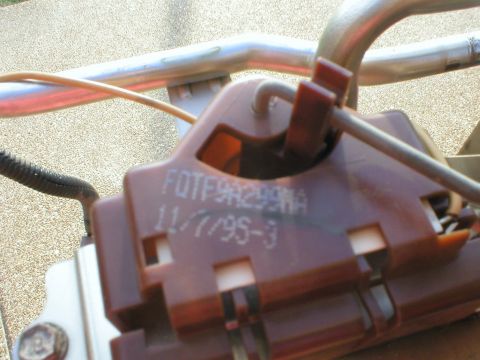
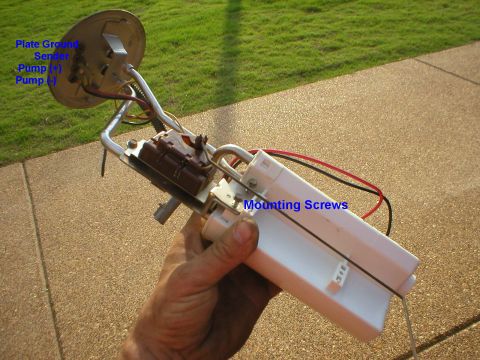
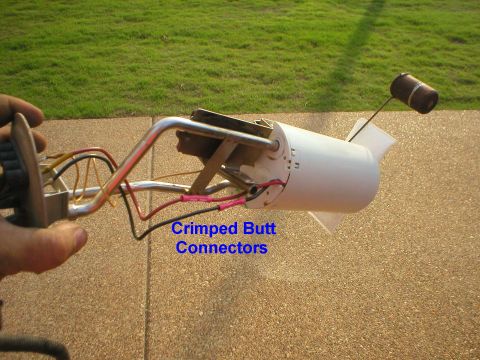
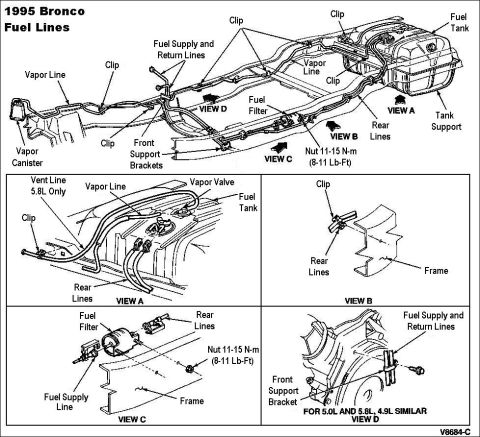
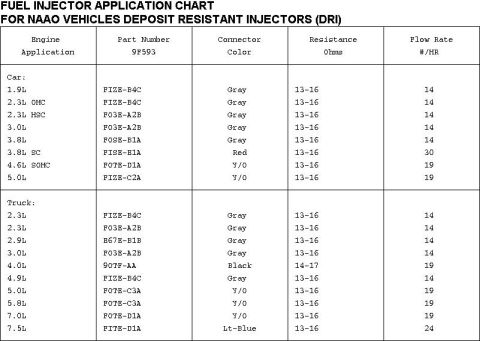
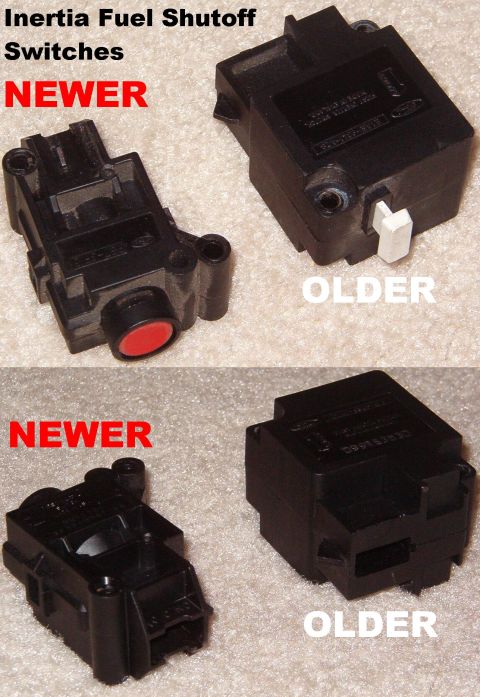
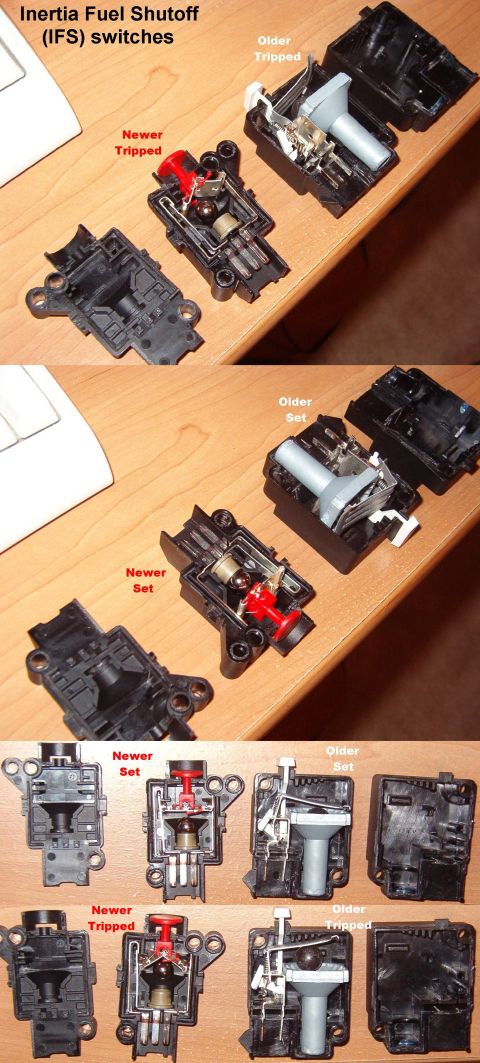
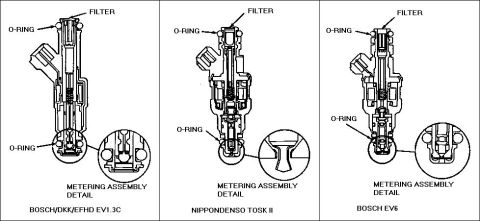
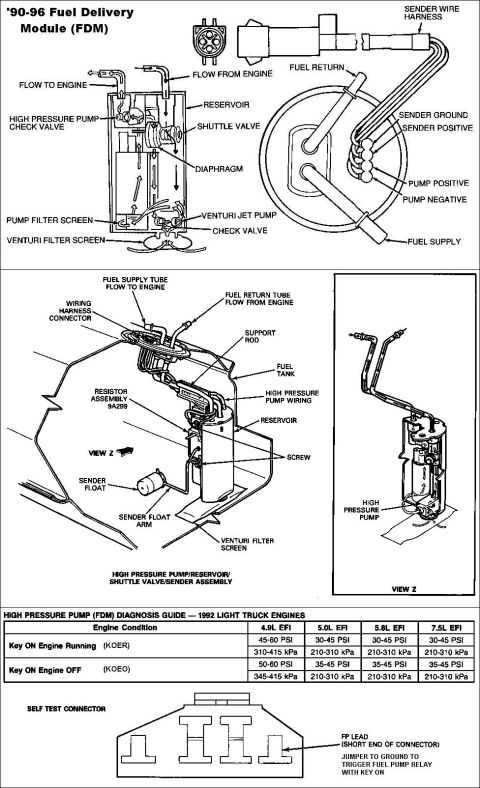
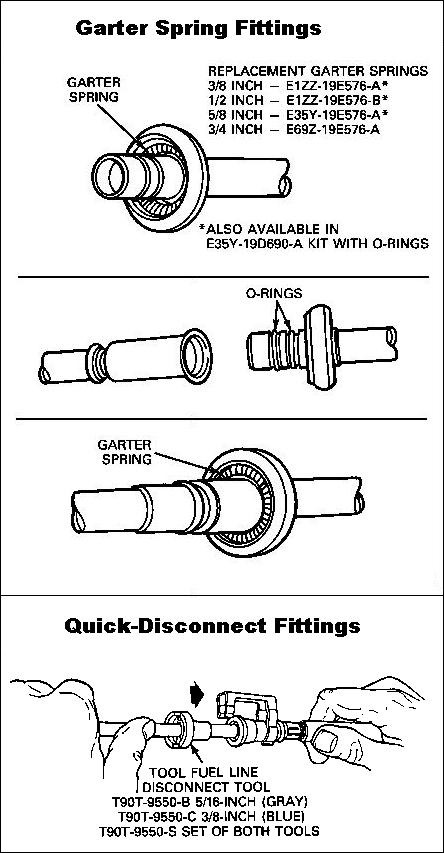
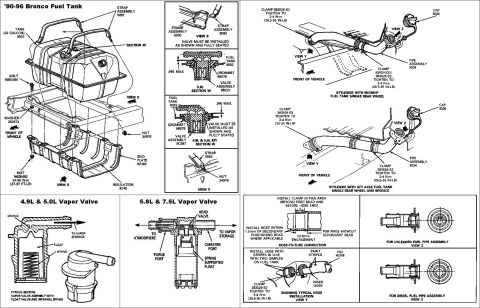
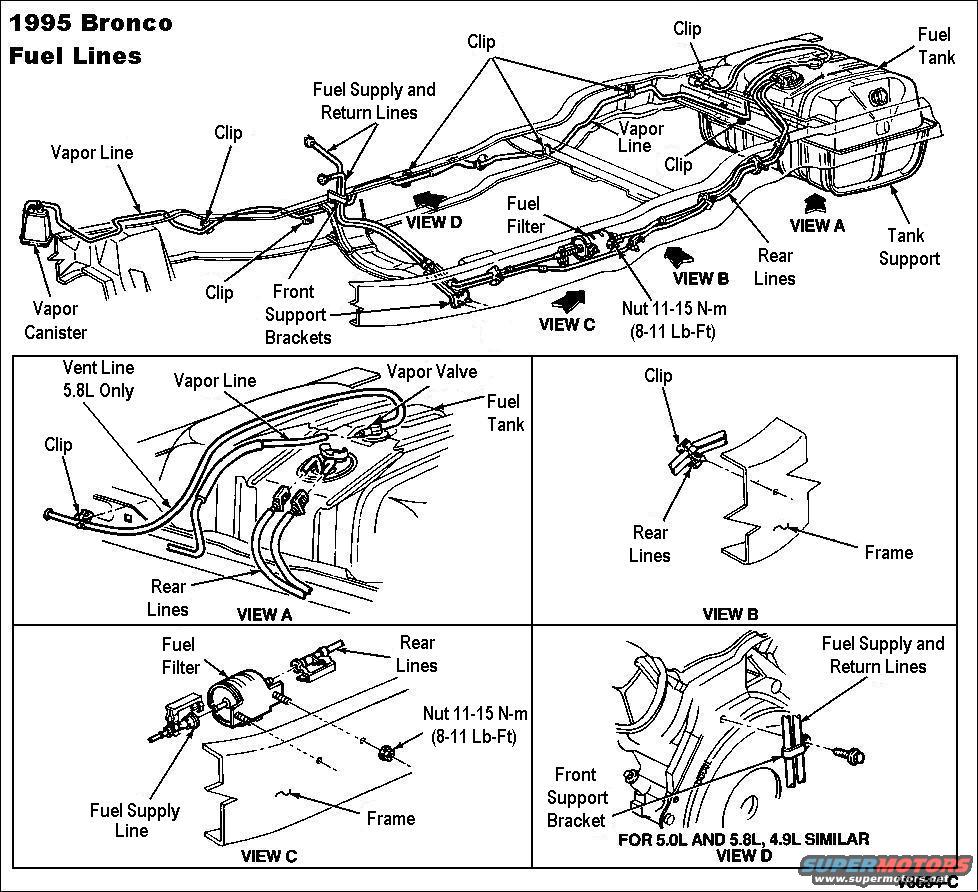
Fuel Lines 95 Bronco (all EFI similar)
IF THE IMAGE IS TOO SMALL, click it.
Supply (pressure) lines are blue; return lines are gray.
Same as '90-96 single tank gas (& '97 over 8500GVWR)
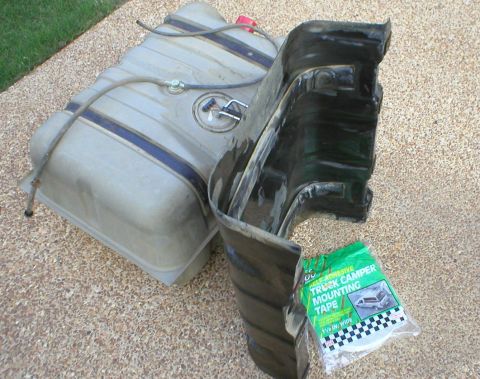
To temporarily or permanently convert a '90-up 2-tank truck to a single tank, read this caption:
See also: .
.  .
.  .
.  .
.  .
. 
The Fuel Tank Vapor System -
Gasoline is extremely volatile in almost all environments, and even diesel is aromatic. Since these vapors can be flammable or noxious, they must be contained & routed to the engine to be burned. But they are produced even when the vehicle is unused for long periods, so a simple tube from the fuel tank to the engine would still allow them to vent out the air filter. Also, during hot weather or violent maneuvers, the quantity of vapor generated can exceed the engine's capacity at low RPM, so the vapors must be stored & their flow regulated.
The system begins in the fuel tank where one or more valves are used to vent vapor pressure, but also to exclude liquid from the vapor system due to overfilling, slosh, or rollover. There may also be a pressure sensor to monitor the system's operation & effectiveness, and/or a vent valve (CANV solenoid, or built into the cap) to allow fresh air [b]into[/b] the fuel tank or vapor system. As vapor exits the tank, it flows thru a tube to a canister Motorcraft CX741 or Motorcraft W0133-1698805-MTR containing carbon (activated charcoal), which absorbs the fuel vapor, but allows air to pass. Depending on the size of the fuel tank, there may be several canisters, or a larger canister. Older canisters are vented, but they're known to collect water, so most modern canisters are sealed. Another tube leads from the canister toward the engine's intake, but it may contain a regulator valve (CANP solenoid, or VMV). The vapor system may also combine with the PCV system at this point.
Being virtually a zero-maintenance system, most faults are simple valve failures, hose leaks, or mechanical damage (collision, road debris, etc.).
Faults in the evaporative systems are usually detected by the use of a special machine which pumps a non-toxic non-flammable high-visibility smoke into the vapor lines to make leaks evident. But a common source of evaporative codes on '97-04 vehicles is the operator not securing the fuel filler cap. Earlier vehicles didn't detect this, and later vehicles are designed to exclude this from turning on the CEL.
See also: .
.  .
.  .
.  .
.  .
. 
Is this accurate? Sign in to help verify it.
No comments yet.