Home/
Registry/
Nissan/
Micra/
1983-1992/
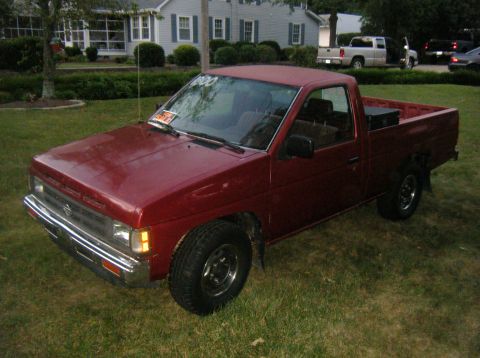
1990 Nissan Micra/
Photo
supermotors.net/registry/media/194464
Nissan Micra Water Pump Removal & Radiator Pressure Test - Cooling System LC-6

Reference · 1983-1992 MicraAll 115 service procedures
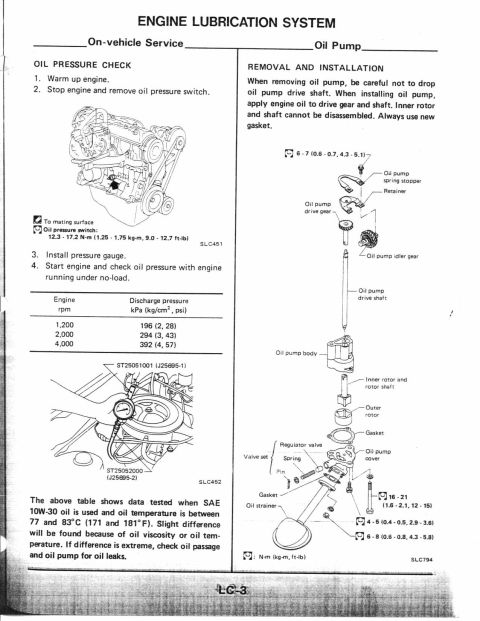
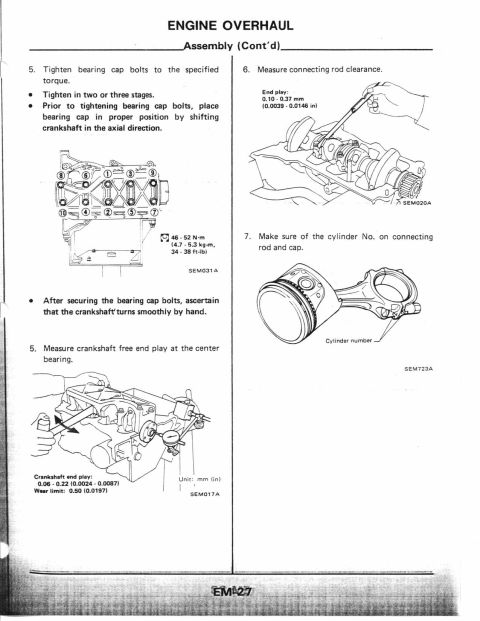
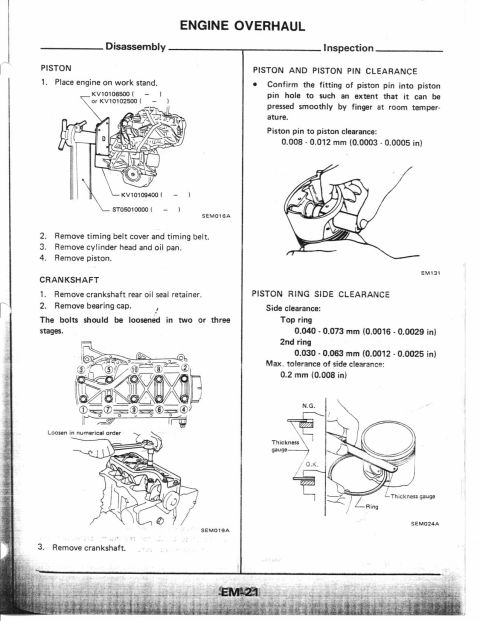
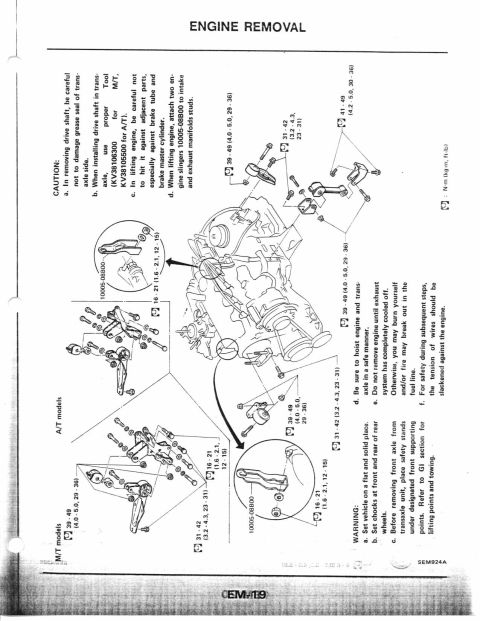
Service procedure for water pump and radiator removal plus cooling-system pressure inspection.
Part of 1983-1992 Nissan Micra Service Procedures
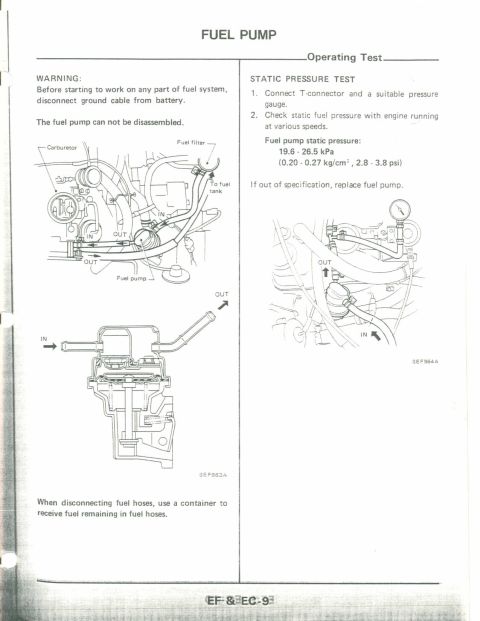
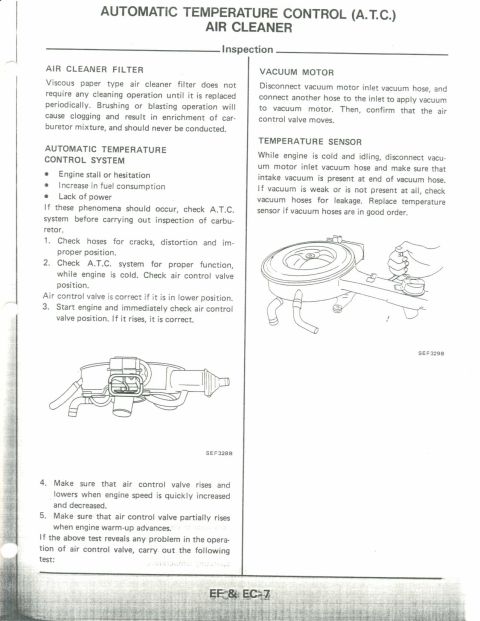
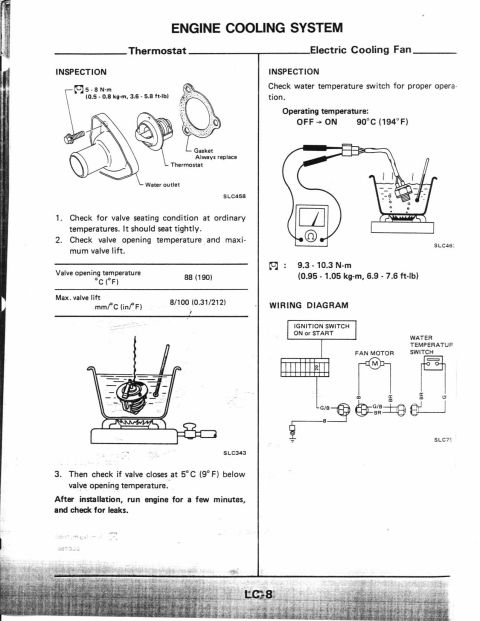
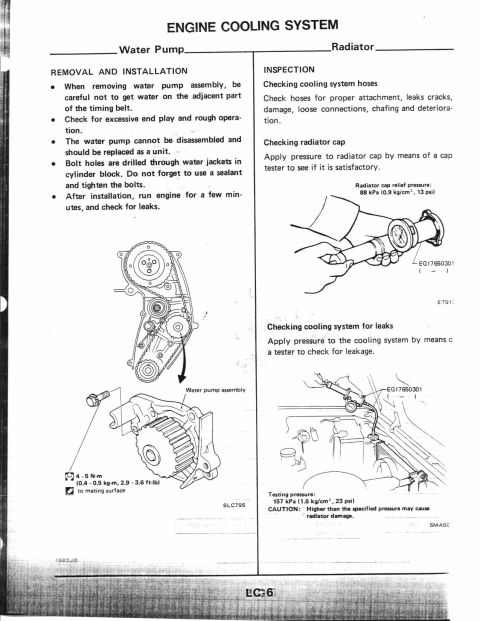
This page is from a Nissan factory-style service manual section titled "ENGINE COOLING SYSTEM" (page LC-6), covering the water pump and radiator. The left column details water pump removal and installation precautions: avoid getting water on the timing belt, check for excessive end play and rough operation, replace the pump as a unit (it cannot be disassembled), apply sealant to bolts because bolt holes are drilled through water jackets in the cylinder block, and run the engine after installation to check for leaks. An exploded illustration shows the water pump assembly behind the timing belt, with a bolt torque specification of 4-5 N·m (0.4-0.5 kg-m, 2.9-3.6 ft-lb) and sealant applied to the mating surface. The right column covers radiator inspection: checking cooling system hoses for leaks, cracks, damage, loose connections, chafing and deterioration; pressure-testing the radiator cap with tool EG17650301 (relief pressure 88 kPa / 0.9 kg/cm² / 13 psi); and pressure-testing the cooling system for leaks at 157 kPa (1.6 kg/cm², 23 psi), with a caution that exceeding this pressure may damage the radiator. Uploaded to a 1990 Nissan Micra gallery; the page itself shows no year/model markings.
Is this accurate? Sign in to help verify it.
Frequently asked questions
- What is the torque spec for the water pump bolts?
- 4 - 5 N·m (0.4 - 0.5 kg-m, 2.9 - 3.6 ft-lb), with sealant applied to the mating surface.
- What is the radiator cap relief pressure?
- 88 kPa (0.9 kg/cm², 13 psi), checked with cap tester EG17650301.
- What pressure should be used to test the cooling system for leaks?
- 157 kPa (1.6 kg/cm², 23 psi). Caution: higher than the specified pressure may cause radiator damage.
- Can the water pump be rebuilt?
- No. The manual states the water pump cannot be disassembled and should be replaced as a unit.
- Why is sealant required on the water pump bolts?
- Because the bolt holes are drilled through water jackets in the cylinder block, so sealant must be used when tightening the bolts.

No comments yet.