Nissan Micra Brake Hydraulic Line Removal, Installation & Inspection (BR-4)
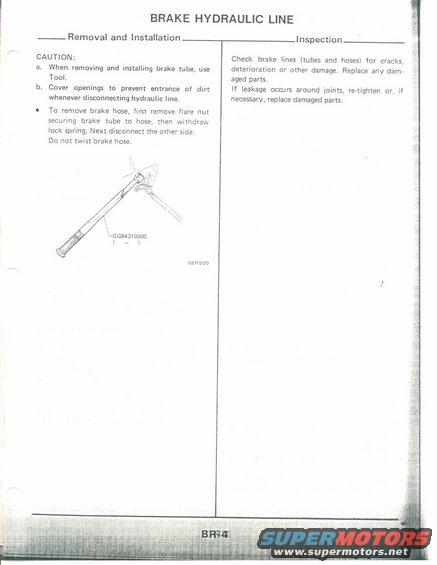
Service manual page with brake hydraulic line removal and installation cautions plus inspection notes and a flare-nut tool figure.
This is page BR-4 of a Nissan factory service manual covering the brake hydraulic line, divided into two sections: Removal and Installation, and Inspection. The removal/installation section lists cautions: use the special tool (a flare nut wrench, part number GG94310000, shown in an illustration labeled SBR500) when removing and installing the brake tube, and cover all openings to prevent dirt from entering whenever the hydraulic line is disconnected. It explains the brake hose removal sequence: first remove the flare nut securing the brake tube to the hose, then withdraw the lock spring, then disconnect the other side, and warns not to twist the brake hose. The inspection section instructs the reader to check brake lines (tubes and hoses) for cracks, deterioration, or other damage and to replace any damaged parts, and states that if leakage occurs around joints, the joints should be re-tightened or damaged parts replaced if necessary. The page was uploaded to a 1990 Nissan Micra gallery; while the page itself carries no model or year identification, the format is consistent with Nissan service manuals of that era.
Is this accurate? Sign in to help verify it.
Frequently asked questions
- What special tool is needed to remove and install the brake tube?
- The manual specifies using Tool GG94310000, a flare nut wrench shown in the illustration, when removing and installing the brake tube.
- What is the correct procedure to remove a brake hose?
- First remove the flare nut securing the brake tube to the hose, then withdraw the lock spring, and next disconnect the other side. Do not twist the brake hose.
- What precaution should be taken when disconnecting a hydraulic brake line?
- Cover the openings to prevent entrance of dirt whenever disconnecting the hydraulic line.
- How should brake lines be inspected?
- Check brake lines (tubes and hoses) for cracks, deterioration or other damage and replace any damaged parts. If leakage occurs around joints, re-tighten or, if necessary, replace damaged parts.
Comments
More from this build
No comments yet.