Home/
Registry/
Ford/
Mustang/
1964-1973/
“Race Car Tope”/
Photo
supermotors.net/registry/media/1161890
Ford Engine Plant Manufacturing - Carousel Hot Test & Machining Processes, Page 7
Reference · 1964-1973 MustangAll 16 manual pages
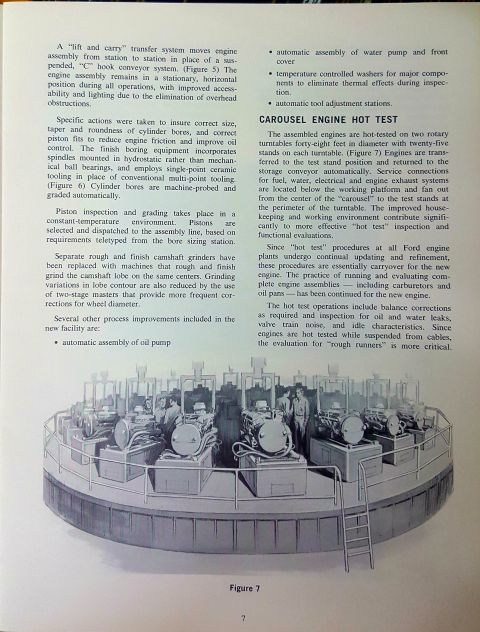


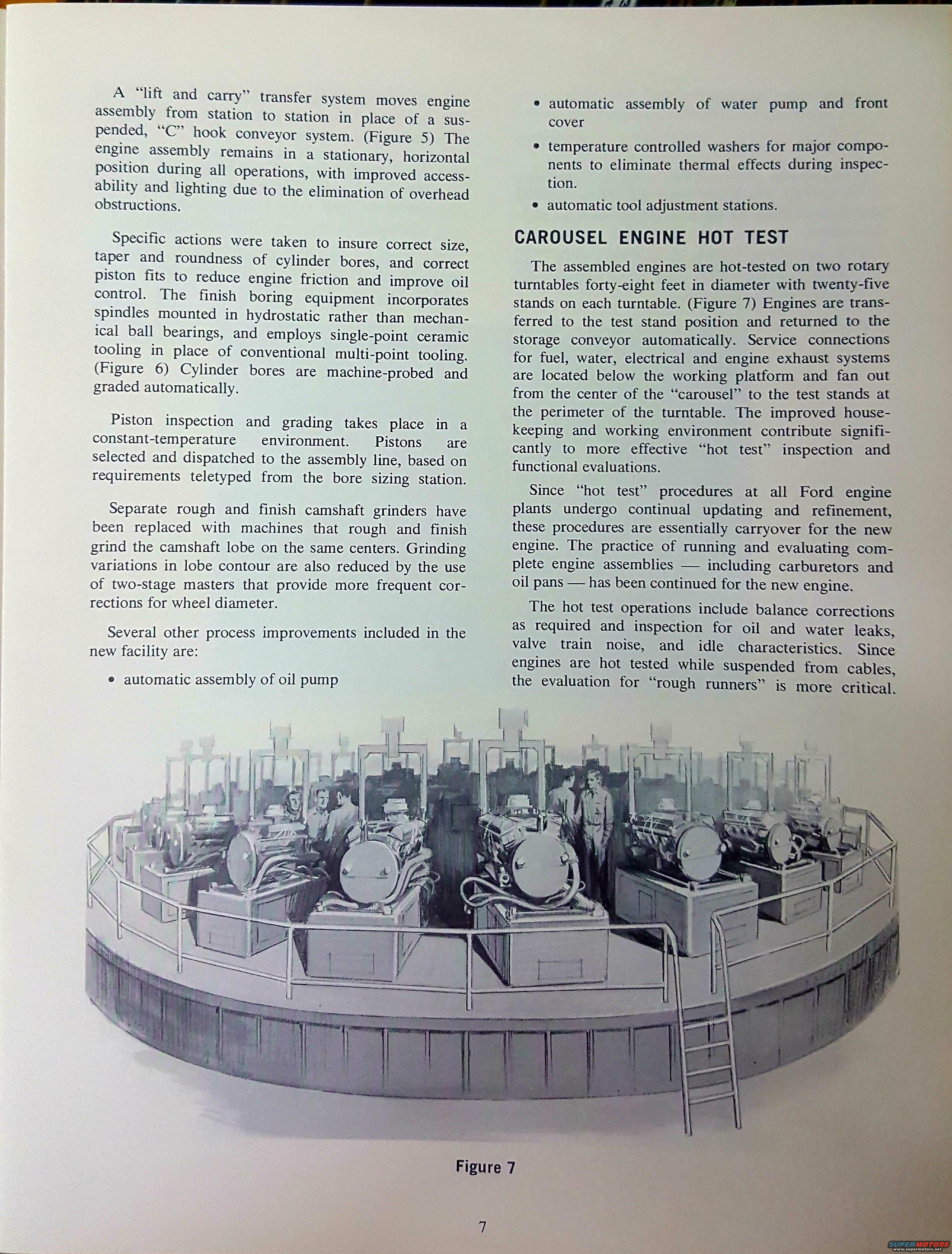
Manual page describing a carousel engine hot-test process with a photo of engines mounted on a rotary turntable.
Part of 1964-1973 Ford Mustang Manual Pages
This is page 7 of a Ford engineering/manufacturing publication describing production processes at a new Ford engine plant. The page explains a "lift and carry" transfer system that replaced suspended "C" hook conveyors, keeping engine assemblies stationary and horizontal for better access and lighting. It details machining improvements: finish boring equipment with hydrostatic spindle bearings and single-point ceramic tooling, automatic machine-probing and grading of cylinder bores, piston inspection and grading in a constant-temperature environment with pistons dispatched via teletyped requirements, and camshaft grinders that rough and finish grind lobes on the same centers using two-stage masters. Additional process improvements listed include automatic assembly of the oil pump, water pump and front cover, temperature-controlled component washers, and automatic tool adjustment stations. The "Carousel Engine Hot Test" section describes hot-testing assembled engines on two 48-foot-diameter rotary turntables with 25 test stands each, with fuel, water, electrical, and exhaust service connections fanning out below the platform. Complete engine assemblies including carburetors and oil pans are run and evaluated, with balance corrections, leak inspection, valve train noise, and idle checks; engines suspended from cables make "rough runner" detection more critical. Figure 7 illustrates the carousel hot test turntable with engines and technicians.
Is this accurate? Sign in to help verify it.
Frequently asked questions
- What is the Ford carousel engine hot test?
- Assembled engines are hot-tested on two rotary turntables forty-eight feet in diameter with twenty-five stands on each turntable. Engines are transferred to the test stand and returned to the storage conveyor automatically, with fuel, water, electrical and exhaust connections located below the working platform fanning out from the center of the carousel.
- What do the hot test operations check for?
- Balance corrections as required, inspection for oil and water leaks, valve train noise, and idle characteristics. Because engines are hot tested while suspended from cables, the evaluation for "rough runners" is more critical.
- What improvements were made to cylinder bore machining?
- The finish boring equipment uses spindles mounted in hydrostatic rather than mechanical ball bearings and single-point ceramic tooling instead of conventional multi-point tooling. Cylinder bores are machine-probed and graded automatically.
- How are pistons matched to engine blocks in the new facility?
- Piston inspection and grading takes place in a constant-temperature environment; pistons are selected and dispatched to the assembly line based on requirements teletyped from the bore sizing station.
- What other process improvements are listed for the new facility?
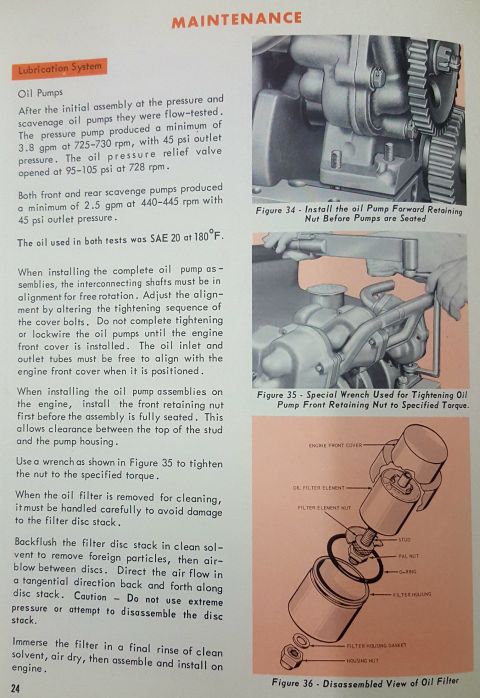
- Automatic assembly of the oil pump, automatic assembly of the water pump and front cover, temperature-controlled washers for major components to eliminate thermal effects during inspection, and automatic tool adjustment stations.



No comments yet.