Home/
Registry/
Ford/
Bronco/
1992-1996/
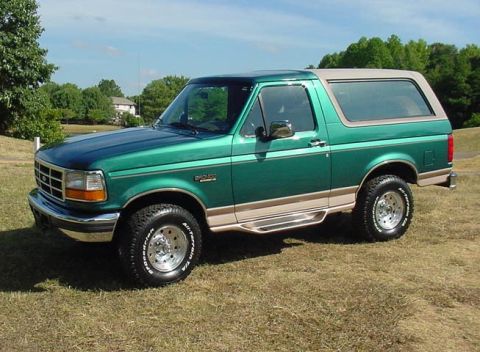
“Eddie Bauer”/
Photo
supermotors.net/registry/media/1019471
Remanufactured Engine Installation Tips - Break-In & Checklist (Ford Bronco)

Engine Installation Tips page listing step-by-step before-installation and after-installation procedures.
Part of 1992-1996 Ford Bronco Service Procedures
This document is a one-page "Engine Installation Tips" checklist for installing a remanufactured engine, divided into "Before Installation" and "After Installation" sections. Before installation, the reader is instructed to determine and correct the original cause of engine failure (overheating, transmission slippage, fuel in oil), thoroughly clean reused parts and bolts, verify vacuum/EGR passages are clear, clean throttle body carbon, inspect gasket and seal mating surfaces for warpage or damage, torque all bolts in sequence with lubed threads, prime the new oil pump with engine oil, and install new cooling system components (water pump, hoses, clamps, thermostat), new air/fuel/crankcase filters, PCV valve, and replace motor mounts, fuel pumps, charging and ignition components, plug wires, and spark plugs. After installation, it directs monitoring the oil pressure gauge/light (stop immediately if no pressure), checking for fluid leaks, listening for unusual noises, watching the temperature gauge during warm-up, adding a bottle of ZDDP zinc oil additive for flat tappet cam/lifter break-in while running the engine at 1,000-1,500 rpm for the first 15 minutes without idling, changing oil and filter at 500 miles and every 3,000 miles or 3 months thereafter, and consulting a professional engine rebuilder with questions. It is generic guidance not tied to a specific vehicle.
Is this accurate? Sign in to help verify it.
Frequently asked questions
- What should I do before installing a remanufactured engine?
- Determine and correct the cause of the original engine failure (overheating, transmission slippage, fuel in oil), thoroughly clean reused parts including bolts, ensure vacuum/EGR passages aren't restricted, clean carbon from the throttle body, check gasket/seal mating surfaces for warpage or damage, torque all bolts in sequence with a torque wrench and lightly lubed threads, and prime the new oil pump with engine oil before starting.
- What parts should be replaced when installing a remanufactured engine?
- New cooling system components (water pump, hoses, clamps, thermostat), new air filter, fuel filter, crankcase filter and PCV valve. Motor mounts, fuel pumps, charging system components, ignition components, spark plug wires, and spark plugs should also be replaced.
- How do I break in a flat tappet cam/lifter engine?
- Add one bottle of ZDDP zinc oil additive and run the engine at 1,000-1,500 rpm for the first 15 minutes of operation. Do not allow the engine to idle during break in.
- When should I change the oil after installing a remanufactured engine?
- Change the oil and filter at 500 miles, and then every 3,000 miles or 3 months thereafter.
- What should I watch for immediately after starting a newly installed engine?
- Full oil pressure should be present immediately after start up, stop the engine immediately if none is observed. Check visually for fluid leaks, listen for unusual noises (knocking, tapping, scraping), and monitor the temperature gauge; don't allow the engine to overheat before completing the cooling system fill procedure.
Comments
More from this build


No comments yet.