Battle Born Brakes SD Hydro Install Page 3 - Booster Rod & Brake Line Plumbing
.jpg)
Reference · 1978-1979 BroncoAll 48 service procedures
Service instruction page covering booster output rod adjustment and 3/16-inch brake line plumbing for a hydroboost install.
Part of 1978-1979 Ford Bronco Service Procedures
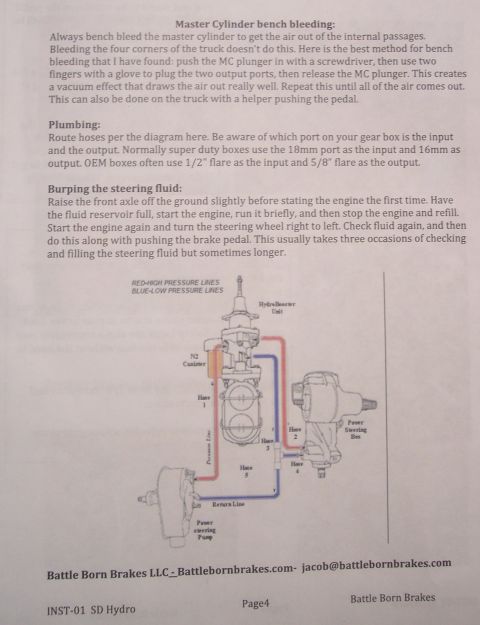
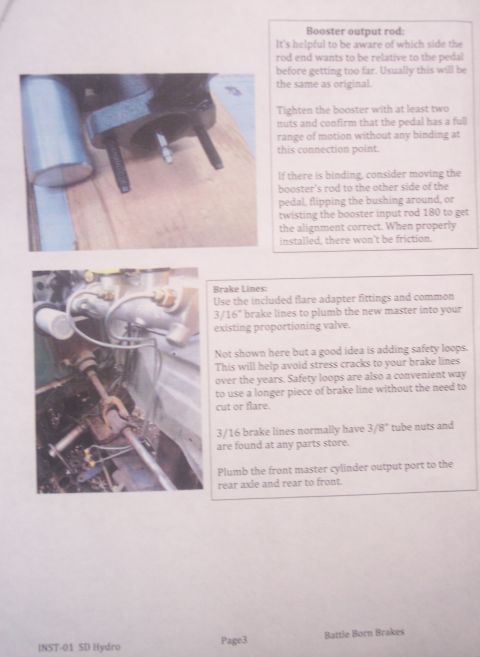
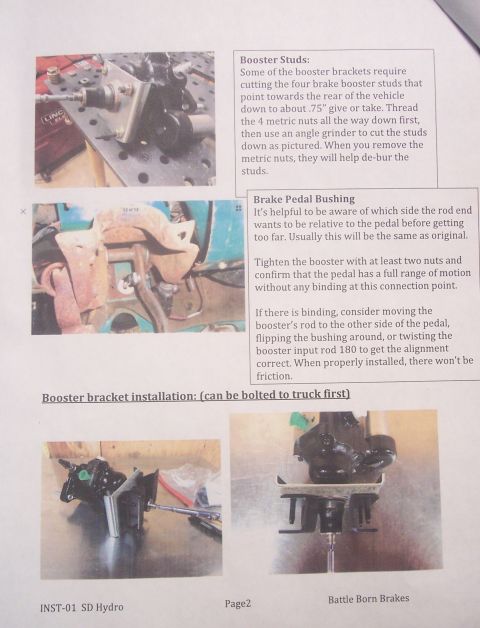
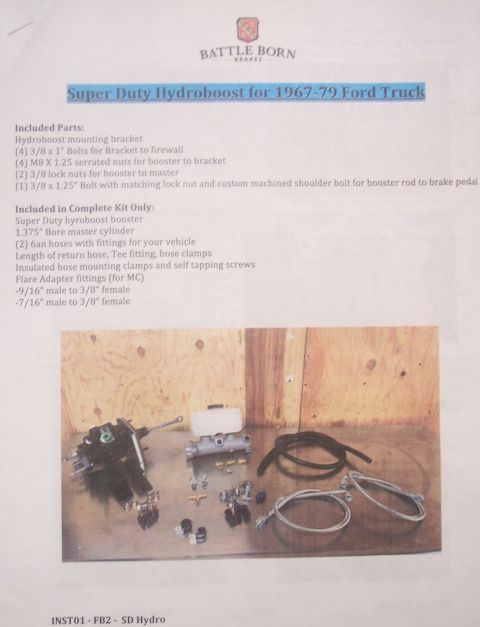
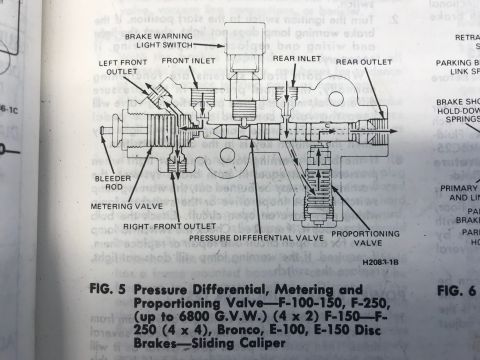
This is page 3 of a Battle Born Brakes installation instruction sheet (document code INST-01 SD Hydro) covering a hydroboost/brake booster and master cylinder conversion. The page has two photo-illustrated sections. The 'Booster output rod' section explains checking which side of the brake pedal the booster rod end should attach to (usually the same side as original), tightening the booster with at least two nuts, and verifying the pedal has full range of motion without binding. If binding occurs, the installer is told to try moving the booster rod to the other side of the pedal, flipping the bushing, or rotating the booster input rod 180 degrees; a properly installed setup will have no friction. The 'Brake Lines' section instructs using the included flare adapter fittings with common 3/16" brake lines to plumb the new master cylinder into the vehicle's existing proportioning valve, recommends adding safety loops to prevent stress cracks and to use up extra line length without cutting or flaring, notes that 3/16 brake lines normally use 3/8" tube nuts available at any parts store, and specifies plumbing the front master cylinder output port to the rear axle and the rear port to the front brakes.
Is this accurate? Sign in to help verify it.
Frequently asked questions
- What size brake lines does the Battle Born Brakes SD Hydro kit use?
- Common 3/16" brake lines with the included flare adapter fittings; 3/16 lines normally have 3/8" tube nuts and are found at any parts store.
- Which master cylinder port goes to which axle?
- Plumb the front master cylinder output port to the rear axle and the rear port to the front.
- What should I do if the booster rod binds at the brake pedal?
- Consider moving the booster's rod to the other side of the pedal, flipping the bushing around, or twisting the booster input rod 180 degrees to get the alignment correct. When properly installed, there won't be friction.
- Why add safety loops to the brake lines?
- Safety loops help avoid stress cracks in the brake lines over the years, and they are a convenient way to use a longer piece of brake line without needing to cut or flare it.
- How should the booster be secured during installation?
- Tighten the booster with at least two nuts and confirm the pedal has a full range of motion without any binding at the connection point.
No comments yet.