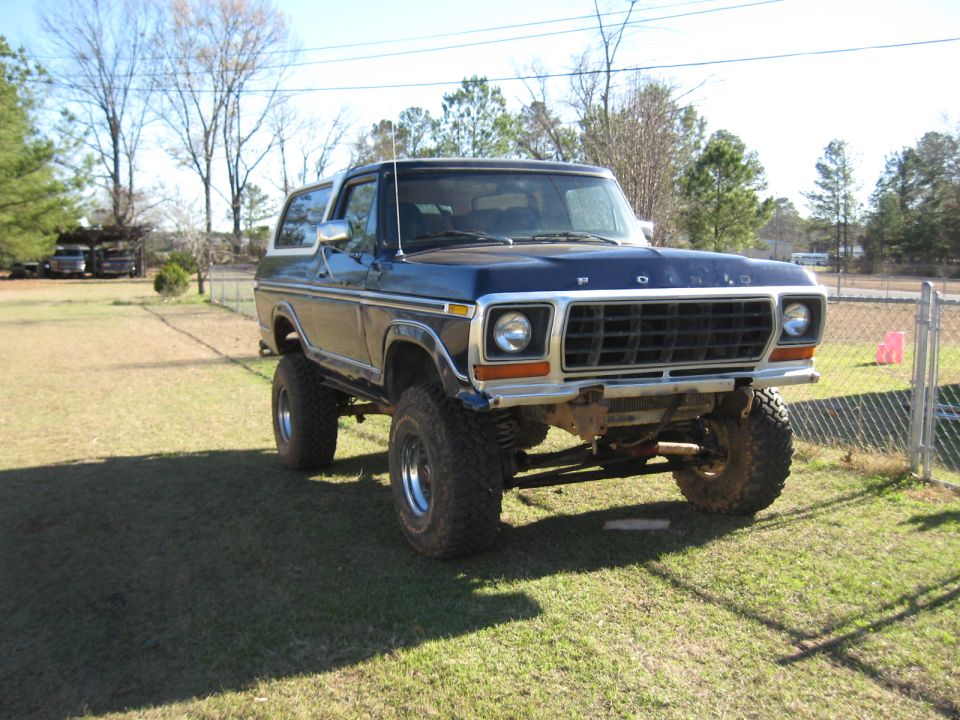
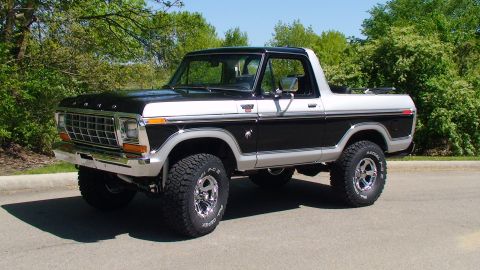
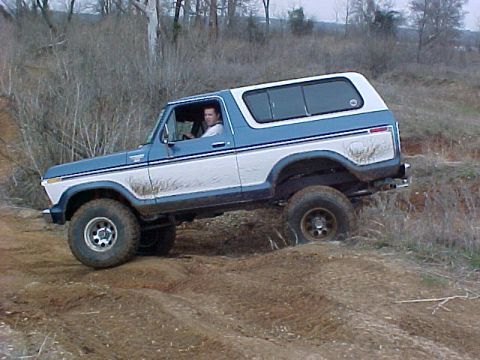
The 1978-1979 Ford Bronco replaced the compact 1966-1977 model with a full-size truck-based design, the first of the larger Broncos that enthusiasts call the "Big Bronco." Ford built it on the 1973-1979 F-series platform, the body style collectors call "Dentside," and stretched the wheelbase to 104 inches from the early truck's 92 inches. A removable fiberglass top covered the rear cargo and seating area, leaving a fixed cab structure forward. Every 1978-1979 Bronco was a V8 four-wheel drive, with a Dana 44 front axle and a Ford 9-inch rear axle. The standard transmission was the New Process NP435 4-speed manual, with the C6 3-speed automatic optional, and the transfer case depended on that choice: manual trucks used the gear-driven New Process NP205 part-time case, while automatic trucks commonly used the chain-driven New Process NP203 full-time case. That full-time NP203 made full-time four-wheel drive available on these trucks, a setup that can be left engaged on dry pavement, unlike the part-time NP205. Front disc brakes were standard. Trim ran from the base Custom up through the Ranger XLT, with the Free Wheeling appearance package available for buyers who wanted the striped, blacked-out look of the period. The generation lasted only two model years before Ford downsized the truck onto the 1980 "Bullnose" platform, which makes 1978 and 1979 the only full-size Dentside Broncos.
Other Ford Bronco generations
At a glance
- Years: 1978-1979 (second generation, first full-size Bronco)
- Platform: 1973-1979 Ford F-series "Dentside" (F-100/F-150 based)
- Body style: two-door wagon with a removable fiberglass roof over the rear
- Engines: 351 cubic-inch (5.8L) and 400 cubic-inch (6.6L) "335-series" (Modified) V8s, all V8
- Drivetrain: four-wheel drive, NP435 4-speed manual standard with C6 3-speed automatic optional; transfer case by transmission (gear-driven NP205 part-time behind the manual, chain-driven NP203 full-time commonly behind the automatic, so full-time 4WD was available)
- Front axle: Dana 44 solid front axle
- Rear axle: Ford 9-inch
- Brakes: front disc brakes standard, rear drums
- Wheelbase: 104 inches
- Trims: Custom, Ranger XLT, plus the Free Wheeling appearance package
Year-by-year changes
| Year | Engines | Drivetrain & brakes | Notable changes |
|---|---|---|---|
| 1978 | 351 cubic-inch (5.8L) and 400 cubic-inch (6.6L) V8s from the 335-series (Modified) family | Four-wheel drive, NP435 4-speed manual standard with C6 automatic optional, transfer case by transmission (gear-driven NP205 part-time with the manual, chain-driven NP203 full-time commonly with the automatic), Dana 44 front axle, Ford 9-inch rear axle, front disc brakes standard | First full-size Bronco; new 104-inch wheelbase on the Dentside F-series platform; removable fiberglass rear roof; Custom and Ranger XLT trims with the Free Wheeling package offered |
| 1979 | 351 cubic-inch (5.8L) and 400 cubic-inch (6.6L) V8s; emissions hardware revised | Four-wheel drive, NP435 4-speed manual standard with C6 automatic optional, transfer case by transmission (gear-driven NP205 part-time with the manual, chain-driven NP203 full-time commonly with the automatic), Dana 44 front axle, Ford 9-inch rear axle, front disc brakes standard; catalytic converter added | Last year of the full-size Dentside Bronco before the 1980 downsizing; round headlamps revised toward rectangular sealed-beam units on many trucks; emissions-driven calibration changes |
Why 1978 was a clean-sheet redesign
The 1978 Bronco shares almost nothing with the 1966-1977 truck that preceded it. Ford abandoned the compact 92-inch-wheelbase chassis and instead adapted the existing F-100/F-150 pickup platform, the 1973-1979 body that enthusiasts label "Dentside" for the long horizontal indent stamped down its sides. The 1978 Bronco rode on a 104-inch wheelbase, far longer than the early truck, and gained the wider track, larger cab, and heavier frame of a full-size pickup. This is the reason the second-generation truck is called the "Big Bronco": it was physically a different class of vehicle, sized to compete with the Chevrolet K5 Blazer and the Dodge Ramcharger rather than the Jeep CJ.
Engines and drivetrain
Both 1978 and 1979 full-size Broncos were V8-only, drawing on Ford's 335-series "Modified" engine family. The 400 cubic-inch (6.6L) V8 was offered, along with the 351 cubic-inch (5.8L). These are tall-deck "M" engines rather than the 351 Windsor or 351 Cleveland, and the 351M and 400 share architecture within that 335-series family. Power reached the ground through four-wheel drive, and the transfer case depended on which transmission a truck carried. The standard transmission was the New Process NP435 4-speed manual, paired with the gear-driven New Process NP205 part-time transfer case; the optional C6 3-speed automatic commonly paired with the chain-driven New Process NP203 full-time transfer case. With the part-time NP205, the front axle is engaged only when the case is shifted into four-wheel drive, so those trucks should not be driven in 4WD on dry pavement. The NP203 carries an inter-axle differential, which makes it a full-time four-wheel-drive case that can be left engaged on pavement, so the availability of full-time 4WD is a distinguishing feature of the automatic-equipped trucks in this generation. Specific advertised horsepower varied by year and emissions calibration, so confirm the figure for an individual truck against its build data rather than assuming a single number for the generation.
Axles, suspension, and brakes
The 1978-1979 Bronco used a solid Dana 44 front axle with the four-wheel-drive system and a Ford 9-inch rear axle, both heavier units than the early Bronco carried because the truck itself was heavier. Suspension was solid axles at both ends, in keeping with the F-series pickup underpinnings of the period. Front disc brakes were standard on these trucks, with drums at the rear, a normal full-size light-truck arrangement for the late 1970s. Because the second-generation Bronco is mechanically a full-size F-series, many service and chassis parts interchange with 1973-1979 F-100 and F-150 pickups, which helps when sourcing components today.
Body, roof, and trim levels
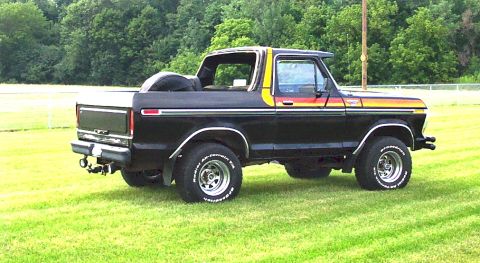
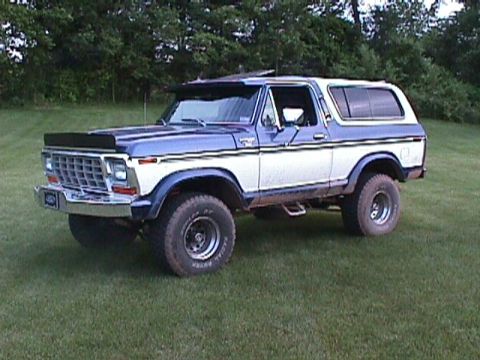
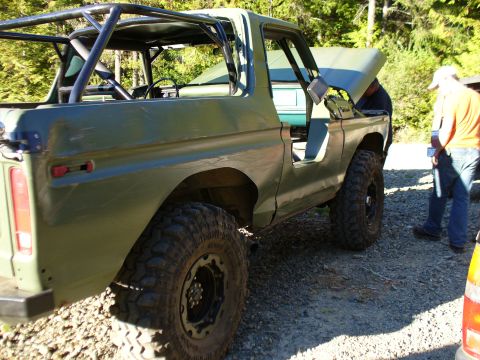
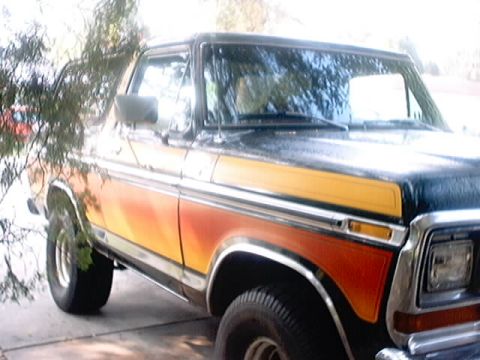
The full-size 1978-1979 Bronco was a two-door wagon with a fixed front cab and a removable fiberglass roof covering the rear seating and cargo area, so the back could be opened up while the windshield, doors, and front roofline stayed in place. Trim started with the base Custom and rose to the Ranger XLT, which added brightwork and a more finished interior. The Free Wheeling package was an appearance option of the era, recognizable by its multicolor tape stripes and blacked-out trim. Buyers could also order the truck for work or recreation duty, and many were equipped with the tow and off-road hardware expected of a full-size 4WD wagon.
What changed for 1979, and why it was the last year
The 1979 Bronco was the final full-size Dentside model. Tightening federal emissions rules brought a catalytic converter and revised engine calibrations for 1979, and front-end appearance shifted toward rectangular sealed-beam headlamps on many trucks as Ford freshened the look. For 1980 Ford replaced this platform with a downsized, lighter Bronco on the new "Bullnose" F-series body, which means 1978 and 1979 were the only Dentside-bodied (full-size) Broncos. That two-year window is why these trucks are comparatively scarce next to the long-running early Bronco and the later 1980-1986 generation.
What to know when buying a 1978-1979 Bronco
Rust is the first thing to check on any 1978-1979 full-size Bronco: inspect the rear quarters, the area under the removable fiberglass top, the tailgate, the cab corners, and the frame, since these trucks are now decades old and were used hard. Confirm which transfer case a truck carries (the part-time NP205 behind the manual or the full-time NP203 behind the automatic), that the four-wheel-drive system engages and disengages properly, and that the front Dana 44 axle and hubs are sound. The 400 and 351 V8s are durable but were never high-output by modern standards, so judge a truck on condition and originality rather than expecting strong power. Because so much hardware is shared with 1973-1979 F-series pickups, mechanical parts are findable, but Bronco-specific body pieces, especially the fiberglass top and rear glass, are harder to source and worth verifying before purchase.
Frequently asked questions
Is the 1978-1979 Bronco a "Bullnose"?
No. The 1978-1979 full-size Bronco is built on the 1973-1979 F-series "Dentside" body. The "Bullnose" nickname belongs to the following 1980-1986 F-series and the 1980-1986 third-generation Bronco. Calling a 1978 or 1979 Bronco a Bullnose is a common mix-up.
Why is the 1978-1979 Bronco called the "Big Bronco"?
The 1978-1979 Bronco was the first full-size Bronco. Ford moved it from the compact 92-inch-wheelbase early-Bronco chassis onto the full-size F-100/F-150 platform with a 104-inch wheelbase, making it much larger than the 1966-1977 truck. Enthusiasts use "Big Bronco" to distinguish these full-size trucks from the early compact Bronco.
What engines came in the 1978-1979 full-size Bronco?
The 1978-1979 Bronco was V8-only, using Ford's 335-series "Modified" engines: the 400 cubic-inch (6.6L) and the 351 cubic-inch (5.8L) V8. These are tall-deck "M" engines, not the 351 Windsor or Cleveland. Exact advertised horsepower varied by model year and emissions calibration.
Did the 1978-1979 Bronco have four-wheel drive and disc brakes?
Yes. Every 1978-1979 full-size Bronco came with four-wheel drive, a solid Dana 44 front axle, and a Ford 9-inch rear axle. The transfer case depended on the transmission: manual NP435 trucks used the gear-driven NP205 part-time case, while C6-automatic trucks commonly used the chain-driven NP203 full-time case, so full-time 4WD was available. The part-time NP205 should not be driven in 4WD on dry pavement, but the full-time NP203 can be left engaged on pavement. Front disc brakes were standard, with drums at the rear, the typical full-size light-truck setup of the period.
How many years was the second-generation Bronco built?
Only two model years, 1978 and 1979. Ford introduced the full-size Dentside Bronco for 1978 and replaced it for 1980 with a downsized "Bullnose" model, so the second generation is one of the shortest-lived Bronco generations.
Sources
- Ford factory shop manuals and parts catalogs for the 1973-1979 F-series and Bronco
- VIN and door-data-plate decoding for engine, axle, and trim verification
- Established full-size Bronco reference works and owner registries
- Period road tests and Ford sales literature of the 1978-1979 model years
Asked all the time
Is the 1978-1979 Bronco a "Bullnose"?
No. The 1978-1979 full-size Bronco is built on the 1973-1979 F-series "Dentside" body. The "Bullnose" nickname belongs to the following 1980-1986 F-series and the 1980-1986 third-generation Bronco. Calling a 1978 or 1979 Bronco a Bullnose is a common mix-up.
Why is the 1978-1979 Bronco called the "Big Bronco"?
The 1978-1979 Bronco was the first full-size Bronco. Ford moved it from the compact 92-inch-wheelbase early-Bronco chassis onto the full-size F-100/F-150 platform with a 104-inch wheelbase, making it much larger than the 1966-1977 truck. Enthusiasts use "Big Bronco" to distinguish these full-size trucks from the early compact Bronco.
What engines came in the 1978-1979 full-size Bronco?
The 1978-1979 Bronco was V8-only, using Ford's 335-series "Modified" engines: the 400 cubic-inch (6.6L) and the 351 cubic-inch (5.8L) V8. These are tall-deck "M" engines, not the 351 Windsor or Cleveland. Exact advertised horsepower varied by model year and emissions calibration.
Did the 1978-1979 Bronco have four-wheel drive and disc brakes?
Yes. Every 1978-1979 full-size Bronco came with four-wheel drive, a solid Dana 44 front axle, and a Ford 9-inch rear axle. The transfer case depended on the transmission: manual NP435 trucks used the gear-driven NP205 part-time case, while C6-automatic trucks commonly used the chain-driven NP203 full-time case, so full-time 4WD was available. The part-time NP205 should not be driven in 4WD on dry pavement, but the full-time NP203 can be left engaged on pavement. Front disc brakes were standard, with drums at the rear, the typical full-size light-truck setup of the period.
How many years was the second-generation Bronco built?
Only two model years, 1978 and 1979. Ford introduced the full-size Dentside Bronco for 1978 and replaced it for 1980 with a downsized "Bullnose" model, so the second generation is one of the shortest-lived Bronco generations.
Technical Reference
Member-uploaded diagrams & documents for this generation. AI-classified; community-verified where badged.
Service Procedures (32)
- Battle Born Brakes Hydroboost Install Pg 4 - Bench Bleeding & Hose Routing DiagramThis is page 4 of a Battle Born Brakes LLC installation instruction set (document code INST-01 SD Hydro) for a hydroboost (HydroBooster) brake conversion. It covers three procedures. First, master cylinder bench…
- Battle Born Brakes SD Hydro Install Page 3 - Booster Rod & Brake Line PlumbingThis is page 3 of a Battle Born Brakes installation instruction sheet (document code INST-01 SD Hydro) covering a hydroboost/brake booster and master cylinder conversion. The page has two photo-illustrated sections…
- Battle Born Brakes SD Hydroboost Install Instructions Page 2 - Ford BroncoThis is page 2 of a Battle Born Brakes installation instruction sheet (document code INST-01 SD Hydro) for a hydroboost/hydraulic brake booster conversion kit. The page covers two preparation topics plus the start of…
- 1979 Ford Bronco/F100-F350 Radio Circuit Troubleshooting & Wiring DiagramThis is page 34 of a Ford factory-style electrical troubleshooting guide (filed as covering the 1979 Bronco and F100 through F350 trucks), covering the Radio circuit. The 'How the Circuit Works' section explains that…
- 1979 Ford Bronco/F100-F350 Brake & Transmission Vacuum Supply TroubleshootingThis page, titled "Brake / Transmission Vacuum Supply," comes from a Ford truck reference manual (uploaded as page 46 of a 1979 Bronco/F100-F350 document set). It explains how the vacuum supply system works and how to…
- 1979 Ford Bronco F100-F350 Vacuum Systems Trouble-Shooting Guide & ToolsThis is page 44 of a Ford service reference document (album titled "1979 Bronco F100 through F350") introducing the Vacuum Systems section. It explains that vacuum trouble-shooting follows the same basic rules as…
- 1979 Ford Bronco/F100-F350 Heater & A/C System Component Location DiagramThis page (page 39) is from a Ford truck electrical/vacuum reference covering the Heater/Air Conditioning System and Deluxe Heater. It addresses two subsystems: the blower system (electrical) and the controls system…
- 1979 Ford Bronco F100-F350 Windshield Wiper/Washer Circuit TroubleshootingThis page (page 36) from a Ford electrical troubleshooting guide covers the Windshield Wiper/Washer circuit, apparently for 1979 Ford Bronco and F100-F350 trucks based on the album set. It explains how the circuit…
- 1979 Ford Bronco/F100-F350 Radio Circuit Troubleshooting & Wiring DiagramThis is page 34 of a Ford service/trouble-shooting reference covering the Radio circuit for 1979 Bronco and F100 through F350 trucks. The "How the Circuit Works" section explains that when the ignition switch is in RUN…
- 1979 Ford Bronco F100-F350 Accessory Systems Component Locations - Radio, WiperThis page (page 32) is from a 1979 Ford Bronco / F100-through-F350 truck electrical reference document. It introduces the 'Accessory Systems' section, which covers the AM/FM and CB radio, standard and intermittent…
- 1979 Ford Bronco/F100-F350 Fuel & Temperature Gauge Troubleshooting DiagramThis is page 30 of a Ford factory-style trouble-shooting guide covering the 1979 Bronco and F100 through F350 trucks, focused on the instrument panel gages. The 'Gages' section explains how the fuel gage works: with…
- 1979 Ford Bronco/F100-F350 Warning Lights Troubleshooting - Oil, Brake, AltThis is page 28 of a service reference booklet covering the Ford Bronco and F100 through F350 trucks, titled 'Warning System.' It explains how the vehicle's dashboard warning lights operate and provides step-by-step…
- 1979 Ford Bronco/F100-F350 Warning Lights & Gauges Component Location DiagramThis is page 27 of a Ford service reference document covering warning lights and gauges ("gages") for Ford trucks. The page header lists the systems covered: brake warning, oil pressure, seat belt, and 4-wheel drive…
- 1979 Ford Bronco/F100-F350 Dome, Courtesy, Glove Box & Cargo Light TroubleshootingThis is page 24 of a Ford electrical troubleshooting guide covering the dome light, dome-map light (Bronco only), courtesy lights, glove box light, and cargo light circuits. The 'How They Work' section explains that…
- 1979 Ford Bronco F100-F350 Interior Light Systems Diagram - Dome & CourtesyThis is page 23 of a Ford electrical reference document (part of a set covering the 1979 Bronco and F100 through F350 trucks) titled "Interior Light Systems." It covers control and instrument lights, the dome…
- 1979 Ford Bronco/F100-F350 Turn Signal, Hazard, Stoplight & Backup Light GuideThis is page 22 of a Ford light truck electrical troubleshooting guide covering the Turn Signals, Emergency Warning (hazard) Flasher, Stoplights, and Backup Lights circuits. For each system it explains how the circuit…
- 1979 Ford Bronco F100-F350 Exterior Lighting Troubleshooting & Wiring GuideThis page, from a 1979 Ford Bronco/F100-F350 service reference set, covers the Exterior Lighting System. The 'How It Works' section explains headlight switch operation: constantly powered, first detent operates…
- 1979 Ford Bronco/F100-F350 Starting & Ignition System Troubleshooting GuideThis page from a 1979 Ford truck/Bronco owner's reference booklet covers the Starting and Ignition Systems. The Starting System section explains that the system consists of the starter, starter relay, and ignition…
- 1979 Ford Bronco/F100-F350 Charging System Diagram - Connector & Splice LocationsThis page (page 9 of a multi-page Ford service reference set) illustrates the charging/starting system components of a late-1970s Ford truck. A pictorial diagram shows the alternator, alternator regulator (a Motorcraft…
- 1979 Ford Bronco F100-F350 Charging System Troubleshooting & Alternator TestsThis page is a service procedure document titled "Charging System," part of a multi-page Ford Bronco/F100-F350 reference set. It explains that the charging circuit contains a 12-volt battery, alternator, and voltage…
- 1979 Ford Bronco & F100-F350 Trouble-Shooting Basics: Battery, Alternator, BeltsThis page, titled "Trouble-Shooting . . . The Basics," is page 4 of a Ford trouble-shooting/service reference booklet covering the 1979 Bronco and F100 through F350 trucks. It introduces the logical fundamentals of…
- 1979 Ford Bronco/F100-F350 Electrical Troubleshooting Tools - Test Light GuideThis page, titled "Tools for Electrical System Trouble-Shooting," is from a multi-page reference set filed for a 1979 Ford Bronco (covering Bronco and F100 through F350 trucks). It explains three basic diagnostic tools…
- Ford Bronco & F100-F350 Front Door Window Glass Removal - Shop Manual 42-04-3This is page 42-04-3 from a Ford factory shop manual, Section 42-04, covering Front Door Window Glass and Mechanisms for Bronco and F-Series trucks (F-100 through F-350). The page centers on Fig. 4, "Window Mechanism…
- Ford V8 Positive Stop Valve Clearance Procedure - Crankshaft Positioning Fig 170This is a scanned page from an automotive service manual covering the positive-stop rocker arm valve clearance checking procedure for a Ford V8 engine. The top of the page shows part of an illustration labeled 'Fig…
- Ford Bronco/F-100-F-350 Cruise Control Diagnosis & Testing: Page 37-01-3This is page 37-01-3 of a Ford shop manual section on the Speed Control (cruise control) System, applicable to E-100 through E-350 vans, F-100 through F-350 trucks, and the Bronco. The page finishes a description of…
- Ford F-100-F-350 & Bronco Cruise Control Servo Installation & Tests 37-01-10This is page 37-01-10 of a Ford factory service manual section covering the Speed Control (cruise control) System for F-100 through F-350 trucks and the Bronco. The page centers on FIG. 10, 'Servo and Bracket…
- Ford Bronco Tailgate Window Mechanism - Adjustment, Removal & Part Numbers 42-35This is a scanned page (42-35-1) from a Ford shop manual section titled 'Tailgate Window Mechanisms,' Part 42-35, covering the Bronco tailgate window. It provides adjustment procedures for the tailgate glass…
- Lakewood Traction Bar Instructions - Snubber Adjustment & Replacement PartsThis document is a page from a Lakewood Industries traction bar instruction sheet (P/N 97144059), apparently the continuation of a multi-page install guide. It explains how to tune the snubber clearance gap: increasing…
- Lakewood Traction Bars #21715 Installation Instructions - Ford F-150, Chevy/GMCThis document is the manufacturer's installation instruction sheet for Lakewood Traction Bars, part #21715, published by Lakewood Industries (a Mr. Gasket Performance Group Company), copyright 2001. The kit fits…
- Lakewood Traction Bars #21715 Installation Instructions - Ford F-150 & Chevy/GMCThis document is page one of the official installation instructions for Lakewood Traction Bars part #21715, made by Lakewood Industries (a Mr. Gasket Performance Group Company, ©2001). The kit fits 1986-2000 Ford F-150…
- Buyers Products Weld-On Lashing Ring Instructions - 16,000 lb Tie-DownThis is a photograph of the instruction card included in the retail packaging of a Buyers Products Company weld-on lashing ring (tie-down ring). The card, still stapled inside its clear plastic clamshell package, lists…
- Ford Transmission Clutch Seal Install & Selective Retaining Ring ChartThis scanned page is from a Ford automatic transmission service procedure covering clutch assembly and seal installation. The left column shows a technician using a dial indicator with bracketry (Tool-4201-C) to check…
Exploded Parts (20)
- 1978-79 Ford Bronco/Truck Rear Slider & Fixed Glass Exploded Parts DiagramThis document is an exploded parts (break-out) diagram showing the rear cab window assemblies for a Ford truck cab, covering both the fixed rear glass and the sliding/movable glass (slider) versions. The upper-left…
- 1977-79 Ford F100/F150/F250 & 1978-79 Bronco Upper Race Track Molding PartsThis is page 63 ("MOLDING") from an aftermarket Ford truck parts catalog, covering Upper Race Track Style Molding for 1977-79 Ford F100, F150, and F250 Styleside pickups and 1978-79 Broncos. A blueprint-style…
- 1977-79 Ford F100 F150 F250 & 1978-79 Bronco Lower Race Track Molding CatalogThis is page 62 of an aftermarket parts catalog covering "Lower Race Track Style Molding" for Ford F100, F150, and F250 Styleside pickups (1977-79) and the Ford Bronco (1978-79). The page includes an exploded…
- 1966-72 Ford F100/F250/F350 4x4 Engine Mounts & Insulators Diagram 240 300 352 360This is a page from a Ford Marketing Corporation parts reference (dated January 1975, marked "FINAL ISSUE") showing exploded-view illustrations of engine supports, insulators, and related parts, front and rear…
- Ford Non-Tilt Steering Column Exploded Diagram - Automatic, Shift Rod In TubeThis document is a page (13-06-8) from a Ford factory shop manual section titled "Steering Column-Shift Rod Within Tube." It presents Figure 7, an exploded parts diagram of a non-tilt steering column used with an…
- Ford Bronco Fuel Tank Filler Grommet Exploded Diagram - Tank without EECThis is a cropped scan of an exploded-parts illustration relating to a fuel tank filler/grommet assembly, labeled 'Tank without EEC' (Evaporative Emission Control). The image shows three numbered callouts: item 16…
- Ford Bronco Tailgate Latch Release & Lock Control Exploded Diagram - Fig. 4This is a scanned page (44-86-4) from a Ford shop manual body section titled "Tailgate: Bronco and F-Series." It presents Figure 4, "Tailgate Latch Release and Lock Control, Bronco," an exploded parts diagram of the…
- Ford Bronco Tailgate Installation Diagram - Exploded Parts & Part NumbersThis is a scanned page (44-86-3) from a Ford factory shop manual, section 'Tailgate: Bronco and F-Series,' showing FIG. 3, 'Tailgate Installtion: Bronco.' The page contains four exploded-view line drawings of the…
- Ford Differential Exploded Parts Diagram - Carrier Bearing, Pinion & Side GearsThis document is an exploded parts diagram of an automotive differential assembly, uploaded to the gallery of a 1979 Ford Bronco. The illustration shows the components of a differential in exploded view, including the…
- Ford Steering Column Installation Diagram & Disassembly - E-100-E-350 (13-06-7)This is page 13-06-7 of a Ford factory shop manual section titled 'Steering Column: Shift Rod Within Tube.' The upper half contains Fig. 6, an exploded/installation diagram of the steering column for E-100 through…
- 1979 Ford Bronco Tilt Steering Column Exploded Diagram - Fig. 9 (13-06-10)This document is page 13-06-10 from a Ford factory shop manual section titled "Steering Column: Shift Rod Within Tube." The page consists entirely of FIG. 9, "Tilt Column," a full-page exploded parts diagram…
- Ford Tilt Steering Column Disassembly & Assembly - Shift Rod Within Tube 13-06-9This is page 13-06-9 of a Ford shop manual section titled "Steering Column: Shift Rod Within Tube." The top half shows Fig. 8, an exploded parts illustration (illustration code G2535-2A) of a steering column for a…
- Ford Bronco Steering Column Exploded Diagram & Disassembly - Shop Manual 13-06-8This is page 13-06-8 of a Ford shop manual section titled "Steering Column: Shift Rod Within Tube." The top half of the page contains Fig. 7, an exploded parts diagram of a non-tilt steering column used with an…
- Ford Tilt Steering Column Service - Wire Bale, Locking Lever & Pivot Pin 13-06-11This is page 13-06-11 of a Ford shop manual section titled "Steering Column: Shift Rod Within Tube," covering service of a tilt steering column. Figure 10 ("Wire Bale and Tilt Locking Lever") is an exploded/cutaway…
- 1979 Ford Bronco Tilt Steering Column Exploded Diagram - Fig. 9, Page 13-06-10This is a scanned page (13-06-10) from a Ford service manual section titled "Steering Column: Shift Rod Within Tube." The page contains FIG. 9, a full-page exploded parts diagram of a tilt steering column assembly with…
- Ford Bronco Transfer Case & Shift Linkage Exploded Diagram - Torque SpecsThis scanned page is an exploded parts and installation diagram covering a Ford transfer case assembly and its shift linkage. It contains four illustrations: a main view showing the transmission/transfer case installed…
- 1978 Ford Bronco Tailgate Latch Release Mechanism Exploded DiagramThis document is an exploded parts diagram (copyright FoMoCo / Ford Motor Company) showing the tailgate latch release mechanism assembly for a Ford Bronco tailgate. The illustration depicts the inner tailgate shell…
- 1978 Ford Bronco Wiper Motor & Linkage Diagram - Arm, Pivot Shaft, Clip 17450This document is an exploded parts / installation illustration showing the windshield wiper motor and linkage assembly mounted behind the dash of a Ford truck/Bronco. The main drawing shows the wiper motor attached to…
- 1978 Ford Bronco Door Glass & Window Regulator Diagram - Runs, Retainers, PartsThis document is an exploded parts/assembly diagram of a Ford door showing the window glass, regulator, and glass run components. The central illustration depicts the inner door panel with the window regulator (part…
- Ford Bronco Body Side Window Glass & Weatherstrip Diagram - Fixed & SlidingThis document is an exploded parts/installation diagram for the body side window glass and weatherstrip on a truck cab or topper. The main illustration shows the vehicle body side with a fixed side window installed…
Blueprints (3)
- 1978 Ford Bronco Custom Bumper Build - SolidWorks CAD Assembly ScreenshotThis document is a photograph of a computer monitor displaying SolidWorks 2016 (x64 Edition) with an open assembly file named "Bumper Assembly.SLDASM". The 3D model shown is a custom fabricated bumper, apparently a…
- 1978 Ford Bronco Custom Front Bumper Build - SolidWorks Winch Bumper CAD DesignThis image is a photograph of a computer monitor displaying a SolidWorks 2016 (x64 Edition) assembly workspace with an open file titled 'Front Bumper Assembly.SLDASM'. The 3D viewport shows a custom front bumper design…
- Axle Flange Bolt Pattern ID Chart - Ford 8.8, 9", 12 Bolt Chevy, Mopar, Dana 60This document is a blueprint-style reference chart identifying seven common automotive axle flange bolt patterns by their dimensions, plus a side-view cross section illustrating how axle flange 'offset' is measured…
Data/Spec Plates (11)
- 1978 Ford Interior Trim Code B Medium Blue Metallic - SEM #1718 Color MatchThis document is a photographed interior trim color-matching reference consisting of a medium blue textured vinyl swatch stapled to paper, accompanied by a typed identification card. The card reads "FORD INT. TRIM CODE…
- 1975-79 Ford Trim Code B Blue Metallic - SEM #1736 Color Match LabelThis photograph shows a typed reference label (part of what appears to be a paint/color sample swatch set) resting on blue vinyl upholstery. The label reads: "FORD EXT. TRIM CODE B, 75-79 / BLUE MET., SEM #1736." It…
- Ford Interior Trim Code B 81-82 Light Blue Metallic - SEM #2718 Color MatchThis photo shows a color-match sample card / spec label used to identify an interior trim paint color. The typed label reads (with the left edge partially cut off) "[FO]RD INT. TRIM CODE B, 81-82" and "[L]IGHT BLUE…
- Mustang Dyno Test Report - 1978 Ford Bronco 357 HP / 368 Ft-Lb Dyno SheetThis document is a Mustang Dynamometer Test Report printed on 2009/06/29 at 21:00:23 by GT Welding | G & S Racing, located at 460 NW 68th Ave., Ocala, FL 34482 (phone 352-237-7955). It records a single dyno run (Run…
- 2002 Ford Mustang GT Dyno Sheet - 361 HP / 372 TQ Horsepower Curve Test ResultsThis document is a chassis dynamometer (dyno) test result sheet titled 'HorsePower Curve Test Results' for a 2002 Ford Mustang GT. The test run was performed on June 29, 2009 at 8:55:02 PM. The sheet reports a maximum…
- 1978 Ford Bronco Data Plate - VIN U15HLBE9825, GVWR & Tire SpecsThis is a photograph of the factory data/certification plate (door jamb sticker) from a 1978 Ford Bronco. The label states "MFD. BY FORD MOTOR CO. IN U.S.A." with a manufacture date of 01/78. It lists the Gross Vehicle…
- 1978 Ford Bronco Door Data Plate - VIN U15HLBE9825, GVWR & Tire SpecsThis is a photograph of the factory Safety Compliance Certification Label (data/spec plate) affixed to a Ford vehicle, stating it was manufactured by Ford Motor Co. in U.S.A. with a build date of 01/78 (January 1978)…
- 1978 Ford Bronco Door Jamb Data Plate - VIN, GVWR & Tire Specs (01/78)This is a photograph of the factory Safety Compliance Certification Label (data/spec plate) affixed to the door jamb of a Ford vehicle manufactured in January 1978 ("01/78") by Ford Motor Co. in the U.S.A. The label…
- 1978 Ford Bronco Door Data Plate - VIN Certification Label & GAWR StickerThis is a photograph of the factory certification / data specification plate (safety compliance sticker) affixed to the driver's door jamb of a Ford vehicle, uploaded to document a 1978 Ford Bronco. The label header…
- EEC Analyzer 2.7.0 Fuel Delivery Calc - 500 HP V8 Injector & Fuel Pump SizingThis document is a screenshot of the EEC Analyzer 2.7.0 software (unregistered version) showing the Fuel Delivery calculation tab. It records a fuel system sizing calculation for a 500 horsepower, 8-cylinder engine…
- Dana 60 Axle ID Diagram - Bill of Material, Date Code, Model Number & Ratio TagThis document is an identification diagram for a Dana 60 axle assembly, showing where key identifying information is located on the axle housing. The line drawing depicts the differential center section (with its…
Manual Pages (10)
- Ford Bronco Manual: Engine Compartment Service Points & Engine Oil RecommendationsThis is a page from an automotive service manual (Chilton-style), likely part of a routine maintenance section. The top of the page contains a numbered legend (items 1-12) for Fig. 89, 'Engine compartment service…
- 1979 Ford F-100-F-350 & Bronco Wiring Manual - Intro, Wire Color Codes, ContentsThis is the introduction and table of contents page from a 1979 Ford electrical and vacuum trouble-shooting manual covering F-100 through F-350 trucks and the Bronco. The Introduction explains the manual's step-by-step…
- 1979 Ford Bronco & F100-F350 Electrical & Vacuum Troubleshooting Manual CoverThis is the front cover of the Ford "Electrical & Vacuum Troubleshooting Manual" for the 1979 Bronco and F100 through F350 pickup trucks (titled "1979 BRONCO, F100/350"). The cover features a sepia-toned illustration…
- Ford Bronco F-100-F-350 Cruise Control Tests - Servo, Amplifier & Road Test 37-01-8This is page 37-01-8 of a Ford shop manual section covering the Speed Control (cruise control) System for F-100 through F-350 trucks, Bronco, and E-100 through E-350 vans. It provides step-by-step diagnostic…
- 1978 Ford Truck Ball Joint Installation - Torque Specs & Tools (Shop Manual)This is a screenshot of page 15-30-5 (page 593 of 1169) from the 1978 Ford Truck Shop Manual, Volume One Chassis, viewed in Adobe Reader from a Dave Graham Auto Literature, Inc. reproduction (© 2008). The page covers…
- 1978 Ford Truck Dana 44-9F Front Axle Ball Joint Installation - Shop ManualThis is a screenshot of page 15-30-5 from the 1978 Ford Truck Shop Manual, Volume One (Chassis), covering the Front Driving Axle - 44-9F Dana. The page details removal and installation of the knuckle ball joints…
- 1978 Ford Bronco Trailer Towing Guide - F7B/F7C Packages, GCWR & Tongue Load ChartThis two-page owner's manual spread (pages 82-83, 'Special Situations') covers trailer towing guidance for the full-size Ford Bronco. Page 82 explains hill-climbing and downgrade driving techniques (downshift for power…
- Ford Automotive Glossary Page 16 - TCC, TFT, TSS, TWC, VMV, VLCM DefinitionsThis document is page 16 of an automotive reference glossary, covering terms alphabetically from "Torque Convertor" through "Variable Reluctance." It defines transmission-related terminology including Torque Convertor…
- Ford 5.0L & 5.8L V8 Coolant Temperature Sending Unit Location - Haynes DiagramThis is a scanned illustration from a Haynes repair manual (watermarked "© Haynes 80-96") showing the location of the coolant temperature sending unit on Ford 5.0L and 5.8L V8 engines, with a note that other V8 engines…
- 1973-79 Ford Bronco Firing Order Diagram - V8 302/351/360/390/400/460 & I6This scanned manual page (attributed to a Haynes manual for 1973-79 Ford Broncos per the watermark) shows engine firing order and distributor information. For six-cylinder in-line engines, the firing order is…
Wiring Diagrams (95)
- Ford Bronco Wiring Diagram - Ignition, Wiper Motor & Back-Up Light CircuitsThis document is a scanned page of an automotive wiring diagram covering the engine ignition, wiper/washer, and back-up light circuits of a Ford vehicle. It shows the fusible link feeding the circuit from the…
- 1979 Ford Bronco Radio Connector Wiring Diagram C-530 & C-532 PinoutsThis scanned page is from a Ford factory-style wiring/connector location diagram showing pin-out details for connectors labeled C-530 and C-532. Connector C-530 covers three related connector part numbers, 18B821…
- 1979 Ford Bronco Radio & CB Wiring Diagram - AM/FM, Speakers, ConnectorsThis is one page of a factory-style Ford wiring diagram covering the radio and audio system circuits. It shows the power feed circuit 137 (yellow with black stripe, "137 Y-BK") branching to several optional radio…
- 2-Speed Taurus Electric Fan Wiring Diagram - Holley Sniper EFI Relay SchematicThis is a custom wiring schematic (V2) for installing a 1995 Ford Taurus 3.0L two-speed electric cooling fan controlled by a Holley Sniper EFI system's 10-pin I/O ground-trigger outputs. The diagram shows three 30/40A…
- 1979 Ford Bronco Power Rear Window Wiring Diagram & Troubleshooting (Tailgate)This is page 38 of a Ford electrical/vacuum troubleshooting manual covering the Bronco and F100-F350 trucks, showing the Power Rear Window circuit (Bronco Only). The 'How It Works' section explains that the…
- 1979 Ford Bronco/F100-F350 Wiring Diagram - Conventional & Interval WipersThis page (page 37) from a Ford wiring diagram manual shows two side-by-side schematics for the windshield wiper and washer circuits: 'Conventional Wipers' on the left and 'Interval Wipers' on the right. Both circuits…
- 1979 Ford Bronco F100-F350 Radio & CB Wiring Diagram - Fuse 12, SpeakersThis page (page 35) is a factory-style wiring diagram covering the radio circuits of a 1979 Ford Bronco / F100-through-F350 truck, per the album it belongs to. It shows power fed from Fuse 12 (7.5 Amps), hot when the…
- 1979 Ford Bronco/F100-F350 Horn & Fog Lamp Wiring Diagram - Page 33This page (page 33) from a Ford wiring diagram manual covers two circuits: the Horn circuit and the Fog Lamps circuit (labeled 'F100-350 Only'). The horn diagram shows power coming from the headlight switch (hot at all…
- 1979 Ford Bronco F100-F350 Speed Control Wiring Diagram & TroubleshootingThis page (page 47) from a Ford electrical/vacuum troubleshooting guide covers the Speed Control (cruise control) system for 1979 Ford Bronco and F100 through F350 trucks. The 'How It Works' section lists the system…
- 1979 Ford Bronco/F100-F350 Heater & A/C Electrical System Wiring DiagramThis is page 41 of a Ford electrical reference guide (uploaded as part of a 1979 Bronco / F100-through-F350 set), covering the Heater and Air Conditioner Electrical System. It explains that the A/C-heater system has…
- 1979 Ford Bronco/F100-F350 Heater Blower Motor Wiring Diagram & TroubleshootingThis page (page 40) from a Ford Bronco/F100-F350 electrical reference manual explains the Heater Only Electrical System. It describes how the system works: with the ignition switch in RUN or ACCY, the blower motor…
- 1979 Ford Bronco Power Rear Window Wiring Diagram & Troubleshooting - Fuse 10This page (page 38) from a Ford Bronco/F100-F350 electrical troubleshooting manual covers the Power Rear Window system, noted as "Bronco Only." It explains how the system works: power feeds through Fuse 10 (20 Amps) to…
- 1979 Ford Bronco F100-F350 Windshield Wiper Wiring Diagram - Conventional & IntervalThis page (page 37) from a 1979 Ford Bronco/F100-F350 wiring diagram set shows the windshield wiper and washer circuits in two side-by-side schematics: Conventional Wipers (left) and Interval Wipers (right). Both…
- 1979 Ford Bronco F100-F350 Radio & CB Wiring Diagram - Fuse 12, SpeakersThis document is page 35 of a factory-style wiring diagram set uploaded as covering the 1979 Ford Bronco and F100 through F350 trucks. It shows the radio circuit wiring, including the AM or AM/FM monaural radio, AM/FM…
- 1979 Ford Bronco/F100-F350 Horn & Fog Lamp Wiring Diagram - Relays & ConnectorsThis page (page 33) from a Ford wiring diagram manual covering the Bronco and F100 through F350 trucks presents two circuit diagrams: the Horn circuit and the Fog Lamps circuit (fog lamps noted as 'F100-350 Only'). The…
- 1979 Ford Bronco/F100-F350 Fuel Gauge & Tank Selector Wiring DiagramThis page (page 31) is part of a 1979 Ford Bronco / F100 through F350 wiring diagram set. It shows the instrument gauge and dual fuel tank circuits: the fuel tank selector switch (fed from Fuse 6, hot when the ignition…
- 1979 Ford Bronco F100-F350 Wiring Diagram - Brake, Oil Pressure & Seat Belt WarningThis page (29) from a Ford wiring diagram manual covering the Bronco and F100 through F350 trucks shows the warning indicator light circuits. Four circuits are traced: the Dual Brake Warning Light circuit (hot with…
- 1979 Ford Bronco F100-F350 Control & Instrument Lights Wiring DiagramThis page, page 26 of a multi-page wiring diagram set filed for 1979 Ford Bronco and F100-F350 trucks, covers the Control and Instrument Lights circuit. It explains circuit operation: when the light switch is pulled to…
- 1979 Ford Bronco/F100-F350 Glove Box & Cargo Light Wiring DiagramThis page is a color wiring diagram titled "Glove Box Light/Cargo Light" from a Ford truck electrical reference set (community-filed under 1979 Bronco/F100-F350). It shows the interior lighting circuits fed from two…
- 1979 Ford Bronco F100-F350 Wiring Diagram - Stoplight & Turn Signal CircuitThis page (page 21) of a Ford factory-style wiring diagram set for the 1979 Bronco and F100 through F350 trucks covers the stoplight and right-hand turn signal circuits. It shows two stoplight switch variants: a…
- 1979 Ford Bronco/F100-F350 Turn Signal & Emergency Warning Lights Wiring DiagramThis page (page 20) from a Ford wiring diagram manual covers the Turn Signal/Emergency Warning Lights circuit. It shows the turn signal switch and its wiring branches, including a red/black (r/bk) feed to the speed…
- 1979 Ford Bronco & F100-F350 Backup Lights Wiring Diagram - Fuse 11 CircuitThis page (page 19) from a Ford wiring diagram manual covers the Backup Lights circuit for the Bronco and F100 through F350 trucks. Two schematics are shown side by side: the left applies to the Bronco only and the…
- 1979 Ford Bronco F100-F350 Trailer Wiring Diagram - Trailer Circuitry & FusesThis document is page 18 of a Ford factory wiring diagram booklet covering the Bronco and F100 through F350 trucks, titled "Trailer Circuitry." It presents the complete trailer towing wiring schematic, including power…
- 1979 Ford Bronco Rear Lighting Wiring Diagram - Parking, Marker & License LightsThis page (page 17) from a Ford Bronco/F-Series (F100 through F350) wiring reference shows a 'Bronco Only' wiring diagram for the rear exterior lighting circuit. The diagram traces brown (br) feed wires through…
- 1979 Ford Bronco & F100-F350 Rear Parking, Marker & License Light Wiring DiagramThis page (page 16) of a Ford Bronco/F-100 through F-350 wiring diagram set covers the rear exterior lighting circuit fed from the headlight switch. It shows the headlight switch internals with a hot-at-all-times feed…
- 1979 Ford Bronco F100-F350 Wiring Diagram - Marker & Parking Lights (Page 15)This is page 15 of a factory-style wiring diagram set covering the 1979 Ford Bronco and F-100 through F-350 trucks, showing the exterior marker light and parking light circuits fed from the headlight switch. The…
- 1979 Ford Bronco F100-F350 Headlights & Marker Lights Wiring DiagramThis document is page 14 of a Ford wiring diagram set covering the Bronco and F100 through F350 trucks, showing the Headlights/Marker Lights circuit. The schematic traces power on a red/yellow (r/y) wire into the…
- 1979 Ford Bronco/F100-F350 Exterior Lights Wiring Location DiagramThis page (page 12) from a Ford truck electrical reference set covers the Exterior Lights system, listing the circuits it includes: headlights; parking, side/roof marker lights and license lights; emergency warning…
- 1979 Ford Bronco F100-F350 Ignition System Wiring Diagram & Spark Test GuideThis page (page 11) from a 1979 Ford Bronco / F100-F350 truck electrical reference covers troubleshooting and wiring of the breakerless (DuraSpark-type) ignition and starting system. The left column gives step-by-step…
- 1979 Ford Bronco F100-F350 Fuse Panel & Ignition Switch Wiring DiagramThis page is one sheet from a factory-style wiring diagram set covering the 1979 Ford Bronco and F100 through F350 trucks. It illustrates the headlight switch (HEAD/PARK/DOME positions), the ignition switch with its…
- 1979 Ford Bronco F100-F350 Power Distribution & Charging System Wiring DiagramThis page from a Ford factory-style wiring diagram set (labeled for 1979 Bronco and F100 through F350 trucks) covers two circuits: Power Distribution and the Charging System. The Power Distribution section shows the…
- Ford F-100-F-350 & Bronco Cruise Control Wiring Diagram: Speed Control 37-01-6This is page 37-01-6 from a Ford factory service manual section covering the Speed Control (cruise control) System. It presents FIG. 7, the Main Wiring Diagram applicable to F-100 through F-350 trucks and the Bronco…
- Ford F-100-F-350 & Bronco Cruise Control Wiring Diagram - Speed Control 37-01-5This is a scanned page (37-01-5) from a Ford shop manual section covering the Speed Control (cruise control) System. The page presents FIG. 6, the speed control wiring diagram for F-100 through F-350 trucks and the…
- 1979 Ford Bronco Turn Signal Flasher Connector C-806 Location & Wire ColorsThis document is a small connector callout diagram labeled C-806, taken from a Ford wiring reference and uploaded as "Turn Signal Flasher.jpg" for a 1979 Ford Bronco. It shows the turn signal (T/S) flasher connector…
- 1979 Ford Bronco Emergency Hazard Flasher Connector C-805 Wiring DiagramThis document is a single connector detail from a Ford wiring diagram set, labeled connector C-805, associated with harness/part group 14401. It depicts the emergency warning (hazard) flasher connector, which is noted…
- 1979 Ford Bronco Brake Light Switch Connector C-802 Wiring Diagram (9A840)This document is a connector pinout diagram for connector C-802, the stop lamp (brake light) switch connector, from a Ford wiring reference set uploaded for a 1979 Ford Bronco. The diagram shows the connector body for…
- 1979 Ford Bronco Turn Signal Switch Connector C-713 Pinout & Wire ColorsThis document is a connector pinout diagram for a Ford turn signal switch connection, identified as connector C-713, located under the instrument panel near the steering column. It shows three half-moon (semi-circular)…
- Ford Bronco Turn Signal Switch Connector C-305 Pinout & Wire Colors (9A840)This document is a wiring/connector pinout diagram labeled C-305 showing the mating halves of a turn signal switch connector (Ford base part number 9A840, footnoted as applicable with speed control). Two semicircular…
- 1979 Ford Bronco C-306 LH Fender Apron Connector Wiring Diagram (14405/14401)This document is a wiring connector diagram labeled C-306, showing the rear left-hand (L.H.) fender apron connector on a Ford truck/Bronco wiring harness. It depicts two mating connector halves identified by harness…
- Ford Bronco Instrument Cluster Connector C-208 Pinout (W/O Gauges) 14401This document is a connector pinout diagram labeled C-208 for the rear of a Ford instrument cluster printed circuit in the without-gauges (W/O GAGES) configuration. The connector is identified by base part number 14401…
- 1979 Ford Bronco Distributor Connector C-322 Wiring Diagram - Pinout & ColorsThis document is a wiring connector diagram labeled C-322, showing the mating pair of connectors for a Ford distributor assembly. The diagram depicts two connector faces (a plug and its mating receptacle), each with…
- 1979 Ford Bronco Breakerless Ignition Module Connector C-321 Wiring DiagramThis document is a connector diagram labeled C-321, showing the wiring connector for the breakerless ignition module located on the left-hand (L.H.) fender apron. The diagram depicts two mating connector faces (part of…
- 1979 Ford Bronco Alternator Connector 14305 Wiring Diagram - Wire ColorsThis document is a scanned page (labeled C-209) from a Ford wiring/connector reference guide showing the alternator connector, identified by Ford basic part number 14305. Two versions of the connector are illustrated…
- 1979 Ford Bronco Alternator Voltage Regulator Connector C-204 Wiring DiagramThis document is a wiring connector diagram identified as connector C-204, showing the alternator (voltage) regulator connector, which is located on the right-hand (R.H.) radiator support. Two versions of the connector…
- 1979 Ford Bronco Instrument Cluster Connector C-208A Pinout (With Gauges) 14401This document is a connector pinout diagram for connector C-208A, identified with base part number 14401 (wiring assembly), showing the rear view of an instrument cluster connector for a version equipped with gauges…
- 1979 Ford Bronco Headlight Switch Connector C-701 Wiring Diagram & Wire ColorsThis document is a single-page connector pinout diagram from a Ford factory wiring reference, showing connector C-701, the headlamp switch connector (wiring harness group 14401). The diagram depicts the physical…
- 1979 Ford Bronco Ignition Switch Wiring Diagram - Connector C-412 PinoutThis document is a scanned wiring connector diagram labeled C-412, showing the ignition switch connector for a Ford vehicle (uploaded as part of a 1979 Ford Bronco wiring reference set). The diagram identifies the…
- Ford Wiring Code Chart Circuits 908-998 - Wire Color Codes (1979 Bronco)This document is a page from a Ford wiring circuit code chart (marked '...ODE CHART (Continued)'), listing electrical circuit numbers 908 through 998 with a description of each circuit and its standard wire color code…
- 1979 Ford Bronco Wiring Color Code Chart - Circuits 701-834 Wire ColorsThis document is one page of a Ford wiring circuit color-code reference chart, listing circuit numbers 701 through 834 with each circuit's description and its wire color (solid color or base color with stripe)…
- Ford Standard Wire Color Code Chart - Circuits 594-697 (1979 Bronco Wiring)This document is one page of a Ford 'Standard Wire Color' code reference chart, listing circuit numbers 594 through 697 with each circuit's description and its standard wire color (including stripe colors). The…
- 1979 Ford Bronco Wiring Color Code Chart - Circuits 374-593 Wire ColorsThis document is one page of a multi-page Ford wiring circuit color-code reference chart, uploaded to accompany a 1979 Ford Bronco. It is a three-column table listing circuit numbers 374 through 593, each with a…
- Ford Wiring Circuit Color Codes 208-373 - Wire Color & Circuit Chart (1979 Bronco)This document is one page of a Ford wiring circuit color-code reference table, listing circuit numbers 208 through 373 with a description of each circuit and its corresponding wire color. Each row identifies the two…
- 1979 Ford Bronco Wiring Color Codes - Circuits 96-207 Wire Color ChartThis document is one page of a Ford wiring circuit color-code reference table, listing circuit numbers 96 through 207 with each circuit's description and its corresponding wire color. It covers a wide range of vehicle…
- Ford Standard Wire Color Code Chart: Circuits 1-95 (1979 Bronco Wiring)This document is a Ford standard wire color code reference chart (page 5, titled "STANDARD WIRE COL...", cut off at the page edge, presumably "STANDARD WIRE COLOR CODE"). It lists numbered electrical circuits from 1…
- Ford Standard Wire Color Code Chart Circuits 835-998 (1979 Bronco Wiring)This document is a scanned page from the Introduction section of a Ford wiring reference, titled "Standard Wire Color Code Chart (Continued)." It lists Ford standard circuit numbers 835 through 998, each with a…
- Ford Bronco Standard Wire Color Code Chart - Circuits 594-834 (Page 3)This is page 3 of a multi-page 'Standard Wire Color Code Chart (Continued)' from a Ford Bronco reference manual, uploaded to accompany a 1979 Ford Bronco. The left column lists circuit numbers 594 through 697 with each…
- Ford Standard Wire Color Code Chart Circuits 208-593 - Wiring Reference Page 6This document is page 6 of a Ford service manual introduction section titled "STANDARD WIRE COLOR CODE CHART (Continued)." It is a continuation page of a multi-page wiring circuit reference listing standard Ford…
- Ford Standard Wire Color Code Chart - Circuits 1-207 Wiring Colors (Page 1)This is page 5 of a Ford wiring reference, titled "Standard Wire Color Code Chart." It is a two-panel table listing numbered electrical circuits, a description of each circuit's function (which components it connects)…
- 1979 Ford Bronco Instrument Cluster Wiring Diagram - C-208/C-208A PinoutsThis is one page of a factory-style Ford wiring schematic set covering the instrument cluster warning lamp circuits. The schematic (grid rows A-F) shows the ignition switch with its positions (S-Start, R-Run, 0-Off…
- 1993 Ford Mustang 5.0L EEC Wiring Diagram 24-5 - Fuel Injectors, IAC & CANPThis document is page 24-5 of a Ford wiring diagram set covering the Electronic Engine Control system for the 5.0L engine (the filename and companion pages indicate a 1993 Ford Mustang manual). It shows…
- 1993 Ford Mustang 5.0L EEC Wiring Diagram 24-4 - PCM, BARO, Neutral SwitchThis is page 24-4 of a Ford factory wiring diagram set covering the Electronic Engine Control (EEC) system for the 5.0L engine. It shows the Powertrain Control Module (PCM, solid state) pins 45, 46, and 30 and their…
- 1993 Ford Mustang 5.0L EEC Wiring Diagram 24-3 - PCM Sensor Circuits & PinoutThis document is page 24-3 of a factory-style wiring diagram set covering the Electronic Engine Control (EEC) system for a 5.0L engine. It centers on the Powertrain Control Module (PCM), shown as a dashed "solid state"…
- 1993 Ford Mustang 5.0L EEC Wiring Diagram 24-2 - Fuel Pump Relay, PCM, EGRThis document is page 24-2 of an electronic engine control (EEC) wiring diagram for a Ford 5.0L engine, apparently from a 1993 Ford Mustang wiring manual. It traces power distribution from a Hot At All Times feed…
- 1993 Ford Mustang 5.0L EEC Wiring Diagram 24-1 - PCM, MAF & O2 Sensor CircuitsThis document is page 24-1 of a Ford factory-style wiring diagram set covering the Electronic Engine Control (EEC) system for a 5.0L engine. It shows power distribution from the ignition switch (hot at all times, with…
- 1993 Ford Mustang 5.0L Ignition System Wiring Diagram - Page 21-4This document is page 21-4 of a Ford factory-style wiring diagram set covering the Ignition System for the 5.0L engine (per the sibling files, a 1993 Ford Mustang manual). It shows the ignition switch (referenced to…
- 1993 Ford Mustang 5.0L Ignition System Wiring Diagram (Page 21-3, TFI/ICM)This document is page 21-3 of a Ford factory-style wiring diagram set, showing the Ignition System for the 5.0L engine. It illustrates the circuit connections between the Powertrain Control Module (PCM, pins 20, 4, 16…
- 1986 Ford Mustang SVO 2.3 Turbo EEC Wiring Diagram - 4 Cyl Turbo Sensors (Pg 114)This is page 114 of a Ford factory-style wiring diagram set titled "Electronic Engine Control (4 Cyl Turbo)." It shows the EEC (Electronic Engine Control) sensor wiring for a 4-cylinder turbocharged engine. The diagram…
- 1986 Ford Mustang 2.3 Turbo EEC Wiring Diagram - ECA, Injectors, TFI (Page 113)This is page 113 of a Ford electrical/vacuum troubleshooting manual (EVTM) covering the Electronic Engine Control (EEC) system for the 4-cylinder turbo engine, from a 1986 Ford Mustang manual set based on companion…
- 1986 Ford Mustang 2.3L Turbo EEC Wiring Diagram - Fuel Pump Relay & ECA CircuitsThis is page 112 of a Ford factory wiring diagram book covering the Electronic Engine Control (EEC) system for the 4-cylinder Turbo engine, from a 1986 Ford Mustang manual (per the file set). The schematic shows the…
- 1986 Ford Mustang 5.0 SFI Wiring Diagram 111A - Fuel Injectors & ECA PinoutThis is page 111A of a Ford factory wiring diagram set, covering the Electronic Engine Control system for the 8-cylinder SFI (sequential fuel injection) engine. The diagram shows power distribution from the Electronic…
- 1986 Ford Mustang 5.0L EEC-IV Wiring Diagram - Fuel Pump & EGR (8 Cyl SFI)This page (numbered 111) is a factory-style wiring diagram titled "Electronic Engine Control (8 CYL SFI)" covering the EEC-IV Sequential Fuel Injection system on a 5.0L V8. The "How The Circuit Works" text explains…
- 1986 Ford Mustang 5.0 SFI EEC Power & Ground Wiring Diagram - EVTM Page 110This is page 110 of a Ford factory electrical/vacuum troubleshooting manual (EVTM), covering the Electronic Engine Control (EEC) power and ground circuits for the 8-cylinder SFI (Sequential Fuel Injection) engine. The…
- Ford EEC Wiring Diagram - 8 Cyl SFI Sensor Circuits (1986 Mustang, Page 109)This page (109) is a factory-style wiring diagram titled "Electronic Engine Control (8 CYL SFI)," covering the sensor input circuits of the EEC system on a V8 sequential fuel injection engine. It shows how the…
- 1986 Ford Mustang 5.0 V8 SFI Start/Ignition Wiring Diagram - TFI, Starter RelayThis is page 101 of a Ford factory-style electrical vacuum troubleshooting manual (EVTM), showing the START/IGNITION circuit wiring diagram for the 8-cylinder SFI (sequential fuel injection) engine, filed in an album…
- 1986 Ford Mustang SVO 2.3 Turbo Start/Ignition Wiring Diagram - TFI, ECA, CoilThis is page 99 of a Ford factory-style electrical/vacuum troubleshooting manual, showing the complete Start/Ignition wiring diagram for the 4-cylinder turbo engine. The diagram traces power from Fuse Link C (16 GA…
- Ford One-Touch Window Module Wiring Diagram - Stock & Auto Up/Down ModThis document is a wiring diagram comparing two configurations of a Ford one-touch (express) power window module. The left side, labeled 'Stock Wiring,' shows the factory circuit: power comes from a circuit that is HOT…
- 1979 Ford Bronco Heater & A/C Blower Wiring Diagram - Circuits & Connector PinoutsThis document is a scanned Ford factory-style wiring diagram page covering the heater and air conditioning (A/C) blower circuits. The top schematic traces power from the fuse panel (F-12 via circuit 137 Y-BK, F-3 via…
- 1978 Ford Bronco Chassis Electrical Wiring Diagram - Fuse Box & Wire ColorsThis scan shows two facing pages (page 6-30, "Chassis Electrical") from an automotive service reference containing full-chassis wiring diagrams, drawing numbers 85766101 and 85766102. The left diagram covers the…
- 1978 Ford Bronco Chassis Wiring Diagram - Lighting, Charging & Wiper CircuitsThis is a scanned page from a chassis electrical section of an automotive service manual, containing two full-page wiring diagrams printed sideways. The upper diagram covers the lighting, instrument panel, and…
- 1978 Ford Bronco Chassis Electrical Wiring Diagram - Fuse Box & Wire ColorsThis document is a two-page chassis electrical wiring diagram (page 6-30, titled "CHASSIS ELECTRICAL") scanned from a printed service manual, drawing numbers 85766101 and 85766102. The left page covers interior/rear…
- 1976-78 Ford F-Series Chassis Wiring Diagram - Dash, Fuse Box & Engine CircuitsThis scanned page (page 6-30, 'Chassis Electrical') from an automotive repair manual contains two chassis wiring diagrams for 1976-78 Ford F-Series trucks: Fig. 86 'section one' (diagram 85766101) and Fig. 87 'section…
- 1970-78 Ford F-Series Chassis Wiring Diagram - Fuse Box, Lights & ChargingThis scanned page (page 6-30, 'Chassis Electrical') from an automotive service manual contains two full-page chassis wiring diagrams for Ford F-Series trucks, labeled Fig. 86 and Fig. 87 (sections one and two…
- 1978-79 Ford F-Series Chassis Wiring Diagram - Fuse Box, Lighting & ChargingThis is a scanned page (page 6-30, 'Chassis Electrical') from a repair manual showing two chassis wiring diagrams for 1978-79 Ford F-Series trucks. Figure 86 (diagram 85766101), 'section one,' covers the fuse box (with…
- 1976-78 Ford F-Series Wiring Diagram - Chassis Electrical, Fuse Box & IgnitionThis is a two-page scan (page 6-30, 'Chassis Electrical') from a repair manual showing complete chassis wiring diagrams labeled Fig. 86 and Fig. 87 for 1976-78 Ford F-Series trucks. Section one (diagram 85766101)…
- 1978 Ford Bronco Chassis Electrical Wiring Diagram - Fuse Box & Wire ColorsThis two-page scan (page 6-30, "Chassis Electrical") shows a complete chassis wiring diagram for a Ford truck, uploaded to a 1978 Ford Bronco gallery. The left page covers the interior/rear circuits: blower motor…
- 1978 Ford Bronco Chassis Electrical Wiring Diagram - Lighting, Charging, WiperThis scan is a rotated page from a printed automotive service manual showing two full-page chassis electrical wiring schematics (the page footer reads "CHASSIS ELECTRICAL"). The upper diagram covers interior/body…
- 1979 Ford Bronco Wiring Diagram - Tailgate Power Window Circuit (Fig 10.149)This document is page 271 of a Haynes manual showing Fig. 10.149, the continuation (final section) of the 1979 Ford Bronco wiring diagram. It covers the tailgate power window circuit. Power feeds come from Power…
- 1979 Ford Bronco Wiring Diagram - Turn Signal, Flasher & Rear Lamp CircuitsThis is page 267 of a Haynes manual showing two continued wiring diagram sections for the 1979 Ford Bronco (Fig. 10.141 and Fig. 10.142). The upper diagram covers the turn and emergency signal switch circuit, including…
- 1979 Ford Bronco Wiring Diagram - Gauges, Heater/AC & Blower Circuits (Haynes)This is page 265 of a Haynes repair manual containing two continuation pages of the factory-style wiring diagram for the 1979 Ford Bronco (Fig. 10.137 and Fig. 10.138). The upper diagram (Fig. 10.137) covers the…
- 1979 Ford Bronco Wiring Diagram - Ignition, Starter & Instrument GaugesThis is page 264 from a Haynes repair manual showing two continued sections of the factory-style wiring diagram for the 1979 Ford Bronco (Fig. 10.135 and Fig. 10.136). The upper diagram (Fig. 10.135) covers the…
- 1979 Ford Bronco Wiring Diagram - Ignition, Charging & Starting CircuitsThis page (page 263) from a Haynes repair manual contains two wiring diagram sections for the 1979 Ford Bronco: Fig. 10.133 and Fig. 10.134 (both marked "continued"). The upper diagram (Fig. 10.133) covers the headlamp…
- 1978-1979 Ford Bronco Wiring Diagram - Fuse Panel Legend & Tailgate WindowThis is page 262 from a Haynes manual showing factory-style wiring diagrams for the Ford Bronco. The top half is Fig. 10.131, the continuation of the 1978 Bronco wiring diagram, covering the tailgate power window…
- 1979 Ford Bronco Ignition Switch & Resistor Wire Diagram - Wire ColorsThis document is a cropped scan of a Ford wiring diagram focusing on the ignition switch circuit, uploaded to illustrate the ignition resistor wire. The diagram shows the ignition switch (labeled IGN. SWITCH) with its…
- 1979 Ford Bronco Wiring Diagram - Ignition & Light Switch, Fuel Gauge WiresThis document is a cropped portion of a factory-style automotive wiring diagram, uploaded as reference for a 1979 Ford Bronco. The visible section shows the wiring around the ignition switch (IGN. SWITCH), the…
- Ford 351/400 Breakerless Ignition Wiring Diagram - Duraspark & Dual Battery RelayThis is one page of a factory-style Ford wiring diagram covering the ignition and starting-related circuits for an 8-cylinder 351/400 engine with a breakerless (Duraspark-type) distributor. The schematic shows the…
Schematics (5)
- Ford 351C, 351M & 400M Firing Order Diagram 1-3-7-2-6-5-4-8 & Distributor CapThis document is a firing order reference diagram for Ford 351C (Cleveland), 351M, and 400M V8 engines, published by gtsparkplugs.com. The firing order is prominently displayed across the top as 1-3-7-2-6-5-4-8. Below…
- Ford 351C, 351M & 400M Firing Order Diagram - 1-3-7-2-6-5-4-8This document is a firing order diagram for Ford 351C (Cleveland), 351M, and 400M V8 engines. Across the top, an orange banner displays the firing order 1-3-7-2-6-5-4-8 in numbered blue circles. Below the title, a…
- 1979 Ford Bronco F100-F350 Power Distribution Diagram - Charging & IgnitionThis page, titled "Power Distribution," is from a Ford truck electrical reference set (uploaded as part of a 1979 Bronco/F100-F350 document series). It covers the charging system and the ignition/starting system. The…
- Ford Wiring Circuit Color Codes 835-907 - Wire Descriptions & Colors ChartThis document is one page of a Ford wiring circuit reference table listing numbered circuits from 835 through 907, with each circuit's description (the two components or terminals it connects) and its wire color code…
- Piston Engine Cycle Animation Diagram - Single Cylinder Cross-SectionThis file (animate.gif) is a small graphical illustration, apparently one frame of an animated diagram, showing a simplified cross-section of a single-cylinder internal combustion engine. Visible elements include a…
Fuse & Relay Charts (6)
- 1979 Ford Bronco & F100-F350 Fuse Block Diagram - Fuse Positions & Amp RatingsThis page from a Ford service/reference publication covers basic electrical test equipment and the fuse block used in Bronco and F-Series (F-100 through F-350) trucks. Three short instructional sections explain how to…
- 1979 Ford Bronco Fuse Panel Diagram - Fuse Positions F1-F12 & Amp RatingsThis document is a fuse panel diagram and legend, uploaded as reference material for a 1979 Ford Bronco. The top portion shows a line drawing of the fuse panel with twelve fuse positions (F-1 through F-12) arranged…
- Welder Electrical Service Guide: Fuse Ratings, Wire Sizes (200-575V, 2008 NEC)This document is Section 3-13, "Electrical Service Guide," from a welding power source manual (not an automotive fuse box chart). It provides branch-circuit electrical service requirements for connecting the welder to…
- Welder Electrical Service Guide: Fuse Ratings, Wire Sizes, 200-575V 1/3-PhaseThis document is Section 3-13, "Electrical Service Guide," from a welding power source manual (likely a Miller welder such as a Syncrowave/similar unit, given the filename 350P). It provides electrical branch circuit…
- 1987 Ford F-250 Fuse Panel Diagram vs Haynes 80-96 Truck/Bronco Fuse ChartThis scanned document compares two Ford truck fuse panel identification charts. The top half is the original bilingual (English/French) "Fuse Identification / Repérage des Fusibles" decal from a 1987 Ford F-250…
- Ford Bronco 1980-96 Fuse Panel Diagram - Fuse & Circuit Breaker Chart (Haynes)This is a scanned page from a Haynes repair manual (watermarked "©Haynes 80-96 Bronco") showing figure 4.2a, a typical later-model Ford fuse panel. The left side contains a line drawing of the interior fuse panel with…
Vacuum Routing (7)
- 1979 Ford Bronco & F100-F350 Vacuum Distribution Diagram - Hose RoutingThis page (page 45 of a multi-page Ford truck reference set) is titled "Vacuum Distribution" and presents a schematic diagram of engine vacuum routing. The diagram shows a multi-port engine fitting (vacuum…
- 1979 Ford Bronco/F100-F350 Deluxe Heater & Heater-A/C Vacuum System DiagramThis document is page 43 of a Ford factory reference set (filed as '1979 Bronco F100 through F350') showing the 'Deluxe Heater and Heater-A/C Vacuum System' vacuum routing diagram. It illustrates how engine vacuum from…
- 1978-79 Ford F100-F350 Bronco Heater/AC Vacuum System Diagram & Test ChartThis page from a Ford factory reference booklet explains the heater and air conditioner vacuum system used on 1978 F-100 through F-350 trucks and the Bronco. It lists the system's major components (vacuum-actuated…
- 1978 Ford 400 V8 Pickup Vacuum Diagram - Federal Auto Trans (Figs 37-38)This page (3-91) is from a 1978 Exhaust Emission System reference section titled 'Ford Motor Co. Vacuum Diagrams (Cont.)', with an 'Emission Control' tab on the margin. It contains two vacuum hose routing…
- 1978 Ford 400 V8 Vacuum Diagram - Pickup & Bronco California Auto TransThis is page 3-92 from a 1978 Exhaust Emission System reference (Ford Motor Co. Vacuum Diagrams, continued), showing two labeled vacuum-routing illustrations for the 400 cubic-inch V8. Figure 39 covers the 400" V8…
- 1986 Ford E-250 5.8L 351W 4V Vacuum Hose Routing & Emissions Decal DiagramThis document is a scan of a Ford Motor Company underhood emissions/vehicle information decal, annotated by the uploader as coming from the hood of a 1986 E-250 with a 351W (5.8L) 4V H.O. engine. The left portion gives…
- Ford 400 CID (6.6L) Vacuum Diagram - Calibration 9-62M-R10, 10-5-78This document is a factory emissions/vacuum hose routing schematic for a Ford 6.6L (400 CID) V8 engine, identified by calibration code 9-62M-R10 and dated 10-5-78. The diagram shows the vacuum hose connections between…
Brochures & Literature (11)
- E-Z-ON 86Y Universal Harness Brochure - Retrofit Lap Belt Safety Harness KitThis document is page 14 of a product brochure for the E-Z-ON 86Y Universal Harness, a retrofit child/passenger restraint harness for vehicles equipped only with lap belts in the rear seats. The brochure argues that…
- 1979 Ford F-250/F-350 Camper Special Package - Pickup Camper Information BrochureThis page is from Ford's Recreation dealer/consumer literature (marked "Revised 2/79", page 2) and is titled "Pickup Camper Information." It explains that F-350 Pickups (Regular Cab, SuperCab, Crew Cab) and F-250 4x2…
- 1979 Ford F-Series & Bronco Trailer Towing Packages - Capacities & OptionsThis is page 8 ("Recreation: Selected Option Descriptions"), revised 2/79, from a Ford light truck dealer/recreation reference covering trailer towing for F-Series pickups and the Bronco. It describes the two available…
- 1979 Ford Light Truck Facts Book Cover - Ford Division Dealer LiteratureThis is the front cover of the '1979 Ford LT. Truck Facts' book, a dealer/salesperson reference publication issued by Ford Division. The cover is printed in red on a white background and features line-art illustrations…
- Ford Bronco Factory Options & Prices List: Towing, Axles, 4WD (Page 116)This document is page 116 of a Ford dealer price/options reference book, continuing the factory option listing for the Ford Bronco. It itemizes optional equipment and prices in three areas: engine/mechanical equipment…
- 1979 Ford Truck Wiring Diagrams Manual Cover - Course 0339-101 (365-247)This image shows the front cover of a spiral-bound Ford training publication titled "1979 Truck Wiring Diagrams." The cover identifies the manual as Course 0339-101, produced by the Ford Parts and Service Division…
- Ford F-Series 4WD Chassis/Body Features - Frames, Suspension, Fuel SystemThis is page 18 of a Ford F-Series 4WD dealer/technical brochure covering chassis and body features of four-wheel-drive F-150, F-250, and F-350 trucks. It describes frames built of hot rolled low carbon steel with…
- 1979 Ford F-Series 4WD Model Availability - Wheelbases & Model CodesThis is page 5 of a Ford dealer literature/brochure page titled "F-SERIES 4WD: MODEL AVAILABILITY," revised 2/79, covering the 1979 Ford F-Series four-wheel-drive truck lineup. It lists model availability in tables…
- 1979 Ford F-250/F-350 Camper Special Package - Pickup Camper InformationThis page, from Ford's dealer/recreation literature (marked "2 Recreation, Revised 2/79"), covers Pickup Camper Information for Ford F-Series trucks. It explains that F-350 Pickups (Regular Cab, SuperCab, Crew Cab) and…
- 1979 Ford F-Series Tu-Tone Paint & Trim Options - Color Selections BrochureThis page is from a 1979 Ford F-Series dealer reference/brochure (marked "Revised 2/79, F-Series 9") covering Color and Trim Selections, specifically Tu-Tone paint options. It describes four two-tone schemes with truck…
- 1979 Ford Pickup Brochure Page 19 - F-100/F-150 Options, Wheels & Tu-Tone PaintThis is a page from a vintage Ford pickup sales brochure listing optional equipment for Ford F-Series trucks (F-100 and F-150 are named). Options are organized by category: comfort/convenience items (tilt steering…
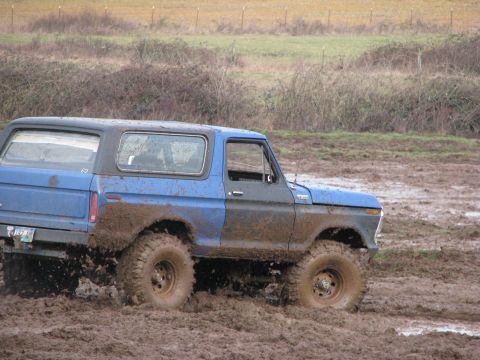
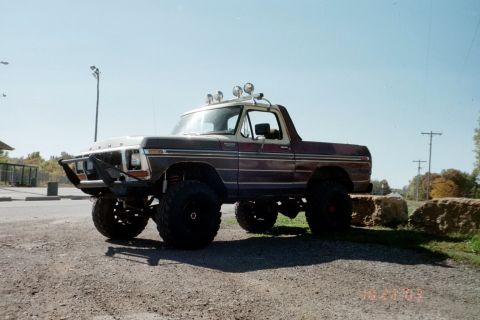
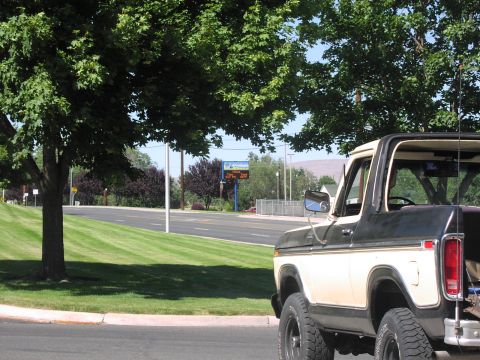
The wall · registered 1978-1979 Broncos
Sorted by depth of documentation. Click any vehicle to open its permanent record.
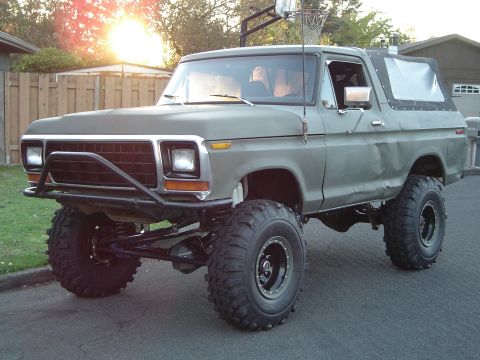
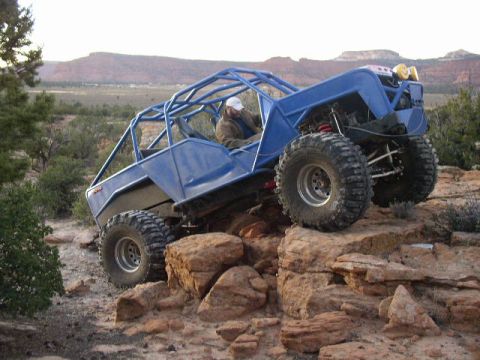
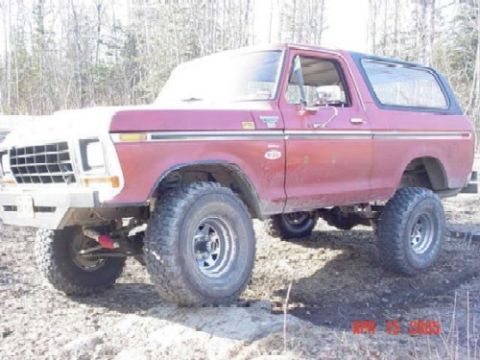
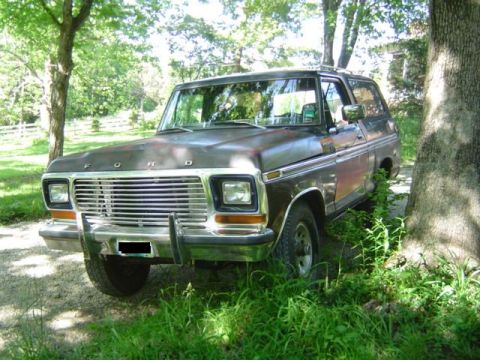
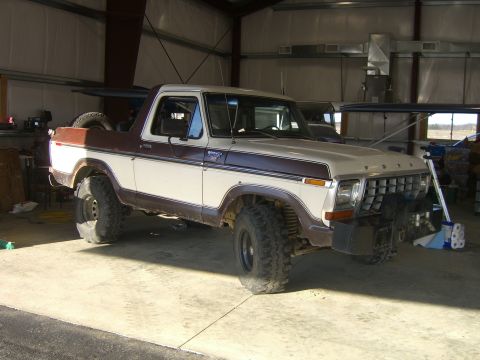
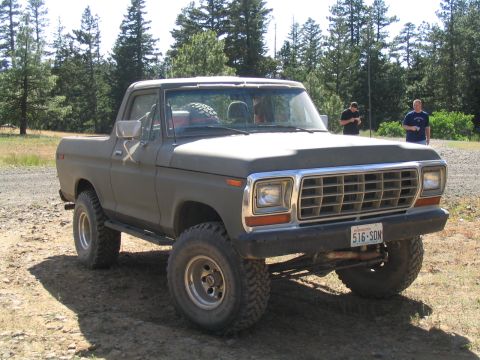
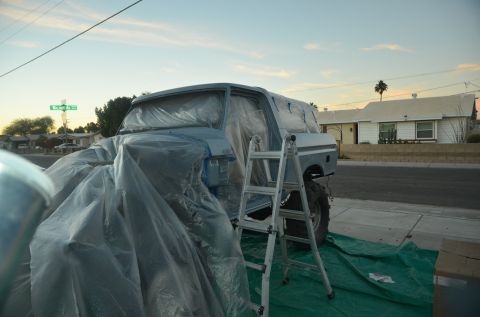
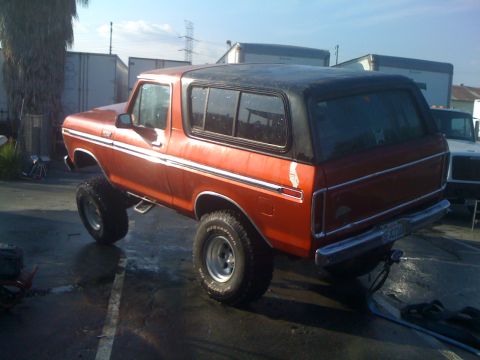

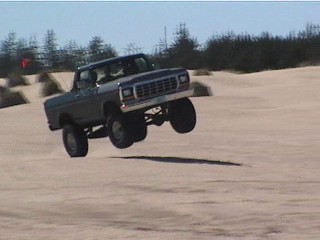
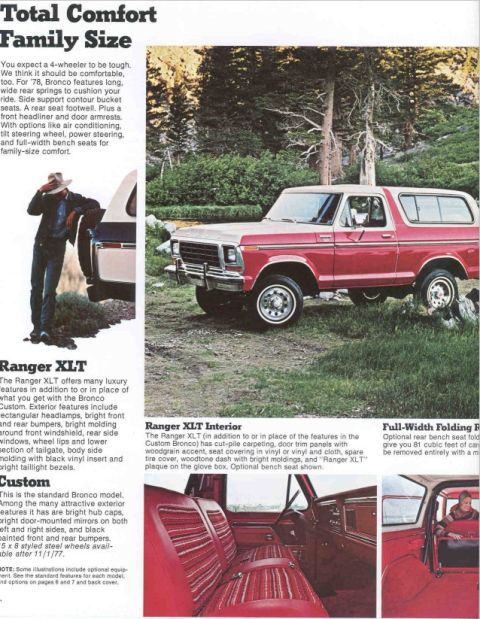
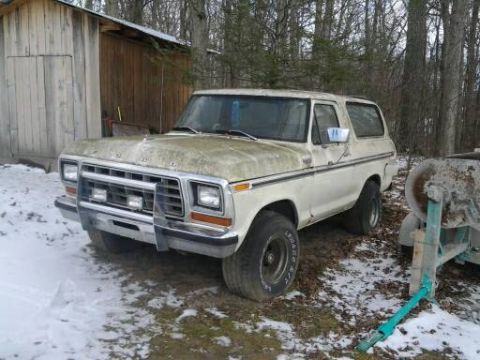
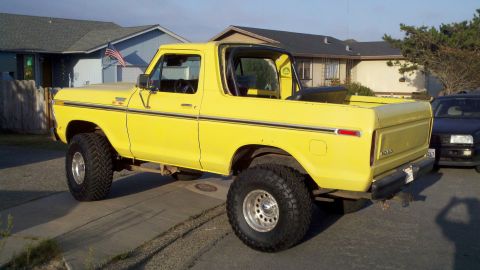
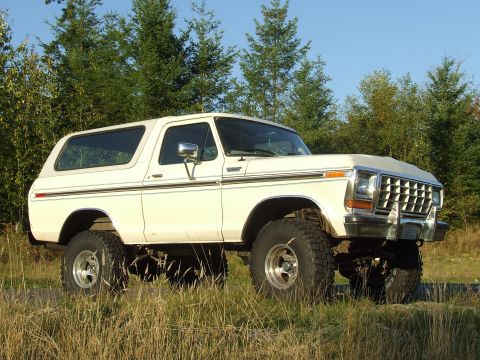
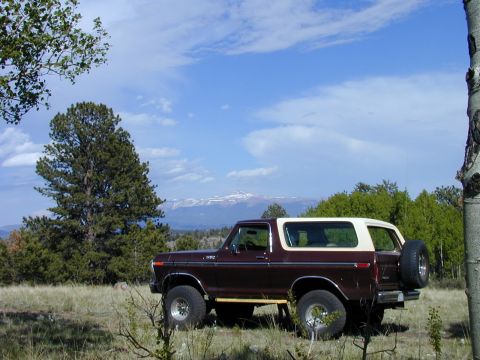
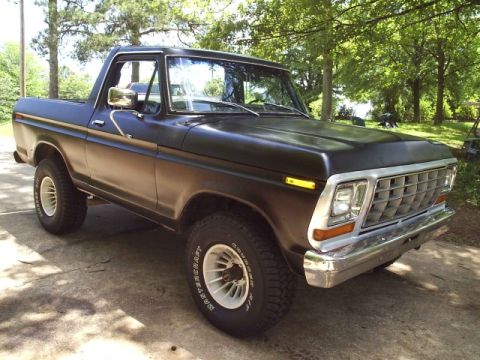
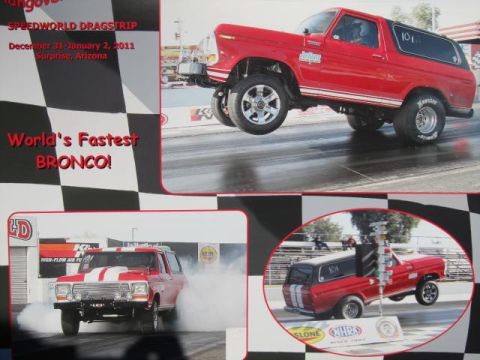
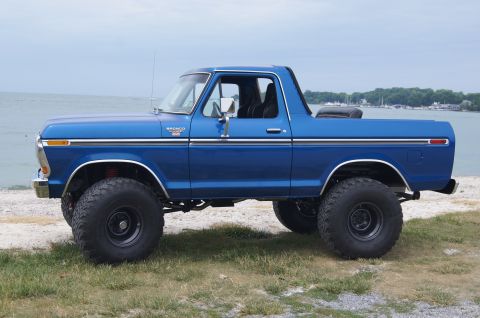
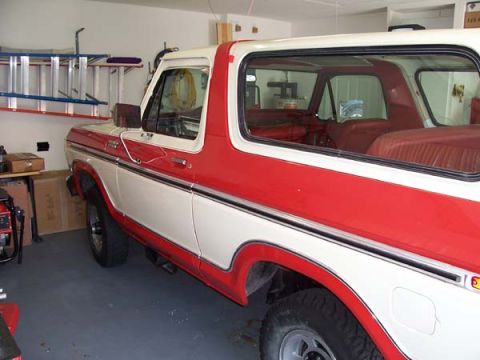
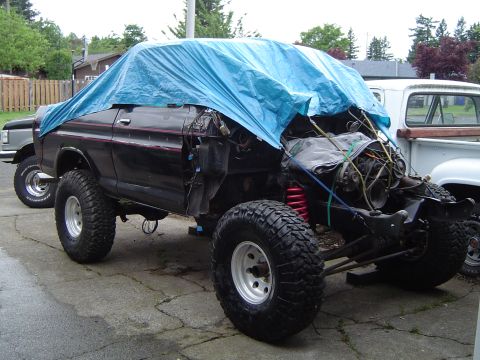
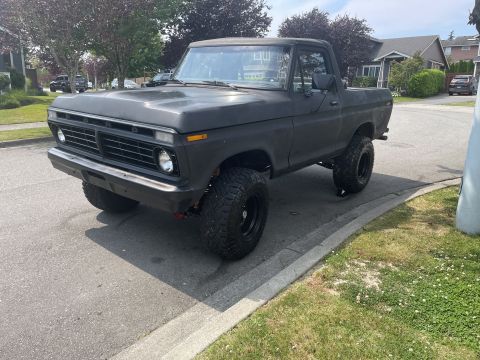
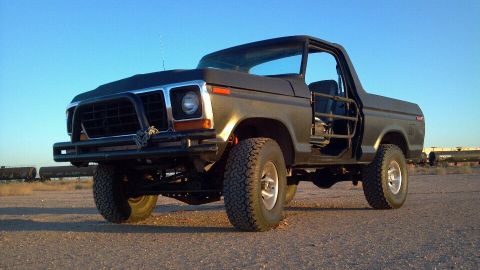
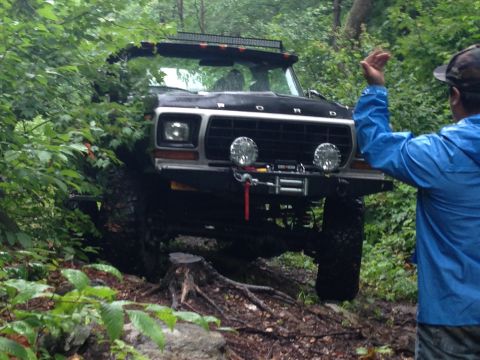
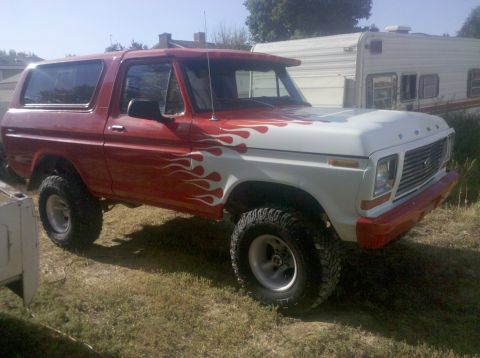
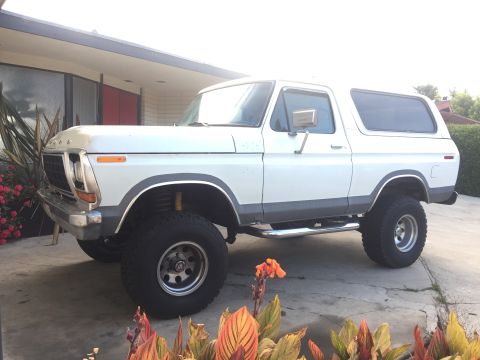
Full year-by-year change log: 1978-1979 Ford Bronco
This log tracks the model-year changes to the second-generation full-size Ford Bronco (1978-1979) at the level of platform, body, engine, drivetrain, axle, brakes, trim, and federally driven equipment. It is assembled from Ford factory shop manuals and parts catalogs for the 1973-1979 F-series and Bronco, VIN and door data-plate decoding for engine, axle, and trim verification, period factory specification sheets and road tests, and established full-size Bronco reference works and owner registries. Where a detail varied by emissions certification or by individual build, this log says so rather than asserting a single figure for the whole generation.
1978
- Introduced as the first full-size Bronco. The 1978 Ford Bronco replaced the compact 1966-1977 truck with a full-size, truck-based design, the model enthusiasts call the "Big Bronco."
- Dentside F-series platform. The 1978 Bronco moved onto the 1973-1979 F-100/F-150 platform, the body style collectors call "Dentside," rather than the compact early-Bronco chassis it replaced.
- New 104-inch wheelbase. The 1978 Bronco rode on a 104-inch wheelbase, longer than the early truck's 92 inches, with the wider track and larger cab of a full-size pickup.
- Removable fiberglass rear roof. The 1978 Bronco was a two-door wagon with a fixed front cab and a removable fiberglass top over the rear seating and cargo area, so the back could be opened up while the windshield, doors, and front roofline stayed in place.
- V8-only engine lineup. The 1978 Bronco was V8-only, using Ford's 335-series "Modified" engines: the 351 cubic-inch (5.8L) as standard and the 400 cubic-inch (6.6L) as the optional engine. These are tall-deck "M" engines, not the 351 Windsor or 351 Cleveland.
- Two transfer cases tied to the transmission. The 1978 Bronco's transfer case depended on which transmission a truck carried. Trucks with the NP435 4-speed manual used the gear-driven New Process NP205 part-time four-wheel-drive case, while trucks with the C6 automatic commonly used the chain-driven New Process NP203 full-time four-wheel-drive case. The NP205 setup is part-time, so the front axle is engaged only when the case is shifted into 4WD and the truck should not be driven in 4WD on dry pavement; the NP203 has an inter-axle differential and can be left engaged on pavement.
- Full-time 4WD availability. Because the C6-automatic trucks could carry the full-time NP203 transfer case, full-time four-wheel drive was available on the 1978 Bronco, an option that lets the truck stay in 4WD on dry pavement, unlike the part-time NP205 manual-transmission trucks.
- Dana 44 front axle, Ford 9-inch rear axle. The 1978 Bronco used a solid Dana 44 front axle and a Ford 9-inch rear axle, both heavier units than the early Bronco carried because the truck itself was heavier.
- NP435 4-speed manual, C6 automatic optional. The 1978 Bronco came with the New Process NP435 4-speed manual as the standard transmission and the C6 3-speed automatic as the option. The manual paired with the gear-driven NP205 part-time transfer case; the automatic commonly paired with the chain-driven NP203 full-time transfer case.
- Front disc brakes standard. The 1978 Bronco came with front disc brakes as standard equipment and drums at the rear, the normal full-size light-truck arrangement of the period.
- Trim levels and the Free Wheeling package. The 1978 Bronco was offered from the base Custom up through the Ranger XLT, with the Free Wheeling appearance package available for buyers who wanted the striped, blacked-out look of the era.
- Shared hardware with the F-series. Because the 1978 Bronco is mechanically a full-size F-series, many service and chassis parts interchange with 1973-1979 F-100 and F-150 pickups.
1979
- Final full-size Dentside year. The 1979 Bronco was the last full-size Dentside model before Ford downsized the truck onto the 1980 "Bullnose" platform, which makes 1978 and 1979 the only full-size Dentside Broncos.
- Engine lineup carried over. The 1979 Bronco kept the V8-only 335-series lineup, the 351 cubic-inch (5.8L) standard and the 400 cubic-inch (6.6L) optional, both "Modified" tall-deck "M" engines.
- Emissions hardware revised. Tightening federal emissions rules brought a catalytic converter and revised engine calibrations for 1979; the specific certification and calibration varied, so confirm an individual truck against its build data.
- Advertised power varied by calibration. Published output for the 1979 Bronco reflected the year's emissions calibrations, so confirm the figure for an individual truck rather than assuming a single number for the generation.
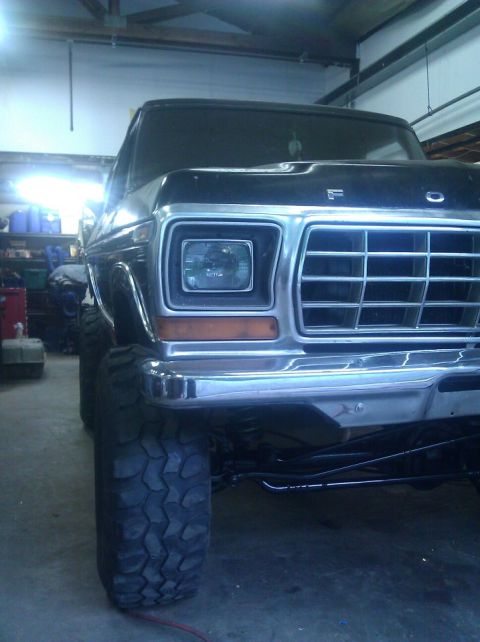
- Move toward rectangular headlamps on higher trims. The 1979 Bronco shifted its front-end appearance toward rectangular sealed-beam headlamps on many trucks, a higher-trim freshening rather than a universal change to every truck.
- Drivetrain and brakes unchanged. The 1979 Bronco continued with the NP435 4-speed manual standard and C6 3-speed automatic optional, the same two transfer cases tied to transmission choice (the gear-driven NP205 part-time case behind the manual, the chain-driven NP203 full-time case commonly behind the automatic), a solid Dana 44 front axle, a Ford 9-inch rear axle, and standard front disc brakes with rear drums. The part-time NP205 trucks should not be driven in 4WD on dry pavement, while the full-time NP203 trucks can be left engaged on pavement.
- Trim levels carried over. The 1979 Bronco continued to offer the base Custom and the Ranger XLT, with the Free Wheeling appearance package still available.
- Replaced for 1980. The 1979 Bronco was the end of this two-year platform; for 1980 Ford fielded a downsized, lighter Bronco on the new "Bullnose" F-series body, so 1978 and 1979 were the only Dentside-bodied (full-size) Broncos.