Home/
Registry/
Ford/
Bronco/
1992-1996/
1996 Ford Bronco/
Photo
supermotors.net/registry/media/892441
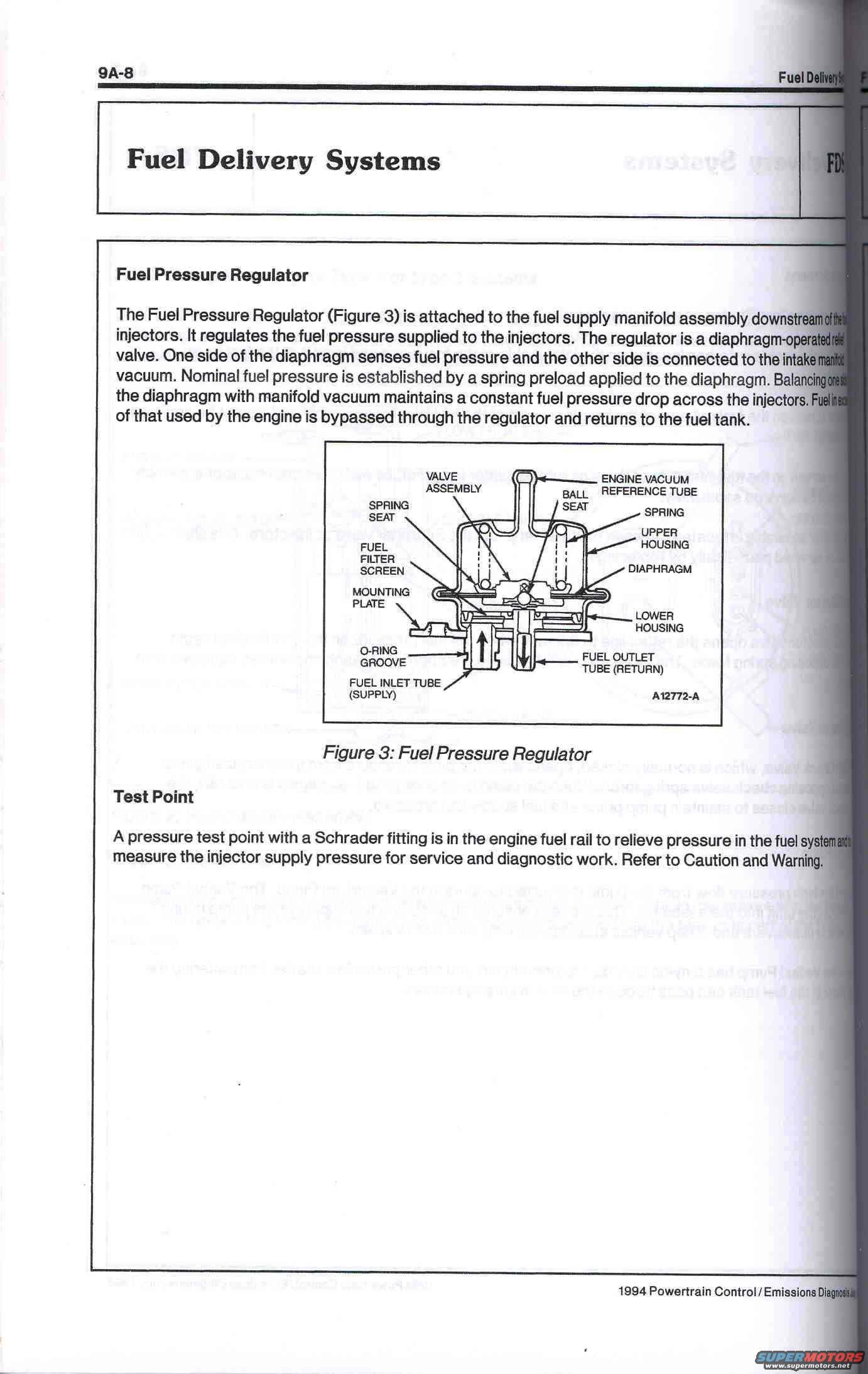
1994 Ford Fuel Pressure Regulator Diagram & Test Point - Powertrain/Emissions
Reference · 1992-1996 BroncoAll 142 service procedures
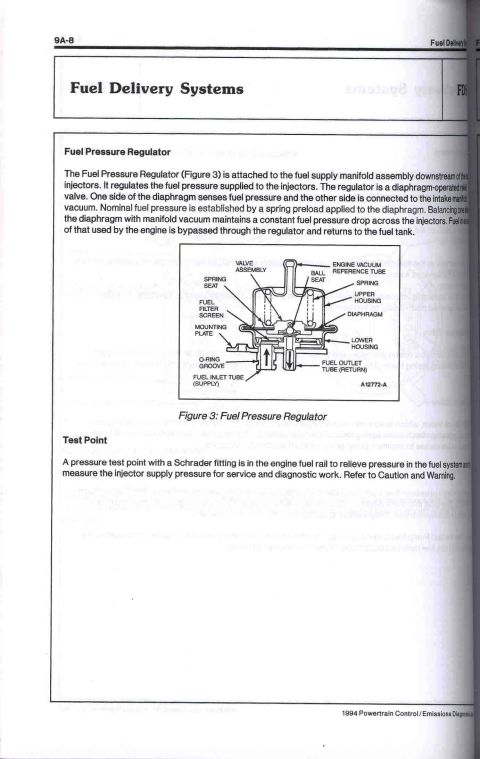
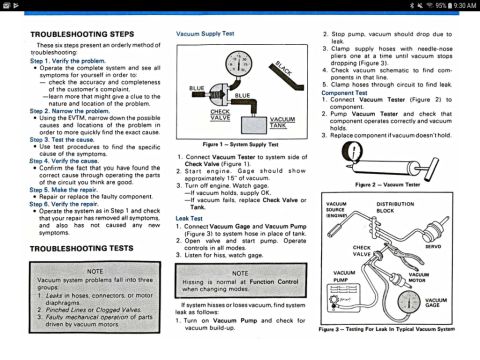
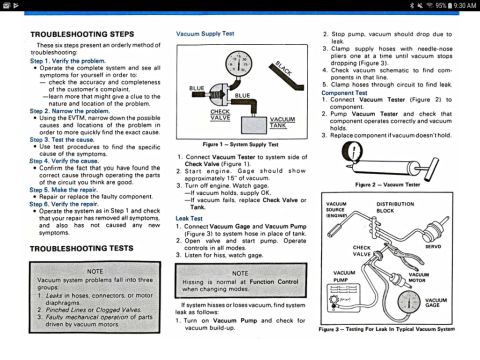
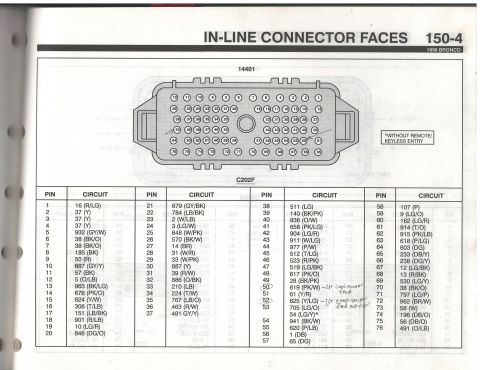
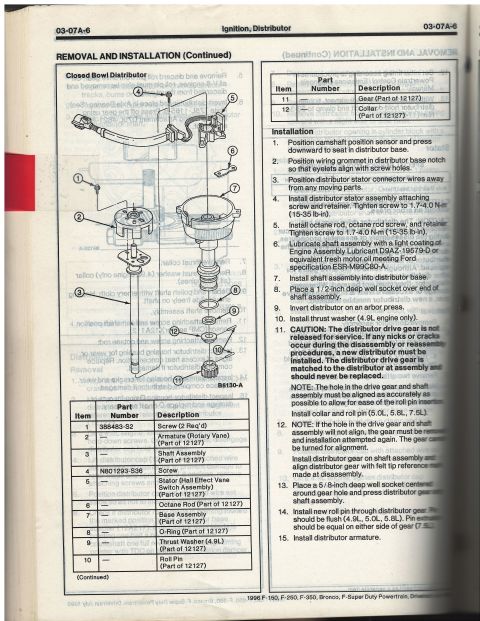
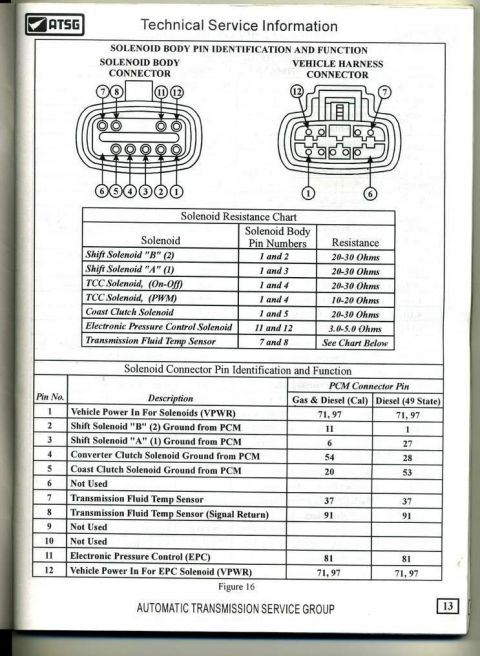
Fuel delivery page: cutaway of the diaphragm-type fuel pressure regulator showing spring, diaphragm, vacuum reference and supply/return tubes; manifold vacuum maintains constant injector pressure drop.
Part of 1992-1996 Ford Bronco Service Procedures
This is page 9A-8 from the 1994 Powertrain Control / Emissions Diagnosis manual, in the 'Fuel Delivery Systems' section. It describes the Fuel Pressure Regulator, explaining that it attaches to the fuel supply manifold assembly downstream of the fuel injectors and regulates fuel pressure supplied to the injectors. The regulator is a diaphragm-operated relief valve: one side of the diaphragm senses fuel pressure while the other side is connected to intake manifold vacuum. Nominal fuel pressure is established by a spring preload on the diaphragm, and balancing the diaphragm with manifold vacuum maintains a constant fuel pressure drop across the injectors. Excess fuel is bypassed through the regulator back to the fuel tank. Figure 3 (drawing A12772-A) is a labeled cutaway of the regulator identifying the valve assembly, engine vacuum reference tube, ball seat, spring seat, spring, upper and lower housings, diaphragm, fuel filter screen, mounting plate, O-ring groove, fuel inlet tube (supply), and fuel outlet tube (return). A 'Test Point' section notes that a Schrader fitting in the engine fuel rail is used to relieve fuel system pressure and measure injector supply pressure during service and diagnostics, with a reference to a Caution and Warning. Text bleeding through from the reverse side of the page is faintly visible but not part of this page.
Is this accurate? Sign in to help verify it.
Frequently asked questions
- Where is the fuel pressure regulator located?
- It is attached to the fuel supply manifold assembly downstream of the fuel injectors.
- How does the fuel pressure regulator work?
- It is a diaphragm-operated relief valve. One side of the diaphragm senses fuel pressure and the other side is connected to intake manifold vacuum. A spring preload on the diaphragm establishes nominal fuel pressure, and balancing the diaphragm with manifold vacuum maintains a constant fuel pressure drop across the injectors. Excess fuel is bypassed through the regulator and returned to the fuel tank.
- Where is the fuel pressure test point and what is it for?
- A pressure test point with a Schrader fitting is in the engine fuel rail. It is used to relieve pressure in the fuel system and to measure the injector supply pressure for service and diagnostic work.
- What parts are shown in the fuel pressure regulator diagram (Figure 3)?
- Valve assembly, engine vacuum reference tube, ball seat, spring seat, spring, upper housing, diaphragm, fuel filter screen, mounting plate, lower housing, O-ring groove, fuel outlet tube (return), and fuel inlet tube (supply).




No comments yet.