Home/
Registry/
Ford/
Bronco/
1992-1996/
1996 Ford Bronco/
Photo
supermotors.net/registry/media/1092263
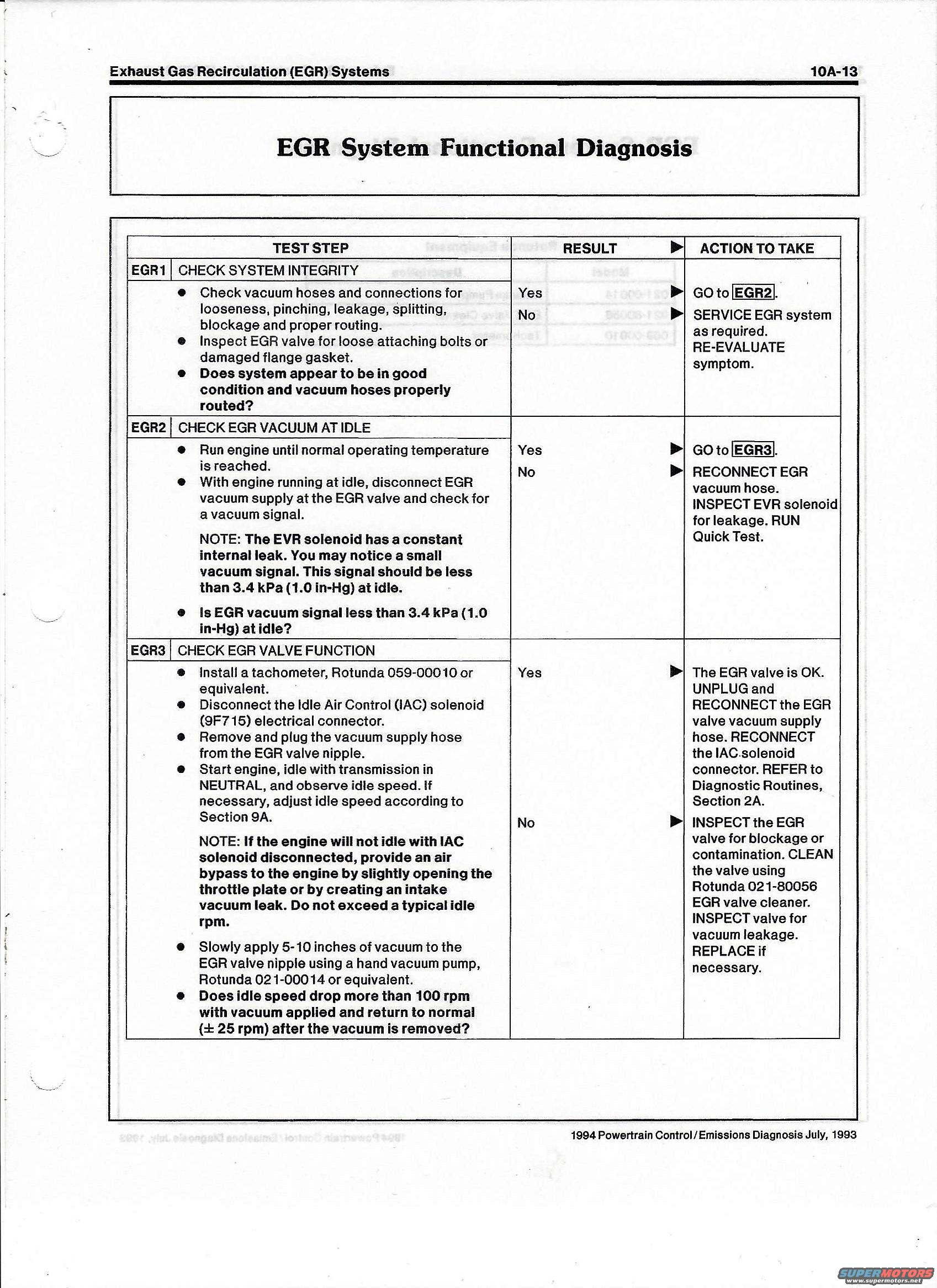
1994 Ford Bronco EGR System Functional Diagnosis - Test Steps EGR1-EGR3 (10A-13)
Reference · 1992-1996 BroncoAll 142 service procedures
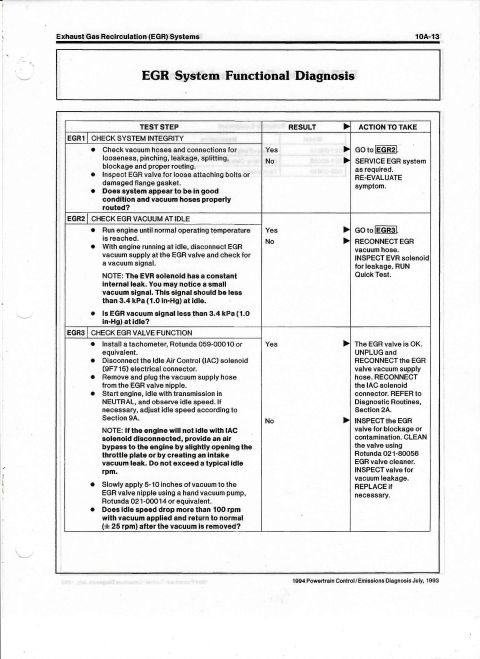
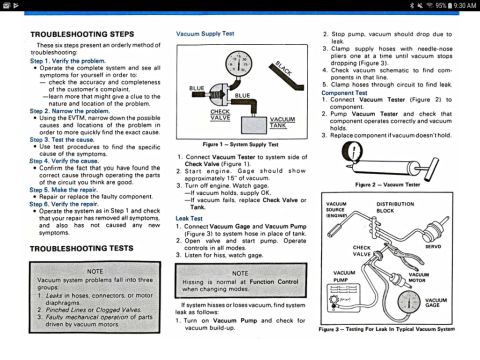
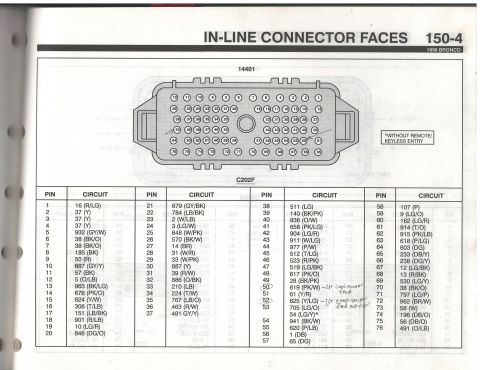
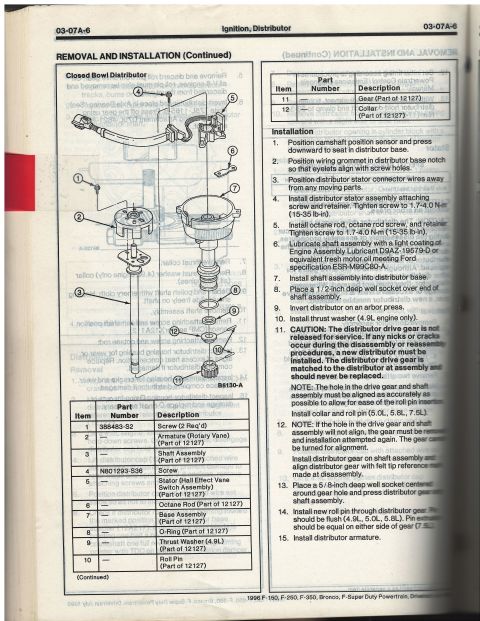
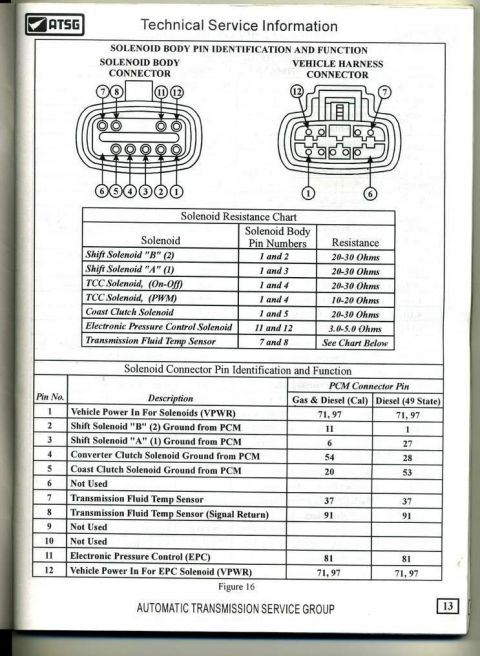
Ford EGR system functional diagnosis chart (page 10A-13): step-by-step pinpoint tests for vacuum integrity, EGR vacuum at idle (<1.0 in-Hg) and EGR valve function using a tachometer.
Part of 1992-1996 Ford Bronco Service Procedures
This page (10A-13) from the 1994 Ford Powertrain Control / Emissions Diagnosis manual (dated July 1993) presents the 'EGR System Functional Diagnosis', a three-step pinpoint test chart for the Exhaust Gas Recirculation system. Step EGR1 checks system integrity: inspecting vacuum hoses for looseness, pinching, leakage, splitting, blockage, and routing, and checking the EGR valve for loose bolts or a damaged flange gasket. Step EGR2 checks EGR vacuum at idle: with the engine at operating temperature, the EGR vacuum supply is disconnected at the valve to verify the vacuum signal is less than 3.4 kPa (1.0 in-Hg); it notes the EVR solenoid has a constant internal leak. Step EGR3 tests EGR valve function: install a tachometer (Rotunda 059-00010), disconnect the IAC solenoid (9F715) connector, plug the vacuum supply hose, and apply 5-10 inches of vacuum to the EGR valve nipple with a hand pump (Rotunda 021-00014); idle speed should drop more than 100 rpm and return to normal (±25 rpm) when vacuum is removed. Each step gives Yes/No results with actions such as servicing the system, inspecting the EVR solenoid, running the Quick Test, or cleaning the EGR valve with Rotunda 021-80056 cleaner.
Is this accurate? Sign in to help verify it.
Frequently asked questions
- How do I test if my EGR valve is working?
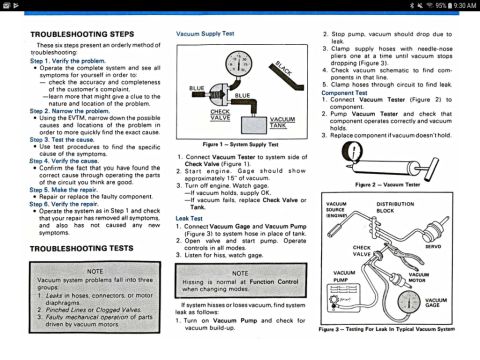
- Per step EGR3: install a tachometer, disconnect the IAC solenoid (9F715) connector, remove and plug the vacuum supply hose from the EGR valve nipple, idle in NEUTRAL, then slowly apply 5-10 inches of vacuum to the EGR valve nipple with a hand vacuum pump. If idle speed drops more than 100 rpm with vacuum applied and returns to normal (±25 rpm) when removed, the EGR valve is OK.
- How much vacuum should the EGR valve see at idle?
- With the EGR vacuum supply disconnected at the valve, the vacuum signal should be less than 3.4 kPa (1.0 in-Hg) at idle. The EVR solenoid has a constant internal leak, so a small vacuum signal is normal.
- What should I do if the EGR valve fails the vacuum function test?
- Inspect the EGR valve for blockage or contamination, clean it using Rotunda 021-80056 EGR valve cleaner, inspect the valve for vacuum leakage, and replace it if necessary.
- What if the engine won't idle with the IAC solenoid disconnected?
- Provide an air bypass to the engine by slightly opening the throttle plate or by creating an intake vacuum leak; do not exceed a typical idle rpm.
- What tools does the EGR functional test require?
- A tachometer (Rotunda 059-00010 or equivalent) and a hand vacuum pump (Rotunda 021-00014 or equivalent); Rotunda 021-80056 EGR valve cleaner is used if the valve is contaminated.





No comments yet.