Model hub · Mercury
Mercury Cougar: History, Generations & Specs
The Mercury Cougar ran from 1967 through 1997 and returned for 1999-2002, spanning eight distinct generations, and no Ford nameplate wandered further from where it started. It began as an upscale Mustang-based pony car, won Motor Trend Car of the Year for 1967, grew into a mid-size personal-luxury car, twice spread across a full line of sedans and wagons (1977-1979 and 1981-1982), spent fifteen years as a Thunderbird twin, and finished as a front-wheel-drive sport coupe on the Contour platform before Mercury dropped it after 2002, ending the nameplate. The 1967-1970 cars carry the strongest collector interest, and with eight eras the right Cougar depends entirely on which one you are shopping.
Pick your generation
Each generation page covers what changed year by year, what owners call them, and the wall of registered vehicles.
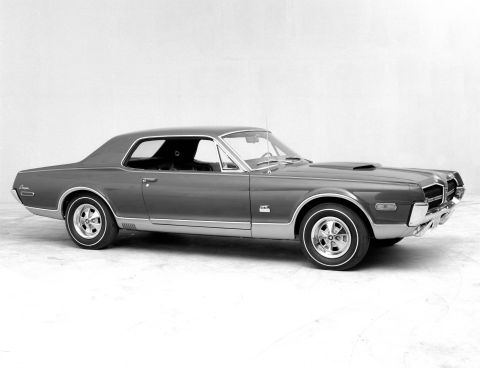 Open1967-1970First-Gen Cougar2,133 photos · 70 registered
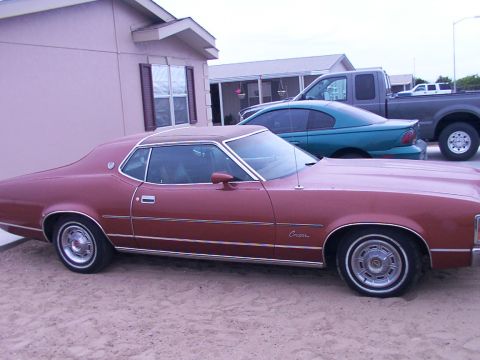 Open1971-1973Second-Gen Cougar213 photos · 9 registered
Open1974-1976Third-Gen Cougar (XR-7)0 photos · 4 registered
Open1971-1973Second-Gen Cougar213 photos · 9 registered
Open1974-1976Third-Gen Cougar (XR-7)0 photos · 4 registered
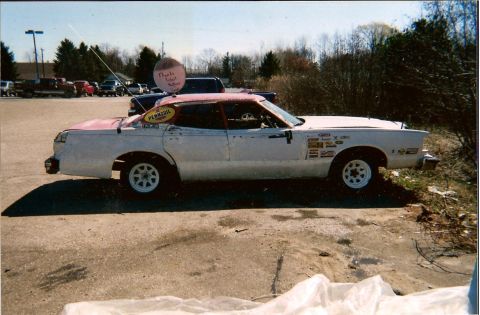 Open1977-1979Fourth-Gen Cougar (Full Range)5 photos · 3 registered
Open1980-1982Fifth-Gen Cougar (Fox)Be the first · add yours
Open1977-1979Fourth-Gen Cougar (Full Range)5 photos · 3 registered
Open1980-1982Fifth-Gen Cougar (Fox)Be the first · add yours
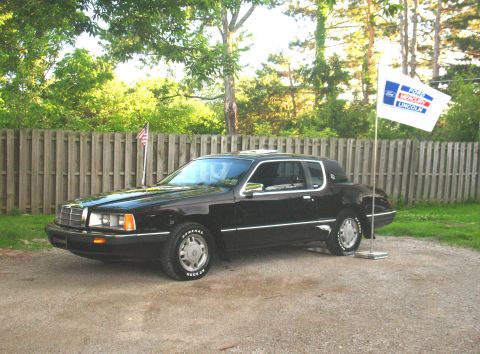 Open1983-1988Sixth-Gen Cougar (Aero Fox)79 photos · 12 registered
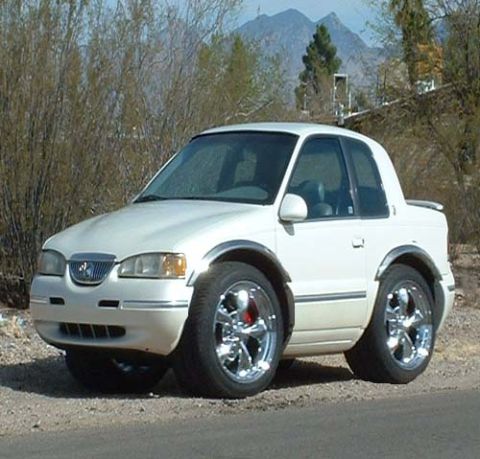 Open1989-1997Seventh-Gen Cougar (MN12)164 photos · 10 registered
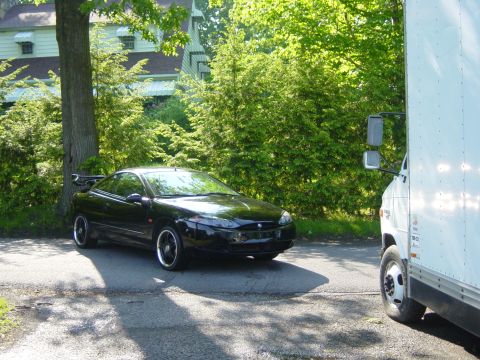 Open1999-2002Eighth-Gen Cougar (FWD)6 photos · 8 registered
By model year
More Mercury models
Technical Reference
1967-1970
- 1967-1970 Mercury Cougar Wiring Diagrams (3)
- 1967-1970 Mercury Cougar Schematics (2)
- 1967-1970 Mercury Cougar Vacuum Routing Diagrams (2)
- 1967-1970 Mercury Cougar Exploded Parts Diagrams (3)
- 1967-1970 Mercury Cougar Data & Spec Plates (16)
- 1967-1970 Mercury Cougar Service Procedures (6)
- 1967-1970 Mercury Cougar Manual Pages (10)
- 1967-1970 Mercury Cougar Brochures & Literature (21)
- 1967-1970 Mercury Cougar Blueprints (5)
1971-1973
The wall
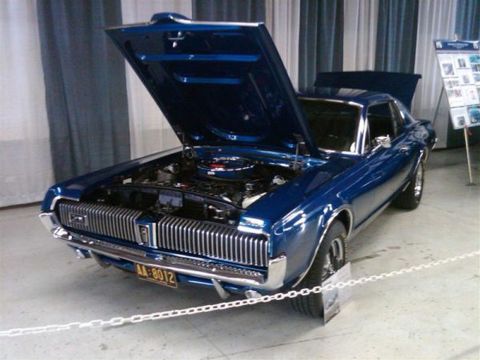
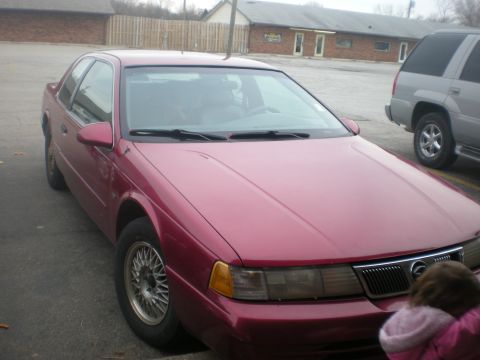
The most-documented Mercury Cougars in the registry, every photo by the owner.
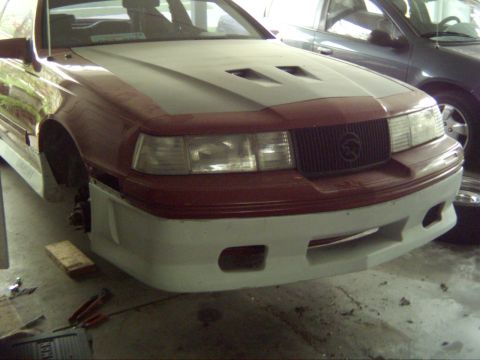
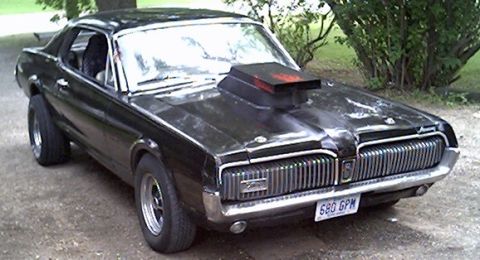
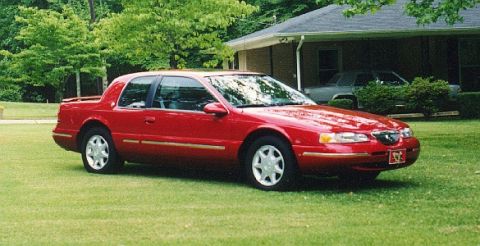
Key facts
| Fact | Detail |
|---|---|
| Production years | 1967-1997, then 1999-2002 after a one-year gap |
| Generations | 8 |
| Body styles across its run | Coupe (all eras), convertible (1969-1973), sedans and wagons (1977-1979 and 1981-1982), hatchback coupe (1999-2002) |
| Platforms | Stretched Mustang platform (1967-1973), Torino/Elite body-on-frame (1974-1976), Thunderbird/LTD II chassis (1977-1979), Fox (1980-1988), MN12 (1989-1997), Contour/Mondeo FWD (1999-2002) |
| Notable variants | XR-7, 1968 GT-E (427 / 428 Cobra Jet), 1969-1970 Eliminator (Boss 302, 428 CJ), supercharged 1989-1990 XR7 |
| Awards | Motor Trend Car of the Year, 1967 |
Generations at a glance
| Generation | Years | Why it matters |
|---|---|---|
| 1967-1970 First-Gen Cougar | 1967-1970 | V8-only upscale Mustang twin, 1967 Motor Trend Car of the Year; the generation the collector market chases. |
| 1971-1973 Second-Gen Cougar | 1971-1973 | Larger Mustang-based body; 1973 was the last Cougar convertible ever built. |
| 1974-1976 Third-Gen Cougar (XR-7) | 1974-1976 | Left the Mustang family for the mid-size Torino chassis; every car an XR-7 coupe, cheapest entry into Cougar ownership. |
| 1977-1979 Fourth-Gen Cougar (Full Range) | 1977-1979 | Cougar name spread across coupes, sedans, and wagons; XR-7 sales were enormous. |
| 1980-1982 Fifth-Gen Cougar (Fox) | 1980-1982 | Downsized to the unibody Fox platform; weak sellers, now among the rarest Cougars on the road. |
| 1983-1988 Sixth-Gen Cougar (Aero Fox) | 1983-1988 | Aero Thunderbird twin with its own formal rear window; 5.0 cars interchange parts with the Fox Mustang. |
| 1989-1997 Seventh-Gen Cougar (MN12) | 1989-1997 | RWD MN12 with four-wheel independent suspension; supercharged 1989-1990 XR7 and 4.6 modular cars are the enthusiast picks. |
| 1999-2002 Eighth-Gen Cougar (FWD) | 1999-2002 | Front-wheel-drive New Edge hatchback on the Contour platform; the last car to wear the name. |
Mercury launched the Cougar for 1967 as Lincoln-Mercury's answer to the Mustang, built on a stretched version of the same platform with a 3 inch longer wheelbase (111 inches) and a more formal character: hidden headlamps, sequential rear turn signals, and V8 power only. It won Motor Trend Car of the Year in its first season. The badge then followed the market rather than its origins, moving upmarket and up in size through the 1970s, riding the Thunderbird's coattails through the 1980s and early 1990s, and closing out as an import-fighter coupe.
1967-1970: Mustang-based pony car
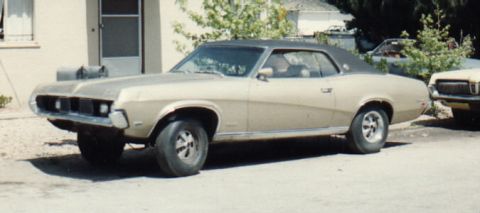
The first-generation Cougar shared the Mustang's underpinnings but never offered a six; base power was the 289 small-block (302 from 1968), with the 390 big-block optional from launch and a 351 joining for 1969. The rare 1968 GT-E carried the 427 rated at 390 horsepower, replaced in April 1968 by the 428 Cobra Jet, which stayed on the option sheet through 1970. The XR-7 added a leather and woodgrain interior with full instrumentation, and the 1969-1970 Eliminator package brought the Boss 302 and 428 CJ into the lineup. A convertible joined for 1969. All horsepower figures in this era are SAE gross. GT-E, CJ, and Eliminator cars carry a large premium over standard coupes.
1971-1973: bigger pony car, last convertible
The 1971 redesign kept the Cougar tied to the Mustang but on a larger body with a 112.1 inch wheelbase. Engine choices narrowed to 351 Cleveland variants plus the 429 Cobra Jet, offered for 1971 only. Ratings switched from gross to net for 1972, which explains the paper drop in horsepower across the board. The 1973 convertible was the last drop-top Cougar ever built, which keeps 1971-1973 convertibles collectible even as the coupes stay affordable.
1974-1976: move to the mid-size Torino chassis
For 1974 the Cougar left the Mustang family entirely, moving to the mid-size body-on-frame chassis shared with the Ford Torino and Elite. Every car was an XR-7 coupe. Standard power was the 351, with the 400 and 460 V8s optional, all strangled by early emissions equipment; the 460 was rated 220 net horsepower in 1974 and about 200 by 1976. This is the least sought-after generation.
1977-1979: Cougar becomes a full line
For 1977 Mercury spread the Cougar name across the former Montego range: coupes, sedans, and wagons, with the XR-7 coupe sharing its chassis with the Ford Thunderbird and LTD II. The wagon lasted only 1977. Engines ran from the 302 through the 351 and 400. Sales of the XR-7 were enormous in this era because the price undercut earlier personal-luxury coupes; survivors are common and inexpensive.
1980-1982: downsized to the Fox platform
The 1980 XR-7 moved to Ford's unibody Fox platform alongside the redesigned Thunderbird, dropping roughly 700 to 900 pounds depending on powertrain and well over a foot of length from the 1979 car; the 255 (4.2L) V8 was standard and the 302 optional. For 1981-1982 Mercury again broadened Cougar into a full line with two-door and four-door sedans and, for 1982, a wagon. The 1981 line cars started with a 2.3L four, with the 200 inline-six and the 255 optional. For 1982 a new 3.8L V6 arrived and the 302 was dropped, leaving the 255 as the only V8 in any Cougar; the new wagon came only with the 3.3L six or the V6. Boxy styling kept sales weak.
1983-1988: aero Fox coupe, Thunderbird twin
The 1983 Cougar took the aerodynamic body shared with the ninth-generation Thunderbird, distinguished by its own upright formal rear window. Base power was the 3.8L V6 with the 5.0L (302) V8 optional; the 1984-1986 XR-7 used the Thunderbird Turbo Coupe's 2.3L turbocharged four, and for 1987-1988 the XR-7 switched to the 5.0 V8. A 20th Anniversary edition marked 1987. The 5.0 cars are the ones to seek; parts interchange with the Fox Mustang keeps them easy to maintain.
1989-1997: MN12 platform, independent rear suspension
The 1989 Cougar moved to the rear-wheel-drive MN12 platform with four-wheel independent suspension, again twinned with the Thunderbird. The XR7 came standard with the supercharged 3.8L V6 (210 hp) for 1989-1990, base cars ran the naturally aspirated 3.8, and no V8 fit under the low cowl those first two years. For 1991 a 200 hp 5.0 V8 replaced the supercharged engine in the XR7 and became optional on other Cougars, and for 1994 the 4.6L SOHC modular V8 replaced the 5.0. Production ended in 1997 when Ford shut down MN12 output.
1999-2002: front-wheel-drive sport coupe
After a one-year gap, the 1999 Cougar returned as a front-wheel-drive hatchback coupe built on the Contour/Mondeo platform with "New Edge" styling, sold in some markets simply as the Ford Cougar. Engines were a 2.0L Zetec four (125 hp) and a 2.5L Duratec V6 (170 hp); the four almost always carried the five-speed manual, with only a handful of rare automatic cars reportedly built, while the V6 offered manual or automatic. Mercury dropped the model after 2002, ending the nameplate. The V6 manual cars handle well and remain cheap, though rust and thin parts support are the usual complaints.
Asked all the time
Which Mercury Cougar years are the most collectible?
The 1967-1970 Mercury Cougar carries the strongest collector interest, topped by the 1968 GT-E (427 or 428 Cobra Jet, 394 built), the 1968-1970 428 Cobra Jet cars, and the 1969-1970 Eliminator with the Boss 302 or 428 CJ. The 1969-1970 and 1971-1973 convertibles also command premiums, and 1973 was the last Cougar convertible ever built. Standard small-block coupes from 1967-1970 remain the most affordable way into the first generation.
What engines did the first-generation Mercury Cougar (1967-1970) offer?
The 1967-1970 Mercury Cougar was V8-only. Base power was the 289 small-block (302 from 1968), with the 390 big-block optional from launch and a 351 added for 1969. The 1968 GT-E carried the 427 rated at 390 horsepower until the 428 Cobra Jet replaced it in April 1968, and the Boss 302 was available in the 1969-1970 Eliminator. All ratings from this era are SAE gross figures.
When did the Mercury Cougar stop being a Mustang-based car?
The Mercury Cougar shared Mustang underpinnings through 1973. For 1974 it moved to the mid-size body-on-frame chassis shared with the Ford Torino and Elite, becoming a pure personal-luxury coupe with 351, 400, and 460 V8 options.
Which Mercury Cougar shares parts with the Fox-body Mustang?
The 1980-1988 Mercury Cougar rides on Ford's Fox platform, so suspension, driveline, and many 5.0L V8 engine parts interchange with the 1979-1993 Ford Mustang. The 1983-1988 coupes, particularly the 1987-1988 XR-7 with the 5.0, are the easiest of these to build and maintain with Mustang aftermarket support.
What is special about the 1989-1997 Mercury Cougar XR7?
The 1989-1990 Mercury Cougar XR7 on the MN12 platform came standard with a supercharged 3.8L V6 rated at 210 horsepower, plus four-wheel independent suspension. For 1991 a 200 horsepower 5.0L V8 replaced the supercharged engine in the XR7 and became optional on other Cougars, itself replaced for 1994 by the 4.6L SOHC modular V8, which is the pick for long-term durability.
Was the 1999-2002 Mercury Cougar front-wheel drive?
Yes. The 1999-2002 Mercury Cougar was a front-wheel-drive hatchback coupe on the Ford Contour/Mondeo platform, offered with a 2.0L Zetec four making 125 horsepower or a 2.5L Duratec V6 making 170 horsepower. It was the only front-drive Cougar and the last car to wear the name.