Home/
Registry/
Ford/
Bronco/
1987-1991/
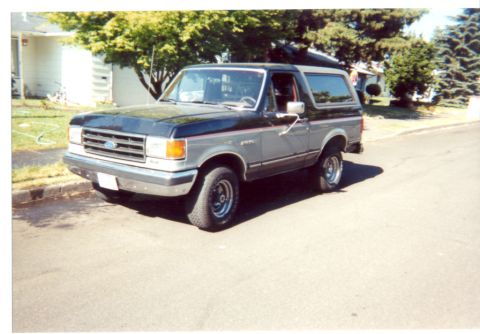
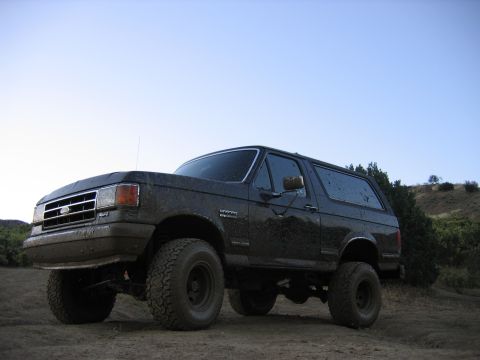
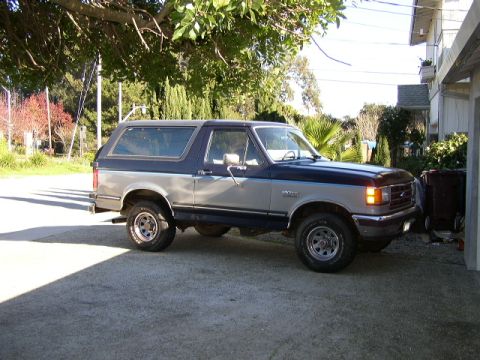
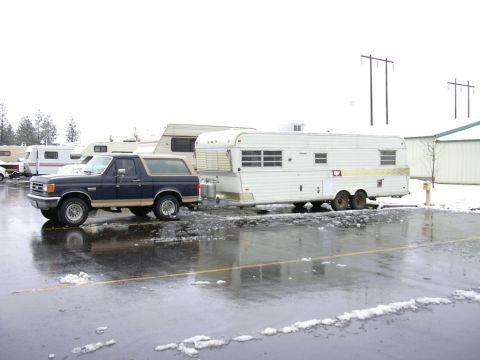
1988 Ford Bronco/
Photo
supermotors.net/registry/media/1006870
DIY Tube Bender Design Using 2005 Chevy Trailblazer Rear Rotors - CAD Concept
Reference · 1987-1991 BroncoAll 110 schematics
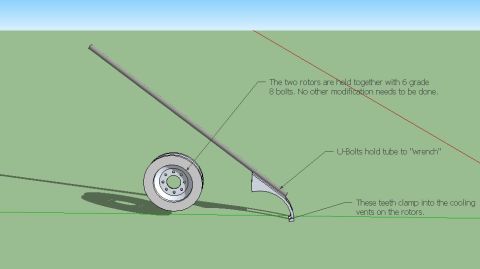
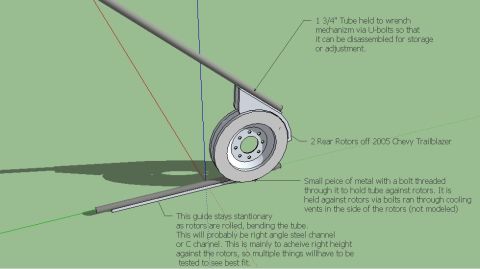

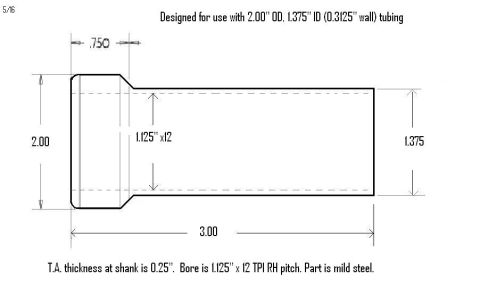
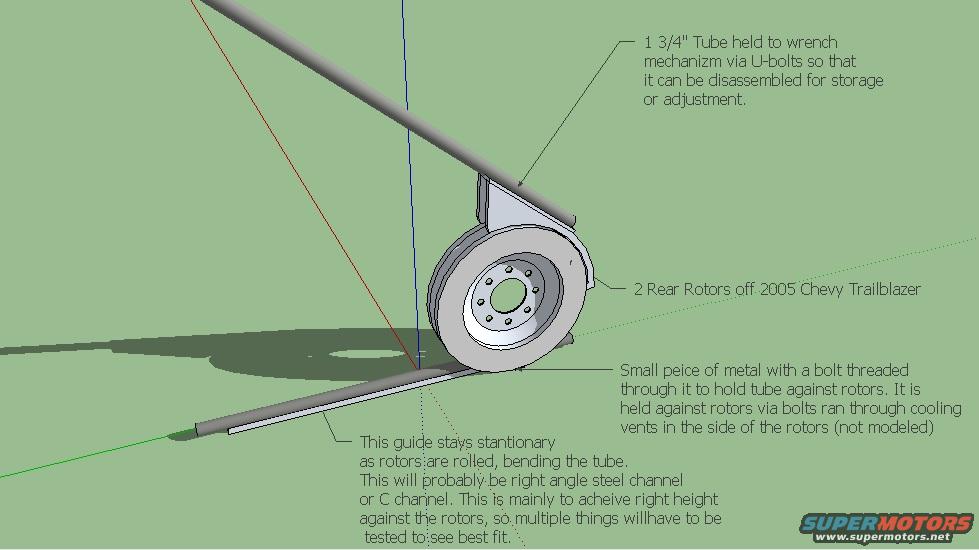
Annotated 3D concept sketch of a homemade tube-bending tool built from Chevy Trailblazer rear rotors and a tube held by U-bolts.
Part of 1987-1991 Ford Bronco Schematics
This document is a 3D CAD (SketchUp-style) concept rendering of a homemade tube bender, not a factory automotive schematic. The design uses two rear brake rotors from a 2005 Chevy Trailblazer stacked together as the bending die. A 1 3/4-inch tube is attached to the wrench mechanism with U-bolts so the assembly can be disassembled for storage or adjustment. A small piece of metal with a threaded bolt holds the tube against the rotors; it is secured by bolts run through the cooling vents in the side of the rotors (not modeled in the drawing). A stationary guide, likely right-angle steel channel or C-channel, remains fixed as the rotors are rolled to bend the tube, primarily to achieve the correct height against the rotors, with the note that multiple options will have to be tested for best fit. A reader can learn the general layout and materials for building a DIY roller-style tube bender from salvaged brake rotors, including attachment methods and design considerations, though no dimensions beyond the tube size, no part numbers, and no torque or fastener specifications are provided.
Is this accurate? Sign in to help verify it.
Frequently asked questions
- What rotors are used in this homemade tube bender design?
- Two rear rotors off a 2005 Chevy Trailblazer are used as the bending die.
- How is the 1 3/4" tube attached to the wrench mechanism?
- The tube is held to the wrench mechanism via U-bolts so it can be disassembled for storage or adjustment.
- How is the tube held against the rotors during bending?
- A small piece of metal with a bolt threaded through it holds the tube against the rotors; it is held to the rotors via bolts run through the cooling vents in the side of the rotors (this part is not modeled).
- What does the stationary guide do and what will it be made of?
- The guide stays stationary as the rotors are rolled, bending the tube. It will probably be right-angle steel channel or C-channel, mainly to achieve the right height against the rotors; multiple options will have to be tested for best fit.
No comments yet.