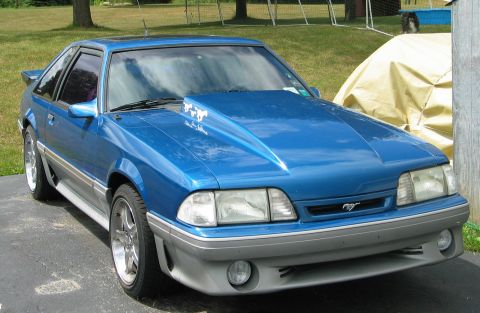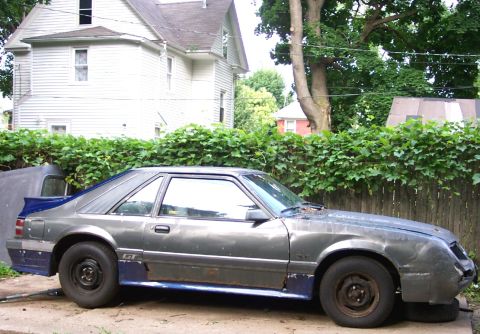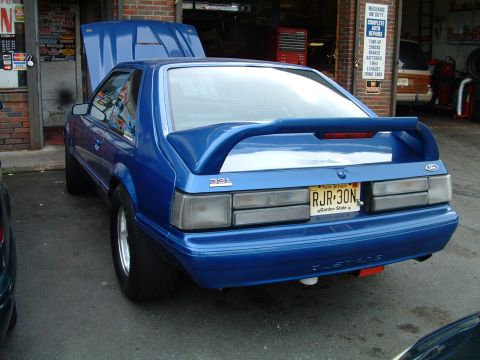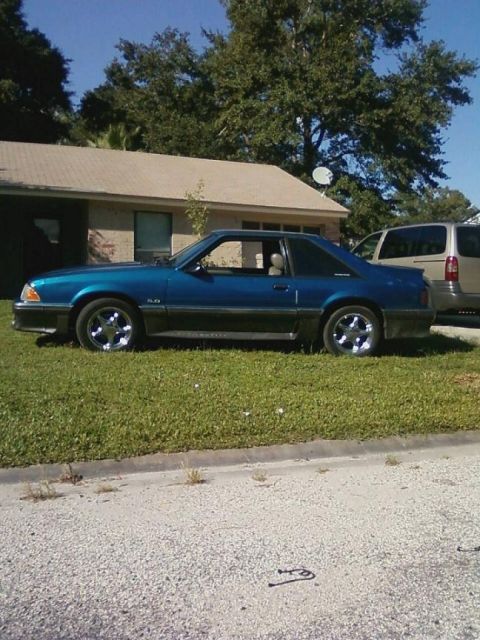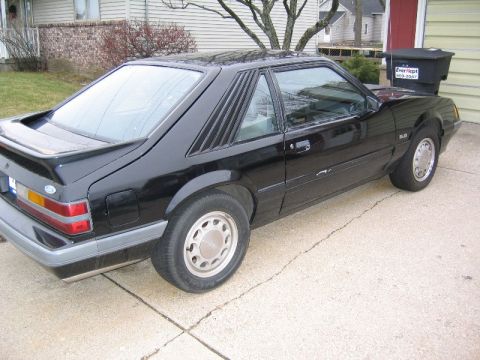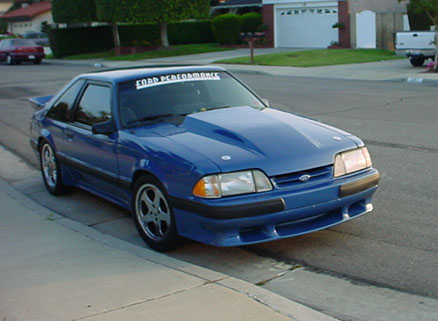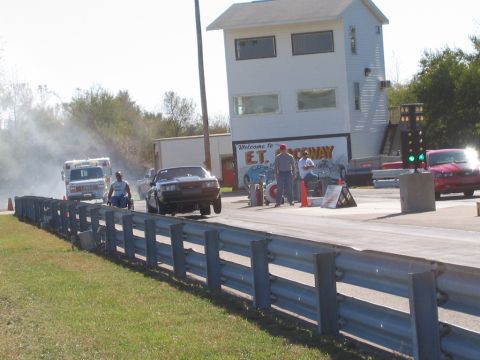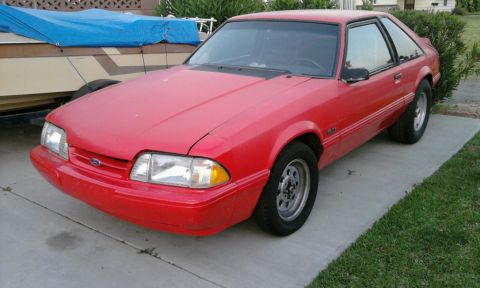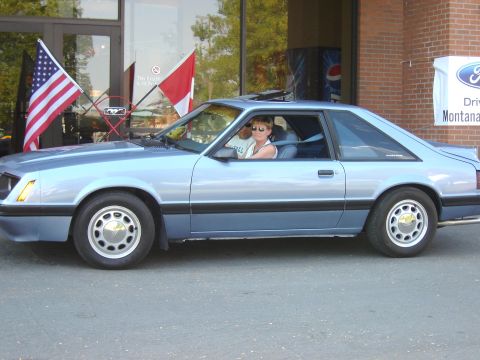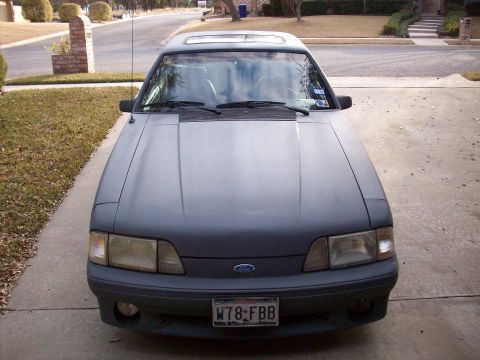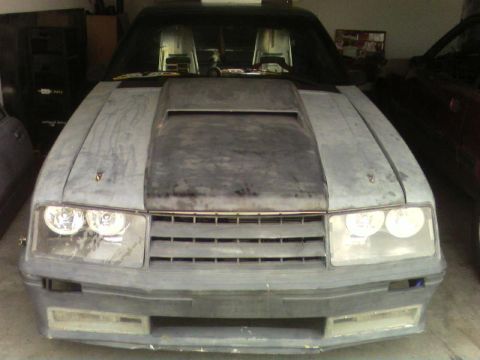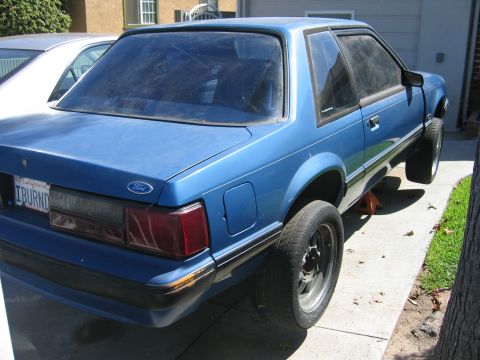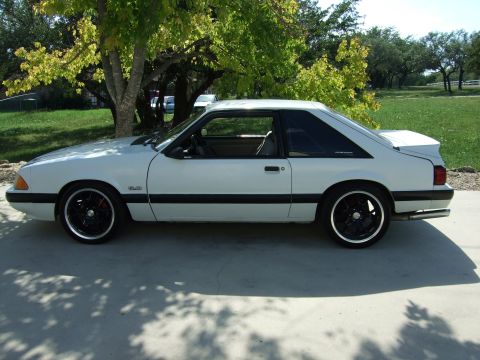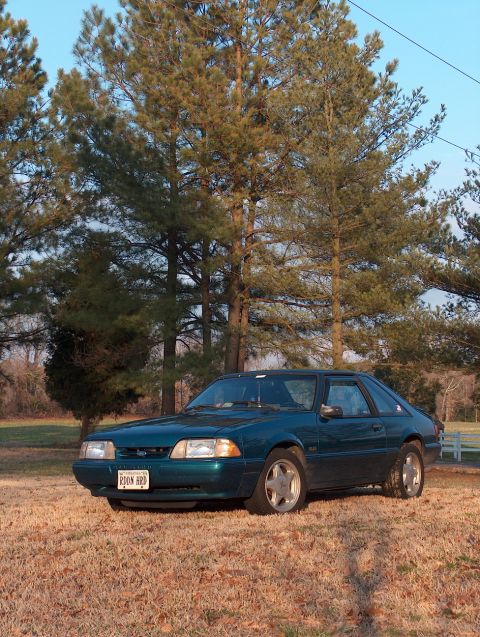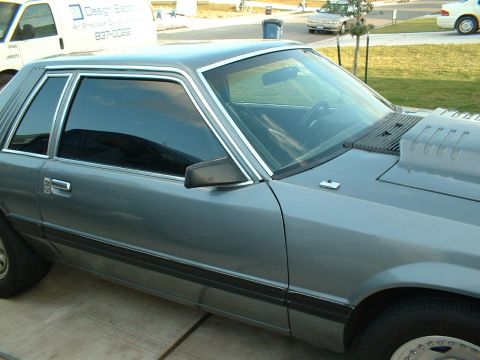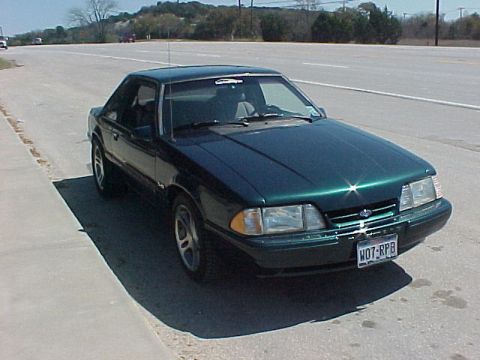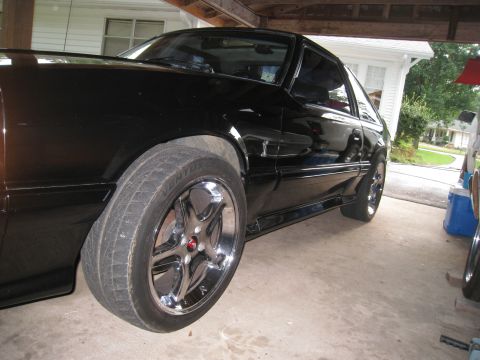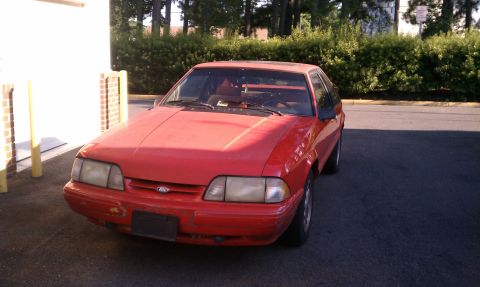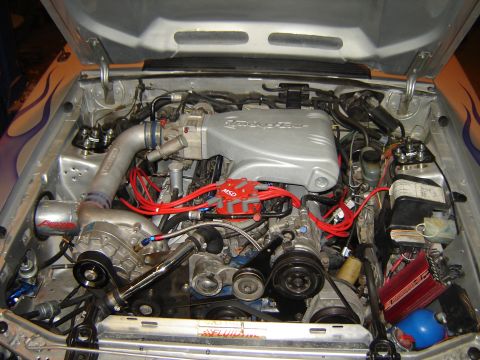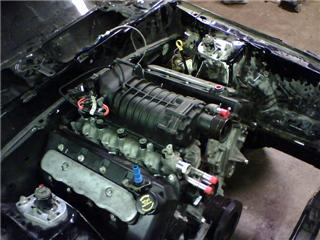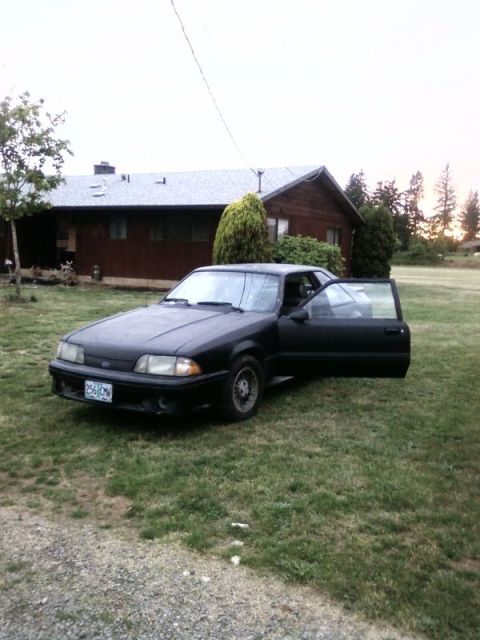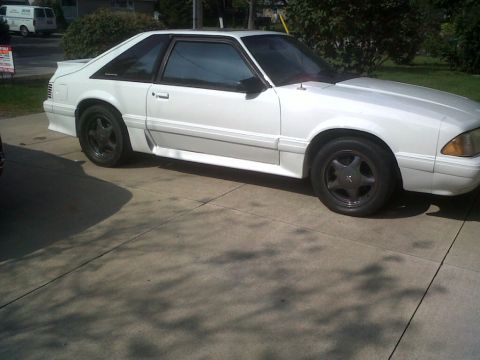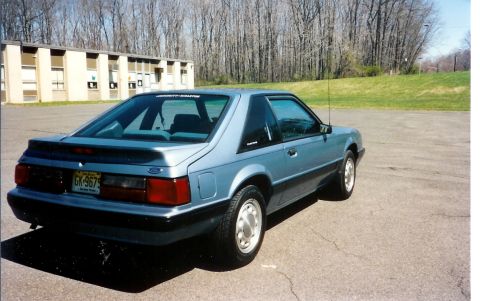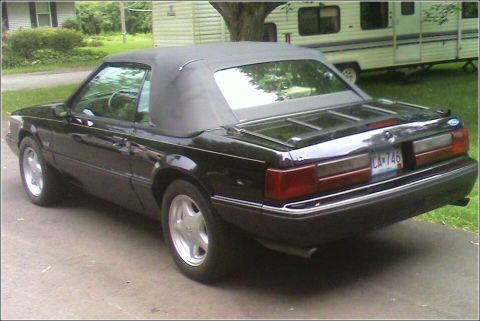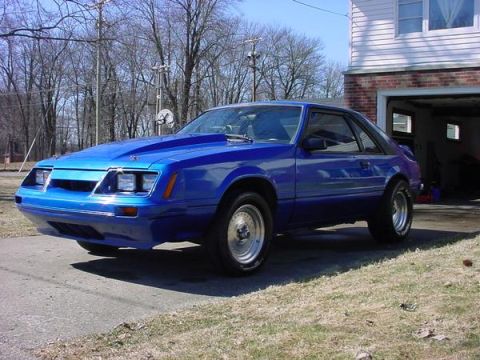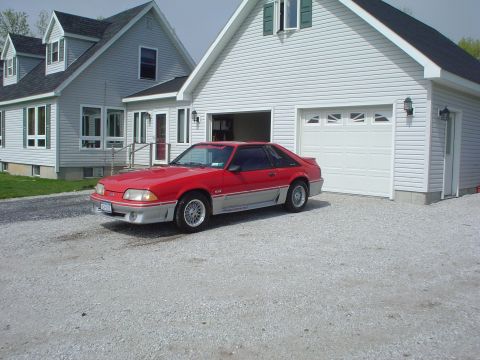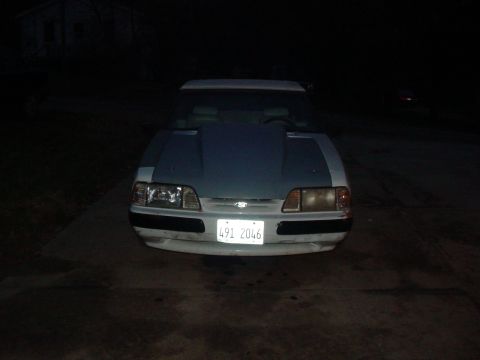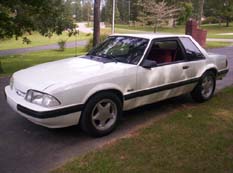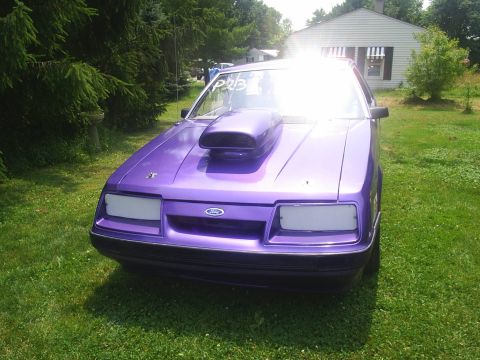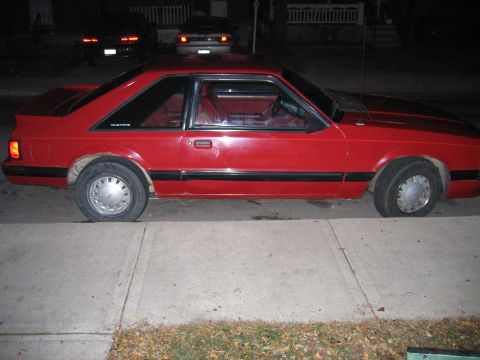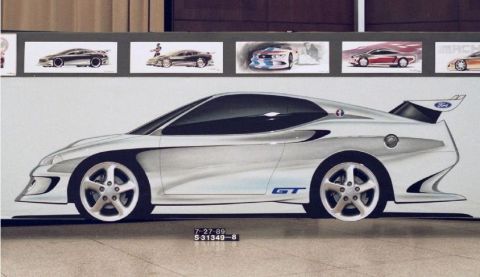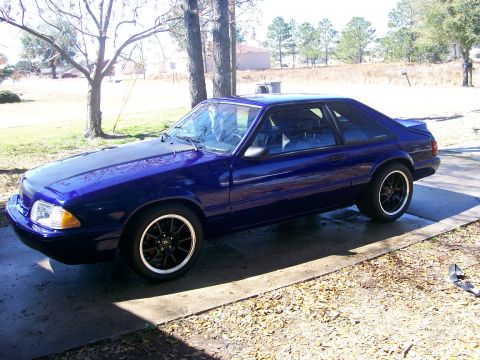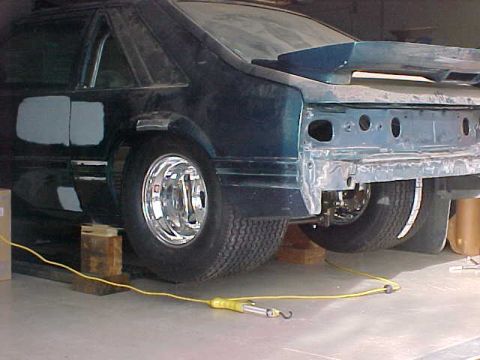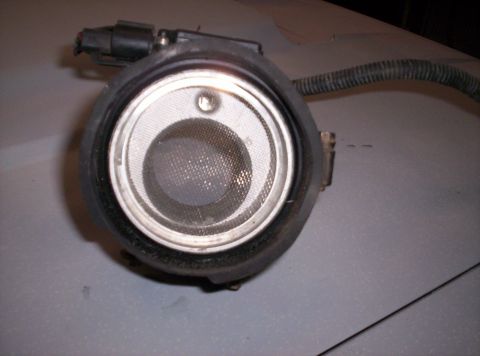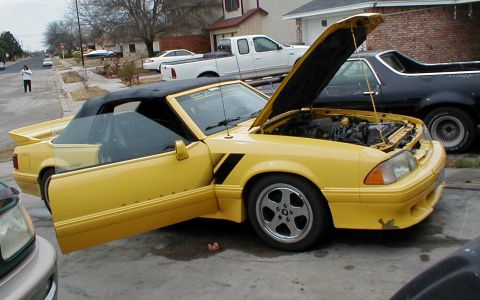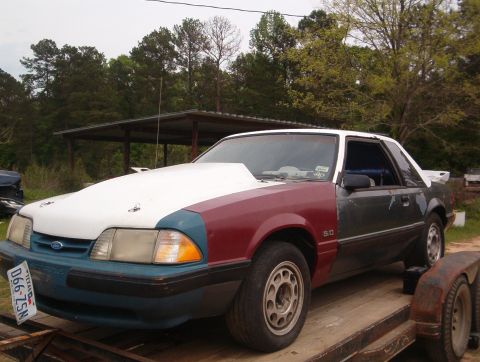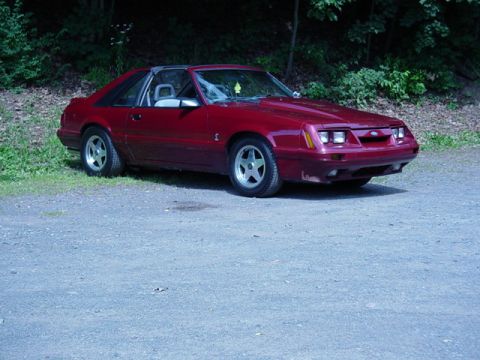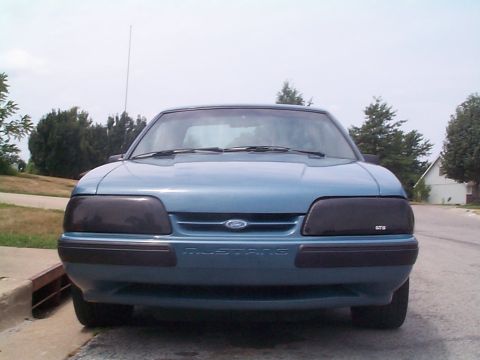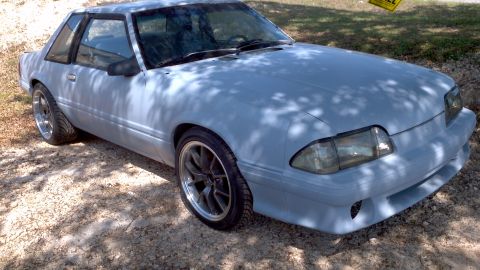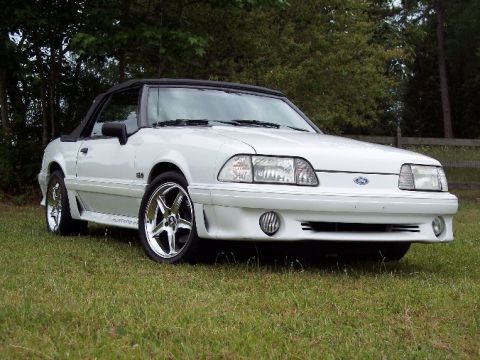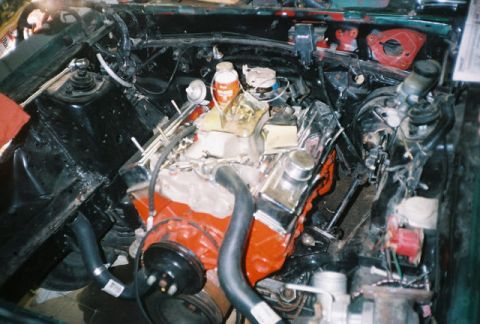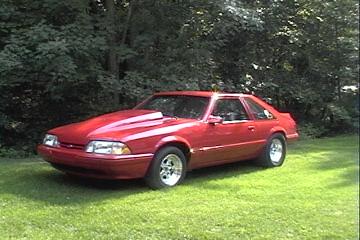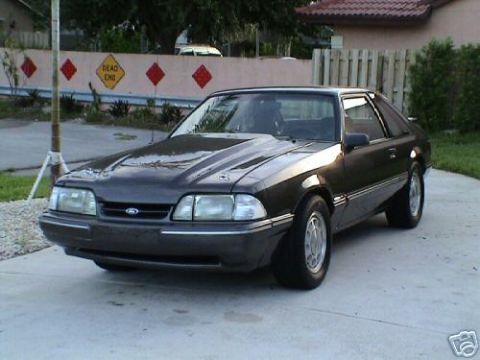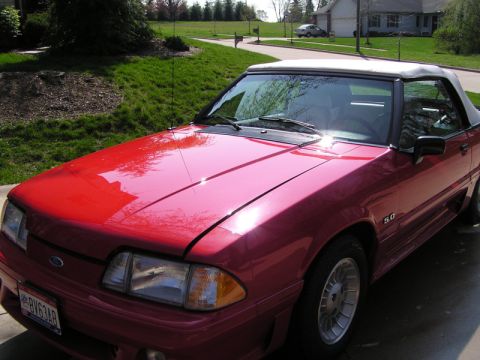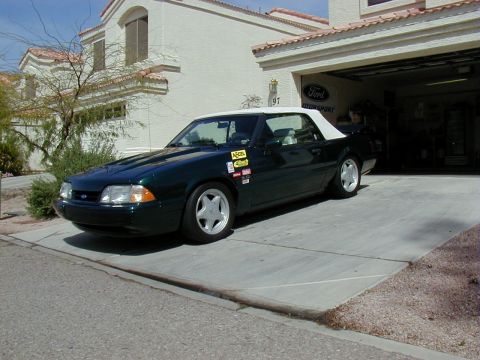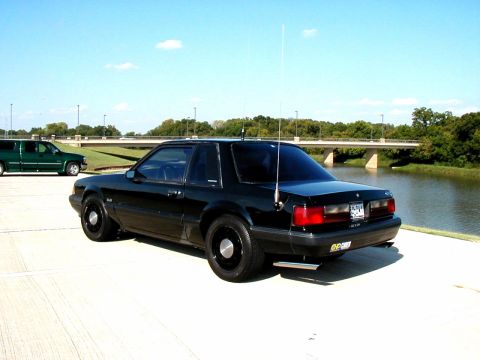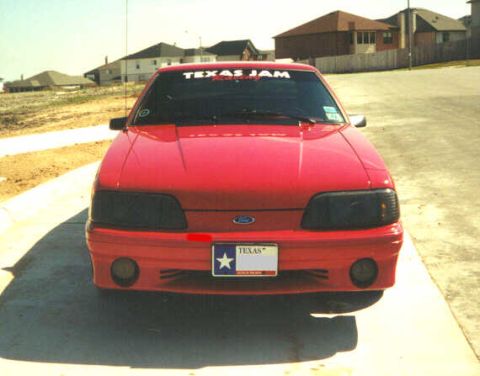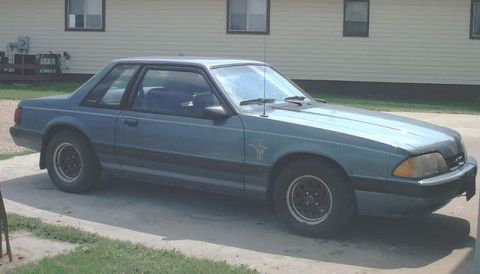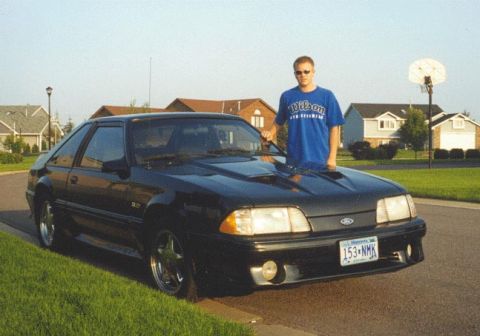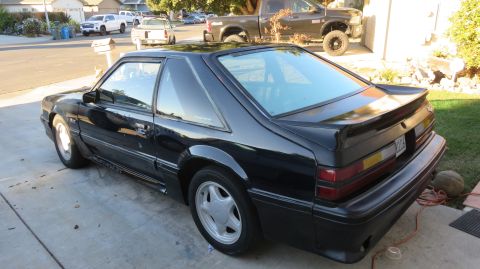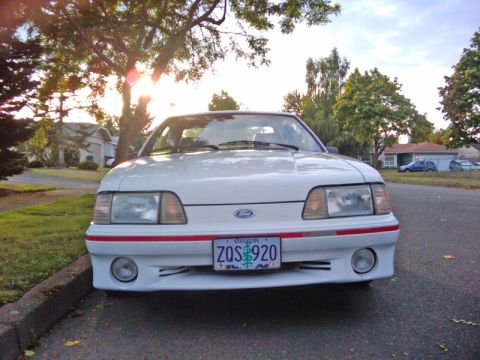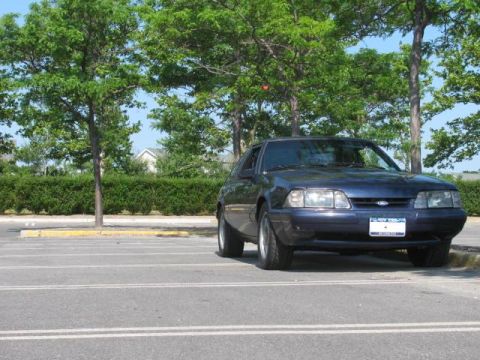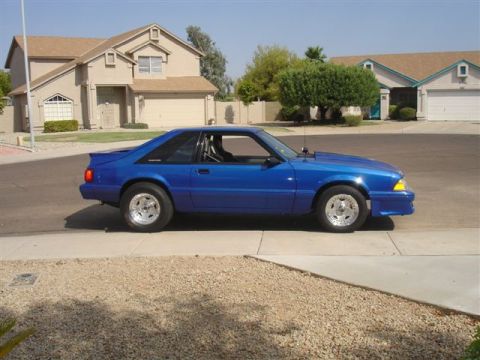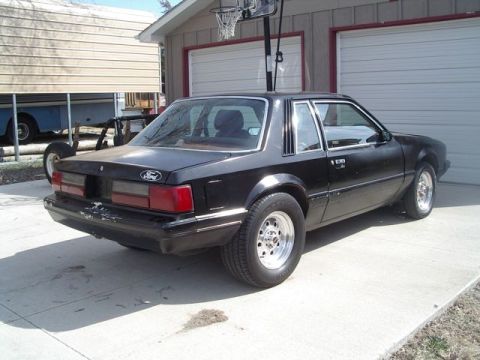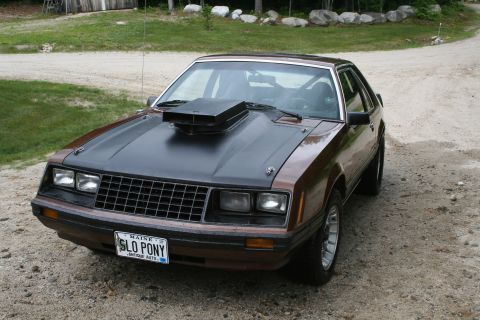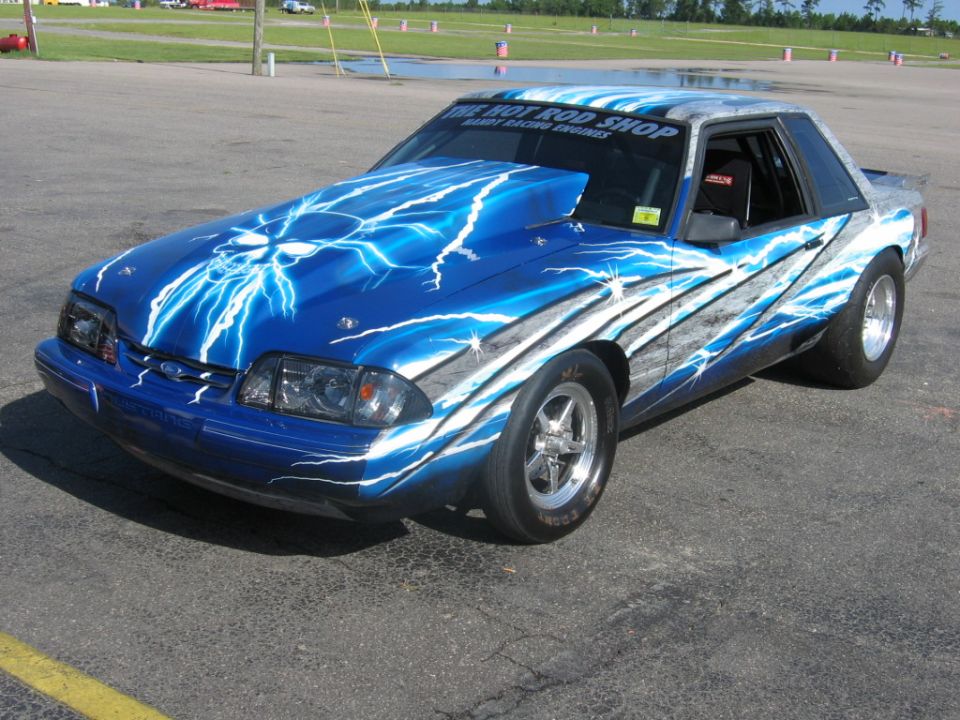
The third-generation Ford Mustang arrived for 1979 on Ford's new rear-drive Fox platform, the same unibody architecture used by the Ford Fairmont and Mercury Zephyr. Its wheelbase measured 100.4 inches, longer than the Mustang II it replaced, and the lighter structure improved both interior room and handling. Launch engines spanned a 2.3L (140 cu in) Lima SOHC four, a turbocharged version of that four, a 2.8L (171 cu in) Cologne V6, and the 5.0L (302 cu in) Windsor V8. Stacked quad headlamps, called the four-eye front, identified 1979 through 1986 cars. The 5.0L High Output V8 returned the GT to genuine performance for 1982, gained fuel injection in 1986, and was rated 225 net horsepower after the 1987 aero facelift. Ford built this body in coupe, hatchback, and convertible forms through 1993, the longest single Mustang run to that point, ending with the 235-horsepower SVT Cobra.
Other Ford Mustang generations
At a glance
- Years: 1979-1993 (third generation, the Fox-body)
- Platform: Ford Fox, rear-wheel-drive unibody shared with the Fairmont and Mercury Zephyr; 100.4 in wheelbase
- Body styles: notchback coupe, three-door hatchback, convertible (from 1983)
- Engines: 2.3L inline-four, 2.3L turbo inline-four (incl. the intercooled SVO), 2.8L Cologne V6 then 3.3L inline-six, and the 5.0L (302) Windsor V8
- Performance models: GT (5.0 HO from 1982), SVO (1984-1986), LX 5.0, SVT Cobra and Cobra R (1993)
- Rear axle: Ford 7.5-inch (four/six and 1979-1985 V8s), Ford 8.8-inch (5.0L V8 from 1986)
- Styling: stacked "four-eye" headlamps 1979-1986; flush aero front from 1987
- Horsepower basis: SAE net
Year-by-year changes
| Year | Key facts |
|---|---|
| 1979 | Fox platform launch on a 100.4 in wheelbase; engines were the 2.3L (140 cu in) I4, a 2.3L turbo I4, a 2.8L (171 cu in) Cologne V6, and the 5.0L (302 cu in) Windsor V8 rated about 140 net hp. The 1979 Mustang paced the Indianapolis 500, and Ford sold a Pace Car replica. Stacked four-eye headlamps. |
| 1980 | The 1980 Mustang dropped the 5.0L (302 cu in) V8 in favor of a smaller 4.2L (255 cu in) Windsor V8 for fuel economy; the 2.3L turbo continued. The Cologne V6 was largely replaced by the 3.3L (200 cu in) Thriftpower inline six. |
| 1981 | The 1981 Mustang carried the 4.2L (255 cu in) V8, the 3.3L (200 cu in) I6, and the 2.3L four; the carbureted 2.3L turbo was withdrawn during this period due to reliability problems. A T-roof option appeared on hatchbacks. |
| 1982 | The 1982 Mustang GT returned with the 5.0L (302 cu in) High Output V8, marketed under the slogan "the Boss is back," rated 157 net hp with a two-barrel carburetor. The 4.2L V8 remained available as a lower option. |
| 1983 | The 1983 Mustang reintroduced a factory convertible after a decade, and the 5.0L (302 cu in) HO V8 gained a four-barrel carburetor, rising to 175 net hp. A mid-year fuel-injected 2.3L turbo returned in the Turbo GT. |
| 1984 | The 1984 Mustang SVO debuted with an intercooled, fuel-injected 2.3L turbo four rated 175 net hp, four-wheel disc brakes, and unique flush aero headlamps; a 20th Anniversary GT350 commemorative was also offered. The 5.0L HO ran 175 net hp. |
| 1985 | The 1985 Mustang GT 5.0L (302 cu in) HO with the four-barrel carburetor was rated 210 net hp, helped by a roller camshaft and revised exhaust; the SVO turbo rose to 205 net hp mid-year. |
| 1986 | The 1986 Mustang 5.0L (302 cu in) HO converted to sequential electronic fuel injection (SEFI) and adopted the stronger 8.8-inch rear axle, though a restrictive cylinder-head casting held it to 200 net hp. The SVO returned at 200 net hp. |
| 1987 | The 1987 Mustang received a major aerodynamic facelift with flush composite headlamps, ending the four-eye era; the 5.0L (302 cu in) HO gained better heads and was rated 225 net hp. The SVO was discontinued, leaving the LX 5.0 and GT as the performance models. |
| 1988 | The 1988 Mustang continued the 225 net hp 5.0L (302 cu in) HO in the GT and the value-leader LX 5.0; mass-airflow metering replaced speed-density on California cars and then more broadly. |
| 1989 | The 1989 Mustang carried the 225 net hp 5.0L (302 cu in) HO with mass-airflow injection across the range; the lighter LX 5.0 hatchback remained the quickest factory configuration. |
| 1990 | The 1990 Mustang added a standard driver airbag, deleting the tilt steering column, and the 5.0L (302 cu in) GT and LX continued at 225 net hp. Cars built in the 25th-anniversary window (roughly spring 1989 into 1990) received a commemorative dash badge, but there was no distinct "25th Anniversary" trim. The year's notable special was a limited emerald-green 7-Up promotional LX 5.0 convertible. |
| 1991 | The 1991 Mustang 5.0L (302 cu in) gained a slightly revised cylinder head and 16-inch wheels; the base 2.3L four was updated to a twin-plug, 105 net hp configuration. |
| 1992 | The 1992 Mustang was a near carryover year; the 5.0L (302 cu in) GT and LX 5.0 held 225 net hp, and a limited "Vibrant Red" feature convertible was offered late in the run. |
| 1993 | The 1993 Mustang closed the generation; the production 5.0L (302 cu in) HO was rerated to 205 net hp, and Ford's new SVT division launched the Mustang Cobra at 235 net hp plus the stripped, track-focused Cobra R. |
Platform and engineering
The third-generation Ford Mustang (1979-1993) used Ford's Fox platform, a rear-wheel-drive unibody introduced on the 1978 Ford Fairmont and Mercury Zephyr. Its wheelbase was 100.4 inches, and front suspension used MacPherson struts while the rear used a four-link live axle with coil springs. The 1979 Mustang weighed several hundred pounds less than the heavy 1973 first-generation cars while offering more interior space than the Mustang II. Bodies at launch were a two-door notchback coupe and a three-door hatchback; the convertible joined for 1983. Rear axles split by output: the 7.5-inch ring gear served four-cylinder, six-cylinder, and lighter cars, while the stronger 8.8-inch axle was fitted to the 5.0L (302 cu in) V8 cars from the 1986 model year. Earlier V8 cars used a 7.5-inch axle that is a known weak point under hard launches.
Engines across the run
The 1979 Ford Mustang launched with four engine families. The base unit was the 2.3L (140 cu in) Lima SOHC four. Above it sat a turbocharged 2.3L four, a 2.8L (171 cu in) Cologne V6, and the 5.0L (302 cu in) Windsor V8 making roughly 140 net hp. The 2.8L V6 was soon replaced by the 3.3L (200 cu in) Thriftpower inline six. For 1980 and 1981, Ford substituted a smaller 4.2L (255 cu in) Windsor V8 for the 5.0L to meet fuel-economy targets, and the early carbureted 2.3L turbo was withdrawn over reliability concerns. The 5.0L (302 cu in) High Output V8 returned for the 1982 Mustang GT at 157 net hp with a two-barrel carburetor, gained a four-barrel for 1983 at 175 net hp, and reached 210 net hp for 1985 with a roller camshaft. The 1986 Mustang 5.0L adopted sequential electronic fuel injection and the 8.8-inch axle. After the 1987 aero update the 5.0L HO settled at 225 net hp, a figure it held through 1992 before a 205 net hp rerating for 1993.
The SVO Mustang, 1984-1986
The 1984 Ford Mustang SVO was built by Ford's Special Vehicle Operations group around an intercooled, electronically fuel-injected 2.3L turbo four rather than the V8. It made 175 net hp at launch, rose to 205 net hp mid-1985 with higher boost and a revised intercooler, and was rated 200 net hp for its final 1986 year. The SVO carried four-wheel disc brakes, a Hurst-shifted five-speed, unique flush aero headlamps that previewed the 1987 facelift, and a biplane rear spoiler. It cost considerably more than a GT and sold in small numbers, which makes surviving 1984-1986 SVO Mustangs collectible today. The SVO demonstrated that the Fox chassis could handle, but the V8's lower price and broad torque made the GT and LX 5.0 the volume performers.
The 1987 aero facelift and the 5.0 cars
The 1987 Ford Mustang received the generation's most visible change: a smoothed front and rear with flush composite headlamps replacing the stacked four-eye lamps used from 1979 to 1986. The 5.0L (302 cu in) HO V8 gained improved cylinder heads and a larger throttle body and was rated 225 net hp, paired with the 8.8-inch rear axle and, on most cars, a Borg-Warner T-5 five-speed manual. Enthusiasts prized the LX 5.0, which packaged the GT's drivetrain in the plainer LX body, shedding weight and the GT's body cladding for quicker acceleration at a lower price. This body, drivetrain, and 225 net hp rating carried the GT and LX 5.0 from 1987 through 1992 with only detail changes such as the 1990 standard driver airbag.
1993 and the first SVT Cobra
The 1993 Ford Mustang closed the third generation. The standard 5.0L (302 cu in) HO was conservatively rerated to 205 net hp for the year. Ford's new Special Vehicle Team launched the 1993 Mustang SVT Cobra with a revised 5.0L making 235 net hp through GT-40 heads and intake, a larger throttle body, and unique suspension tuning, plus four-wheel disc brakes. A stripped, fixed-window 1993 Cobra R was built in limited numbers for racing, deleting the air conditioning, radio, and rear seat. These 1993 cars sent the Fox-body out before the 1994 SN95 redesign carried the Mustang forward.
Frequently asked questions
What platform is the 1979-1993 Fox-body Mustang built on?
The third-generation Ford Mustang (1979-1993) is built on Ford's Fox platform, a rear-wheel-drive unibody it shares with the Ford Fairmont and Mercury Zephyr. Its wheelbase is 100.4 inches. The name "Fox-body" comes directly from that platform code.
How much horsepower does the 1987-1992 Mustang 5.0 make?
The 1987 through 1992 Ford Mustang 5.0L (302 cu in) High Output V8 is rated 225 net horsepower with sequential electronic fuel injection. For 1993 Ford rerated the standard 5.0L to 205 net horsepower, while the 1993 SVT Cobra used a 235 net horsepower version.
What is the difference between the 7.5 and 8.8 rear axle in a Fox-body?
In the Fox-body Mustang the 7.5-inch rear axle was used on four-cylinder, six-cylinder, and earlier V8 cars and is the weaker unit. The stronger 8.8-inch axle was fitted to the 5.0L (302 cu in) V8 cars beginning with the 1986 model year and is the one enthusiasts seek for performance use.
What was the Mustang SVO?
The Mustang SVO, built for 1984 through 1986, used an intercooled, fuel-injected 2.3L turbo four instead of a V8, making 175 to 205 net horsepower depending on year. It added four-wheel disc brakes and flush aero headlamps that previewed the 1987 facelift, and it was the most expensive Fox-body Mustang of its time.
When did the Fox-body Mustang get its aero facelift?
The 1987 Ford Mustang received a major aerodynamic restyle with flush composite headlamps, replacing the stacked four-eye headlamps used from 1979 through 1986. That 1987 facelift body carried the GT and LX 5.0 through 1993.
Sources
This entry draws on Ford factory model-year sales literature and shop manuals for the 1979 through 1993 Mustang, period road tests of the GT, LX 5.0, and SVO, Special Vehicle Operations and Special Vehicle Team press material for the SVO and 1993 Cobra, and standard Mustang reference guides covering engine codes, axle ratios, and production changes. Horsepower figures are stated as SAE net.
Asked all the time
What platform is the 1979-1993 Fox-body Mustang built on?
The third-generation Ford Mustang (1979-1993) is built on Ford's Fox platform, a rear-wheel-drive unibody it shares with the Ford Fairmont and Mercury Zephyr. Its wheelbase is 100.4 inches. The name Fox-body comes directly from that platform code.
How much horsepower does the 1987-1992 Mustang 5.0 make?
The 1987 through 1992 Ford Mustang 5.0L (302 cu in) High Output V8 is rated 225 net horsepower with sequential electronic fuel injection. For 1993 Ford rerated the standard 5.0L to 205 net horsepower, while the 1993 SVT Cobra used a 235 net horsepower version.
What is the difference between the 7.5 and 8.8 rear axle in a Fox-body Mustang?
In the Fox-body Mustang the 7.5-inch rear axle was used on four-cylinder, six-cylinder, and earlier V8 cars and is the weaker unit. The stronger 8.8-inch axle was fitted to the 5.0L (302 cu in) V8 cars beginning with the 1986 model year, and it is the axle enthusiasts seek for performance use.
What was the Ford Mustang SVO?
The Ford Mustang SVO, built for 1984 through 1986, used an intercooled, fuel-injected 2.3L turbo four instead of a V8, making 175 to 205 net horsepower depending on year. It added four-wheel disc brakes and flush aero headlamps that previewed the 1987 facelift, and it was the most expensive Fox-body Mustang of its era.
When did the Fox-body Mustang get its aero facelift?
The 1987 Ford Mustang received a major aerodynamic restyle with flush composite headlamps, replacing the stacked four-eye headlamps used from 1979 through 1986. That 1987 facelift body carried the GT and LX 5.0 through 1993.
Technical Reference
Member-uploaded diagrams & documents for this generation. AI-classified; community-verified where badged.
Exploded Parts (3)
- Ford Brake Light Switch & Pedal Bushing Diagram - 14010, 13742, 13086 ClipThis document is an annotated exploded-view photograph showing the brake light switch installation at the brake pedal on a Ford vehicle. The image identifies the brake pedal, the brake light switch assembly, and the…
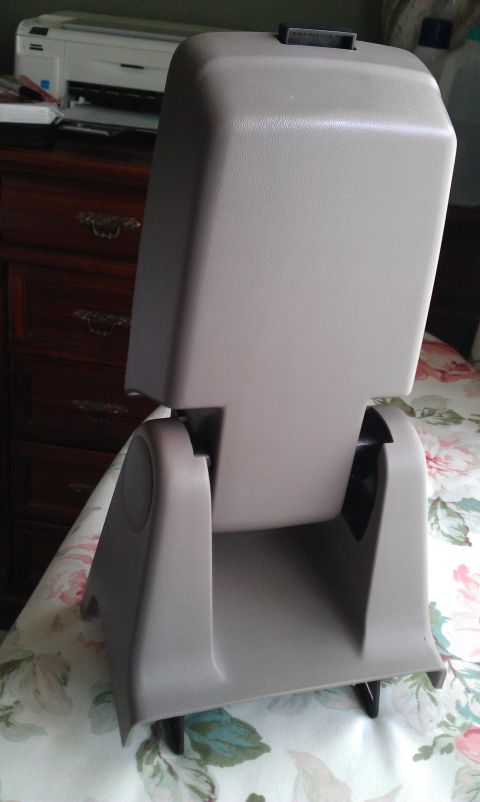
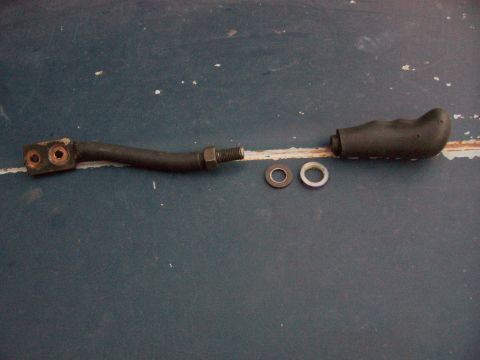
- 1993 Ford Mustang Center Console Exploded Diagram - Armrest & Shift Plate PartsThis document is a page from a Ford service manual showing an exploded parts diagram of a center console assembly, along with removal instructions. Step 3 of the procedure explains how to remove the gear shift lever…
- Ford Mustang Exterior Trim Moulding Diagram (Except Cobra) - Part & Fastener IDsThis is a page (01-08-5) from a Ford service manual section titled 'Trim, Exterior' under 'Removal and Installation (Continued)'. It shows an exploded parts diagram for exterior body side and rear mouldings on 'Except…
Blueprints (9)
- Ford Mustang Front Crossmember Blueprint - A-Arm & R&P Mount DimensionsThis is a CAD-style dimensional blueprint titled "View Looking Up," drawn by D. Rahn and dated 1/2/2011. It depicts the underside layout of a front suspension crossmember/K-member area, showing the passenger side…
- Small Block Ford Block Front Bolt Pattern Blueprint - Dimensions & Hole LayoutThis document is a CAD-style blueprint drawing titled 'Block Front' showing the front face bolt-hole pattern of a Small Block Ford engine block. It depicts the locations of the threaded bolt holes and two…
- Small Block Ford Rear Bellhousing Bolt Pattern Blueprint - 157 & 164 ToothThis document is a CAD-style blueprint/dimensional drawing of the rear bellhousing bolt pattern for a Small Block Ford engine, shown in a 'View Looking Forward' orientation. All dimensions are referenced from the…
- Small Block Ford Bellhousing/Block Bolt Pattern Blueprint - Dimensions in InchesThis document is a CAD-style dimensional blueprint titled "View Looking Forward," showing the bolt hole, dowel pin, and bore locations on the face of an engine block or bellhousing pattern. All positions are…
- Ford Small Block Valve Cover Bolt Pattern Blueprint - Dimensions & RadiiThis document is a CAD-style blueprint titled "Valve Cover Pattern," showing the bolt hole layout and outline geometry for a valve cover gasket surface. The drawing depicts an elongated rounded-rectangle pattern with…
- Small Block Ford Motor Mount Bolt Pattern Diagram - Dimensions (1990 Mustang)This is a CAD-style blueprint diagram showing the motor mount bolt pattern for an engine block, uploaded to the gallery of a 1990 Ford Mustang. The drawing depicts three bolt holes (shown as circled crosshair markers)…
- Small Block Ford Rear Block Face Blueprint - Bellhousing Hole & Dowel Pin DimsThis document is a CAD-style dimensional blueprint (yellow linework on black background) showing the rear face bolt/dowel hole pattern of an engine block, labeled 'View Looking Forward.' Based on the album context…
- Small Block Ford Engine Block Front Bolt Pattern Blueprint - Motor Plate DimensionsThis document is a CAD-style blueprint drawing (black background with yellow dimension lines) showing the front bolt hole pattern of an engine block, uploaded as 'True Block Front.JPG'. It plots the locations of…
- Ford Mustang K-Member Mounting Bolt Pattern Diagram - Bolt Spacing DimensionsThis document is a screenshot of the AutoSketch CAD program displaying a drawing titled "K Member Mounting Bolt Pattern," uploaded to the gallery of a 1990 Ford Mustang. The drawing depicts a layout of bolt holes…
Torque Specs (1)
- Crowfoot Wrench Torque Conversion Chart & Torque Wrench Offset FormulasThis document is a reference chart for re-calculated torque values when using crowfoot wrench adapters in-line with micrometer "click type" torque wrenches. It notes the values are valid only when using GAC accepted…
Wiring Diagrams (4)
- Ford 3G 130 Amp Alternator Upgrade Wiring Diagram - Harness ModificationThis document is a two-panel wiring diagram illustrating how to convert a Ford stock alternator harness for use with a 3G 130-amp alternator. The left panel shows the stock alternator with its two connectors: the…
- 1990 Ford Mustang Stop Lamp Wiring Diagram - Brake Light Circuit 810 R/LGThis document is a stop lamp (brake light) wiring schematic covering three body styles: convertible, 2-door, and 3-door. Power enters on circuit 10 (light green/red) to the stop lamp switch, which closes when the brake…
- 1993 Ford Mustang Starting System Wiring Diagram & Operation (03-06-2)This is page 03-06-2 from a Ford service manual section titled 'Starting System: Description and Operation (Continued)'. The page finishes a numbered explanation (steps 6-9) of how the starting system works: current…
- Ford Wiring Diagrams - Charging System, DuraSpark Ignition & Column ConversionThis is page 10 of an aftermarket wiring reference booklet titled "FORD DIAGRAMS," showing generic Ford wiring information rather than a diagram for a specific model year. It contains four sections: (1) a Charging…
Service Procedures (2)
- Ford Mustang 5.0L HO PCV Valve Assembly Diagram & Installation - Service ManualThis is page 03-01B-8 from a Ford service manual section covering the 5.0L HO engine, under the heading "IN VEHICLE SERVICE (Continued)." It provides the final steps (steps 2 through 6) of a PCV valve installation…
- Ford 289/302/351W/351C Cylinder Head Water Passage & Rocker Stud Modification GuideThis page is an engine-building technical reference (likely from a Ford Racing/Motorsport catalog) covering small-block and big-block Ford cylinder head topics. A "Rocker Stud Comparison" section illustrates four stud…
Brochures & Literature (1)
- 1967-73 Ford & Mercury Drum to Disc Brake Conversion Kits - SSBC Catalog PageThis is page 15 of an SSBC (Stainless Steel Brakes Corporation) catalog covering 1967-73 standard front drum-to-disc brake conversion kits for Ford and Mercury vehicles. Application tables list kits by year, part…
Schematics (8)
- Ford 5.0L Heater Hose Restrictor Location & Routing Diagram (TB-3206-A)This document is a technical illustration (labeled Figure 2, drawing number TB-3206-A) showing heater hose routing for a 5.0L engine. The line drawing depicts the engine bay area around the throttle body and upper…
- Trim Removal Tool Diagram - How to Pry Door Panel Clips Without DamageThis is a simple hand-drawn schematic illustrating how to use a trim removal tool to release a trim panel clip on a vehicle. The cross-section diagram shows three zones labeled BODY (top), TRIM (middle band), and GLASS…
- Small Block Ford V8 Header Firing Pattern Diagram - Cylinder Tube LayoutThis document is a simple hand-drawn schematic showing the cylinder-number arrangement of the header collector tubes on a V8 engine, viewed from the back of the headers looking forward toward the front of the vehicle…
- Stock 1979 Ford Mustang 4-Link Suspension Geometry & Anti-Squat - Performance TrendsThis is a screenshot from the Performance Trends Inc. '4 Link' suspension analysis software, showing a saved project titled 'STOCK 79 MUSTANG' (registered to Douglas C. Rahn). The screen displays a side-profile…
- Stock 1979 Ford Mustang 4-Link Rear Suspension Geometry - Anti-Squat & IC DataThis is a screenshot of Performance Trends Inc.'s '4 Link' suspension analysis software, showing a saved project titled 'STOCK 79 MUSTANG' (registered to Douglas C. Rahn). The screen displays a side-view schematic of a…
- Stock 1979 Ford Mustang 4-Link Rear Suspension Geometry - Anti-Squat & IC DataThis is a screenshot of the '4 Link' rear suspension analysis software by Performance Trends Inc., registered to Douglas C. Rahn, showing a saved setup titled 'STOCK 79 MUSTANG.' The program displays a side-view…
- Ford Heater Hose Coolant Restrictor E7VH-18D406-AA Installation DiagramThis document is a technical illustration (Figure 1, drawing number TB-3203-A) showing the correct installation of a heater coolant restrictor in the inlet heater hose. The diagram depicts a bent heater hose section…
- Beadlock Wheel Ring Design Options 1-8 - Pattern Style Selection SheetThis scanned document, filed as "beadlocks1-8.jpg," is a design option sheet showing eight circular ring patterns, each hand-numbered 1 through 8. The drawings appear to represent styling choices for beadlock wheel…
The wall · registered 1979-1993 Mustangs
Sorted by depth of documentation. Click any vehicle to open its permanent record.