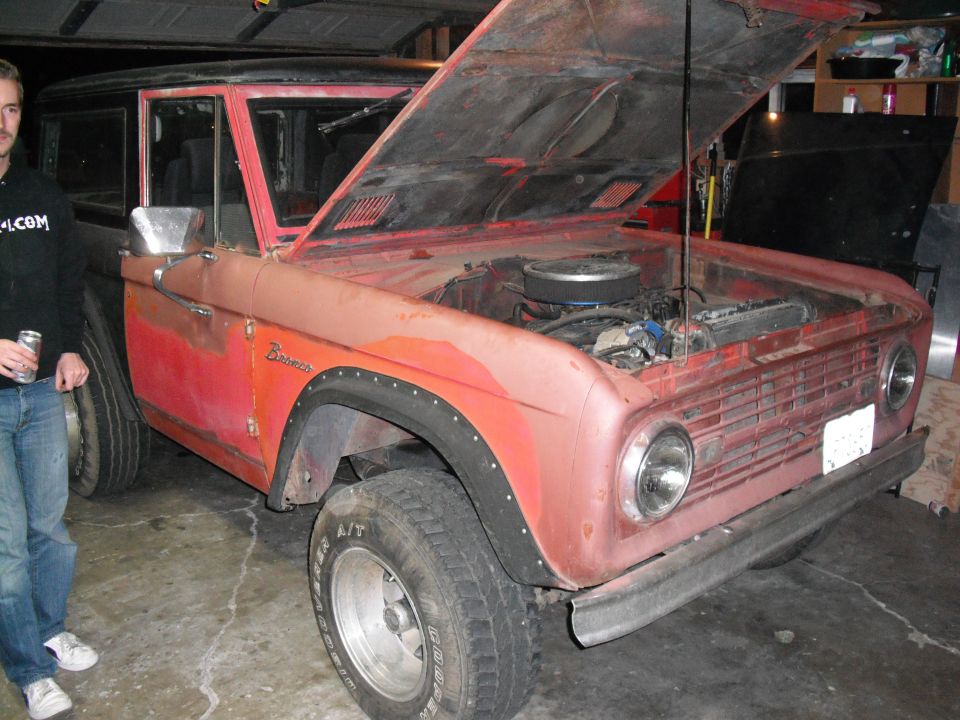
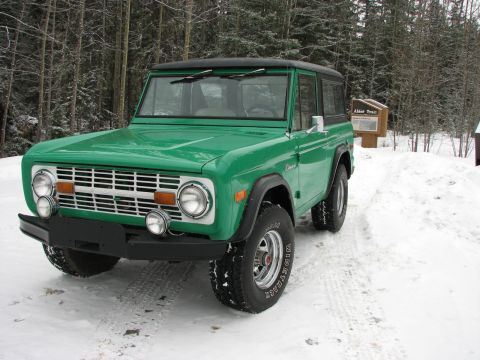
The first-generation Ford Bronco, built for the 1966 through 1977 model years, was a compact body-on-frame four-wheel-drive on a 92-inch wheelbase, sold in three body codes: the U13 open roadster with no doors or top, the U14 half-cab pickup, and the U15 wagon. Ford launched it with a 170-cubic-inch inline-six and added the 289-cubic-inch V8 during 1966. The 302 V8 replaced the 289 for 1969, and the base six grew from 170 to 200 cubic inches for 1973. Suspension used coil springs at the front Dana 30 axle and leaf springs at the Ford 9-inch rear, a combination Ford kept for the whole generation. The Dana 30 front axle was replaced by the heavier-duty Dana 44 for 1971. Front drum brakes carried through 1975 before power front disc brakes arrived for 1976. The open U13 roadster was dropped after 1968, and the U14 half-cab pickup continued through 1972; the U15 wagon became the only body style for 1973 and carried the model to its 1977 finish.
Other Ford Bronco generations
At a glance
- Years: 1966-1977 (first generation, the "early Bronco")
- Body styles: U13 open roadster (1966-1968), U14 half-cab pickup (1966-1972), U15 wagon (1966-1977, the only body style from 1973)
- Engines: 170 then 200 cubic-inch inline-six; 289 then 302 cubic-inch V8
- Front axle: Dana 30 (1966-1970), Dana 44 (1971-1977)
- Rear axle: Ford 9-inch (all years)
- Suspension: front coil springs, rear leaf springs
- Brakes: front drums 1966-1975, power front discs 1976-1977
- Wheelbase: 92 inches throughout
Year-by-year changes
| Year | Engines | Drivetrain & brakes | Notable changes |
|---|---|---|---|
| 1966 | 170 I6 standard; 289 V8 added during the year | Dana 30 front, Ford 9-inch rear, front drums, 3-speed manual | Launch year of the compact Bronco on a 92-inch wheelbase; U13 roadster, U14 half-cab, U15 wagon all offered |
| 1967 | 170 I6; 289 V8 | Dana 30 front, Ford 9-inch rear, front drums | Sport appearance and trim package debuts; federal safety equipment such as a dual-circuit brake master cylinder added across Ford lines for 1967 |
| 1968 | 170 I6; 289 V8 | Dana 30 front, Ford 9-inch rear, front drums | Side marker lights added for federal rules; final year for the open U13 roadster body |
| 1969 | 170 I6; 302 V8 | Dana 30 front, Ford 9-inch rear, front drums | Roadster dropped; range narrows to the U14 half-cab and U15 wagon; 302 V8 replaces the 289 |
| 1970 | 170 I6; 302 V8 | Dana 30 front, Ford 9-inch rear, front drums | Last model year for the Dana 30 front axle |
| 1971 | 170 I6; 302 V8 | Dana 44 front, Ford 9-inch rear, front drums | Heavier-duty Dana 44 front axle replaces the Dana 30 |
| 1972 | 170 I6; 302 V8 | Dana 44 front, Ford 9-inch rear, front drums | Final model year for the U14 half-cab pickup; industry shift to SAE net power ratings, so published outputs drop versus the earlier gross figures |
| 1973 | 200 I6; 302 V8 | Dana 44 front, Ford 9-inch rear, front drums, C4 automatic now available | U15 wagon becomes the only body style after the half-cab is dropped; 200 six replaces the 170; C4 3-speed automatic and power steering become available; larger bumpers and detail changes during the early-1970s federal updates |
| 1974 | 200 I6; 302 V8 | Dana 44 front, Ford 9-inch rear, front drums | Continued wagon-only production with the Dana 44 front axle |
| 1975 | 200 I6; 302 V8 | Dana 44 front, Ford 9-inch rear, front drums | Last model year for front drum brakes; the V8 gains a catalytic converter and requires unleaded fuel |
| 1976 | 200 I6; 302 V8 | Dana 44 front, Ford 9-inch rear, power front discs | Power front disc brakes introduced, the major running change of the late first generation |
| 1977 | 200 I6; 302 V8 | Dana 44 front, Ford 9-inch rear, power front discs | Final year of the compact first-generation Bronco before the full-size 1978 redesign |
Engines and drivetrain
The first-generation Ford Bronco (1966-1977) started with a 170-cubic-inch inline-six as the base engine, with the 289-cubic-inch V8 added as an option during the 1966 model year. The 302-cubic-inch Windsor V8 replaced the 289 for 1969, and the base six grew from 170 to 200 cubic inches for the 1973 model year. A 3-speed manual was standard for most of the run, and both the C4 3-speed automatic transmission and power steering became available for 1973. Power was sent through the transmission to a gear-driven Dana 20 transfer case, mounted to the gearbox by an adapter rather than divorced, which split drive to both axles. One point of caution when comparing figures: ratings published before 1972 are SAE gross, while 1972 and later figures are SAE net, so a 302 in a 1976 Bronco shows a lower number than an earlier one even though the basic engine family is the same.
Axles and suspension
Every first-generation Bronco from 1966 to 1977 used coil springs at the front and leaf springs at the rear, an unusual layout for a 4x4 of the period and part of why the early Bronco rides and articulates the way it does. The front axle was a Dana 30 from 1966 through 1970, then Ford introduced the stronger Dana 44 front axle as a running change during the 1971 model year and kept it through the end of the run, so some early-build 1971 trucks can still carry the Dana 30. The rear axle was the Ford 9-inch for the entire generation, so the 9-inch is not a late addition; it was there from the first 1966 trucks.
When did the early Bronco get disc brakes?
The first-generation Ford Bronco used front drum brakes from 1966 through 1975. Power front disc brakes were introduced for the 1976 model year and carried into the final 1977 model year. This means a 1976 or 1977 early Bronco stops noticeably better than a drum-braked 1966 through 1975 truck, and it is one of the clearest ways to tell a late first-generation Bronco apart mechanically.
Body styles and trims
The first-generation Bronco was sold under three body codes on the same 92-inch wheelbase. The U13 was the open roadster with no doors and no fixed top, the most stripped-down version, offered only from 1966 through 1968. The U14 was the half-cab pickup with an enclosed cab and a short pickup bed, offered from 1966 through 1972, and the U15 was the full-length wagon with a removable hardtop. The roadster was dropped after 1968 and the half-cab after 1972, leaving the U15 wagon as the only body style from 1973 through the 1977 finish. Ford offered factory and dealer options including the Sport appearance and trim package (introduced for 1967), larger engines, and a variety of axle ratios. Beginning around 1971 and continuing into 1975, Ford also offered the Bill Stroppe-built Baja Bronco, a limited factory-blessed package of roughly 650 units honoring Stroppe's Baja 1000 racing Broncos, fitted with an automatic transmission, power steering, fender flares, dual shocks, and a padded roll bar in a distinctive red, white, blue, and black paint scheme; it is the truck the 2025 Stroppe Edition honors.
What to know when buying a first-generation Bronco
Because the first-generation Bronco (1966-1977) used a body-on-frame design with steel body panels over a separate frame, rust is the dominant concern: check the floors, rear quarters, the rocker areas, and the frame itself, especially around the rear spring hangers. Confirm which front axle is fitted, since a 1971-1977 truck should have the Dana 44 and a 1966-1970 truck the Dana 30, and mismatches indicate a swap. The 1976-1977 trucks bring factory power front discs, while earlier trucks have front drums that many owners convert. The open U13 roadster (1966-1968) is the rarest body and commands the most attention, so verify the body code on the data plate rather than trusting appearance alone.
Frequently asked questions
When did the Ford Bronco get the Dana 44 front axle?
The first-generation Ford Bronco received the heavier-duty Dana 44 front axle as a running change during the 1971 model year, replacing the Dana 30 used from 1966 through 1970. Because it arrived as a running change, some early-build 1971 Broncos can still carry the Dana 30, and the Dana 44 continued through the end of the generation in 1977.
What rear axle does the first-generation Bronco use?
The first-generation Ford Bronco used the Ford 9-inch rear axle for every model year from 1966 through 1977. It was not a late addition; the 9-inch was present from the original 1966 trucks all the way to the final 1977 model year.
When did the early Bronco get front disc brakes?
The first-generation Ford Bronco used front drum brakes from 1966 through 1975, then gained power front disc brakes for the 1976 model year. The 1976 and 1977 early Broncos are the only first-generation trucks with factory front discs.
What engines came in the 1966-1977 Bronco?
The first-generation Ford Bronco offered an inline-six and a V8. The six started at 170 cubic inches and later grew to 200 cubic inches, while the V8 started as the 289 and became the 302. Remember that pre-1972 outputs are quoted as SAE gross and 1972-and-later outputs as SAE net, so later figures read lower for the same engine family.
What is the difference between the U13, U14, and U15 Bronco?
On the first-generation Bronco, the U13 is the open roadster with no doors or top, offered only from 1966 through 1968; the U14 is the half-cab pickup with an enclosed cab and short bed, offered from 1966 through 1972; and the U15 is the full-length wagon with a removable hardtop, which became the only body style from 1973 through 1977. All three share the same 92-inch wheelbase.
Sources
- Ford factory shop manuals and parts catalogs for the 1966-1977 Bronco
- VIN and door data-plate decoding for body codes (U13, U14, U15) and axle identification
- Established early-Bronco reference works and owner registries
- Period road tests and factory specification sheets
Asked all the time
When did the Ford Bronco get the Dana 44 front axle?
The first-generation Ford Bronco received the heavier-duty Dana 44 front axle as a running change during the 1971 model year, replacing the Dana 30 used from 1966 through 1970. Because it arrived as a running change, some early-build 1971 Broncos can still carry the Dana 30, and the Dana 44 continued through the end of the generation in 1977.
What rear axle does the first-generation Bronco use?
The first-generation Ford Bronco used the Ford 9-inch rear axle for every model year from 1966 through 1977. It was not a late addition; the 9-inch was present from the original 1966 trucks all the way to the final 1977 model year.
When did the early Bronco get front disc brakes?
The first-generation Ford Bronco used front drum brakes from 1966 through 1975, then gained power front disc brakes for the 1976 model year. The 1976 and 1977 early Broncos are the only first-generation trucks with factory front discs.
What engines came in the 1966-1977 Bronco?
The first-generation Ford Bronco offered an inline-six and a V8. The six started at 170 cubic inches and later grew to 200 cubic inches, while the V8 started as the 289 and became the 302. Remember that pre-1972 outputs are quoted as SAE gross and 1972-and-later outputs as SAE net, so later figures read lower for the same engine family.
What is the difference between the U13, U14, and U15 Bronco?
On the first-generation Bronco, the U13 is the open roadster with no doors or top, offered only from 1966 through 1968; the U14 is the half-cab pickup with an enclosed cab and short bed, offered from 1966 through 1972; and the U15 is the full-length wagon with a removable hardtop, which became the only body style from 1973 through 1977. All three share the same 92-inch wheelbase.
Technical Reference
Member-uploaded diagrams & documents for this generation. AI-classified; community-verified where badged.
Wiring Diagrams (7)
- Ford Duraspark Ignition Module Wiring Diagram - Blue Connector ConversionThis document is a hand-annotated wiring diagram, credited to MustangSteve (http://www.mustangsteve.com), showing how to wire a Ford Duraspark ignition module (the version with the blue connector) to a 12-volt…
- 1976-1977 Ford Duraspark II Ignition Wiring Diagram - Blue Grommet ModuleThis document is a color-coded wiring diagram for the 1976-1977 Ford Duraspark II ignition system. It shows the ignition switch with RUN and START terminals feeding the circuit: a Red-Green wire supplies power in…
- 1975-1977 Ford Bronco Power Distribution Wiring Diagram - Ignition, ChargingThis is a color-coded power distribution wiring diagram for 1975-1977 Ford Broncos, titled "'75-77 Bronco Power Distribution," with boxed codes referencing a repair locations grid (columns 1-15, rows A-J). It traces…
- 1970 Ford Bronco Windshield Wiper & Washer Wiring Diagram - Fig. 10.91This document is a scanned page from a factory-style wiring diagram, labeled 'Fig. 10.91 Wi...' (caption cut off), showing the windshield wiper and washer circuit for a vintage Ford vehicle. Power comes from a buss bar…
- 1974 Ford Bronco Wiring Diagram - Rear Stop/Turn, Marker, License & Heater BlowerThis document is one page of a factory-style wiring diagram, uploaded as part of a 1974 Ford Bronco documentation set (filename 74wiring3.jpg). It covers the rear lighting circuits and the heater blower circuit. On the…
- 1974 Ford Bronco Wiring Diagram - Headlights, Turn Signals, Wiper & FusesThis document is one page of a multi-page factory-style wiring diagram, uploaded as "74wiring2.jpg" for a 1974 Ford Bronco. The schematic covers primarily lighting and accessory circuits: the headlamp switch, headlamp…
- 1974 Ford Bronco Wiring Diagram - Ignition, Charging, Gauges & Horn CircuitsThis is a scanned factory-style electrical wiring diagram sheet (grid-referenced A-F rows, columns 1-16) covering the engine compartment and instrument circuits of an early-1970s Ford vehicle, uploaded as a 1974 Ford…
Brochures & Literature (2)
- Sunset Magazine July 2018 Cover - Classic Ford Bronco 'Epic Road Trips of the West'This is not a technical automotive reference document but rather the front cover of the July 2018 issue of Sunset magazine, photographed while held in hand. The cover photo features a first-generation (1966-1977 style)…
- Bronco Driver Magazine Issue 34 (Jul/Aug 2008) Cover & James Duff Catalog 22 AdThis is a photograph (not a scan of a technical document) showing the front cover of Bronco Driver magazine, apparently the July/August 2008 issue (Issue 34), lying on a wooden table. The cover features a…
Exploded Parts (54)
- Bendix Hydro-Boost Brake Booster Exploded Parts Diagram - Component NamesThis document is an exploded parts diagram (labeled Fig. 3) showing the components of a Bendix Hydro-Boost brake booster assembly, specifically a unit with an external accumulator. The illustration identifies each part…
- 1974 Ford Bronco Windshield Wiper Assembly Exploded Parts DiagramThis document is an exploded parts diagram of a windshield wiper assembly, uploaded to the gallery of a 1974 Ford Bronco. The illustration shows every major component of the wiper system in exploded view with labeled…
- 1974 Ford Bronco Vent Window Exploded Diagram - Seals, Handle & Repair PinsThis document is an exploded parts diagram illustrating the vent window (wing window) assembly of a vehicle door, uploaded to a 1974 Ford Bronco gallery. The line drawing shows the components in disassembled, spatially…
- 1974 Ford Bronco Interior Trim Panels Exploded Diagram - FoMoCo IllustrationThis document is an exploded parts diagram (line illustration) of interior trim components, uploaded to a 1974 Ford Bronco gallery. The drawing shows how interior trim pieces assemble into the rear cab/cargo area of…
- Ford Bronco Transfer Case Exploded Parts Diagram - Dana 20 Component NamesThis document is an exploded parts diagram of a Ford transfer case, credited "Copyright Ford Motor Company." It illustrates the complete internal assembly of the transfer case with callout labels identifying each major…
- Early Ford Bronco Swing-Away Spare Tire Carrier Exploded Parts DiagramThis document is a factory-style exploded parts illustration (credited "Copyright FoMoCo") showing the swing-away spare tire carrier assembly for an early Ford Bronco. The main drawing depicts the rear of the Bronco…
- 1974 Ford Bronco Tailgate Exploded Parts Diagram - Latch & Drain AssemblyThis document is a scanned exploded-parts illustration from Ford (marked "Copyright FoMoCo") showing tailgate components, uploaded to the gallery of a 1974 Ford Bronco. The page contains several line drawings: at the…
- 1976-1977 Ford Bronco Sway Bar Assembly Exploded Parts Diagram (FoMoCo)This document is a Ford (FoMoCo copyright) exploded-view parts diagram labeled "1976/77 Sway Bar Assembly." It illustrates the front sway bar (stabilizer bar) installation on a solid front axle with differential…
- 1974 Ford Bronco Front Suspension Exploded Parts Diagram - Coil Spring & AxleThis document is an exploded parts diagram of a Ford front suspension assembly, uploaded to a 1974 Ford Bronco gallery. The line-art illustration shows the front frame section with the coil-spring front suspension…
- 1974 Ford Bronco Front Suspension Exploded Diagram - Coil Spring, Radius ArmThis document is an exploded parts diagram of a Ford front coil-spring suspension assembly, copyrighted by FoMoCo (Ford Motor Company). It illustrates the arrangement and assembly order of the major front suspension…
- 1966-77 Ford Bronco Steering Column Exploded Parts Diagram - Column AssemblyThis document is an exploded parts diagram of a steering column assembly, uploaded to a 1974 Ford Bronco gallery. The illustration shows the complete steering column broken apart into its individual components, each…
- 1974 Ford Bronco Rear Leaf Spring & Shock Exploded Parts DiagramThis document is an exploded-view parts diagram of a rear leaf spring suspension assembly, uploaded to a 1974 Ford Bronco gallery on SuperMotors.net. The illustration shows how the rear suspension components fit…
- 1974 Ford Bronco Seat Bracket & Seat Track Exploded Parts DiagramThis scan is an exploded parts diagram, uploaded to a 1974 Ford Bronco gallery with the filename 'setdiabrackets.jpg', apparently depicting seat mounting brackets and seat track (adjuster) hardware. The illustration…
- Early Ford Bronco Rear Body Seals & Weatherstrip Exploded Parts DiagramThis document is an exploded parts diagram showing rear body seals and related components for an early Ford Bronco, viewed from the rear quarter with the tailgate lowered and liftgate raised. Callout leader lines…
- Early Ford Bronco Front Windshield & Cowl Seals Exploded Parts DiagramThis document is an exploded parts illustration showing front body seals and weatherstrips for an early Ford Bronco. A line drawing of the Bronco body (front three-quarter view) is shown with four callout part group…
- 1974 Ford Bronco Door Seal Weatherstrip Diagram - Part Groups 16020 & 16021This document is a black-and-white exploded parts diagram scanned from a Ford parts reference, showing the door opening weatherstrip seals for an early Ford Bronco. The illustration depicts the complete Bronco body…
- Early Ford Bronco Rear Tailgate & Liftgate Seals Diagram - 16048/16049, 16050/16051This document is an exploded parts line drawing showing the rear body seal (weatherstrip) locations for an early Ford Bronco wagon body. The illustration depicts the rear of the vehicle with the liftgate (rear window…
- 1974 Ford Bronco Door Glass & Window Regulator Exploded Parts DiagramThis document is an exploded parts diagram showing the window regulator assembly and door glass components for a vehicle door, uploaded to a 1974 Ford Bronco gallery. The illustration depicts how the manual window…
- 1974 Ford Bronco Rear Seat Assembly Exploded Diagram - Frame & Mounting BoltsThis document is a black-and-white exploded-view illustration of a rear (auxiliary) bench seat assembly, uploaded to a 1974 Ford Bronco gallery as 'rearseat.jpg'. The drawing shows the seat back cushion and seat bottom…
- 1974 Ford Bronco Steering Gear Box Exploded Diagram - Mounting & Pitman ArmThis document is an exploded-view illustration (credited 'Copyright FoMoCo') showing a steering gear box assembly and its mounting hardware, uploaded to a 1974 Ford Bronco gallery under the filename…
- 1974 Ford Bronco Parking Brake Cable Routing Diagram - Ford FoMoCo Exploded ViewThis document is a Ford factory (FoMoCo copyright) exploded/routing illustration of the parking brake (emergency brake) cable system on a Ford Bronco chassis, uploaded to a 1974 Ford Bronco gallery. The line drawing…
- 1974 Ford Bronco Lower Body Exploded Parts Diagram - Floor Pans & PanelsThis document is an exploded-view parts illustration of the lower body structure of a vehicle, uploaded to a 1974 Ford Bronco gallery under the filename 'lower body.jpg'. The drawing shows the sheet-metal components…
- Early Ford Bronco Door Latch & Lock Rod Exploded Diagram - Striker, CylinderThis document is an exploded parts diagram illustrating the door latch and lock rod assembly for an early Ford Bronco door. The line drawing shows the interior of a door shell (indicated with dashed lines) with the…
- 1974 Ford Bronco Instrument Cluster Exploded Parts Diagram (FoMoCo)This document is an exploded-view parts diagram, uploaded to SuperMotors.net and attributed to a 1974 Ford Bronco, showing the components of an instrument cluster assembly. The illustration depicts, from left to right…
- Early Ford Bronco Hood-to-Cowl Seal Diagram - Part 16004 LocationThis is a single exploded-parts style line drawing of an early Ford Bronco front end shown with the hood raised, exposing the engine compartment. A single long, narrow strip-shaped component is illustrated separately…
- 1974 Ford Bronco Hood & Latch Exploded Parts Diagram - FoMoCo Part NumbersThis document is an exploded parts diagram from a Ford (FoMoCo) parts reference showing the hood assembly and related hardware. The illustration depicts the hood panel (16612) with callouts identifying the associated…
- 1974 Ford Bronco Heater Assembly Exploded Diagram - Defroster Hoses & BlowerThis document is an unlabeled exploded-view parts illustration (Copyright FoMoCo) of a heater and defroster assembly, uploaded to a 1974 Ford Bronco gallery as 'heater.jpg'. The only text callout identifies the…
- Ford Bronco Headlight & Front Lamp Exploded Parts Diagram (1966-1970+) FoMoCoThis document is a Ford Motor Company (FoMoCo) exploded parts diagram (plate P-5096) showing the headlight and front lamp assembly for an early Ford Bronco. It illustrates the headlight door/bezel (13200 right-hand…
- 1974 Ford Bronco Gas Tank Exploded Diagram - Fuel Tank Mounting & StrapsThis document is an exploded-view parts illustration showing the fuel (gas) tank assembly and its mounting components, uploaded to a 1974 Ford Bronco gallery. The drawing depicts the fuel tank itself with a round…
- Early Ford Bronco Body Diagram - Part Numbers 16030/16031, 16040/16041, 16035This document is an exploded-parts style line drawing of an early Ford Bronco wagon body, shown from the rear three-quarter view with the tailgate lowered. Three callout labels identify part group numbers and point to…
- 1974 Ford Bronco Front Seat Exploded Parts Diagram - Seat Back, Cushion & HingeThis document is an exploded parts diagram illustrating the components of a front seat assembly, uploaded to a 1974 Ford Bronco gallery on SuperMotors.net. The line drawing shows the seat back cushion at the upper left…
- 1974 Ford Bronco Frame & Bumper Exploded Parts Diagram (FoMoCo)This document is a factory-style exploded parts illustration (marked 'Copyright FoMoCo') showing a complete vehicle frame assembly, uploaded to a 1974 Ford Bronco gallery as 'frame.jpg'. The drawing depicts the…
- Ford 9-Inch Rear Axle Exploded Parts Diagram - Differential & Pinion AssemblyThis document is an exploded parts diagram of a Ford rear axle assembly (copyright FoMoCo), uploaded to the gallery of a 1974 Ford Bronco and filed as 'ford9inch.jpg', indicating it depicts the Ford 9-inch rear axle…
- 1974 Ford Bronco Door Panel Exploded Diagram - Armrest & Window Crank (FoMoCo)This document is an exploded parts diagram illustrating an interior door panel assembly, credited 'Copyright FoMoCo' (Ford Motor Company). The line drawing shows the interior door trim panel with a ribbed lower…
- 1974 Ford Bronco Door Handle & Lock Cylinder Exploded Parts DiagramThis document is an exploded parts diagram of a door handle and latch hardware assembly for a vehicle door. It shows a line-art illustration of a door shell (viewed from the interior side) with the associated handle…
- 1974 Ford Bronco Dashboard Exploded Parts Diagram - Dash Panel AssemblyThis document is an exploded parts diagram of a dashboard (instrument panel) assembly, uploaded to a 1974 Ford Bronco gallery as "dash.jpg". The illustration shows the main dash panel structure with a large round…
- Ford Bronco Dana 44 Front Disc Brake Exploded Diagram - Caliper, Rotor, HubThis document is an exploded parts diagram from Ford Motor Company (FoMoCo) showing the front disc brake and hub assembly on a Dana 44 front axle, as used on early Ford Broncos. The illustration breaks down the caliper…
- Ford Dana 44 Front Axle Exploded Parts Diagram - Hub, Knuckle, Trac-Loc, DiffThis document is a Ford Motor Company (FoMoCo) exploded parts diagram of a front drive axle assembly, uploaded to a 1974 Ford Bronco gallery under the filename "Dana44.jpg". The illustration shows the complete axle…
- Ford Bronco Dana 30 Locking Hub Exploded Diagram - Internal & External LockoutsThis document is a Ford (FoMoCo) exploded parts diagram showing two styles of front locking hubs (lockout hubs): an external-locking hub and an internal-locking hub. The external-locking hub view shows the disassembly…
- Ford Bronco Dana 30 Front Axle Exploded Parts Diagram - FoMoCoThis document is an exploded parts diagram of a front drive axle assembly, copyrighted by FoMoCo (Ford Motor Company), uploaded as "Dana30.jpg" to a 1974 Ford Bronco gallery. The illustration shows the complete front…
- 1974 Ford Bronco Upper Body Exploded Parts Diagram - Hardtop & Quarter PanelsThis document is an exploded parts diagram of the upper body structure for an early Ford Bronco, uploaded to a 1974 Ford Bronco gallery under the filename 'body, upper.jpg'. The illustration shows the removable hardtop…
- 1974 Ford Bronco Body Panels Exploded View Diagram - Fenders, Floor, TailgateThis document is a scanned exploded-view parts illustration showing the body components of a classic Ford Bronco, uploaded as one page of a multi-page factory-style reference set for a 1974 Ford Bronco. The line-art…
- 1972-77 Ford Bronco V8 Air Cleaner & Intake Duct Diagram - Exploded Parts ViewThis document is a line-art exploded parts diagram showing the air intake/air cleaner system for a 1972-1977 Ford Bronco with an 8-cylinder (V8) engine, based on the upload filename "airdia8Cyl.gif" and the labeled…
- 1975-1976 Ford Bronco V8 Emissions & Vacuum Hose Routing Exploded Parts DiagramThis scanned Ford factory-style exploded parts illustration (marked "Numbers for reference use only, COPYRIGHT FoMoCo") depicts emission-control and vacuum system components on a V8 engine. The top illustration shows…
- Ford Bronco V8 Thermactor Air Pump Emissions System Exploded Parts DiagramThis is a Ford (FoMoCo) factory exploded-parts illustration (figure P-12150) showing the Thermactor air injection / emissions system on a V8 engine. The main drawing depicts the complete engine with carburetor, exhaust…
- 1974 Ford Bronco Thermactor Air Pump & Emissions Hose Exploded Parts DiagramThis is a scanned Ford factory (FoMoCo) exploded parts diagram, page reference P.11229, showing the Thermactor air injection (emissions) pump system and related plumbing on a V8 engine. The illustration depicts the air…
- 1974 Ford Bronco Vent Window Glass & Frame Exploded Parts Diagram (16023)This document is a single exploded-parts line drawing showing a vent (wing) window assembly, uploaded to a 1974 Ford Bronco gallery under the filename 'window, vent.jpg'. The illustration depicts a triangular vent…
- Ford Bronco Windshield Washer Bottle & Wiring Exploded Parts Diagram 1966-68This is a scanned FoMoCo (Ford Motor Company) exploded parts diagram showing the windshield washer bottle/reservoir system and related wiring/hose routing, uploaded to the gallery of a 1974 Ford Bronco. The drawing…
- 1974 Ford Bronco Taillight & Rear Lamp Exploded Parts Diagram (FoMoCo)This document is a scanned exploded-view parts illustration from a Ford factory parts reference (marked "Copyright FoMoCo"), uploaded to a 1974 Ford Bronco gallery as "taillight.jpg." The drawing depicts the rear…
- 1974 Ford Bronco Stabilizer (Sway) Bar Assembly Diagram - Ford Factory IllustrationThis scanned document is a Ford factory line-art illustration showing a stabilizer (sway) bar assembly for a Ford vehicle, uploaded to a 1974 Ford Bronco gallery under the filename 'stabilizer.jpg'. The drawing depicts…
- 1974 Ford Bronco Heater & Blower Assembly Under-Dash Installation DiagramThis document is a line-art illustration (apparently from a Ford factory shop manual or parts catalog) showing the heater assembly installed beneath the dash of an early Ford Bronco. The exploded-style drawing depicts…
- 1974 Ford Bronco Headliner Installation Diagram - FoMoCo Exploded ViewThis document is a scanned factory-style illustration (credited "Copyright FoMoCo," i.e., Ford Motor Company) showing the headliner installation area of an early Ford Bronco-type cab. The drawing depicts the interior…
- 1974 Ford Bronco Drum Brake Diagram - LH Side Parts & Self Adjuster LayoutThis document is a labeled photographic diagram (Ford Motor Company copyright) showing the left-hand (LH) side drum brake assembly with the drum removed. Uploaded to a 1974 Ford Bronco gallery, it identifies the major…
- Ford Bronco 4WD Transfer Case Exploded Diagram - Shift Rails & Output ShaftThis is page 6-25 from a Ford shop manual, Part 6-3 covering the 4-Wheel Drive Transfer Case. The page contains three figures. Fig. 18 shows the shift mechanism in exploded view, labeling the rear drive shift rail…
Schematics (4)
- Hydroboost Plumbing Diagram - 1999 Superduty Booster, Saginaw Pump, -6AN FittingsThis document is a color-coded plumbing schematic for a hydroboost power brake/steering conversion. It illustrates the hydraulic line routing between a Saginaw power steering pump (labeled "Saginaw box" near the…
- Early Ford Bronco Wiring Harness Locations Diagram - Engine, Dash, TaillightThis document is a labeled line-art illustration (schematic-style overview) of an early Ford Bronco body showing the general routing and locations of the vehicle's main wiring harnesses. The drawing depicts the Bronco…
- 1966-1977 Ford Bronco Dash Layout Diagrams - Gauges, Switches & ControlsThis scanned reference page (page 24 of a larger document) shows three annotated dash layout diagrams for early Ford Broncos, covering the 1966-1967, 1968-1972, and 1973-1977 model years. Each diagram is a line drawing…
- Ford Bronco Dana 30 Front Axle Steering Knuckle & Roller Bearings CutawayThis document is a cutaway cross-section schematic illustration of a front axle steering knuckle assembly, uploaded to a 1974 Ford Bronco gallery and identified by the uploader as depicting a Dana 30 axle knuckle. The…
Blueprints (2)
- 1967 Ford Bronco Tire Rack Blueprint - Dimensioned Fabrication DrawingThis document is a dimensioned CAD-style blueprint (side elevation view) of what the uploader identifies as a tire rack, presumably for mounting a spare tire. The drawing shows a large flat panel measuring 35.000 by…
- 5-Lug Wheel Bolt Pattern Measurement Diagram - A, B, C Dimensions ExplainedThis document is a small illustrative diagram (uploaded as "5lugboltpatterns.jpg") showing how to measure a 5-lug wheel bolt pattern. It depicts a dashed bolt circle with five lug holes evenly spaced around it. Three…
Torque Specs (1)
- Ford Bronco & Econoline Transmission/Transfer Case Torque Specs & Gear RatiosThis is page 6-26 of a Ford shop manual, titled 'PART 6-4: Specifications,' covering manual transmission and transfer case specifications for the Ford Econoline and Ford Bronco. For the Econoline, it lists 3-speed…
Service Procedures (6)
- Ford Bronco Transfer Case Assembly - Output Shaft Bearings & Shift Rail SealsThis is page 6-24 from a Ford shop manual section titled "GROUP 6: Manual Shift Transmission," covering transfer case assembly procedures (uploaded as part of a multi-page transfer case set). The page contains numbered…
- Ford Transfer Case Repair - Output Shaft, Input Shaft & Shift Rail ProceduresThis is page 6-22 from a Ford shop manual, Group 6, Manual Shift Transmission, covering parts repair and replacement procedures for a transfer case. It includes three labeled photographs: Fig. 7 shows removing or…
- Ford Bronco 4WD Transfer Case Disassembly Procedure - Shop Manual Page 6-21This is page 6-21 from a Ford shop manual, Part 6-3 covering the 4-Wheel Drive Transfer Case, section 3 'Major Repair Operations.' It presents the step-by-step DISASSEMBLY procedure (steps 1-20) for the transfer case…
- Ford Bronco Transfer Case Removal & Installation - Shop Manual Page 6-20This is page 6-20 from a Ford factory shop manual, Group 6, Manual Shift Transmission, covering the removal and installation of the transfer case. The page begins by finishing a power-flow description: direct drive to…
- Ford Bronco 2-Speed Transfer Case Description & Operation - Shop Manual Pg 6-19This is page 6-19 of a Ford shop manual, the opening page of Part 6-3 covering the 4-Wheel Drive Transfer Case for the Bronco. It begins with a table of contents for the part, listing Description and Operation (page…
- Ford Bronco Dana 20 Transfer Case Assembly Procedure & Exploded Diagrams (6-23)This is page 6-23 of a Ford shop manual section titled 'PART 6-3-4-Wheel Drive Transfer Case.' The page covers the assembly of the transfer case, presenting numbered steps 1 through 15 that describe installing the…
Fuse & Relay Charts (1)
- 1973-74 Ford Bronco Fuse Box Diagram: Fuse Panel & Circuit Breaker ChartThis is page 52 ("Maintenance") from an early-1970s Ford Bronco owner's manual, uploaded as part of a multi-page scan set. The top of the page concludes a "Tire and Tire Care" section covering trailer towing…
Manual Pages (10)
- 1973 Ford Bronco Owner's Manual Page 37 - Changing a Tire, Jack Points & TorqueThis is page 37 of a Ford Bronco owner's manual, from the "Operating Your Bronco" section, continuing instructions for changing a tire. An illustration shows correct jack placement: at the front, under the radius arm…
- 1973 Ford Bronco Owner's Manual Page 36 - Spare Wheel Storage LocationsThis is page 36 from a Ford Bronco owner's manual, from the section titled "Operating Your Bronco," covering the topic of "Wheel Storage." The page consists entirely of three illustrations showing the different spare…
- 1973 Ford Bronco Owner's Manual Page 30 - Trouble Diagnosis: Steering, FusesThis is page 30 of a Ford Bronco owner's manual, from the 'Operating Your Bronco' section covering Special Situations (Trouble Diagnosis). It provides troubleshooting guidance for several common issues: hard steering…
- 1973 Ford Bronco Manual Page 25 - Hood Opening, Fuel Tank Capacity & OctaneThis is page 25 of a 1973 Ford Bronco owner's manual, covering the end of the 'Comfort and Convenience' section and the beginning of 'Routine Service.' It advises coating the floor side of each washer with a waterproof…
- 1973 Ford Bronco Owner's Manual Page 24 - Liftgate & Tailgate OperationThis is page 24 of a Ford Bronco owner's manual, from the 'Operating Your Bronco' section under 'Comfort and Convenience.' The page continues instructions for closing and locking the liftgate: pushing up slightly to…
- 1973 Ford Bronco Owner's Manual Page 18 - 4WD Transfer Case Shifting GuideThis is page 18 of a Ford Bronco owner's manual, from the 'Operating Your Bronco' / 'Driving' section, covering transfer case operation and four-wheel drive shifting procedures. It explains the transfer case positions…
- 1973 Ford Bronco Owner's Manual Page 13 - Wipers, Headlamps & Dimmer SwitchThis is page 13 of a Ford Bronco owner's manual, from the section 'Operating Your Bronco,' continuing 'After Starting the Engine.' It covers visibility and lighting controls. The windshield wipers are two-speed…
- 1973 Ford Bronco Instrument Panel & Controls Diagram - Owner's Manual Page 7This is page 7 of a Ford Bronco owner's manual, titled "Instrument Panel and Controls." It presents a labeled line-art illustration of the Bronco's dashboard/instrument panel with 24 numbered callouts identifying every…
- 1973 Ford Bronco Instrument Cluster Diagram - Gauges & Indicator LightsThis document is a labeled diagram of an instrument cluster (gauge panel) from a Ford owner's manual page, uploaded to a 1974 Ford Bronco gallery (filename suggests a 1973 manual). The illustration shows a round…
- 1973 Ford Bronco Owner's Manual Page 49 - Vehicle Care, Upholstery & Tire CareThis is page 49 of a Ford owner's manual (the "Maintenance" section, continuing "Vehicle Care"), scanned from what the uploader labels a 1973 manual filed with a 1974 Ford Bronco. The page covers exterior and interior…
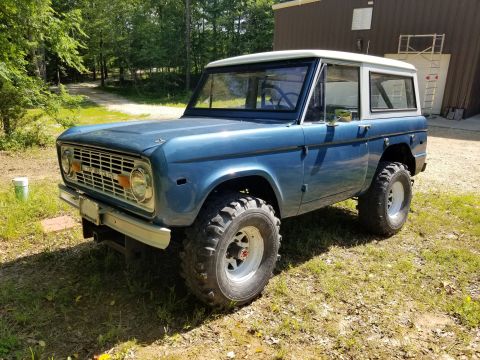
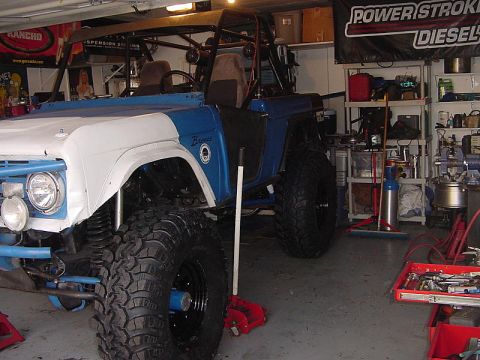
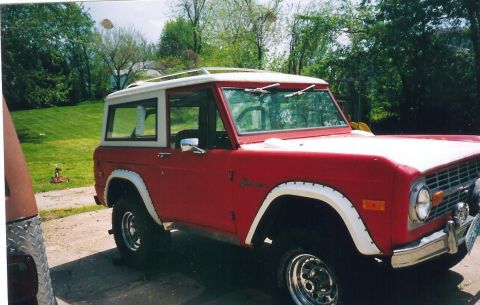
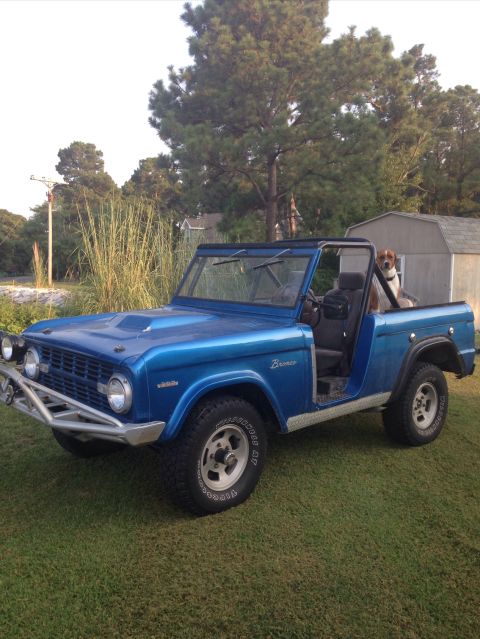
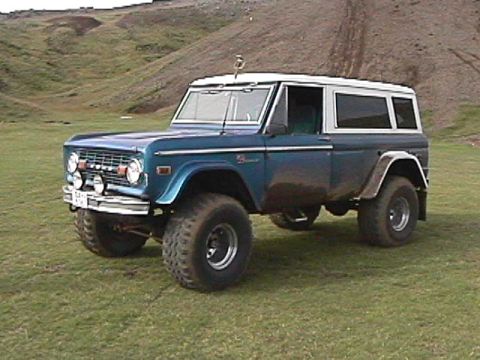
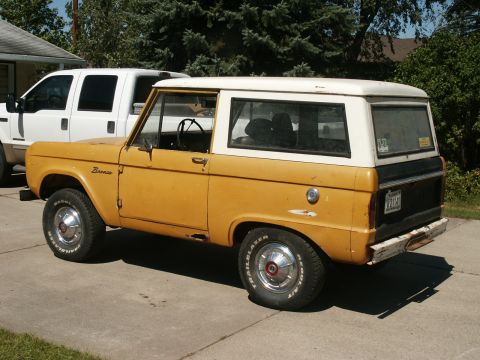
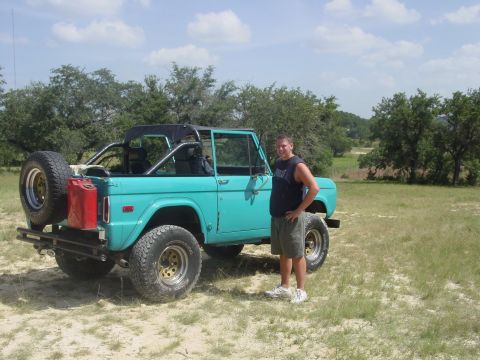
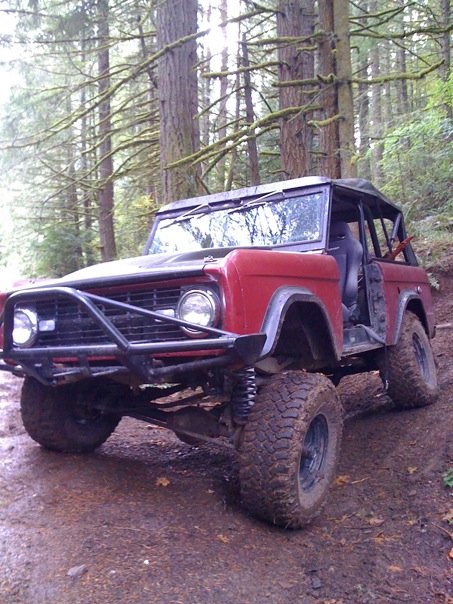
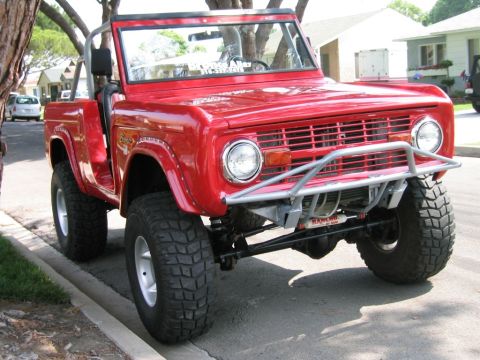
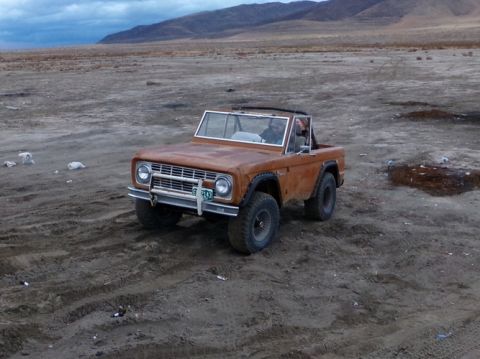
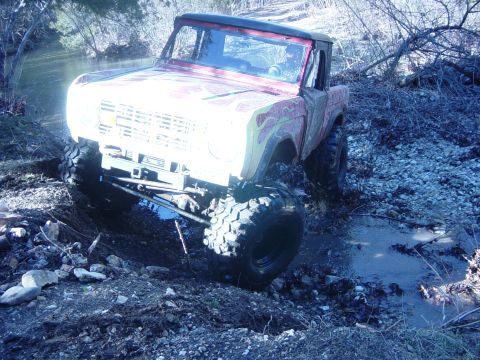
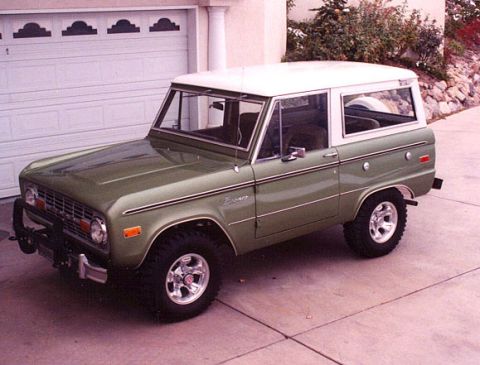
The wall · registered 1966-1977 Broncos
Sorted by depth of documentation. Click any vehicle to open its permanent record.
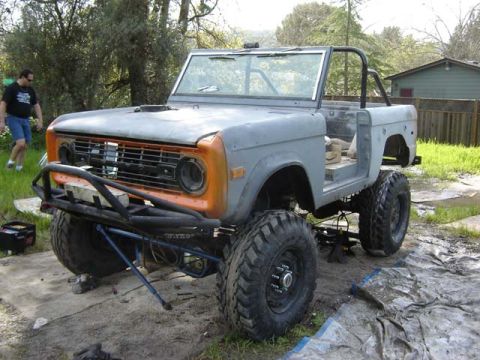
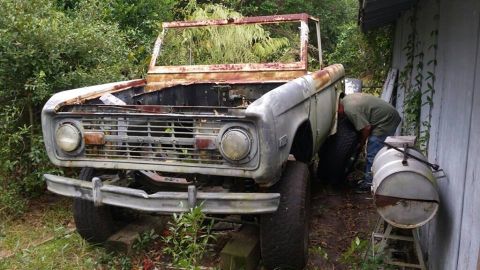
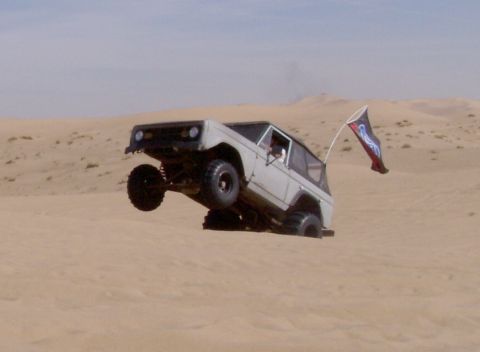
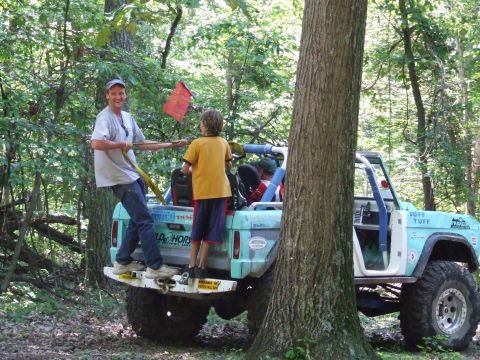
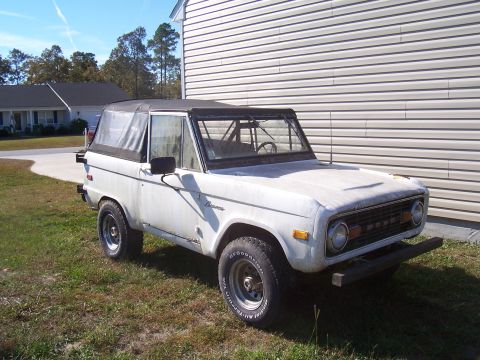
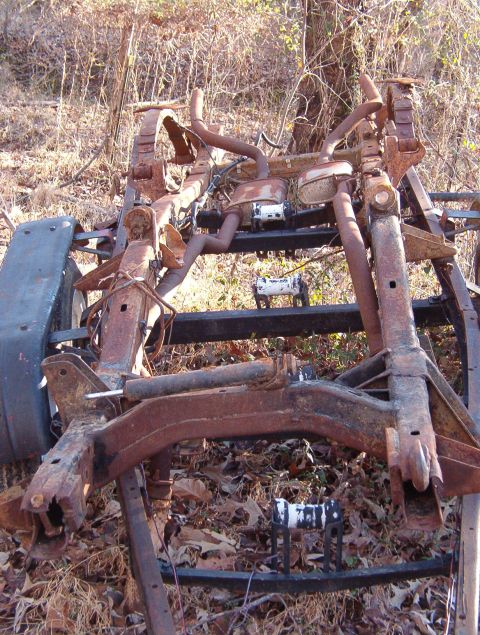
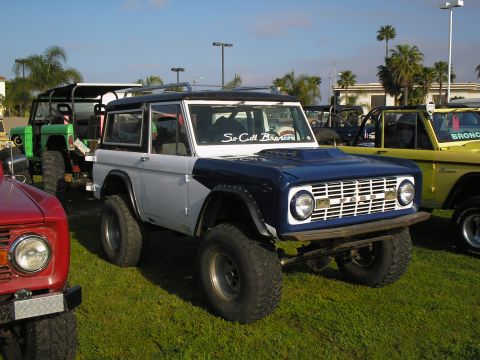
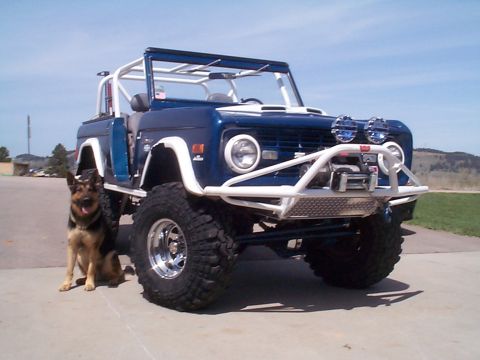
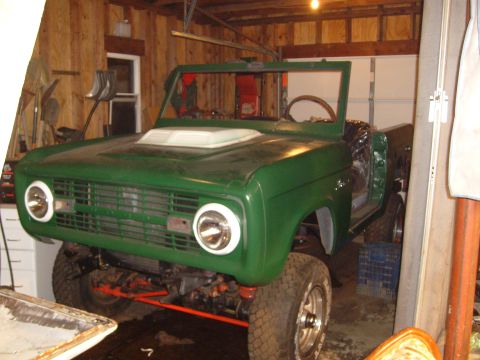
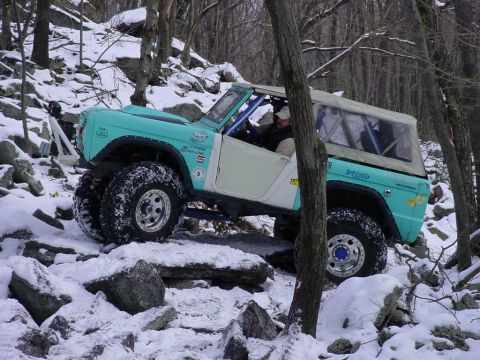
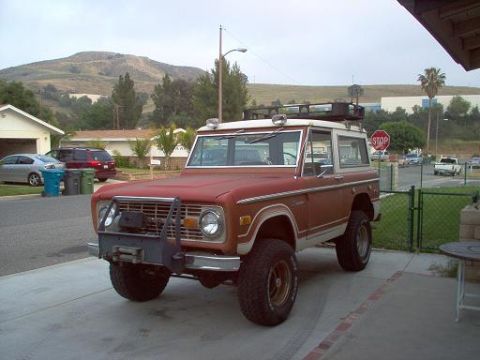
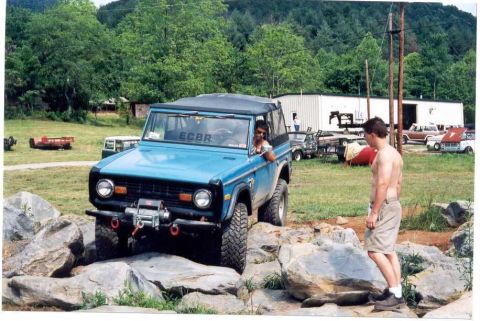
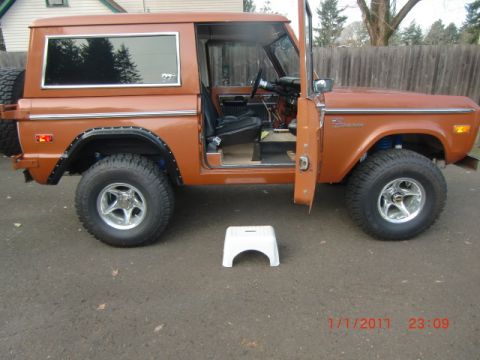
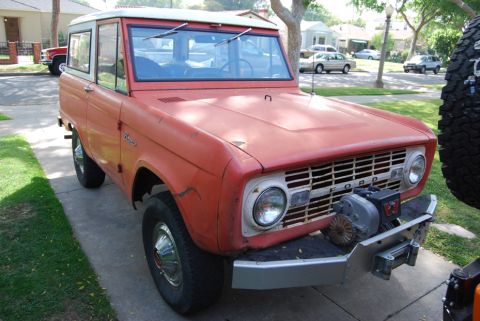
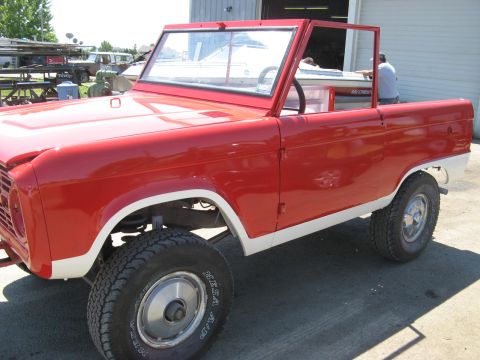
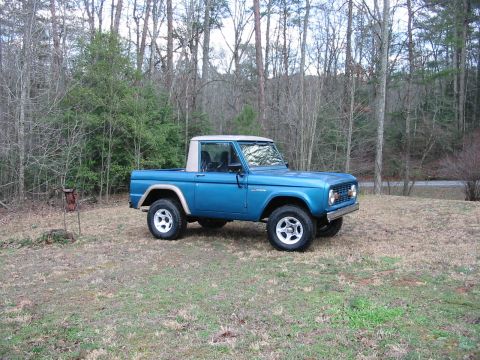
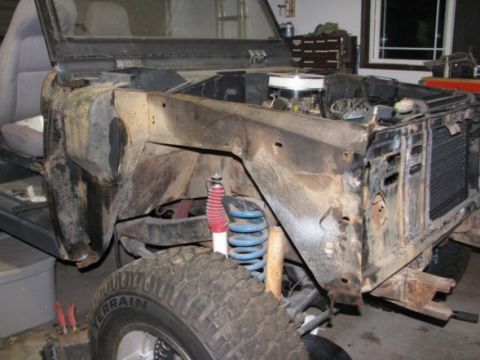
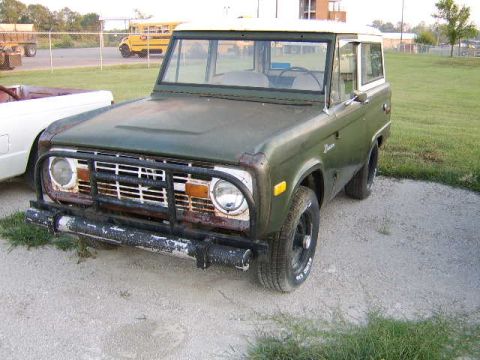
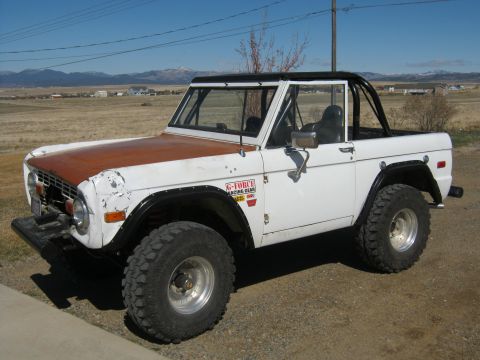
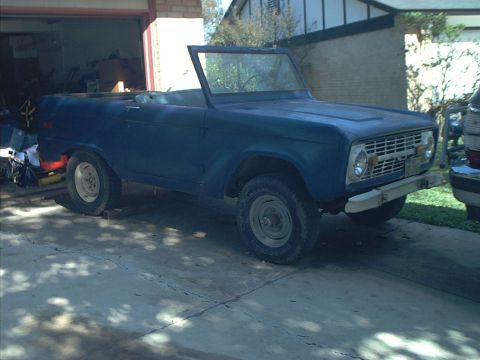
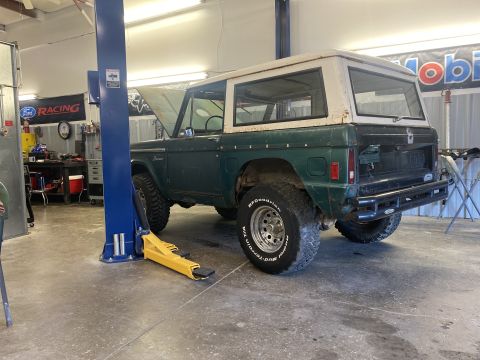
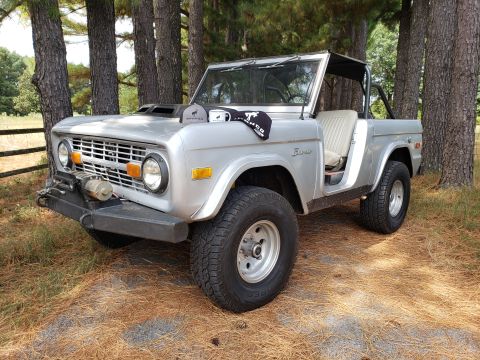
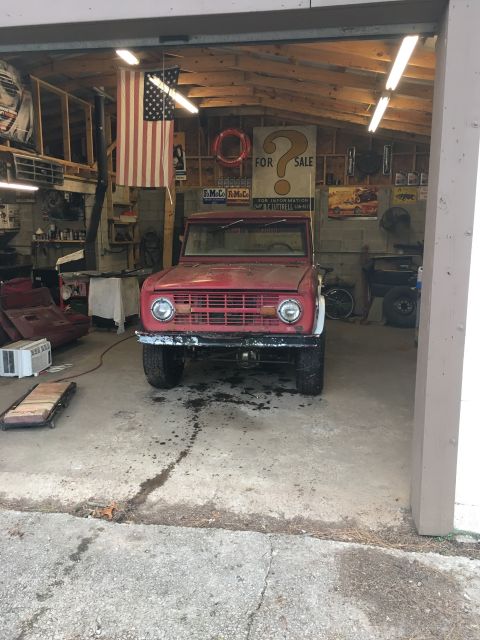
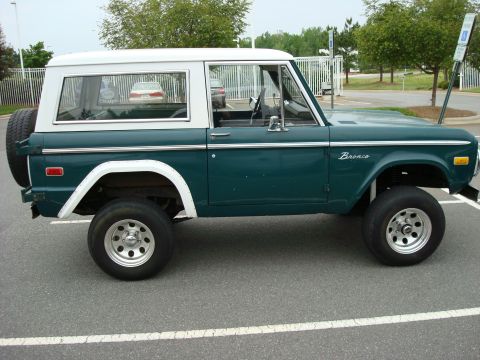
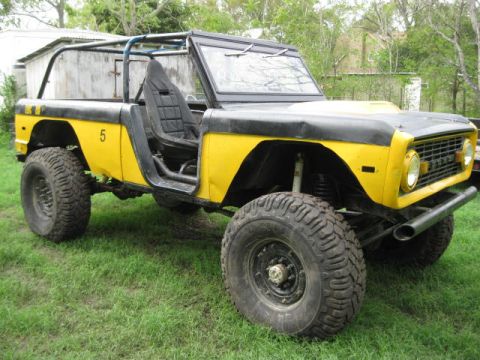
Full year-by-year change log: 1966-1977 Ford Bronco
This log tracks the running and model-year changes to the first-generation Ford Bronco (1966-1977) at the level of body code, engine, drivetrain, axle, brakes, and federally driven equipment. It is assembled from Ford factory shop manuals and parts catalogs, VIN and door data-plate decoding for body codes (U13, U14, U15) and axle identification, period factory specification sheets and road tests, and established early-Bronco reference works and owner registries.
1966
- Introduced. The 1966 Ford Bronco launched as a compact body-on-frame four-wheel-drive on a 92-inch wheelbase, a new vehicle separate from Ford's full-size trucks.
- Three body codes from launch. The 1966 Bronco was sold as the U13 open roadster with no doors and no fixed top, the U14 half-cab pickup with an enclosed cab and short bed, and the U15 wagon with a removable hardtop.
- Base engine. The 1966 Bronco used a 170-cubic-inch inline-six as standard equipment.
- V8 added during the model year. The 289-cubic-inch V8 became available as an option partway through the 1966 model year (around March 1966), so early-build 1966 trucks are six-cylinder only.
- Drivetrain. The 1966 Bronco used a 3-speed manual transmission driving a gear-driven Dana 20 transfer case, which was bolted to the transmission through an adapter rather than mounted as a separate divorced case.
- Axles. The 1966 Bronco used a Dana 30 front axle and a Ford 9-inch rear axle.
- Suspension. The 1966 Bronco used coil springs at the front axle and leaf springs at the rear, a layout Ford kept for the entire generation.
- Brakes. The 1966 Bronco used drum brakes at all four wheels.
1967
- Dual-circuit master cylinder. The 1967 Bronco adopted a dual-circuit (split) brake master cylinder, part of the federal safety equipment phased in across Ford lines for 1967. Brakes remained drum at all four corners.
- Bronco Sport package debuts. The Bronco Sport appearance and trim package became available for 1967, adding bright and chrome exterior trim along with upgraded interior appointments over the base Bronco.
- Otherwise unchanged. The 1967 Bronco continued with the 170 inline-six, optional 289 V8, Dana 30 front axle, Ford 9-inch rear, and the U13, U14, and U15 body codes.
1968
- Side marker lights. The 1968 Bronco added side marker lights to meet new federal lighting rules in effect for the 1968 model year.
- Last year of the open roadster. The 1968 model year was the final year for the U13 open roadster body; the half-cab and wagon continued.
- Drivetrain unchanged. The 1968 Bronco kept the 170 inline-six, optional 289 V8, Dana 30 front axle, Ford 9-inch rear, and four-wheel drum brakes.
1969
- Roadster dropped. The 1969 Bronco range narrowed to the U14 half-cab and U15 wagon after the open roadster was discontinued.
- 302 V8 replaces the 289. The 1969 Bronco's optional V8 became the 302-cubic-inch unit in place of the 289.
- Otherwise unchanged. The 1969 Bronco kept the 170 inline-six as the base engine, the Dana 30 front axle, the Ford 9-inch rear, and four-wheel drum brakes.
1970
- Last year of the Dana 30 front axle. The 1970 model year was the final year for the Dana 30 front axle before the 1971 upgrade.
- Otherwise unchanged. The 1970 Bronco continued with the 170 inline-six, optional 302 V8, Ford 9-inch rear, four-wheel drum brakes, and the half-cab and wagon bodies.
1971
- Dana 44 front axle. The Dana 44 front axle was introduced as a running change during the 1971 model year, replacing the Dana 30, so some early-build 1971 Broncos can still carry the Dana 30. The Dana 44 continued through the end of the generation.
- Bill Stroppe Baja Bronco. Beginning around 1971, Ford offered the Bill Stroppe-built Baja Bronco, a limited factory-blessed package of roughly 650 units honoring Stroppe's Baja 1000 racing Broncos. It came with an automatic transmission, power steering, fender flares, dual shocks, and a padded roll bar, finished in a distinctive red, white, blue, and black paint scheme. The run continued into 1975, and it is the truck the 2025 Stroppe Edition honors.
- Otherwise unchanged. The 1971 Bronco kept the 170 inline-six, optional 302 V8, Ford 9-inch rear, and four-wheel drum brakes.
1972
- Power ratings move to SAE net. Published output for the 1972 Bronco reflects the industry move from SAE gross to SAE net ratings, so the same 170 six and 302 V8 read lower on paper than in prior years even where the hardware was largely unchanged.
- Last year of the U14 half-cab pickup. The 1972 model year was the final year for the U14 half-cab pickup. The U15 wagon was the only body style offered for 1973 and after.
- Otherwise unchanged. The 1972 Bronco continued with the Dana 44 front axle, Ford 9-inch rear, four-wheel drum brakes, and the half-cab and wagon bodies.
1973
- 200 six replaces the 170. The 1973 Bronco's base inline-six grew from 170 to 200 cubic inches.
- Automatic transmission available. The 1973 Bronco offered the C4 3-speed automatic transmission for the first time, alongside the standard 3-speed manual.
- Power steering available. Power steering became available as a factory option for the 1973 Bronco.
- Fuel system revisions. The dual-tank fuel selector valve moved to the dashboard for 1973, and the fuel filler was relocated higher on the rear quarter panels.
- Wagon-only body. The U15 wagon was the only body style for 1973, following the discontinuation of the U14 half-cab after 1972.
- Hardware unchanged. The 1973 Bronco kept the optional 302 V8, the Dana 44 front axle, the Ford 9-inch rear, and four-wheel drum brakes.
1974
- Seatbelt-ignition interlock standard. A federally required seatbelt-ignition interlock system was standard on the 1974 Bronco, a one-year-only federal requirement.
- Hardware unchanged. The 1974 Bronco continued as the U15 wagon with the 200 inline-six, optional 302 V8, Dana 44 front axle, Ford 9-inch rear, and four-wheel drum brakes, with no significant mechanical change for the model year.
1975
- Last year of front drum brakes. The 1975 model year was the final year the Bronco used front drum brakes before the 1976 disc-brake change.
- Catalytic converter and unleaded fuel. For 1975 the Bronco's V8 gained a catalytic converter and required unleaded fuel, with a filler-neck restrictor, in line with industry-wide 1975 emissions standards.
- Otherwise unchanged. The 1975 Bronco continued with the 200 inline-six, optional 302 V8, Dana 44 front axle, and Ford 9-inch rear.
1976
- Power front disc brakes. The 1976 Bronco introduced front disc brakes in place of the front drums used through 1975, paired with a power brake booster.
- Otherwise unchanged. The 1976 Bronco kept the 200 inline-six, optional 302 V8, Dana 44 front axle, and Ford 9-inch rear.
1977
- Final year of the compact Bronco. The 1977 model year was the last for the compact first generation before the larger 1978 redesign moved the Bronco onto the full-size F-Series platform.
- Hinged fuel-filler door. The exposed screw-on exterior fuel cap was replaced by a hinged fuel-filler door set into the body, a late first-generation detail.
- Otherwise unchanged. The 1977 Bronco carried the 200 inline-six, optional 302 V8, Dana 44 front axle, Ford 9-inch rear, and the power front disc brakes introduced for 1976.